
A mother and daughter’s kidney donation journey highlights transplant disparities in minority communities
After a devastating crash left a woman in need of a kidney transplant, her family’s journey highlights the need for more organ donation awareness in communities of color.
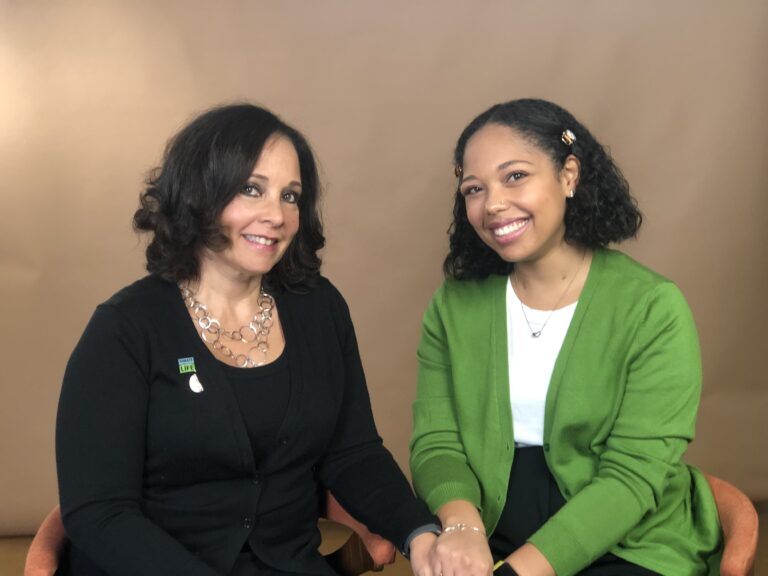
Sue Levy Giles (left) and Alexandria Warner (right) pose for photograph. (Photo from Natalie Valentine)
From Philly and the Pa. suburbs to South Jersey and Delaware, what would you like WHYY News to cover? Let us know!
A catastrophic car crash left Alexandria Warner with life-threatening injuries that resulted in a kidney transplant.
She was a junior at Spelman College in Atlanta when a stolen vehicle being pursued by police hit the car she was riding in while her car was stopped at a red light. The crash severed both of Warner’s renal arteries, leading to a loss of kidney function.
Her mother, Susan Levy Giles, immediately knew she wanted to help.
“I knew that I would be willing to donate a kidney to her as her mother,” Levy Giles said.
But neither knew much about the transplant process before Warner’s accident. Levy Giles began researching organ donation and transplant centers while her daughter was still hospitalized. Warner, despite studying pre-med and understanding how the kidneys worked, said she had never fully understood what receiving a transplant entailed.
“I had heard about transplants, but I really didn’t know or understand the weight that transplants held,” Warner said. “I really didn’t understand what it meant to be on dialysis, to be waiting for a transplant, going through the transplantation process.”
Levy Giles planned to donate a kidney directly to her daughter. But blood transfusions and surgeries after the crash caused her to develop antibodies that would have rejected her mother’s kidney.
Instead, the two became part of a paired donor exchange involving 16 people — eight donors and eight recipients across the country. Levy Giles donated her kidney to another recipient, while Warner received a compatible kidney from another living donor.
Warner eventually met the man who donated the kidney she had received. The two built a friendship and remain in contact.
“I just wanted to tell him thank you because I knew that this was going to be such a life changing moment for me,” Warner said.
The transplant allowed Warner to return to Spelman College, where she graduated summa cum laude. She was also able to travel again and regain the independence she had lost.
“Transplants are wonderful, and they’re life-changing, and they are a second chance at life,” she said. “But they are treatments, not cures.”
Related Content
More than 80% of resident doctors in Philadelphia region now covered by union contracts
Resident doctors at Temple Health and Jefferson Health organized to form unions more than a year and a half ago, and recently ratified their first contracts.
2 months ago
Listen 1:29August is Minority Donor Awareness Month
Their experience reflects a larger need for organ donation awareness among communities of color. August marks National Minority Donor Awareness Month, an annual observance that celebrates organ donation and transplantation in communities of color, encourages donor registration, and promotes healthy lifestyles.
Communities of color make up more than half of the more than 100,000 people on the national waiting list for lifesaving transplants, but the group remains underrepresented among registered donors, according to a Gift of Life. The disparity is especially pronounced in Philadelphia, where nearly 70% of people waiting for lifesaving organ transplants are African Americans. Nearly 93% of those waiting need kidney transplants.
The demand for kidneys also far exceeds the number of transplants performed.
Dr. Anthony Watkins, enterprise kidney transplant director at Thomas Jefferson Health, said Black and Hispanic communities experience higher rates of end-stage renal disease while also facing lower access to transplantation.
“There’s over 90,000 people on the waiting list to receive a kidney transplant; however, we only perform roughly 27,000 kidney transplants a year,” Watkins said. “That’s a huge discrepancy.”
Watkins said ethnic groups that experience higher rates of kidney disease have lower access to transplantation.
“It’s important for us in the transplant community to use every opportunity that we can to share this information with the broader community,” Watkins said. “That they’re aware of the realities of the need, the impact that transplant has on improving people’s lives and the possibilities people have to be organ donors and still live a long healthy life.”
For Levy Giles and Warner, their experience has made raising awareness about organ donation personal.
That push for awareness will continue Friday, Aug. 28 at 6 p.m. at Philadelphia’s AMC Fashion District, where there will be a screening of “Abundant,” a film centered around the experiences of organ donations.
Following the screening, there will be a live panel discussing organ donation, altruism, and the importance of organ donation in minority communities.

Never miss a moment with the WHYY Listen App!


WHYY is your source for fact-based, in-depth journalism and information. As a nonprofit organization, we rely on financial support from readers like you. Please give today.
Stroke rates rising among younger adults, hitting Philadelphia’s Black communities hardest
Doctors say strokes remain a leading cause of death and disability, as younger adults and underserved Philadelphia communities face rising risks due to health disparities.
6 months ago
Listen 2:07
April is National ‘Donate Life Month.’ Here’s what it means
About 5,000 people in the Philadelphia area are awaiting an organ transplant. Some wait for over five years.
4 years ago
Listen 1:45
Penn’s new living organ donor center aims to close gaps in transplant access
A majority of organ transplants are still done with deceased organ donations, but living organ donations can last longer.
4 years ago
Listen 1:18