


SEPTA puts the brakes on energy loss by slowing subway cars
Listen
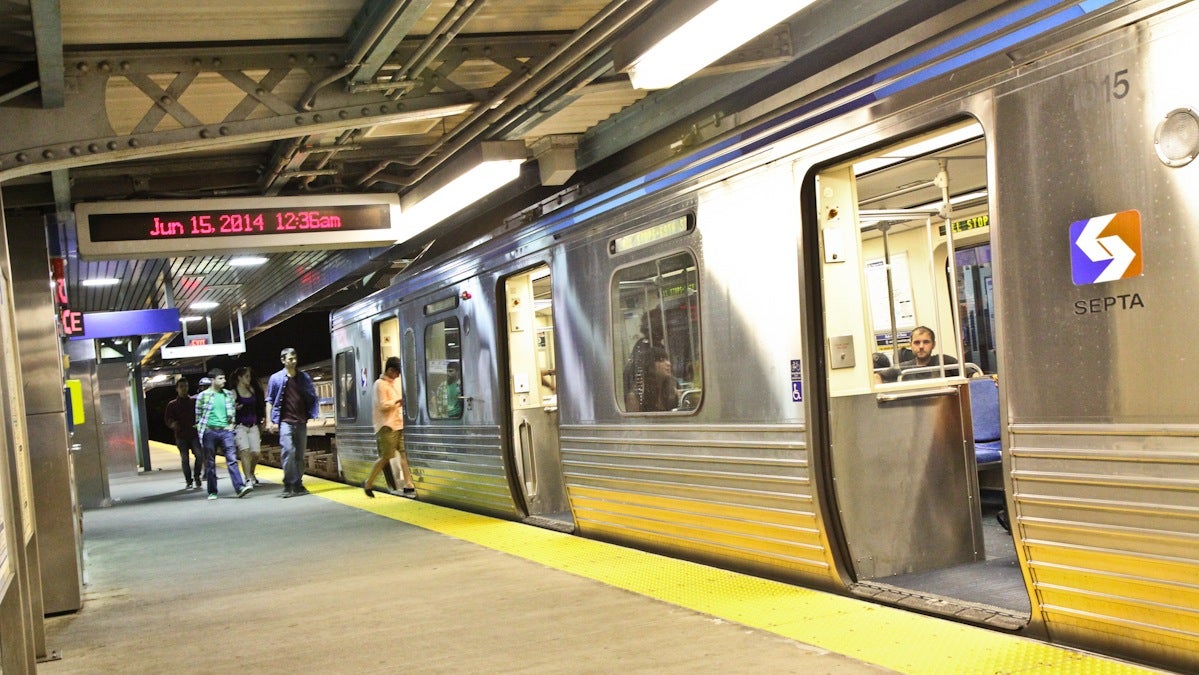
A SEPTA Market-Frankford line train prepares to leave the station. (Kimberly Paynter/WHYY)
It’s one of the basic tenets learned in high school physics class. The first law of thermodynamics says that energy cannot be created or destroyed; it can only change form.
SEPTA subway cars use a lot of energy, but then cast it off each time one of them stops at a station. Now, the transit agency is about to put that physics lesson to use.
SEPTA is launching a project to build a battery storage network, which will capture and reuse energy released by braking subway cars. When complete, the network will be one of the nation’s largest customer-sited battery storage systems — the first commercially deployed for a transit operation — and serve as a model for using stored energy to supply power in congested parts of the grid.
“It’ll save us about a million kilowatt hours each year,” explained Erik Johanson, SEPTA’s director of innovation. He shared the details of the project with NewsWorks Tonight’s Dave Heller.
WHYY is your source for fact-based, in-depth journalism and information. As a nonprofit organization, we rely on financial support from readers like you. Please give today.
Brought to you by NewsWorks Tonight
NewsWorks Tonight
NewsWorks Tonight was a daily radio show and podcast that ran from 2011-2018. It is no longer in production, but the show's archive is available online.