

How the Wildwoods became a Jersey Shore staple — across 4 separate towns
What do cattle, railroads and neon motels have in common? They helped shape the barrier island’s evolution into a summer vacation destination.
From Camden and Cherry Hill to Trenton and the Jersey Shore, what about life in New Jersey do you want WHYY News to cover? Let us know.
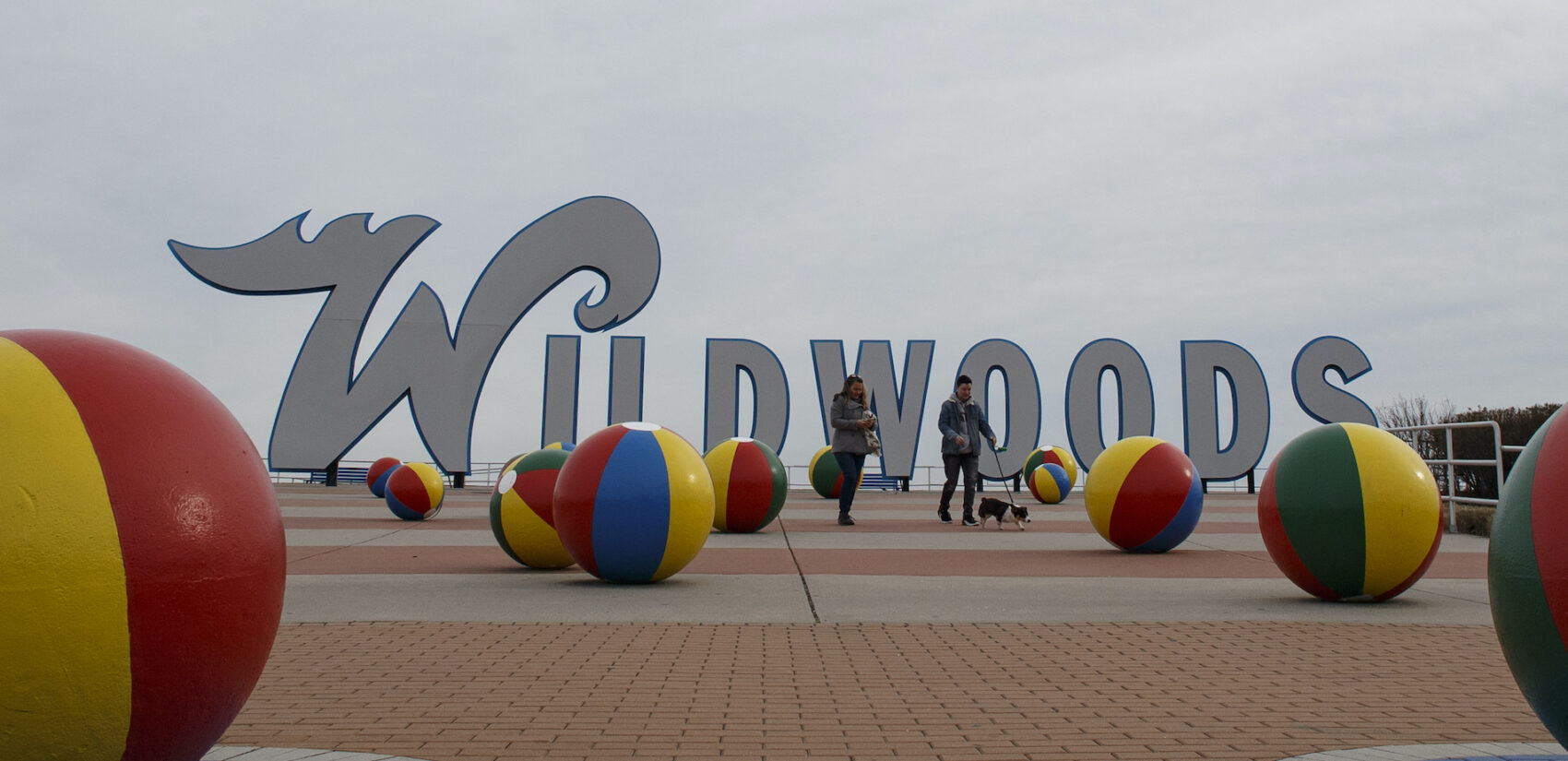
The Wildwoods in Cape May County, New Jersey, are not one town, but four.
North Wildwood, Wildwood, Wildwood Crest and West Wildwood each have their own history, identity and local government. However, all four towns share a single barrier island along the Jersey Shore.
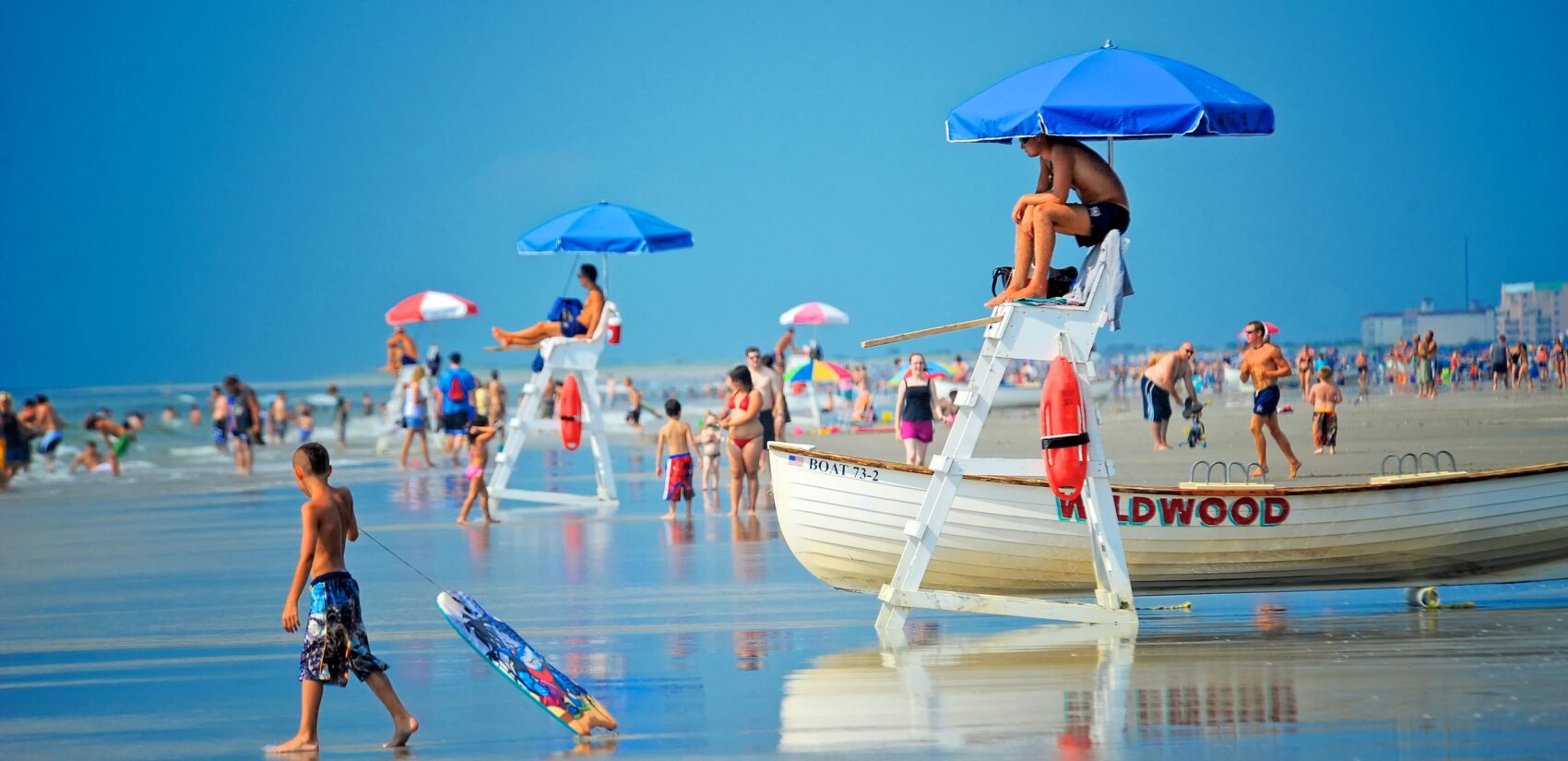
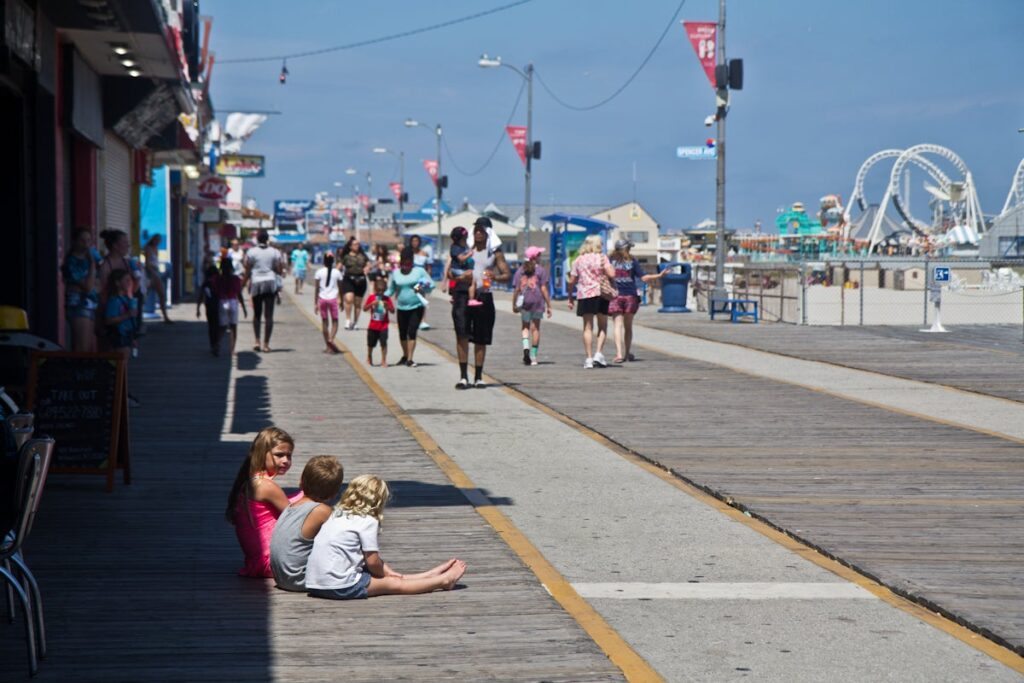
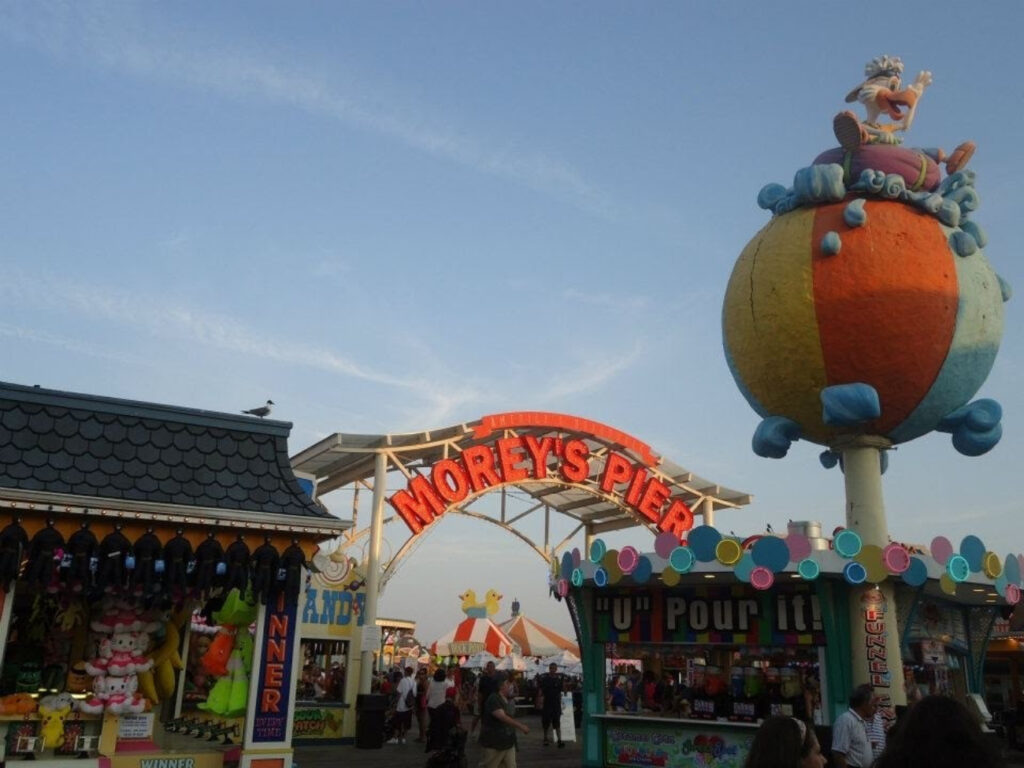
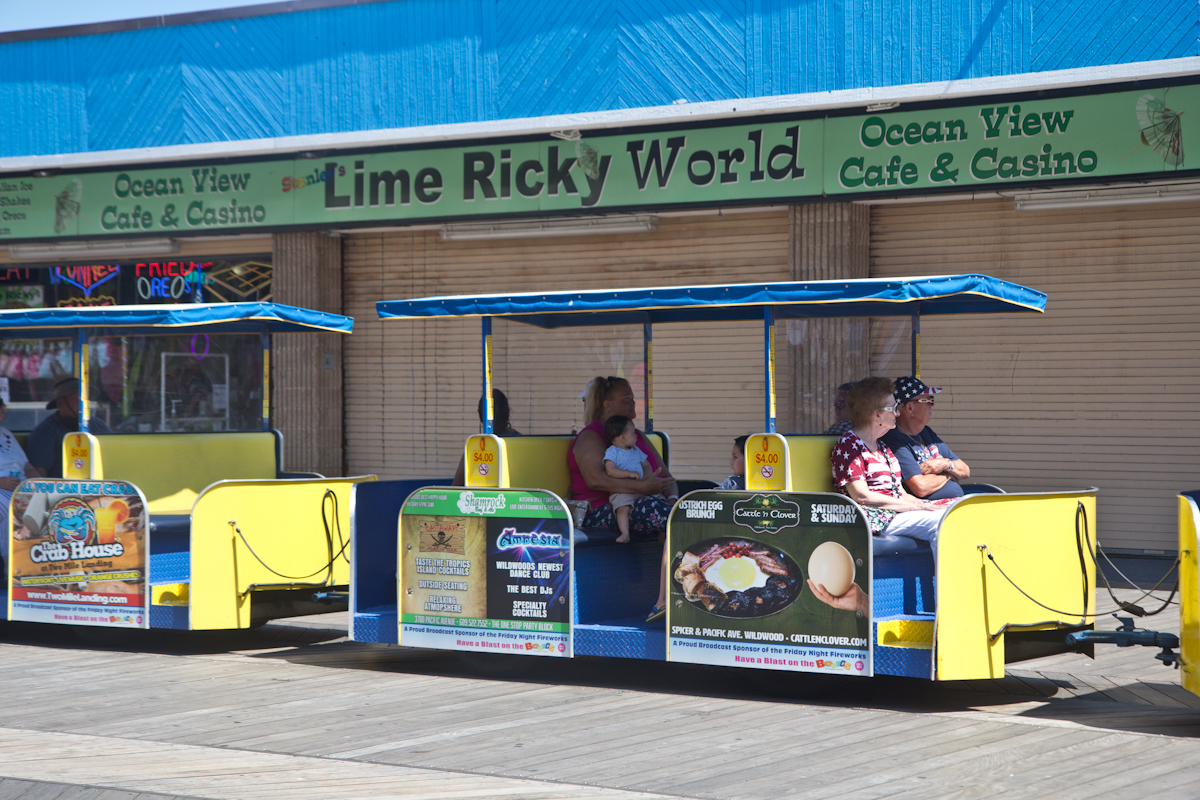
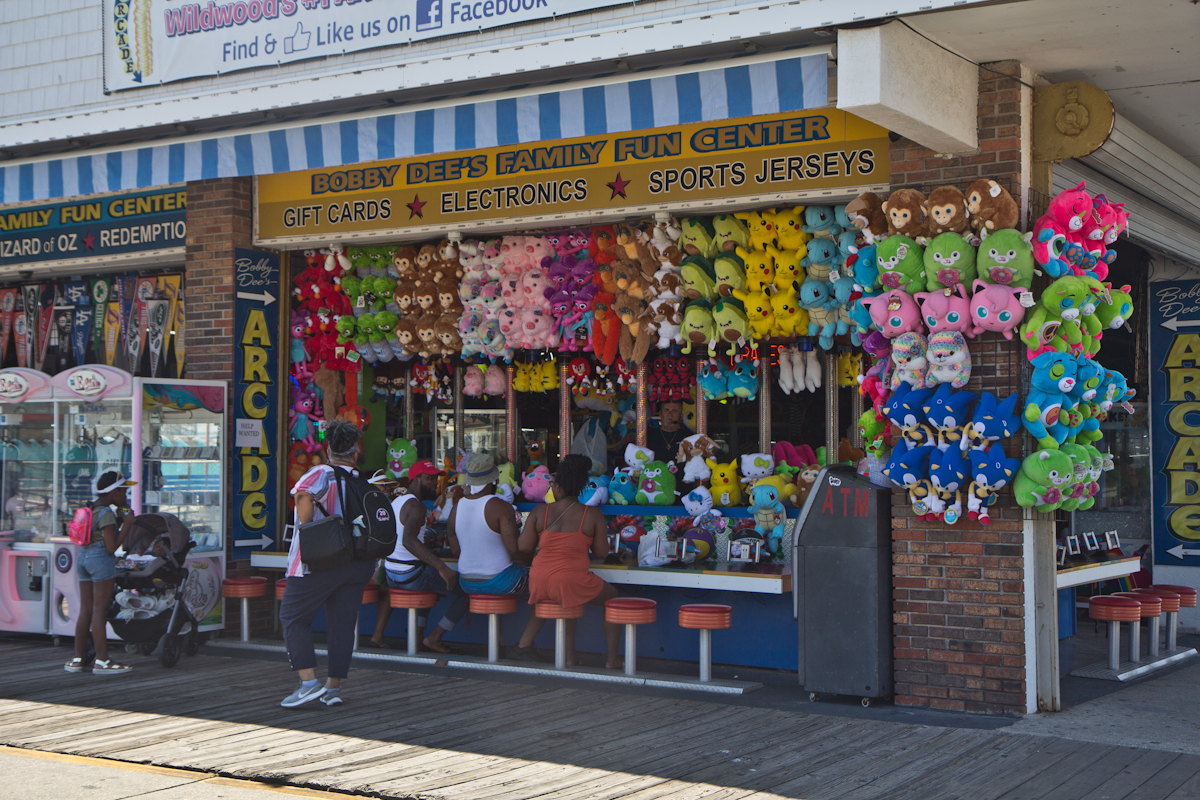
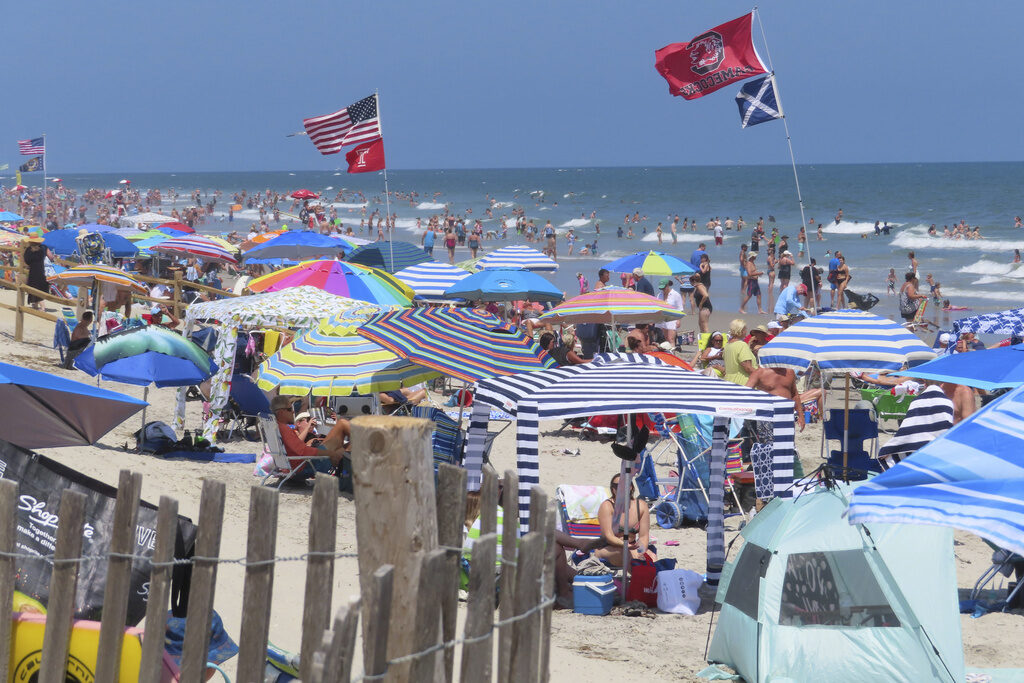
Together, the communities are home to roughly 16,000 year-round residents, a number that swells each summer to more than 250,000. Their wide, free beaches stretch for about 5 miles and are among the largest on the East Coast. The boardwalk, which spans nearly 40 blocks, is lined with rides, shops and restaurants.
From barrier island to coastal community
Long before the summer crowds, the island was a working landscape shaped by tides, cattle and early settlers.
“The barrier islands all along the New Jersey coast … were owned by different farmers, settlers on the mainland,” Pary Tell, the curator of the Wildwood Historical Society’s George F. Boyer Museum, said. “In the spring, they would load their cattle onto barges and take them over and turn them loose on the island and come back in the fall and pick them up.”
At the time, the island looked nothing like it does today. It was covered in dense maritime forest, with high dunes, freshwater ponds and open meadowland, making it ideal for grazing, she said. The more farmers and their families visited the island, the more they saw its potential.
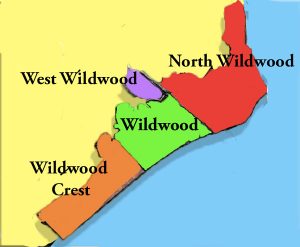
That realization set off a wave of development that would eventually divide the island into the four municipalities that function today.
How Hereford Inlet Lighthouse became a landmark
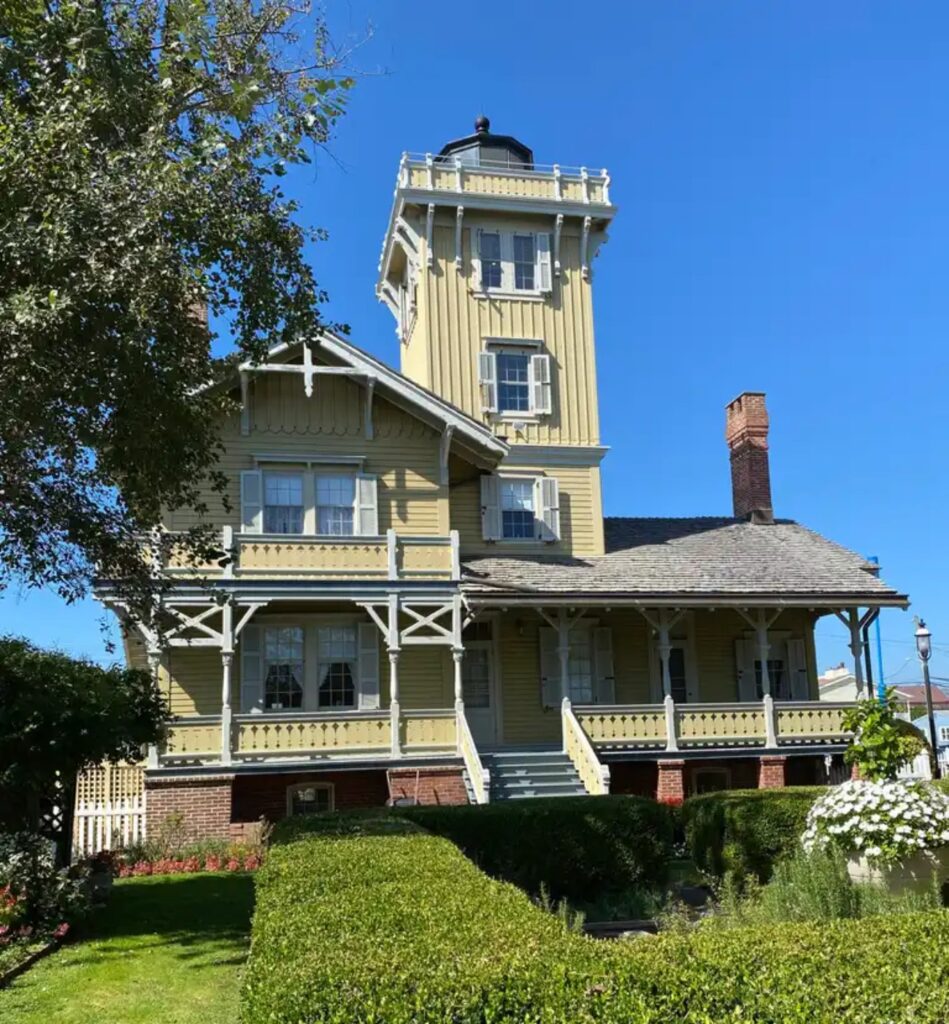
By 1849, the U.S. Life Saving Service established Station No. 36 at Hereford Inlet, bringing a permanent presence to the northern end of the island. In 1874, the Hereford Inlet Lighthouse was built, anchoring what would become the first settled community, Anglesea. More development followed.
Anglesea formally became a borough in 1885. It was renamed the borough of North Wildwood in 1906 and reincorporated as a city in 1917.
“This season will mark the 152nd year in which Hereford Inlet Lighthouse has been an active navigational landmark for boaters,” said Salvatore T. Zampirri Sr., mayor of North Wildwood. “The lighthouse is not standing in its original location, as it had to be moved 150 feet west due to coastline erosion from a storm in 1913. Outside of remaining a navigational landmark, the lighthouse has served many additional purposes in its history, including as a site to host Baptist religious services, a tourist information center and, currently, a museum.”
After the death of John Marche, the lighthouse’s first keeper, Civil War veteran Freeling Hysen Hewitt took over and remained at the lighthouse for 45 years. According to the lighthouse’s official history, Hewitt also held the first formal religious services in the Wildwoods inside the lighthouse parlor.
As development took hold in the north, attention turned south
In the early 1800s, Vineland developers known as the Baker Brothers began promoting a new community at the southern end of the island. According to Tell, they promoted the area then known as Holly Beach by organizing excursions and offering free trips, attracting visitors who would ultimately become property owners.
Some built summer homes. Others stayed year-round.
According to the historical society, many of the early permanent residents were fishermen and sailors from Scandinavia who helped establish a working community alongside seasonal visitors. Within a short time, Holly Beach grew to about 40 houses and a post office. In 1885, the town was formally incorporated as the borough of Holly Beach.
“The Baker Brothers thought, ‘Well, they’re [developing] at the north end. Let’s buy something in the middle,’” Tell said.
Between Anglesea and Holly Beach sat additional land that developers also saw potential in. Yet, reaching it proved difficult.
“The problem with that land was that there was no way to get to it,” Tell said. “There was no road.”
Before roads, visitors had to walk along the beach or follow a trail Indigenous people used through the woods. That changed in 1891, when a road, now Pacific Avenue, connected the island.
The Baker Brothers formed the Wildwood Beach Improvement Company in 1895 and incorporated the borough of Wildwood.
The name reflected what the area looked like at the time, a dense coastal forest, a “wild wood” by the sea, according to the Wildwood Crest Historical Society.
Encouraged by that success, development continued south. In 1905, the first home was built in what would become Wildwood Crest. By 1910, it was incorporated as a borough.
“They called that section Wildwood Crest, because it’s a little higher,” Tell said.
From railroads to road trips, shaping the Wildwoods
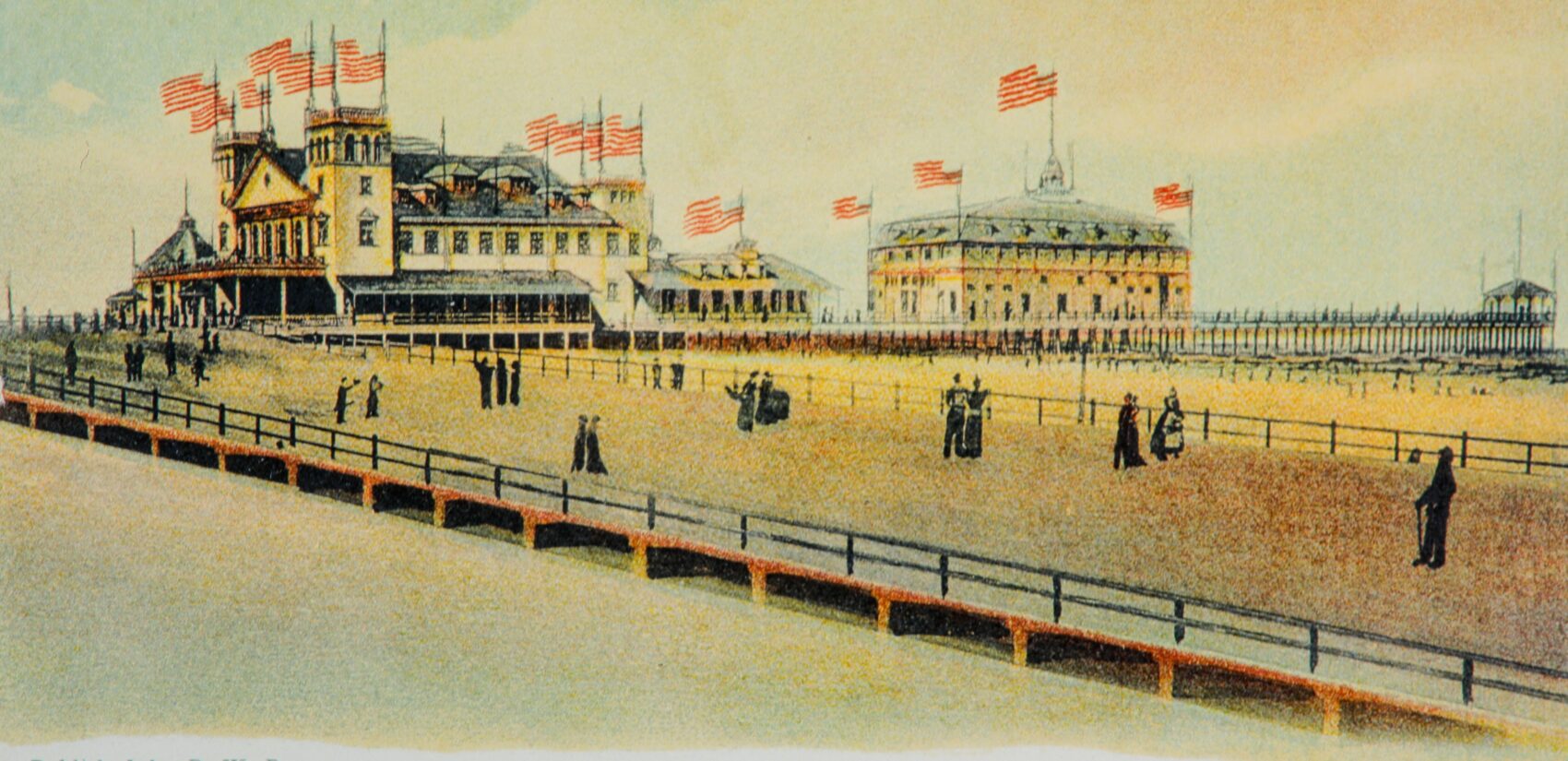
With improved access came rapid development. Larger homes were built, followed by hotels and eventually the boardwalk.
By 1911, Holly Beach and the borough of Wildwood merged to form the city of Wildwood, which created the island’s commercial and tourism center. Rail lines in the early 1900s brought visitors from Philadelphia and beyond.
“The railroads came in and that let even more people come from the Philadelphia area,” Tell said. “It blossomed into a big resort.”
West Wildwood developed later on a smaller, separate island and remained modest in scale.
“It never took off as a resort,” Tell said. She said West Wildwood developed more as a residential, back-bay area. While the borough is associated with boating, fishing and marshland access.
Related Content
Several laws aim to stop pop-up parties and flash mobs promoted on social media before they cause a problem.
5 months ago
Listen 1:01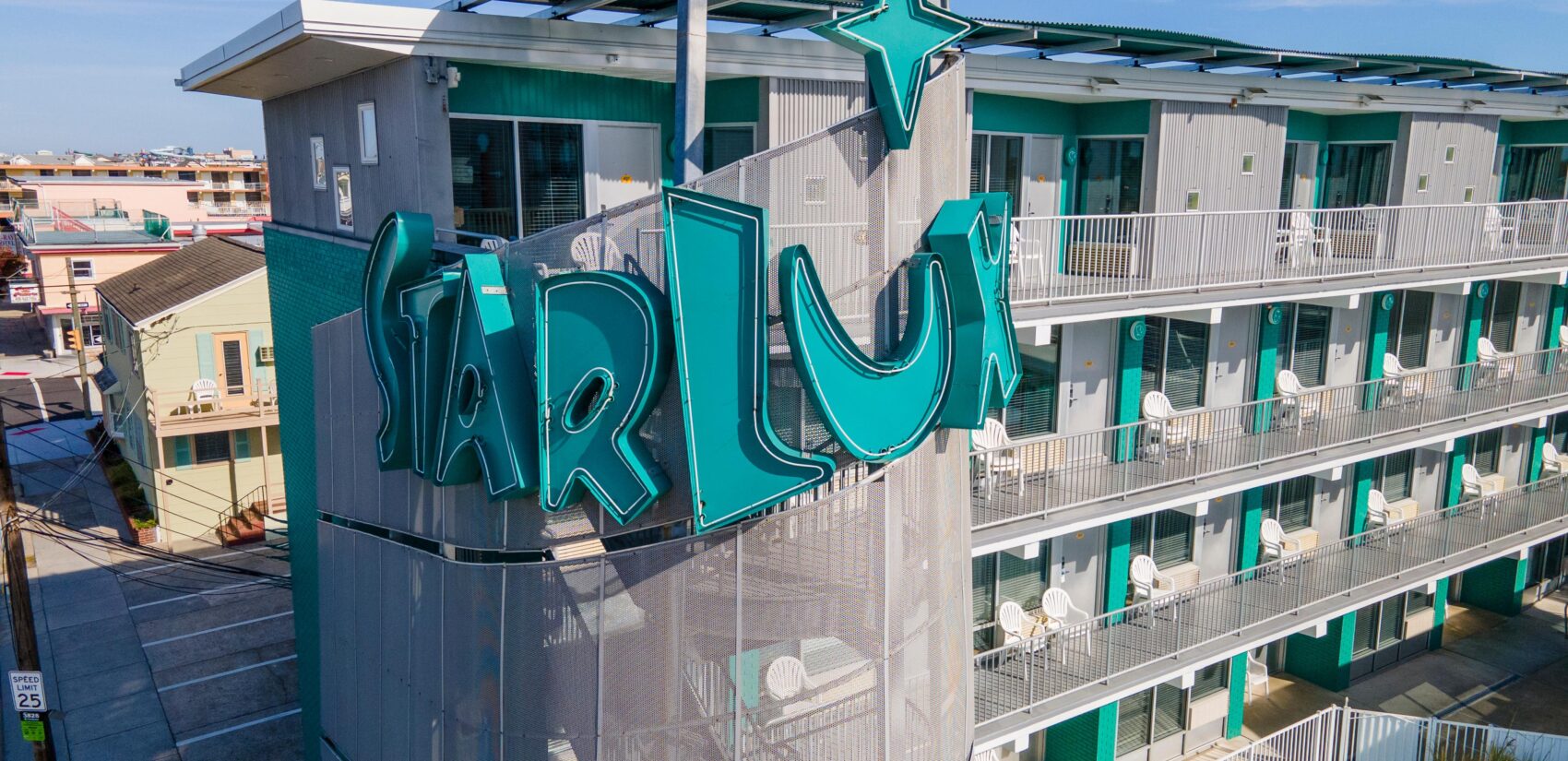
The arrival of doo-wop
Hotels lined the beachfront and the boardwalk had become a central attraction by the early 1900s. But the island’s most defining visual identity would not emerge for a few more decades.
As automobile travel expanded in the 1950s and more families began driving to the shore, the Wildwoods adapted. Large hotels gave way to motels designed for convenience with parking, pools and direct beach access, Tell said.
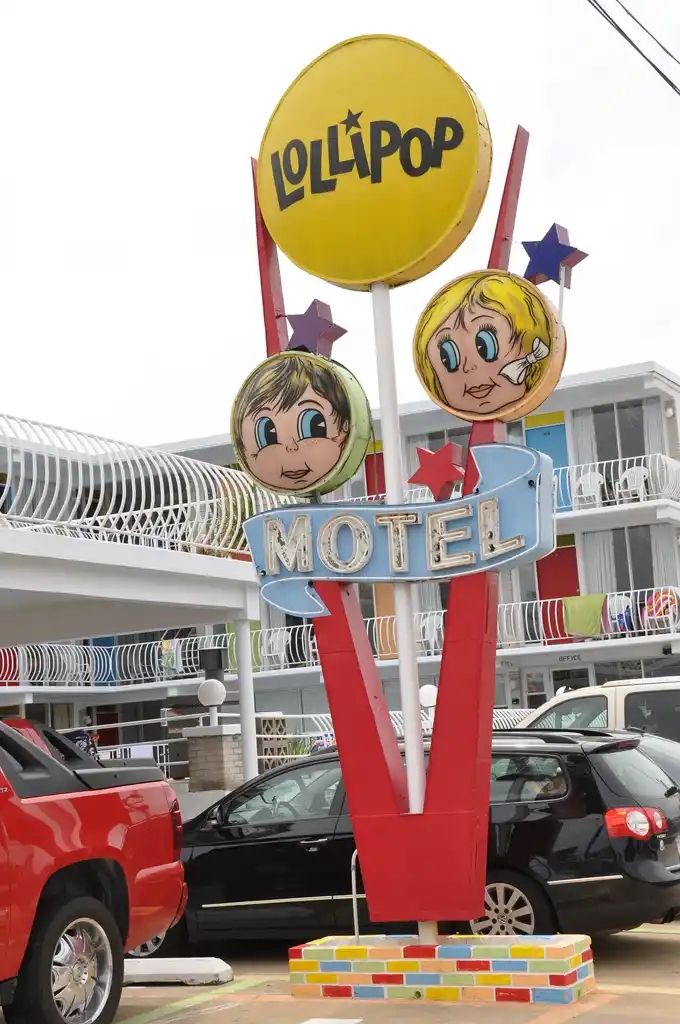
Many of those properties were built in what became known as doo-wop, a midcentury design marked by bold colors, neon signage, angular lines and space-age themes.
Tell said that the shift reflected both the era and the audience.
The Wildwoods’ doo-wop architecture reflects the optimism and futuristic design trends that emerged alongside the rise of postwar American vacation culture, rock ’n’ roll and the Space Age.
Today, the Wildwoods’ preserved motels, neon signs, retro diners and Doo Wop Experience Museum continue to celebrate the bold 1950s and 1960s style that became a defining part of the shore community’s identity.
Over time, the Wildwoods became known as one of the largest collections of doo-wop, or midcentury modern buildings in the country, giving the island a distinct visual identity that still defines much of its character today. Locally referred to as the “doo-wop district,” the area is officially recognized as the Wildwoods Shore Resort Historic District.
Even as some of those motels have been replaced, there has been a renewed preservation effort to save and restore the remaining structures, recognizing their role in shaping the Wildwoods’ brand and cultural history.
Related Content
Help wanted: At the Jersey Shore, the summer job rush is on
The seasonal workforce is shifting in some shore towns amid rising housing costs. Even with higher wages, businesses say finding workers remains a challenge.
7 months ago
Related Content
2026 Jersey Shore beach tags: What they cost and where beaches are free
More shore towns in Atlantic and Cape May counties are moving to digital beach badges. In several communities, you can buy them before you hit the sand.
6 months ago
4 towns, 1 destination
More than a century later, those early decisions still shape how the Wildwoods function, not just in how they look, but in how they operate.
“Each municipality in the Wildwoods typically hosts their own services, including police, fire, public works, recreation, beach patrol, etcetera,” North Wildwood Mayor Zampirri said.
However, North Wildwood does provide police and court services to West Wildwood.
“While we have our own services, there are times when we work together through mutual aid of emergency services and other collaborative efforts for events in the Wildwoods,” Zampirri said.
That balance, independence paired with coordination, has long defined the island, he said.
“They all schedule their own events,” Tell said, speaking about how each town maintains its own calendar of activities. “They do it on different nights, so they’re not competing with each other.”
The municipalities also work together on joint marketing efforts under the name the Wildwoods.
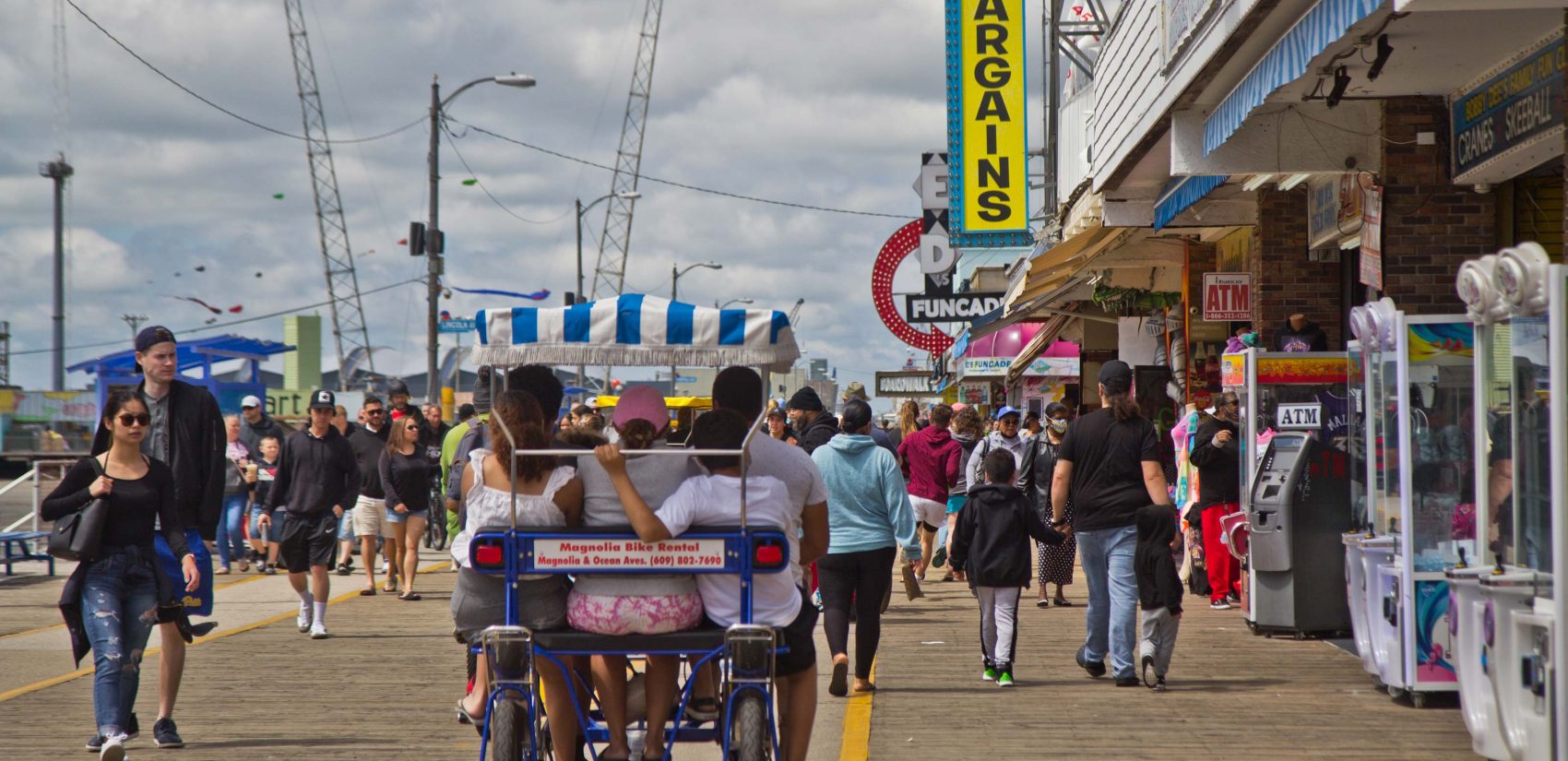
Tell said the municipalities have historically developed with distinct roles. Wildwood became the commercial center, where businesses, shops and entertainment took hold, while North Wildwood and Wildwood Crest evolved with more residential character.
The differences between the towns were not just geographic; they were socioeconomic, Tell said.
North Wildwood was home to many of the island’s professionals, including judges, lawyers and doctors, while Wildwood Crest drew younger families and what Tell described as “newer money.” Wildwood, by contrast, became where most businesses were located and where many working-class families lived. She said many of these still hold today.
Tell, who grew up in Wildwood, recalled how that divide shaped her own family’s experience.
“My father was the city treasurer for the city of Wildwood. And as such, we had to live in Wildwood,” she said. “My mother wanted to live in Wildwood Crest, because that’s where the young middle-class families were. We couldn’t. So my parents bought a house on Cresse Avenue. Cresse Avenue is the street that divides Wildwood from Wildwood Crest. So we lived on the Wildwood side of the street. If we walked across the street, we were in Wildwood Crest. [My mother] got as close as she could.”
Those socioeconomic differences extend to how each town is funded as well.
Property values vary widely from town to town as do the tax rateables. Wildwood, with more commercial density and a broader mix of housing, also operates differently. Tell and residents have said that creates an ongoing divide that has shaped conversations about whether the towns should ever merge.
“There’s some discussion” about consolidation from time to time, Tell said, but concerns remain that combining the municipalities would shift financial burdens.
Longtime Wildwood resident Larry Lillo echoed the same sentiment, noting that it would be hard for the towns to consolidate given the expense of managing the commercial district and boardwalk.
Lillo, who has lived in Wildwood for 78 years, knows that Wildwood carries cost for year-round services, including police, fire and public works, as well as a lot of projects that maintain the boardwalk and beaches, while other towns operate differently, making consolidation difficult.
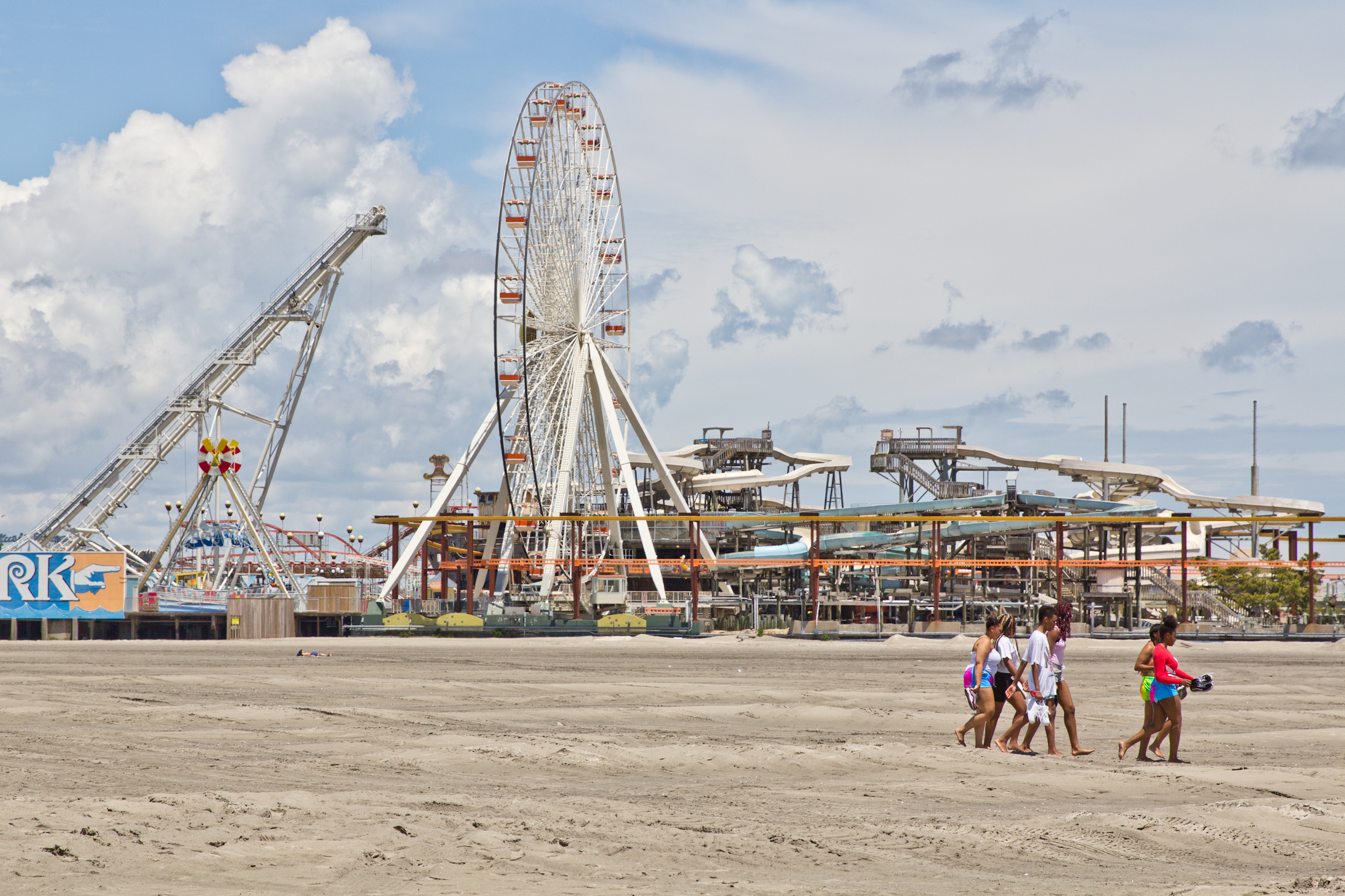
For residents, those differences are not a divide, they are what make the island work.
Each town serves a different role, which is what makes the Wildwoods so unique. Residents believe it offers a little of everything.
Scott Chambers, a West Wildwood resident, said that contrast is exactly what drew him from one part of town to another. After years of living in North Wildwood, close to the beach and boardwalk, he moved to West Wildwood looking to find something different, including more space and options for a single-family home.
“North Wildwood is a fantastic town, but it gets busy in the summer,” Chambers said. “We didn’t realize how peaceful [West Wildwood] is. It’s like a hidden gem.”
Chambers, who owns and operates Zippy’s Bikes on Pacific Avenue, said Wildwood is often misunderstood.
Chambers spoke on Wildwood’s concentration of boardwalk activity, hotels, night clubs and bars, and some trouble from outsiders for the misrepresentation of the city. Chambers added that he raised his children in North Wildwood and had no issues with them walking alone to the boardwalk.
Still, he said the differences in each municipality are what make the island work.
“They all have their own unique personality and traits,” Chambers said.
Lillo said Wildwood’s identity is tied to both history and daily life. He described growing up in an area where everything was within reach.
“I woke up. I could go to the tailor, I’d go to the pharmacy. I could go to three grocery stores; it was all within two blocks,” he said. “So, it was a very convenient place.”
He said it still is with many year-round activities and its own school system.
Chambers agreed, saying that the Wildwoods have some of the best restaurants on the island and that it has everything other beaches have and more.
Together, the four towns offer different ways to experience the same island, whether that means quiet streets, residential neighborhoods or the energy of the boardwalk.
“Basically, it’s a small city at the beach,” Lillo said.
Editor’s note: This story has been updated to correct the number of annual Wildwood visitors, and to remove the former title of Pary Tell.
WHYY News is partnering with independent journalists across New Jersey to spotlight the people, communities, cultures and distinctive places that shape the Garden State. This work is made possible with support from the Geraldine R. Dodge Foundation.

Saturdays just got more interesting.
WHYY is your source for fact-based, in-depth journalism and information. As a nonprofit organization, we rely on financial support from readers like you. Please give today.
Part of the series
New Jersey diaries: From shore towns to small towns
WHYY News is partnering with independent journalists across New Jersey to spotlight the people, communities, cultures and distinctive places that shape the Garden State.
From beach wheelchairs and access mats to beach taxis and accessible restrooms, here's where to find accommodations down the shore.
4 months ago
Cape May County Zoo’s new red panda could help protect endangered species
The 1-year-old newcomer offers a window into habitat loss, species survival and wildlife conservation efforts underway at the zoo.
4 months ago
Listen 1:10
2026 Jersey Shore beach tags: What they cost and where beaches are free
More shore towns in Atlantic and Cape May counties are moving to digital beach badges. In several communities, you can buy them before you hit the sand.
6 months ago