

Dance becomes a step toward coding at a West Philly arts program
At danceLogic, girls use choreography and computer programming to build confidence, solve problems and explore futures they may not have considered.
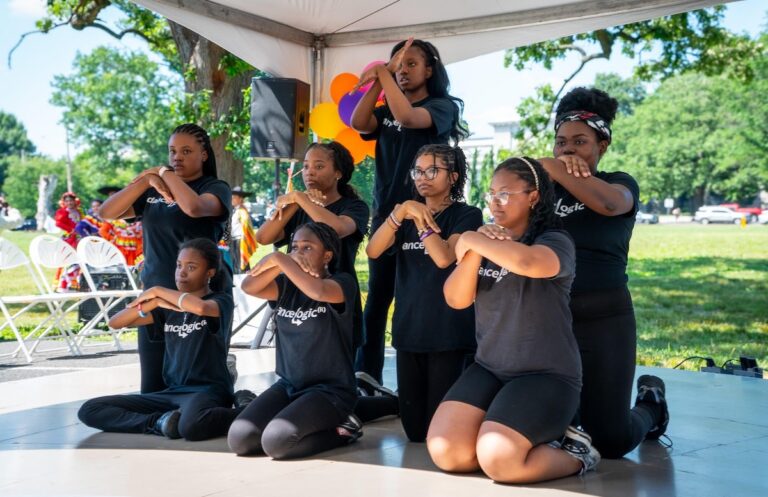
danceLogic uses dance and computer programming to help girls build confidence, strengthen problem-solving skills, and explore STEM concepts through movement. (Courtesy of Miquon Brinkley)
From Camden and Cherry Hill to Trenton and the Jersey Shore, what about life in New Jersey do you want WHYY News to cover? Let us know.
On Saturday mornings at the West Park Cultural Center, a group of girls moves through a dance routine they created together.
They count the beats, remember the order of each step and watch one another to stay in sync. When someone misses a movement, the group begins again.
Later, the music gives way to tablets. The girls begin another process of building, testing and correcting, this time through computer code.
To the founders of danceLogic, a course combining dance with computer coding, the two classrooms are not as different as they might appear.
“Dancing is learning steps and practicing repetition,” said Franklyn Athias, who co-founded the program in 2018. “Coding is basically the same way. It’s learning the functions, learning the syntax and repetition.”
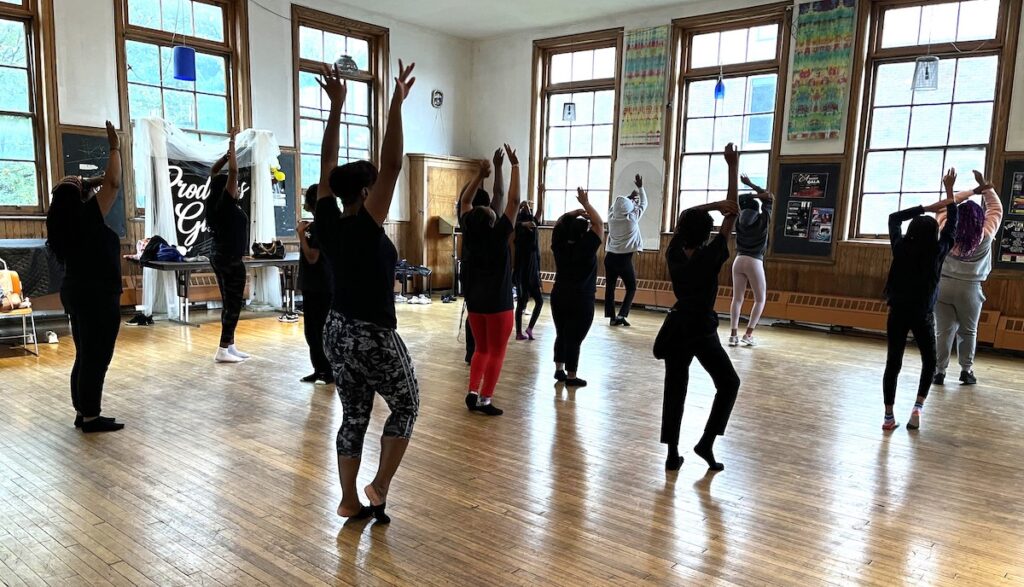
The course brings girls ages 13 to 18 to West Park for dance and coding classes from October through June. Students spend about 90 minutes dancing and 75 minutes learning coding technology.
The program’s goal goes beyond teaching two individual skills. Through movement, technology and collaboration, the program seeks to build confidence and introduce girls ⸺ particularly girls of color ⸺ to academic and career possibilities they may not otherwise encounter.
Since danceLogic launched in 2018, more than 150 young women have participated in the program. Athias said success isn’t measured simply by how many girls eventually pursue careers in technology. Instead, they look for steady growth in the skills that connect dance and coding, including creative problem solving, collaboration and learning through repetition.
Finding a way into technology
Before danceLogic, Athias taught a free Saturday coding class at Second Antioch Baptist Church. West Park Cultural Center Executive Director Betty Lindley, who co-founded the course with Athias, visited the free class and approached him about bringing West Park a similar program.
The two began discussing how to reach more girls.
The science, technology, engineering and mathematics gap starts early and continues into the workforce. According to the National Science Foundation, Black workers made up just 8% of STEM occupations in 2021, despite accounting for 11% of the overall workforce. The numbers are even lower for Black women, who represent only 2% of scientists and engineers.
“We were trying to figure out how to attract young ladies to come take coding,” Athias said. “The dance concept came into play, and then it triggered us to call it danceLogic.”
West Park Cultural Center spokesperson Niesha Kenneday said it was their goal to draw the girls in with dance and get them interested in coding.
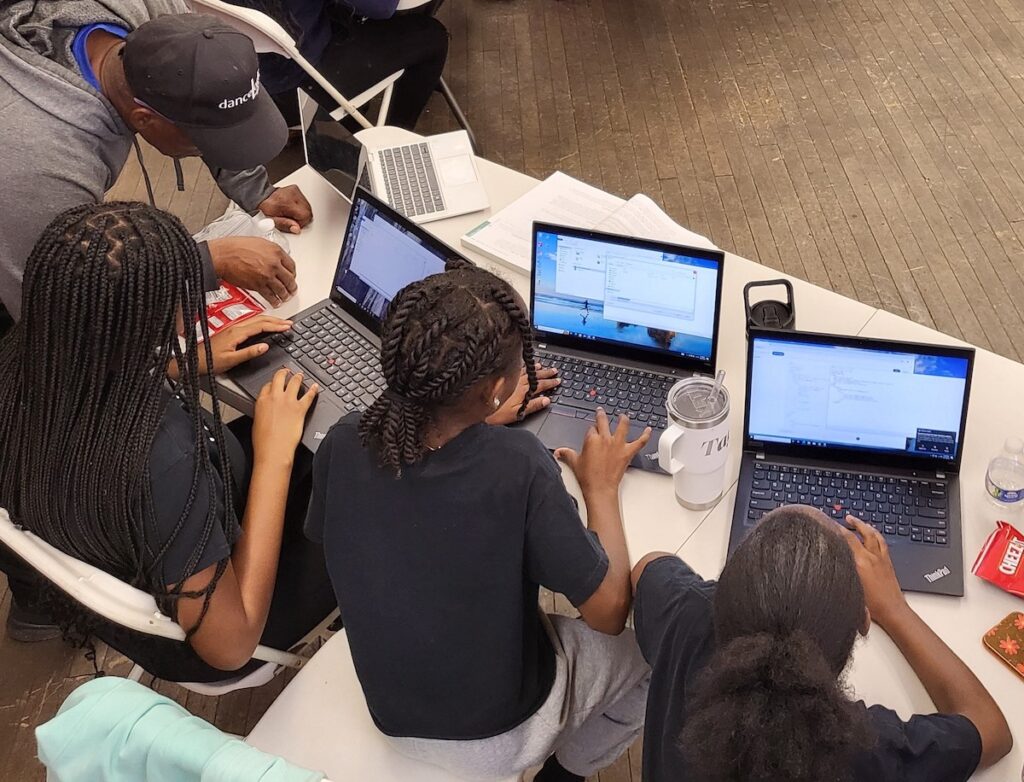
Dance became the invitation and coding became the opportunity waiting on the other side.
That was the case for Nailah Shabazz, who joined danceLogic in the seventh grade after participating in other arts programs at West Park. She was curious about coding, but wasn’t sure how to get started.
“I learned a lot of the basic fundamental tools of coding, what a variable is, what a function is, why code is written and how it’s used in the real world,” Shabazz said. “It pretty much started this momentum of learning different applications of coding.”
The girls started with coding languages such as Swift, and those who excelled moved on to more advanced languages like Python, Java and HTML.
Devon Gooden, current coding instructor at danceLogic, believes that relating dance and coding is simple.
“[The class] allows our students to see that programming is not just a technical skill but is also a creative tool that can support artistic expressions. It is not just for engineering and science,” he said.
Kennedy said students often enter the program with different interests. Some arrive excited about dance and uncertain about technology. Others prefer coding and feel less comfortable performing.
“Some girls really love the dance part and just do the coding as part of the program, but then end up loving the coding,” she said.
The reverse can also happen.
Kennedy said her daughter entered the program because she loved dancing but was not enthusiastic about coding. The technical work came naturally to her, and it appeared to increase her comfort with math. Her daughter later joined a mathletes team and participated in additional math programs.
It reflects one of the ideas the founders said is behind danceLogic: Children cannot choose an opportunity they have never been given a chance to experience.
Athias, who studied computer science and spent 27 years at Comcast, said he has often worked in environments dominated by men.
“This is what our intent is, exposure,” he said. “You’ve got to give them an opportunity to go after those things.”
Related Content
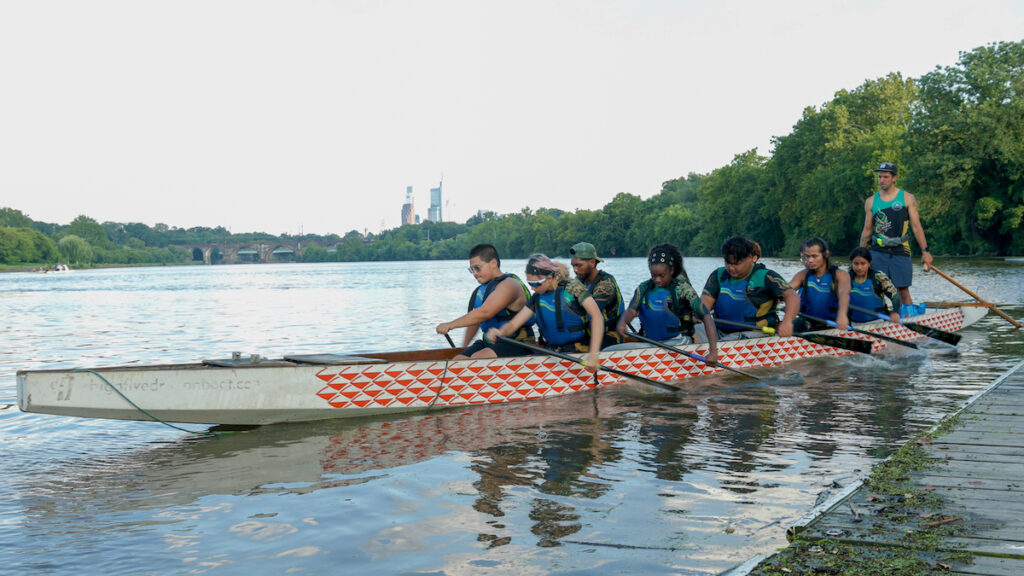
South Philly’s youth dragon boat team heads to world championships in Taiwan
A group of 12 students is traveling across the world at the end of August to compete in an ancient sport defined by teamwork, coordination and strength.
2 months ago
Listen 3:59What happens when children dance
A 2024 review of 187 studies published in the European Journal of Public Health found that dance is a safe and effective form of physical activity for children and adolescents. After reviewing 17 high-quality studies that met inclusion criteria, researchers concluded that dance provides physical and well-being benefits comparable to those of traditional physical education classes, with no negative effects when programs are of sufficient duration.
At danceLogic, the connection is more practical than clinical.
A dancer learns a sequence, performs it, sees what went wrong and repeats it in order to correct it. A programmer writes a command, tests it, finds an error and revises it.
“It’s always repetition,” Athias said. “It’s the same as homework. At some point, it becomes innate, and you know it. But it’s tough until the light bulb goes off and they say, ‘Ah, this is what they’re talking about.’”
Research suggests dance does much more than get children moving. A 2022 review assessed 20 years of research and found that dance provides physiological and psychological benefits for children and adolescents. Researchers found evidence that dance can support executive function, including working memory, inhibitory control and cognitive flexibility, while also promoting physical activity and mental wellbeing. The authors concluded that “dance is a feasible alternative to traditional physical activity” and provides “physiological and psychological benefits” for children and adolescents.
Creating, not just following
Students in danceLogic do not spend the year only following an instructor’s choreography. They help develop their own routines.
As they do develop those routines, instructors pay attention to more than if students can master the steps. They watch for growth in balance and coordination, whether or not students become more comfortable moving through increasingly complex choreography, how well they retain what they’ve learned from week to week, and if they’re beginning to collaborate more confidently with one another.
The goal isn’t simply to dance. It’s to build the same habits of practice, creativity and persistence students will use later when solving problems through code.
That creative control is an important part of the program, Kennedy said. Students have to make choices, communicate their ideas and work with others to turn separate movements into a complete performance.
As students gain experience, they may also take on leadership roles by teaching steps or helping newer participants.
Athias said the program began placing greater emphasis on group collaboration after instructors saw experienced students step forward.
“It brings out some of the leadership stuff that they probably didn’t think they had,” he said. “They can stand up and teach and help the other young ladies coming in.”
That confidence can appear in small moments, including a student demonstrating a movement or explaining an idea to the group. Shabazz said she saw those same collaborative skills carry in the coding classroom.
“Coding has a learning curve, and it’s usually easier to get through the challenges when you’re communicating,” she said. “It helps with teamwork because you’re asking questions, helping each other and solving problems together.”
She said dance worked much the same way. Students helped each other learn choreography, practiced difficult movements together and built confidence as a group.
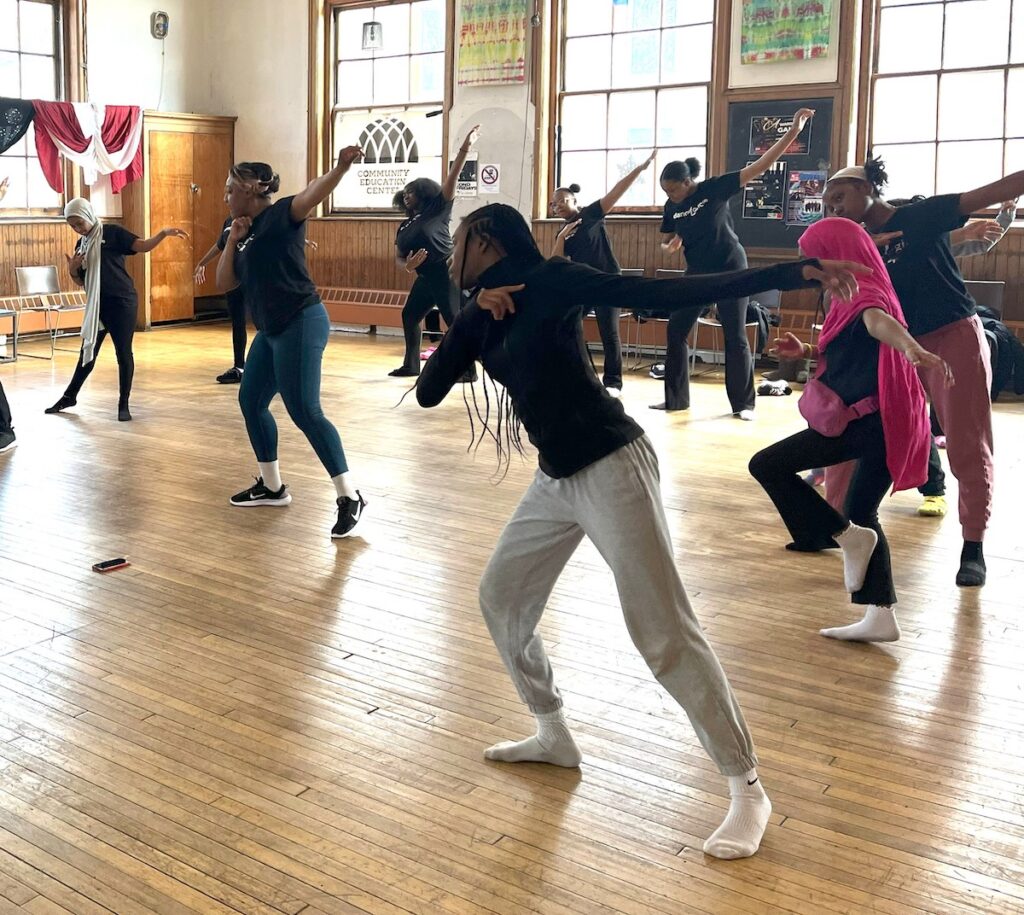
Research suggests dance does boost confidence; a review found that dance interventions helped children and adolescents improve “self-trust, self-esteem, self-expression and perception of dance abilities.” The authors concluded that “dance may be a valuable approach to strengthen aspects of the self,” suggesting that structured dance programs can help young people build confidence alongside physical and cognitive skills.
Student Jennah Wims, 11, agrees. She shared in a student video that she used to be shy about dancing in public.
“When I made my own dances and showed up, I was more confident,” Wims said.
Jamie Dixon’s daughter, Juhlia, recently completed a semester at danceLogic. She said her daughter learned how to build and perform routines while developing teamwork, confidence and discipline. She said the program teaches dancers to be aware of their surroundings, give one another space during performances and understand how each person’s movements contribute to the group skills she saw on display during the end-of-year performance.
“Introducing kids to different types of art is really important at WestPark; it gives children a chance to showcase their talents, not just to parents and their friends, but to the community,” Dixon said.
In the coding portion of class, beginners learn foundational concepts and languages. Students who progress beyond the introductory material may begin creating websites and using their skills for practical projects.
Those lessons stayed with Shabazz. Now a junior studying computer science at the University of Delaware, she said many of the concepts introduced through danceLogic became familiar again during her first year of college.
“A lot of the fundamentals I learned [in college] weren’t new to me,” she said. “It was more of a refresher, rather than something that was completely new.”
Student Taylor Bullock, 13, said that coding has helped her with school and critical thinking.
“It helps you think better,” Bullock said in her post-class review.
The program’s curriculum has changed over time as technology has evolved. Athias said West Park is exploring how to introduce students to artificial intelligence tools while continuing to teach them how technology works and how to use it responsibly.
Technology may change, but he said the larger lesson remains the same.
“This gives them the ability to say, ‘I’m not afraid of this technology,’” Athias said.
Related Content
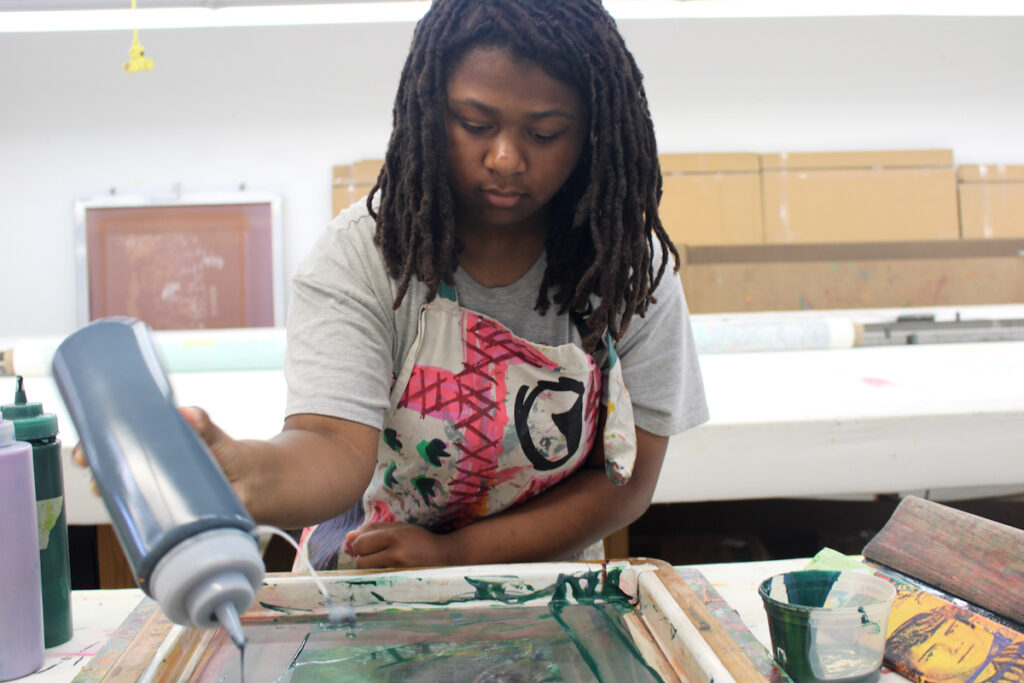
As the workshop and museum nears its 50th anniversary, its paid high school program continues teaching teens teamwork and creative expression.
3 months ago
Listen 1:11Showing children what is possible
DanceLogic enrolls up to 15 girls each semester. The program charges a $150 fee, but grants, donations and scholarships allow most students to participate at little or no cost, Kennedy said.
When each year ends at the West Park Arts Fest, students perform their original choreography and present their digital projects. Onstage, the girls will count the beats and move through the routines they built together. Then, they will stand before an audience and explain the logic behind the dance.
Founders said their program gives girls a place to practice taking risks while envisioning a future.
They can make the wrong move, lose their place, write code that does not run and begin again. They can see women in technology, watch older students lead and imagine options that once felt distant.
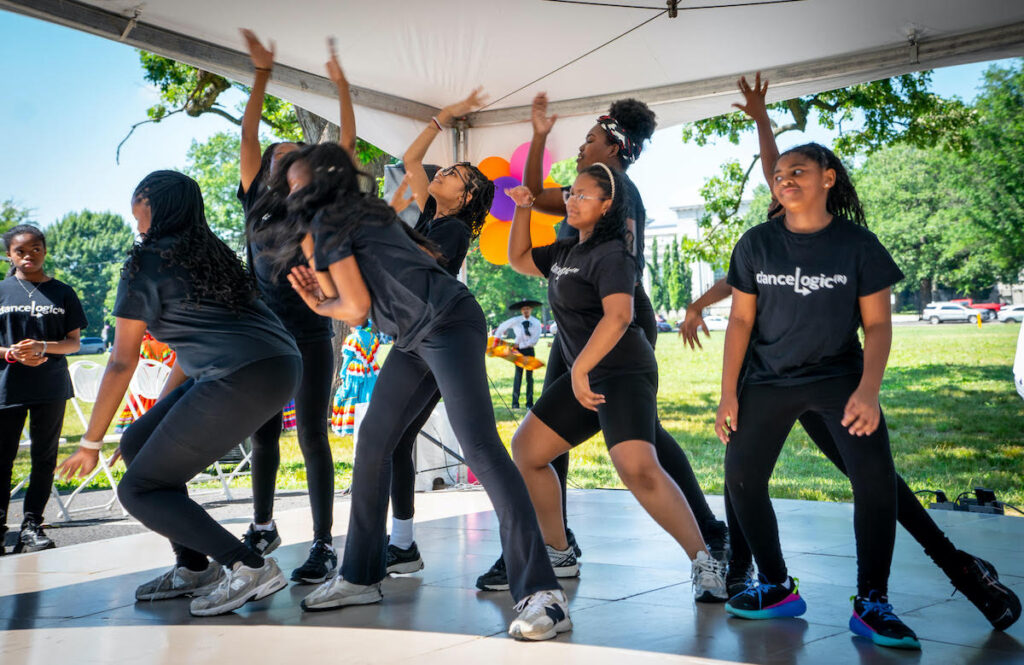
“It is not that they become an expert dancer or computer programmer; it is ultimately them finishing the semester with greater confidence, new dancing and coding skills, more self-confidence, and an inner sense of accomplishment to keep learning, going forward in their lives,” Gooden said.
Athias said that even if only one student chooses a path she had not considered before, it represents one more opportunity than she would have had without the program.
“It opens up the opportunity to say, ‘I can be something else, or I can do something. I can go to college,’” he said.
Shabazz agreed that exposure, not recruitment, is what matters most.
“You don’t want to force girls into math or computer science just because the field isn’t diverse,” she said. “The main goal is to expose them [to coding], so they know it’s even an option in the first place.”
Editor’s Note: This story has been updated to correct the name of student “Taylor Bullock,” who was previously listed as “Taylor Buck.”
WHYY News is partnering with independent journalists across New Jersey to spotlight the people, communities, cultures and distinctive places that shape the Garden State. This work is made possible with support from the Geraldine R. Dodge Foundation.

Get daily updates from WHYY News!
WHYY is your source for fact-based, in-depth journalism and information. As a nonprofit organization, we rely on financial support from readers like you. Please give today.
Part of the series

New Jersey diaries: From shore towns to small towns
WHYY News is partnering with independent journalists across New Jersey to spotlight the people, communities, cultures and distinctive places that shape the Garden State.
Part of the series

Creativity Sparks Success
WHYY News explores the impact that creativity and arts programming has on the development on school-aged children.
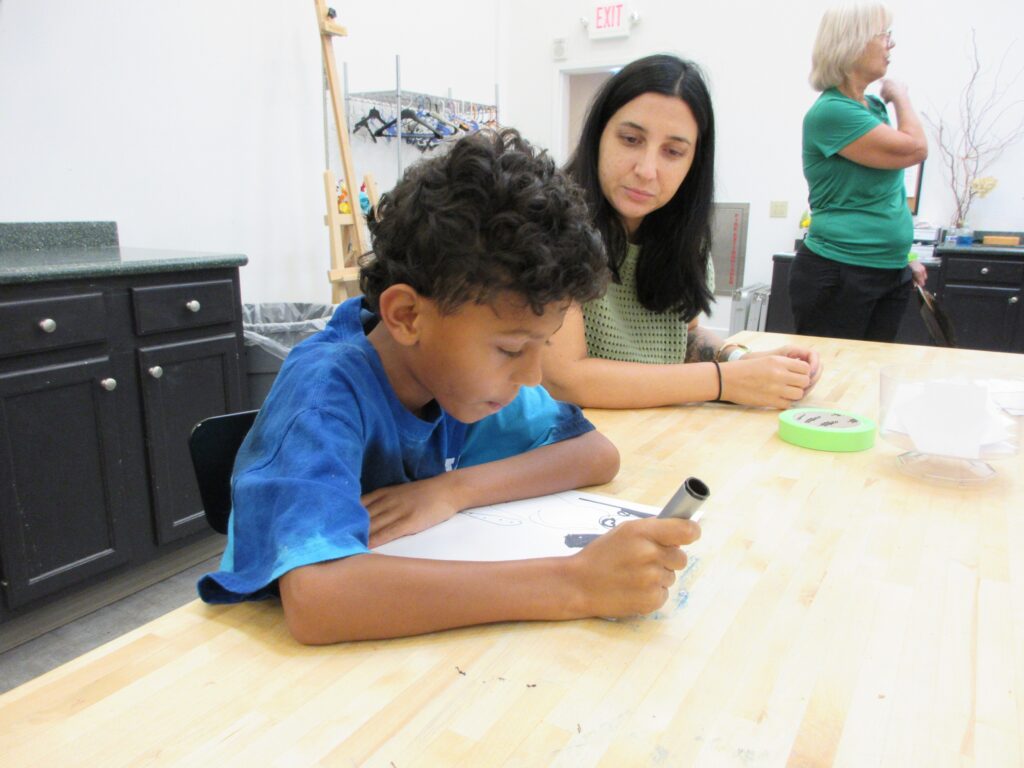
New Jersey community arts programs fill gaps in kids education and spark creativity
When arts programs are limited in programming and time in the traditional classroom, community arts programs step up to round out exposure.
2 weeks ago
Listen 2:41
The Yes! And…Collaborative Theater program guides teenagers to devise an original play for the Philadelphia Fringe Festival.
1 month ago
Listen 3:04
South Jersey woman turns health scare into dream bookstore in Bordentown
Austen’s Shelf is opening a permanent New Jersey bookstore as readers increasingly seek independent bookstores centered on community and connection.
5 months ago