This play conceived by teens in Philadelphia’s Germantown neighborhood could be the ‘ultimate toolkit’ toward becoming better adults
The Yes! And…Collaborative Theater program guides teenagers to devise an original play for the Philadelphia Fringe Festival.
From Philly and the Pa. suburbs to South Jersey and Delaware, what would you like WHYY News to cover? Let us know!
After a global apocalyptic disaster, survivors have divided themselves into warring tribes, clashing over what’s left of the world.
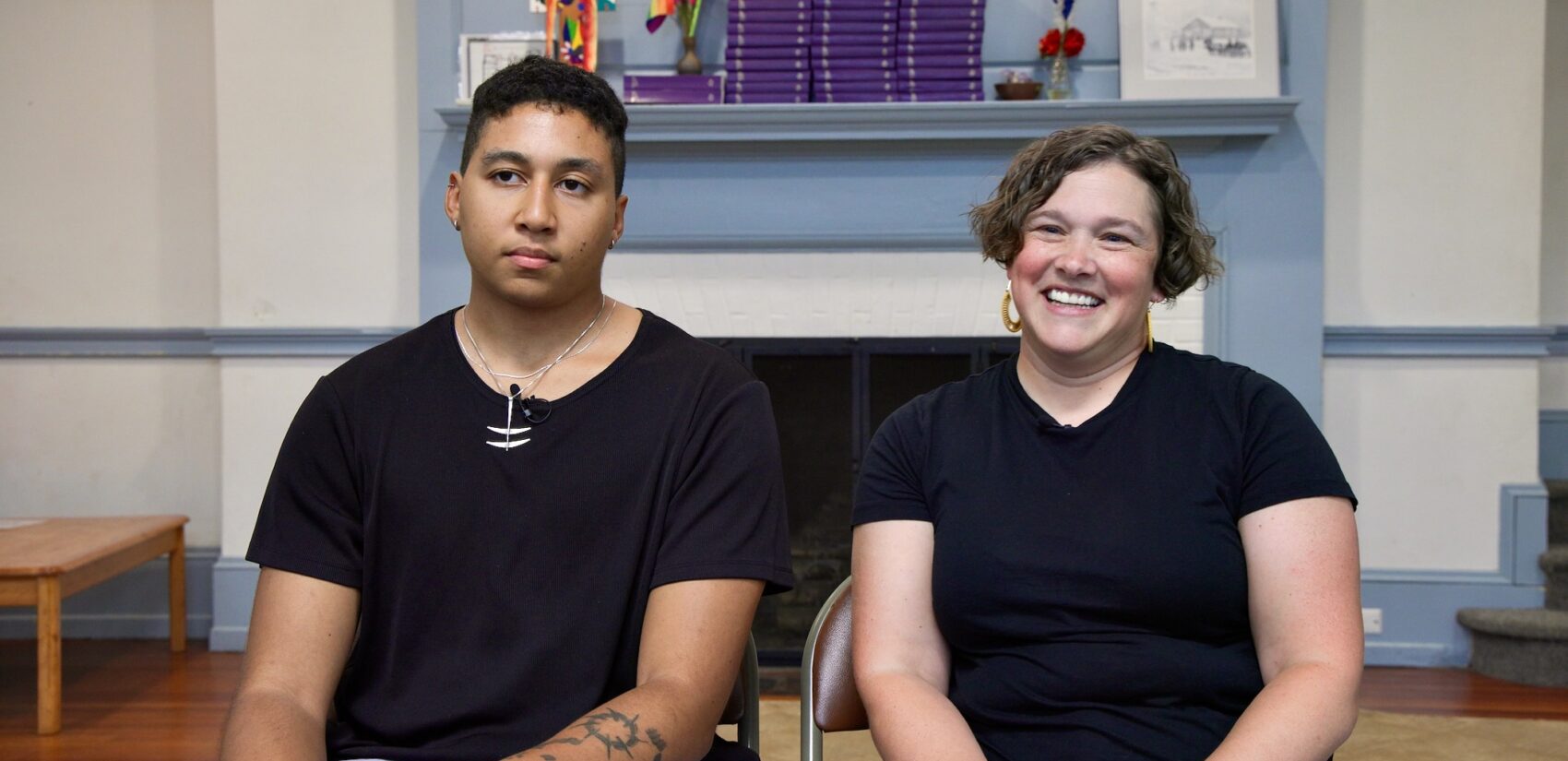
“It’s 30 years after this big disaster called The Reckoning,” said Chedani Presley, 14. “The three factions decided on three different ways of living.”
Nola Larson, 16, chimed in:
“The world has flooded and that’s how people are living now. Their mindsets have separated everyone into these three factions: Adaptation, Restoration and Ocean Dwellers.”
Zion Nalah Petty, 16, wraps up the story.
“A whole bunch of communities find a way to clash, but in the end learn to come together to get over their differences.”
The latest big screen blockbuster?
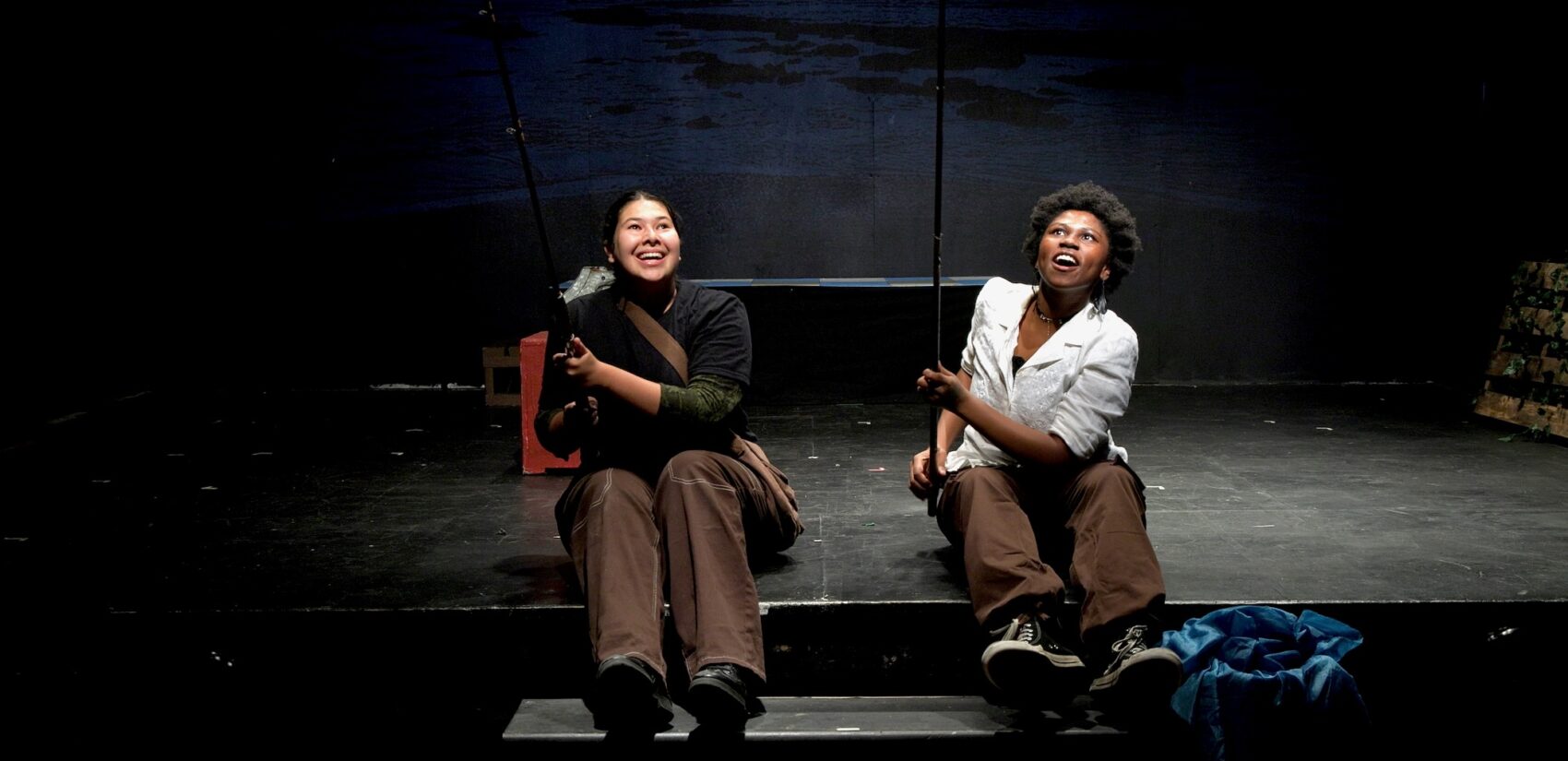
Nope. An original play devised by teenagers in the Shadow Company of Yes! And…Collaborate Arts, a youth theater program based in Philadelphia’s Germantown neighborhood. Thirteen teenaged co-authors devised and performed the play, “When Tides Collide,” for the Philadelphia Fringe Festival.
The play is more than a creative enterprise. The collaboration that brought it about challenged its young creators to develop adult skills, and leave them better for it.
The program is one of the only ones in the Greater Philadelphia region where teenagers devise and perform an original play for a public audience, according to Program Director Gabriele Preston.
“I am always asking them to reflect on: What kind of story do you want to tell? What are the kinds of stories that you resonate with?” they said. “Their ability to develop their own stories is integral to our mission of developing them as collaborators and also as citizens in the world.”
Stories on the minds of teenagers
The young people in the program took their collective interest in mythic and dystopian fiction — including the “Hunger Games” franchise, “The Last of Us” video game, the musical “Hadestown” and the Percy Jackson fantasy novels of Rick Riordan — and folded them into their real-life concerns about climate change and divisive politics.
“There was definitely a lot of discussions of, ‘We want it to be a cautionary tale,’” said Executive Director Christine Herrman. “But they wanted a dark comedy-style production in order to tell that cautionary tale.”
Is “When Tides Collide” funny?
“It’s what 13 teens have agreed is dark comedy,” Preston said.
View this post on Instagram
A team of professional theater artists offered guidance, but the concepts, writing and performance were achieved through a nearly yearlong collaborative process among the teens themselves.
“We believe strongly that our stories are better when they involve lots of different voices,” Herrman said. “Our stories go further because our imaginations are bigger when we’re combining all of our different imaginations together. We want to give the kids the tools to be good collaborators in all different aspects of their lives.”
The science of playacting
Theater and teenagers were made for each other, said Thalia Goldstein, director of Applied Developmental Psychology at George Mason University.
“The adolescent brain is turning away from the known and turning towards the new. That is what the neurological pathways are doing,” she said. “Theater becomes this safe space for teenagers to walk into, try on a whole bunch of different identities, see which one feels good to them.”
Goldstein wrote “Why Theater Education Matters” (2024), a book-length study of the impact of theater on youth. As research, she visited over 50 teen theater classes across the country and across socioeconomic strata.
She found that acting classes can promote the neurological, cognitive and social development teenagers need to be successful in school and life. Skills tested included decision making, collaborative thinking and mental agility. Goldstein describes theater as the “ultimate flexible toolkit” for education.
“Theater requires you to have a physical understanding of your body and other people’s bodies in space and time and movement,” Goldstein said. “It requires you to think deeply about the mental states of characters and other people. It requires you to work together and have a sense of collaboration. It requires reflection and metacognition.”
While researching her book, Goldstein did not visit the Germantown program. Nevertheless, what the teens were experiencing aligns with her findings.
“It’s a place where, as an actor, you can be just weird,” said Larson, a junior in Central High School with professional theater aspirations. “They’re helping you get to the best you can be. You can just figure it out. You can be weird. You can be making choices. I think that’s what’s helped me grow so much.”
Related Content
With ‘Kramer/Fauci,’ the Philly Fringe opens with a reminder of civic debate circa 1993
The play about Anthony Fauci and Larry Kramer takes its script directly from a C-SPAN broadcast on which they appeared 33 years ago.
1 month ago
Making theater in the real world
One of the motivating factors of the Shadow Company is the Philly Fringe performance in front of an audience of strangers who bought tickets for shows on the weekend of Sept. 12. Unlike other youth theater programs that might result in a performance for friends and family, the Fringe feels more real.
There are other Fringe productions that involve youth, but Yes! And is the only one where kids make and perform the show. Fringe CEO Nell Bang-Jensen would like to change that.
“We’re seeing now more than 50% of our audience for the festival identifying as Gen Z or millennial. I’m figuring out how we can go even younger, to the teenagers,” she said. “I’m a believer that you fall in love with the arts by having the opportunity to participate in some way.”
Bang-Jensen has spoken to Goldstein about possibly working with FringeArts, which produces the Fringe Festival, to develop a youth education program to make theater more accessible.
“The beauty of Fringe and self-producing work is that you don’t have to wait for someone else to give you permission,” she said. “You don’t have to go on 900 auditions to do a show. You can create it yourself.”
Playwrighting is a messy business
Petty, who attends Philadelphia Virtual Academy, learned that dreaming up a play is easy. The hard part is making it coherent.
“The idea is always the easiest part because you can just put in a whole bunch of random things,” she said. “But then it’s trying to turn it into an actual story and make it make sense for anyone else to see it.”
For “When Tides Collide,” the 13 teenagers regularly split into small groups for 15-minute writing sessions to work on scenes. The groups sometimes devolved into excited chatter about anything and everything except the play.
“We just feed off of each other’s energy,” Petty said. “We’re like, ‘OK, I think I want to be doing something else right now.’ So, we just make jokes constantly until we end up wasting time. Then we realize we have to get stuff done.”
The Shadow Company works slowly, but with patience and small miracles the script gets written, the blocking gets set, the choreography is learned and the curtain rises.
“It’s so amazing, seeing a scene or an idea and being, like, ‘Wow, I put that in there,” Larson said.
“When we first started writing I had just read ‘Parable of the Sower’ by Octavia Butler, and Gabriele was, like, ‘Here’s like the prompt for you.’ I was like, ‘Guys: post-apocalyptic world, new society?’ Seeing how what I said was important and my friends were, like, ‘We want to take that and run with it.’ That’s what makes it different from just doing a school musical or a theater camp.”
In the short term, that collaboration produced a play. Over time, Herrman sees it producing better human beings.
“Its important to learn how to listen well to people, especially people from whom you may have a very different opinion,” Herrman said. “It’s also really great for kids to get that experience of: How do you build something as a collective? You have to be taking another idea and be willing to change your idea and see where that can take you.”
Editor’s Note: This story is part of a series that explores the impact of creativity on student learning and success. WHYY and this series are supported by the Marrazzo Family Foundation, a foundation focused on fostering creativity in Philadelphia youth, which is led by Ellie and Jeffrey Marrazzo. WHYY News produces independent, fact-based news content for audiences in Greater Philadelphia, Delaware and South Jersey.
-
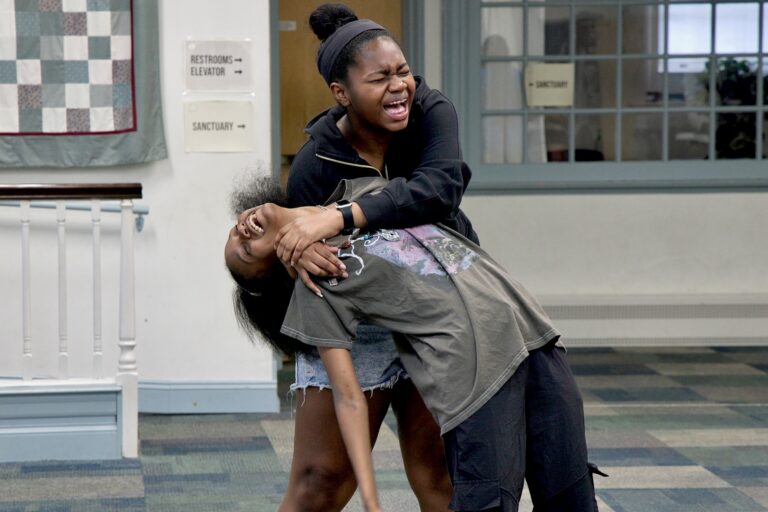
Students clown around during warmups at the Yes! And...Collaborative Arts building in Germantown. (Emma Lee/WHYY) -
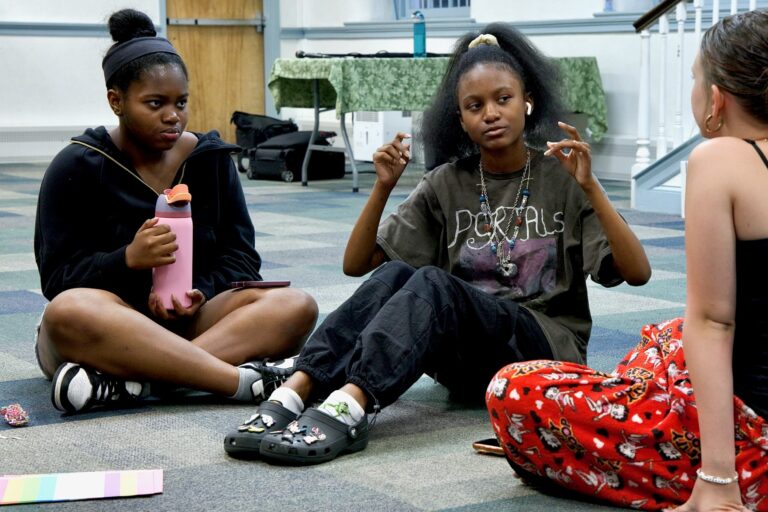
Students write the script for a play they will perform at the Fringe Festival. (Emma Lee/WHYY) -
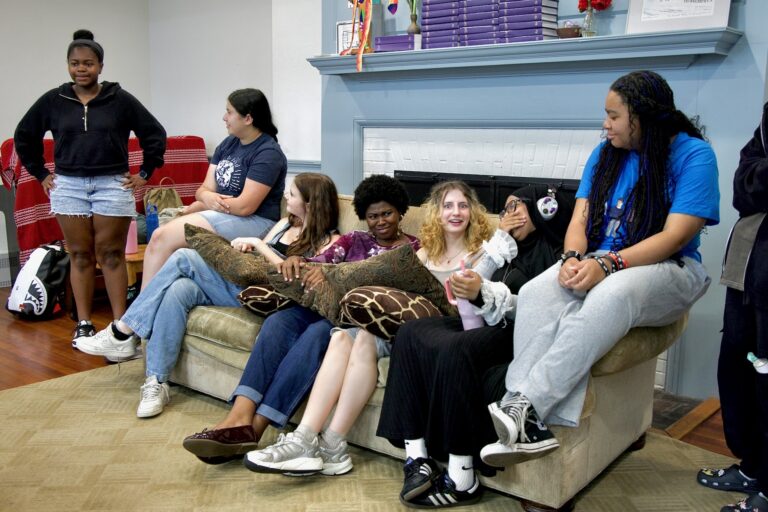
Shadow Company students start a session by sharing their highs and lows at the Yes! And...Collaborative Arts space in the Germantown Mennonite Church. (Emma Lee/WHYY) -
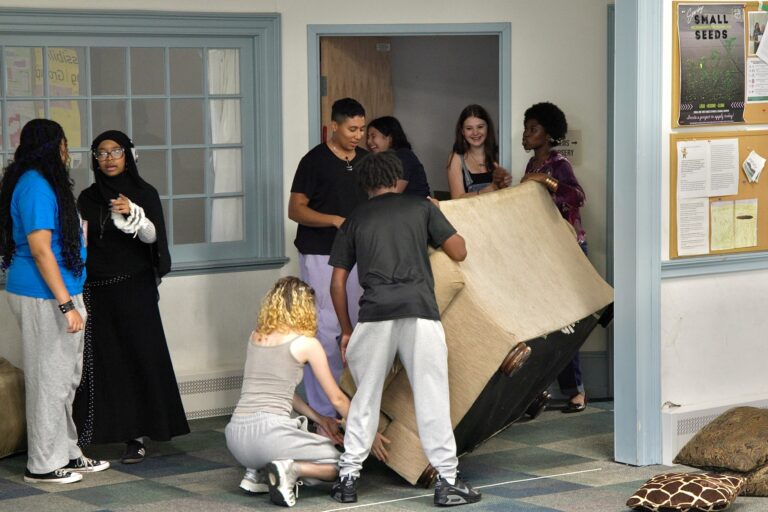
Teen performers decide that a couch is called for and work together to bring it into their meeting space at Yes! And... Collaborative Arts in Germantown. (Emma Lee/WHYY) -
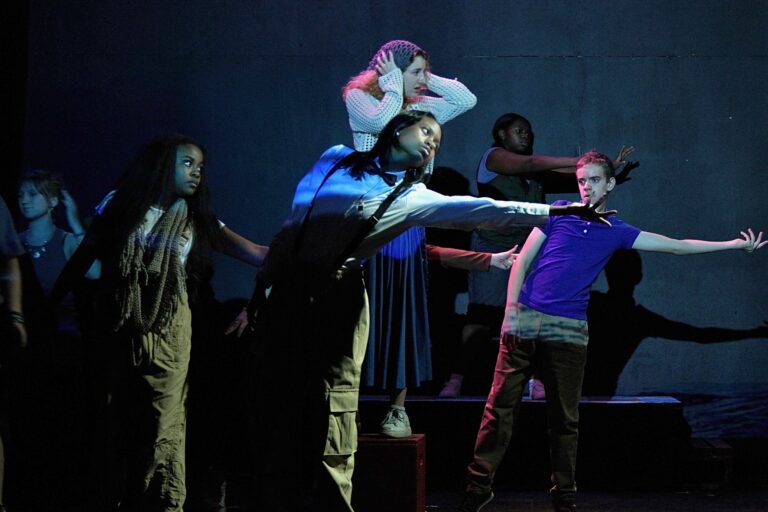
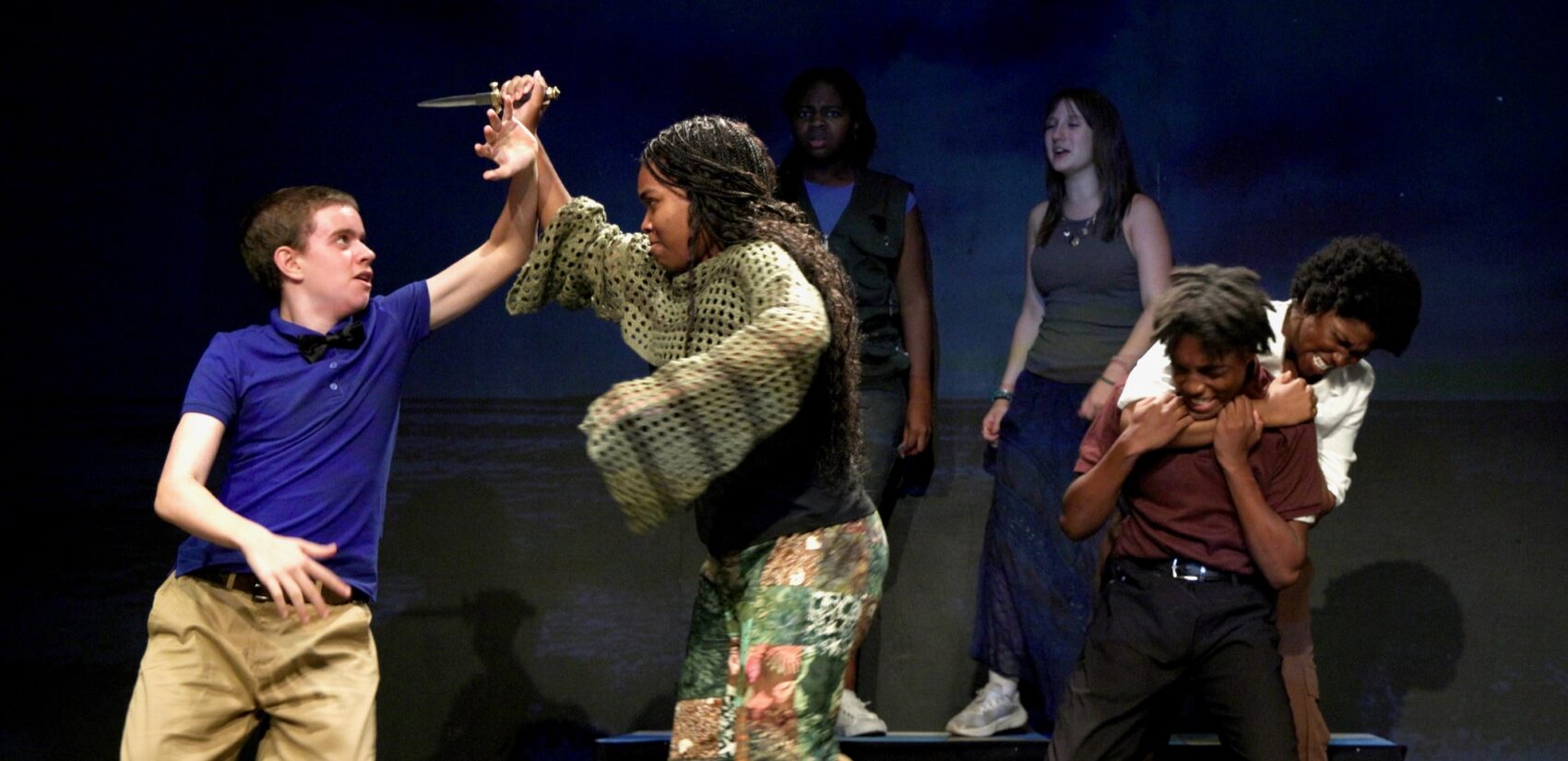
''When Tides Collide,'' written and performed by high school students, is set in a post-apocalyptic world where survivors split into factions and fight for scarce resources. (Emma Lee/WHYY) -
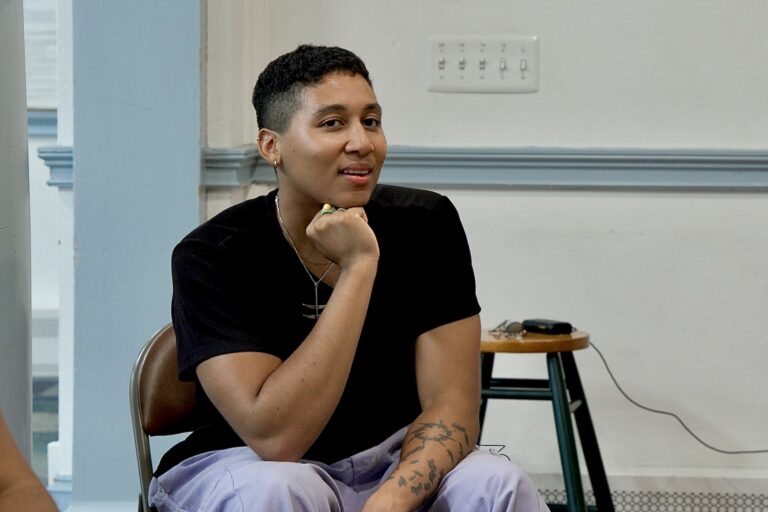
Gabriele Preston is program director for Shadow Company, a performing arts company made up of high school students. (Emma Lee/WHYY) -
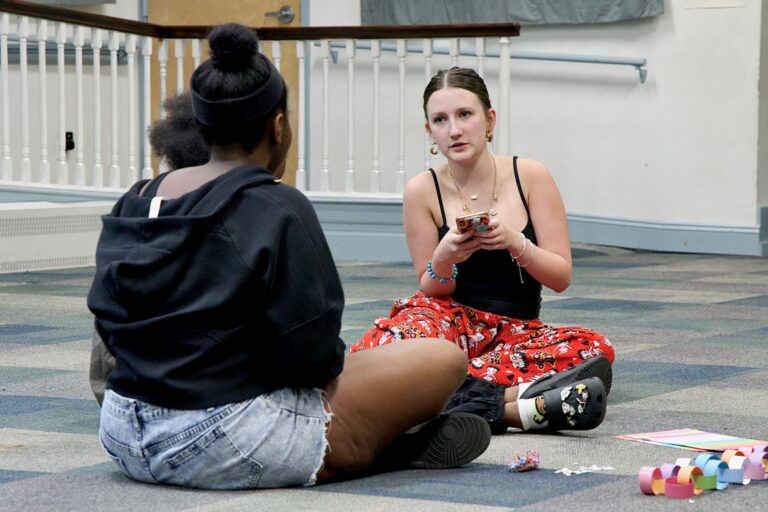
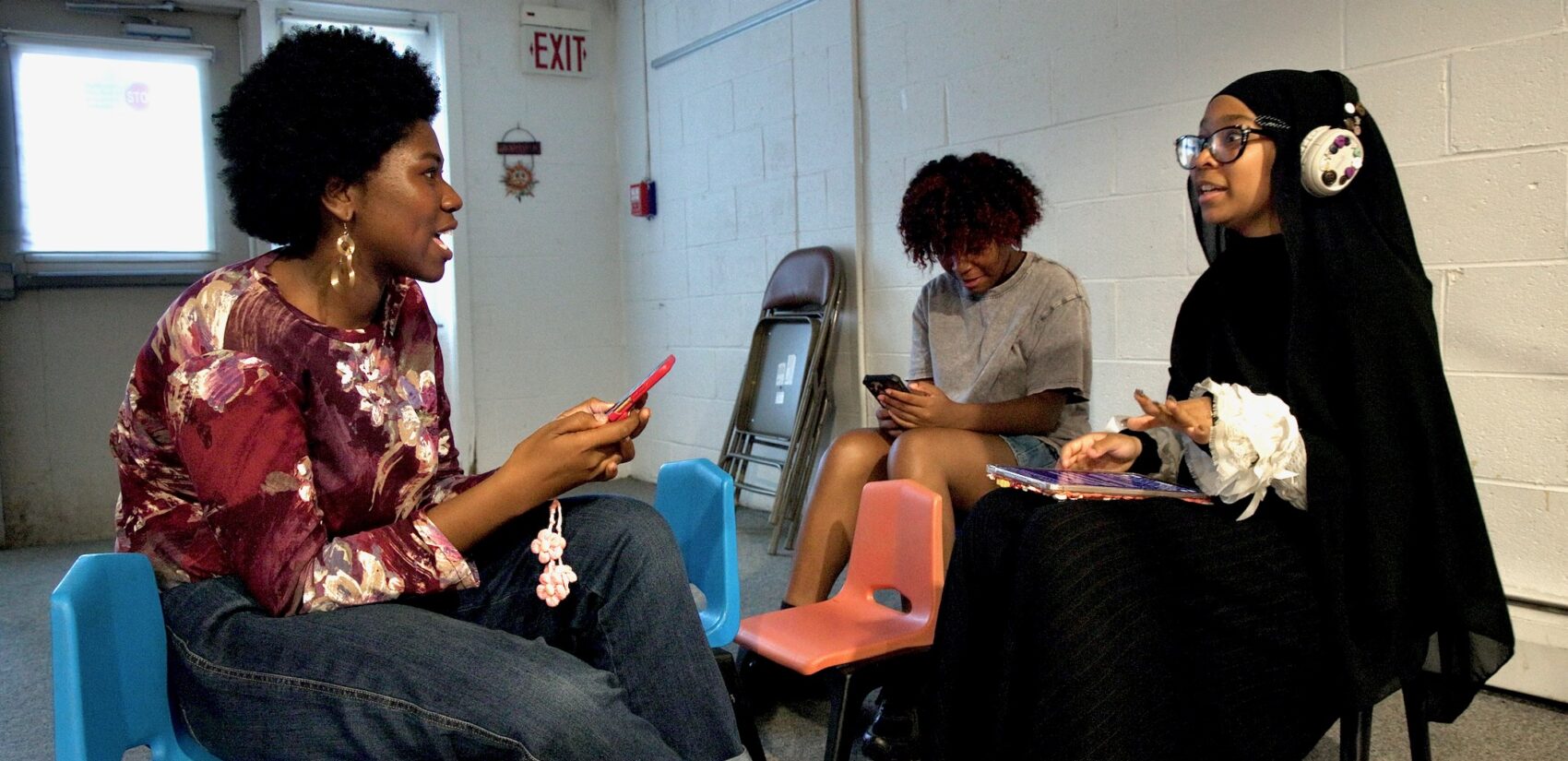
Nola Larson (right) works with other high teens to write the script for a play they will perform at the Fringe Festival. (Emma Lee/WHYY)

Get daily updates from WHYY News!
WHYY is your source for fact-based, in-depth journalism and information. As a nonprofit organization, we rely on financial support from readers like you. Please give today.
Part of the series

Creativity Sparks Success
WHYY News explores the impact that creativity and arts programming has on the development on school-aged children.
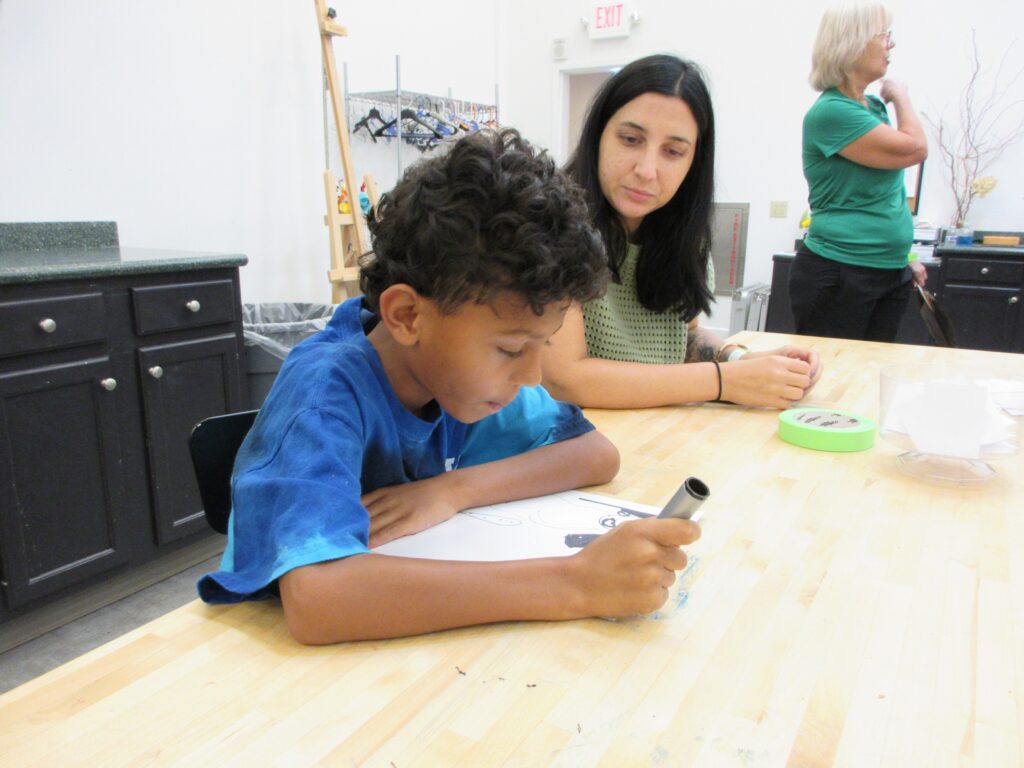
New Jersey community arts programs fill gaps in kids education and spark creativity
When arts programs are limited in programming and time in the traditional classroom, community arts programs step up to round out exposure.
1 week ago
Listen 2:41
Joe Torsella goes from Pa. treasurer to the Philly Fringe Fest in his first one-man show
A politician who grew up in theater, Torsella mixes his two passions in “Declaration.”
1 month ago
Listen 3:41
With ‘Kramer/Fauci,’ the Philly Fringe opens with a reminder of civic debate circa 1993
The play about Anthony Fauci and Larry Kramer takes its script directly from a C-SPAN broadcast on which they appeared 33 years ago.
1 month ago