Philadelphia School District voter summit gives students hands-on civics lesson ahead of Pa. election
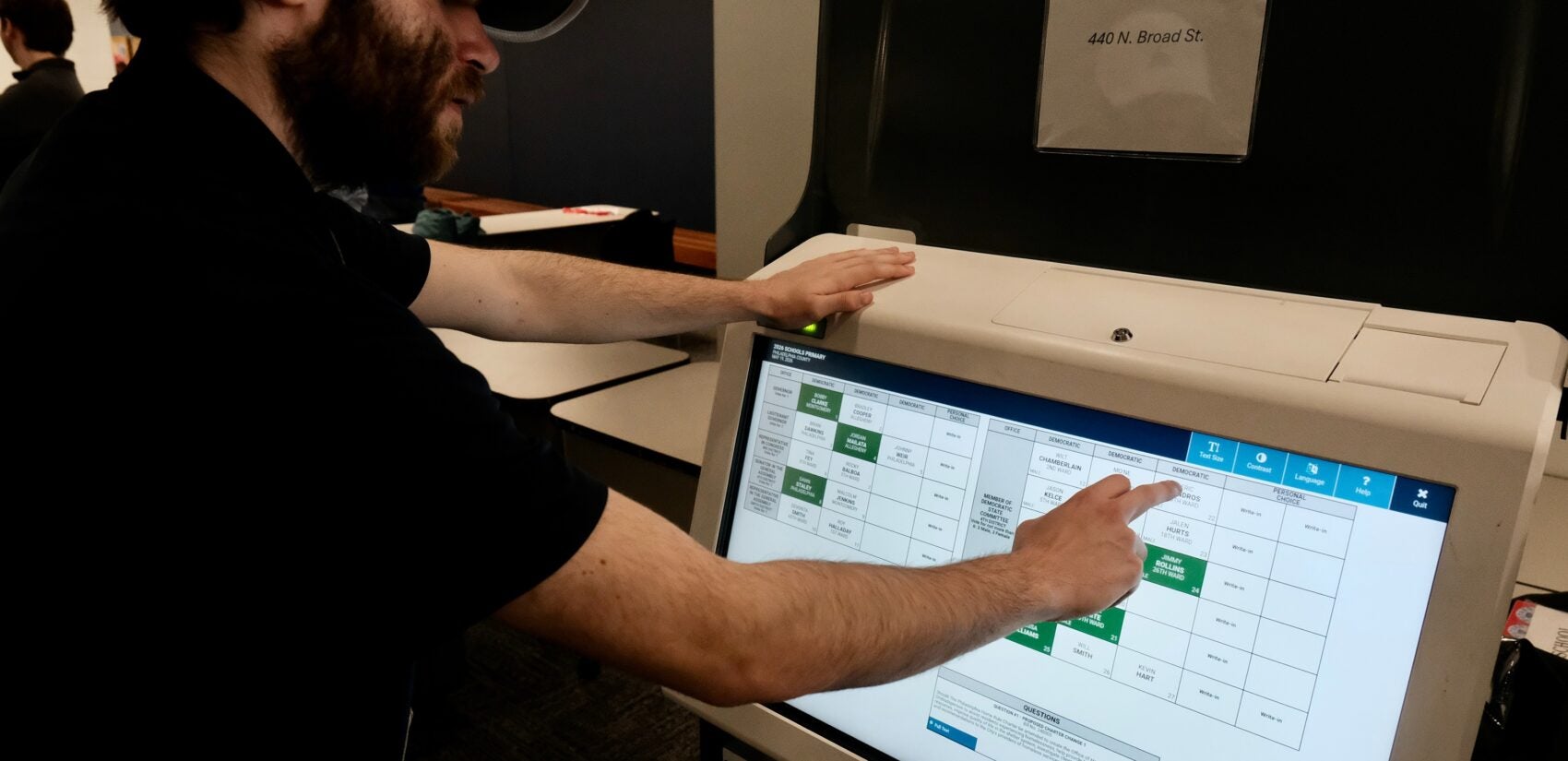
Young Philadelphians showed off their civics projects, participated in workshops about local elections and got hands-on experience with a voting machine.
From Philly and the Pa. suburbs to South Jersey and Delaware, what would you like WHYY News to cover? Let us know!
Over 100 Philadelphia high school students on Tuesday learned what it means to be informed, active citizens at the district’s annual Voter Education Summit.
Community organizations led workshops on electoral rights, and city workers demonstrated how to cast a ballot on voting machines.
Demonstrating civic engagement
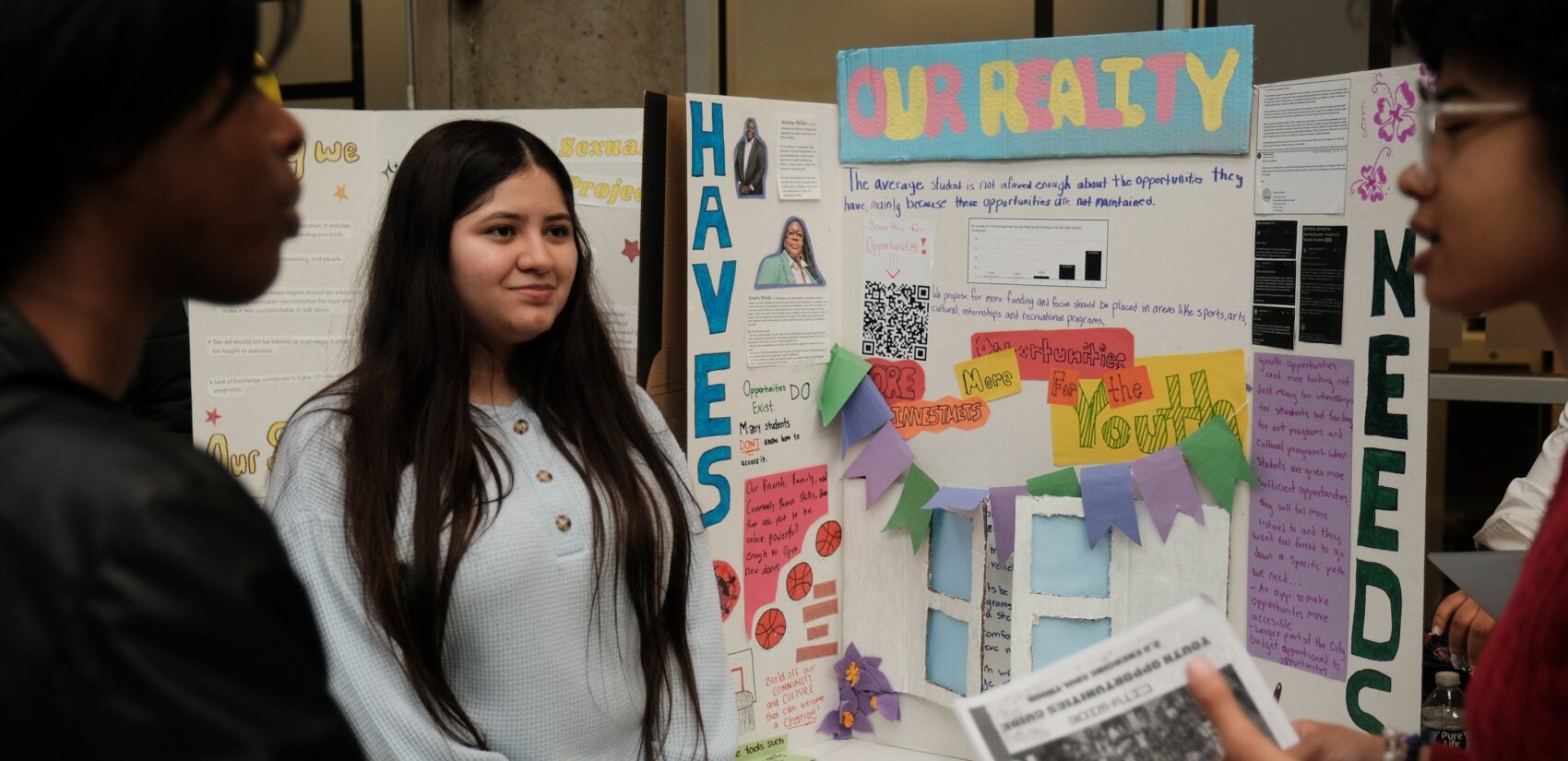
Students from Academy At Palumbo displayed five civic-focused projects. Each class of seniors selected an issue of importance to students, from community spaces to opportunity gaps, and explored how they would work to address the problem.
In the past, Charlie McGeehan, who teaches honors social science, has taught a more traditional civics curriculum, starting with the basics of government and then moving to apply that knowledge to students’ lives. Over the years, however, he has shifted this project to be more about “action civics.”
“I realized that I should really flip it,” McGeehan said. “Focus on issues [the students] care about and let them learn about how government works and how government interacts with it through those issues.”
Emil Alexandrowicz’s project addressed public school funding allocation, proposing that students should have more of a say in the process. The senior and his classmates created surveys and polled their peers about where they think money should be focused.
According to their research, Alexandrowicz said that a large number of students said that their school had average to below-average funding for classrooms, bathrooms and essential resources.
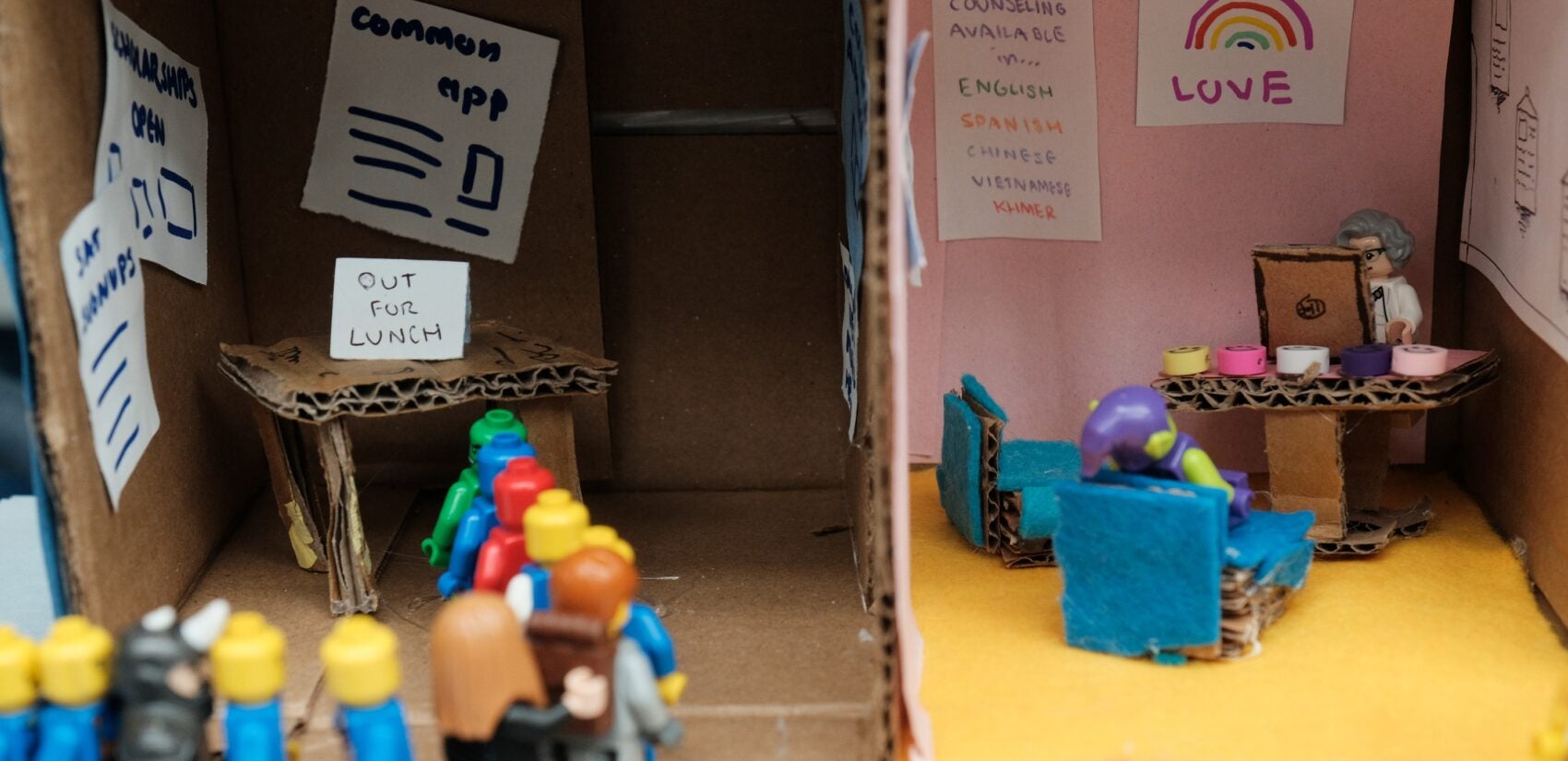
To draw attention to funding disparities, the class created dioramas to show two sets of classrooms, before and after implementing their ideal changes, including more supplies and areas for students to decompress.
Alexandrowicz said he thinks that implementing these changes in his school could have a ripple effect, as the new additions could inspire other schools to do the same.
“I have a little brother who’s a freshman in high school now,” Alexandrowicz said. “I feel like if I’m able to draw attention to this, it’ll make his experience in high school better.”
Related Content

Young Philadelphians are finding success with PA Youth Vote, tipping peers toward civic involvement
Through the nonpartisan nonprofit, students are working on projects to improve civic education and to motivate young people to vote.
1 month ago
Getting young people engaged
Students participated in a variety of civics workshops throughout the summit, learning about the importance of votes and how to participate in local elections.
Sam Forman, representing the National Liberty Museum, ran a workshop highlighting the importance of free assembly. Students learned about third spaces — social settings beyond home and work — and how various groups show solidarity through the use of objects like buttons and pennants.
Forman said he thinks it’s a misconception that young people do not care about elections. It is easy to cite low turnout or registration numbers, Forman said, but the real problem is a disconnect between young voters and what they think civic action is.
“Young people care about issues,” he said. “They care about all the same things that the rest of us care about.”
If young people are educated and shown that participation can be as simple as gathering in community spaces, he said, it can ground them as voters and make civic action less daunting.
“Civic actions are for me, I am already taking them,” Forman said. “I am worthy of voting and all these other things.”
Related Content
A young Pa. state representative candidate is giving his peers hands-on campaign experience
Leo Solga’s new internship aims to expand civic literacy and give other young people the tools they need for a future run for office.
3 weeks ago
Voting your interest
Councilmember Isaiah Thomas, who serves as the chair of Philadelphia City Council’s education committee, gave the keynote speech at the summit. He compared the act of voting to ordering in a restaurant or buying an item of clothing at a store.
A person would not just give Nike their money and let the company pick out their sneakers for them, Thomas said. If you pay for something, you should get the choice of what you receive.
He explained that Americans pay taxes, so citizens are granted a role to play in how the government chooses to spend them through the act of voting. Someone who does not vote gives up that ability to choose, he said.
With students months away from graduating, and many wanting to continue on to college, Thomas emphasized that voting is going to have a tangible effect on their lives moving forward.
This year’s election will be critical for young people in Pennsylvania, Thomas said. The governorship is on the ballot, and whoever wins that office will directly affect the future of education in the state at the K-12 and college levels.
“You are now obligated to make real-life decisions, that’s really going to impact you,” Thomas said. “One of them is whether or not you vote this year.”
He said it is the responsibility of students to educate themselves about the candidates on the ballot and make their voices heard this November.
“Do you know that there are people who don’t believe K-12 education should be free?” Thomas said. “What we have in Philly, everybody doesn’t have that.”
Get daily updates from WHYY News!
WHYY is your source for fact-based, in-depth journalism and information. As a nonprofit organization, we rely on financial support from readers like you. Please give today.
Part of the series

Students and advocates call for expansion, not elimination, of 5 West Philly schools
A West Philadelphia rally called for the consolidation of five schools set to be closed under the school district's plan.
2 weeks ago
Philadelphia School District proposes $225 million in budget cuts. Here’s what it means
The cuts, proposed to go into effect 2026-27 school year, begin the process of eliminating a $300 million deficit.
4 weeks ago

Students and community advocates told the school board Thursday that shuttering schools affects more than numbers.
4 weeks ago
Listen 1:10