

‘Right plant, right place’: Philly Flower Show encourages adapting to climate change
Gardeners learn how to be more sustainable while adapting to climate change during the Philadelphia Flower Show.
Listen 1:04
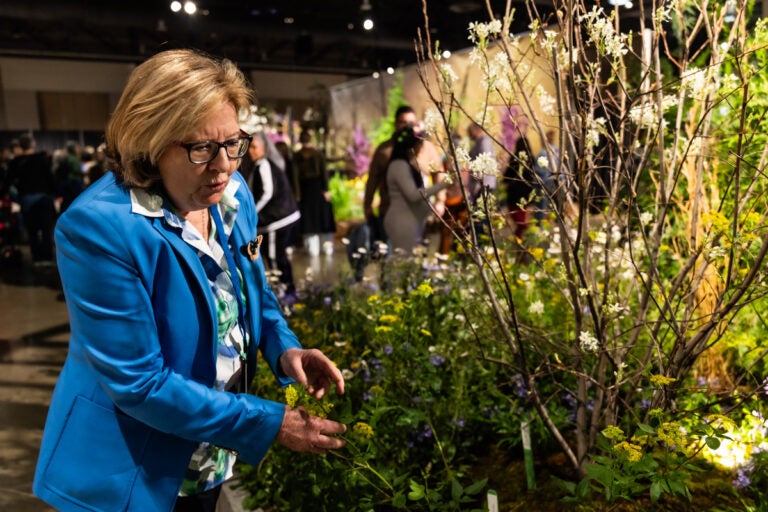
Claire Jones, an author and landscape designer, examines plants in an exhibit at the 2026 Philadelphia Flower Show (Kimberly Paynter/WHYY)
This story is part of the WHYY News Climate Desk, bringing you news and solutions for our changing region.
From the Poconos to the Jersey Shore to the mouth of the Delaware Bay, what do you want to know about climate change? What would you like us to cover? Get in touch.
As climate change increases the threat of severe weather events like heat waves, drought and flooding, gardeners are grappling with how to adapt and protect their gardens.
As the final days of the Philadelphia Flower Show wrap up, the Pennsylvania Horticultural Society is encouraging gardeners to find new ways to make their plants resilient.
During the event’s Know to Grow lecture series, experts are providing advice on sustainable gardening practices, like planting native species and helping plants thrive in a changing climate.
“We can’t garden like we have done in the past 20 years,” said landscape designer Claire Jones, one of the guest speakers at the Flower Show.
A recent climate report from the Environmental Protection Agency shows that Philly-area residents now face an additional four to six heat waves each year than they did 60 years ago.
High temperatures can cause rapid water loss, wilting, leaf scorch and stunted growth. Intense heat can also reduce the process of photosynthesis, and change the flavors of leafy green vegetables. Hot weather can attract pests like the Harlequin bug, which damages some vegetables. The invasive spotted lanternfly can increase the risk of disease among weakened trees.
Related Content
Climate Fixers: Cool solutions for a warming planet
From adapting gardens and slowing down fast fashion to clean alternatives to natural gas, WHYY News profiles some innovative climate solutions in the Philly region.
12 months ago
Jones advises gardeners to water early in the morning, use shade cloths or even install beach umbrellas over vegetable gardens. Landowners can also consider large plants like sunflowers to create shaded areas.
“My peppers were burning. They were getting sun-skulled,” Jones said, recalling the extreme July heat in her home state of Maryland. “Peppers are a plant that loves hot weather — but it’s too hot. So, I was putting umbrellas over them to shade them.”

She encourages gardeners to research which plants are more likely to thrive in certain conditions, and understand which species work in tandem. The phrase “right plant, right place” may be an overused meme, Jones said, but the concept is crucial when adapting to climate change.
There is a silver lining to the effects of a warming planet, she said, as gardeners are growing plants they wouldn’t have dreamed of planting a decade ago.
“It’s not all bad news. It’s about actionable things that you can do to mitigate this. You just have to learn how to garden a bit differently,” she said. “Be a nimble and adaptable gardener.”

The Philadelphia Flower Show also promoted the importance of planting native species as the region faces habitat loss, which reduces the number of birds and insects that visit gardens. Invasive species like burning bush have choked out native plants in the area, and don’t support pollinators.
Andrew Bunting, the society’s vice president of horticulture, encourages gardeners to buy pollinator plants and native shrubs that improve biodiversity and to reduce their lawn area as much as possible.
He advises people to plant mountain mint, which grows quickly and has an abundance of pollinators, or butterfly milkweed to attract monarch butterflies, which are facing population declines.

Bunting also said using electric mowers instead of gas, and avoiding pesticides, can also make a big difference on the environment.
“If every homeowner just did one thing, collectively, that would have a positive impact on the environment,” he said.

Get daily updates from WHYY News!
WHYY is your source for fact-based, in-depth journalism and information. As a nonprofit organization, we rely on financial support from readers like you. Please give today.
Part of the series
Trump administration proposes new research for microplastics, pharmaceuticals in drinking water
The EPA has proposed adding microplastics and pharmaceuticals to a list of priority contaminants.
1 day ago
Listen 1:20
Volunteers collect over 125,000 of pieces of plastic waste from New Jersey beaches
In 2025, 83% of the trash collected from New Jersey’s beaches were made from plastic.
3 days ago
Listen 1:11
New Jersey firefighters take toxic PFAS firefighting foam off their shelves
New Jersey has partnered with Revive Environmental to remove and destroy 150,000 gallons of aqueous film forming foam.
5 days ago
Listen 1:20