

Why seasonal depression can linger even as days get longer in Philadelphia
Health experts say seasonal affective disorder symptoms can decrease in April and May, though they may not disappear entirely.

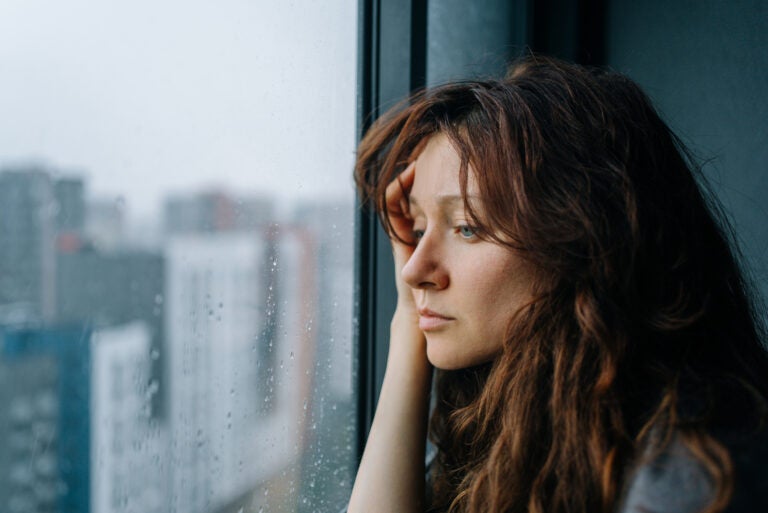
Seasonal affective disorder symptoms can continue into April and May, health experts say. (istockphoto)
From Philly and the Pa. suburbs to South Jersey and Delaware, what would you like WHYY News to cover? Let us know!
As winter transitions into spring, longer days of sunshine and warmer weather can improve one’s mood after a cold winter keeps us inside. However, for some individuals in Philadelphia, this change doesn’t happen right away.
Seasonal affective disorder, or SAD, is a type of depression linked to seasonal changes, typically appearing during fall and winter, when daylight hours decrease. Unlike other types of depression, SAD follows a predictable pattern.
“It has an annual recurrence … typically fall and winter when the days are shorter,” said Dr. George Brainard, professor of neurology at Thomas Jefferson University who directs Jefferson’s Light Research program.
But as spring nears, those feelings of depression don’t always vanish.
“Symptoms are very high still” throughout March, he said. “They begin to reduce in April and May.”
Why is seasonal affective disorder present in early spring?
The delay results from the body’s reaction to changing light. During the winter months, reduced sunlight can disrupt circadian rhythms, often referred to as the body’s internal clock. Less sunlight can also impact hormones like melatonin and serotonin, which regulate sleep and mood.
As daylight increases, those systems take time to adjust. “You get a bright day, you might get a momentary relief [from] the acute effects of light, but you’re not getting the full relief because you’re not fully in the seasonal change yet,” Brainard said. “Your body takes time to reset and re-adapt to the lengthening days.”
The lag in readjusting is most often felt in early spring, especially as temperatures fluctuate and sunny days give way to cold, gray weather.
Related Content

Feeling that holiday stress? Here are 5 tips to help ease the tension
Journaling, breathing techniques and having a safe space to retreat to can help mitigate stressful situations during the holiday season.
4 months ago
Listen 0:58Where people spend their time also affects how quickly they adjust. Many people spend most of their day indoors, limiting exposure to natural light, even when it’s available. “There’s nothing magic about daylight being present outside if you’re not exposed to it,” Brainard said. “You have to be out in it.”
In urban environments like Philadelphia, factors such as indoor work schedules, long commutes and dense building structures can further reduce daily light exposure. The artificial light we experience at night from phones, computers and other devices can disrupt sleep cycles and make it harder for the body to reset.
Around 2% to 7% of adults in the U.S. experience seasonal affective disorder each year, depending on the population, Brainard said. However, a much larger group—up to 20%—experiences milder, subclinical symptoms often referred to as the winter blues. Rates tend to be higher in northern regions, where seasonal changes in daylight are greater.
What can you do to help with seasonal affective disorder?
Health experts recommend small, consistent changes that can help make the transition into spring easier. This includes exposure to bright light during the day, spending time outdoors and maintaining a regular sleep schedule. Limiting exposure to bright blue light at night can also improve sleep quality. Light therapy, using a specialized bright-light device, is often used to treat individuals with more severe symptoms.
While some seasonal mood changes are common, Brainard said it’s important to recognize when symptoms go beyond that. “[If] you’re not coping, seeking professional help is really advised,” he advised.
He cautioned against dismissing symptoms as “just seasonal,” noting that depression, whether seasonal or not, can significantly impact a person’s well-being. As days grow longer, experts suggest that improvement will happen gradually as the body slowly adapts to more light.

Get daily updates from WHYY News!
WHYY is your source for fact-based, in-depth journalism and information. As a nonprofit organization, we rely on financial support from readers like you. Please give today.

As winter drags on, Philadelphia advocates are pushing to dispel myths about suicide risk
Research shows that rates of suicide are actually higher during the warmer months of the year, not during the winter holidays, a common misconception.
3 months ago
Listen 1:11
Plastic surgery regret — what causes it, and how to avoid it
At 21, Carla Papas was excited to get a new nose — instead, she ended up with medical bills, trouble breathing, and crippling insecurity.
1 year ago
Listen 15:29
A growing medical field looks at how skin and mental health are connected
Patients with skin conditions have long known their skin can affect their mental health and vice versa. More clinicians are exploring that.
1 year ago
Listen 10:50