

Researchers find microplastics in insects from Schuylkill River watershed
The researchers found that microplastics were as prevalent in forested parts of the watershed as they were in urban areas.
Listen 1:21
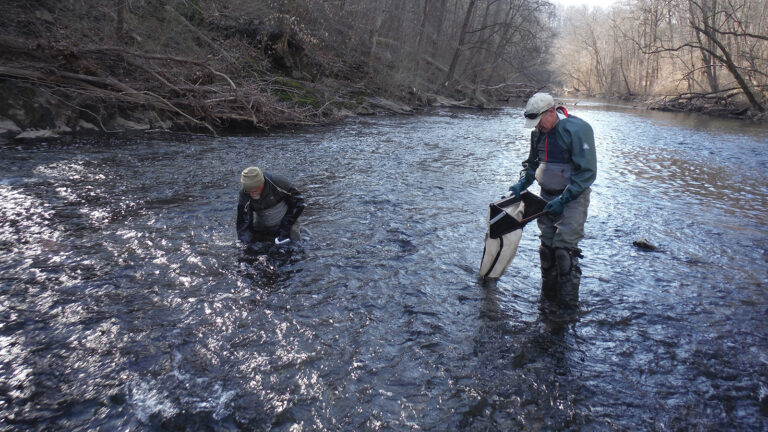
Research scientists collected insect samples from the Schuylkill River. (Courtesy of the Stroud Water Research Center)
This story is part of the WHYY News Climate Desk, bringing you news and solutions for our changing region.
From the Poconos to the Jersey Shore to the mouth of the Delaware Bay, what do you want to know about climate change? What would you like us to cover? Get in touch.
Microplastics were detected inside a third of insects across six streams within the Schuylkill River watershed, according to a new study in collaboration with California State University, Millersville University and the Stroud Water Research Center.
Researchers analyzed aquatic insects like mayflies, stoneflies and caddisflies that were collected between 1998 and 2019.
The results indicated that microplastics were prevalent across the watershed in urban and forested areas.
About 2 million people rely on the Schuylkill River watershed for their drinking water.
Microplastics can enter waterways from treated wastewater discharges, the application of biosolids on land, stormwater runoff and the dumping of trash.
“It’s a really good illustration, or a reminder, that everything we do in a watershed, whether it’s on the land or in our wastewater, whatever we’re releasing into the environment, it often just ends up in our water,” said co-author John Jackson, a senior research scientist at the Stroud Water Research Center.
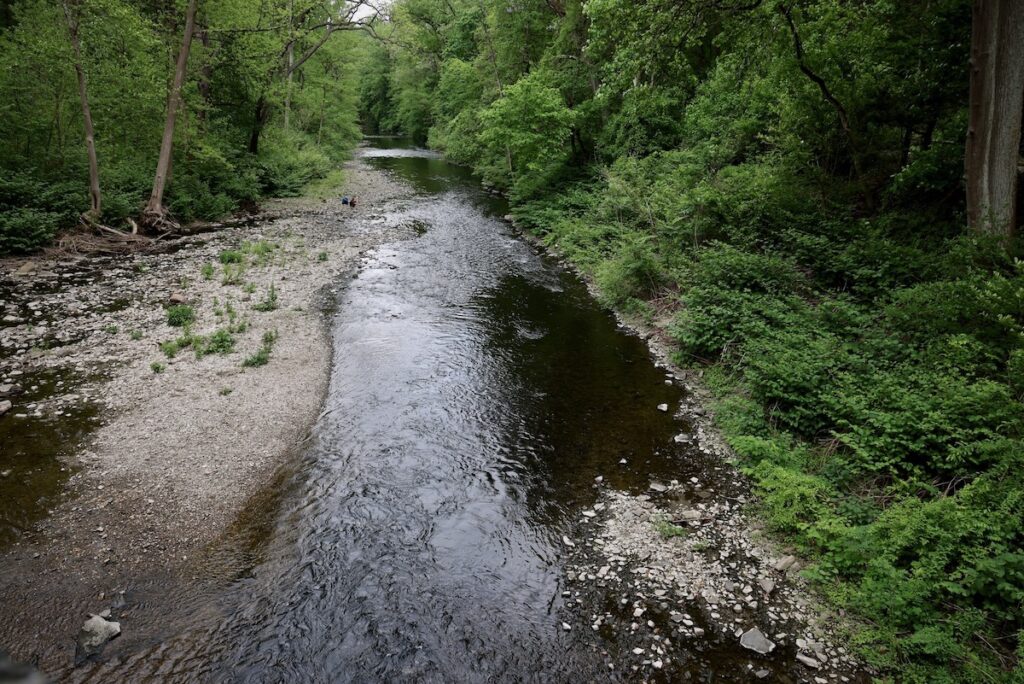
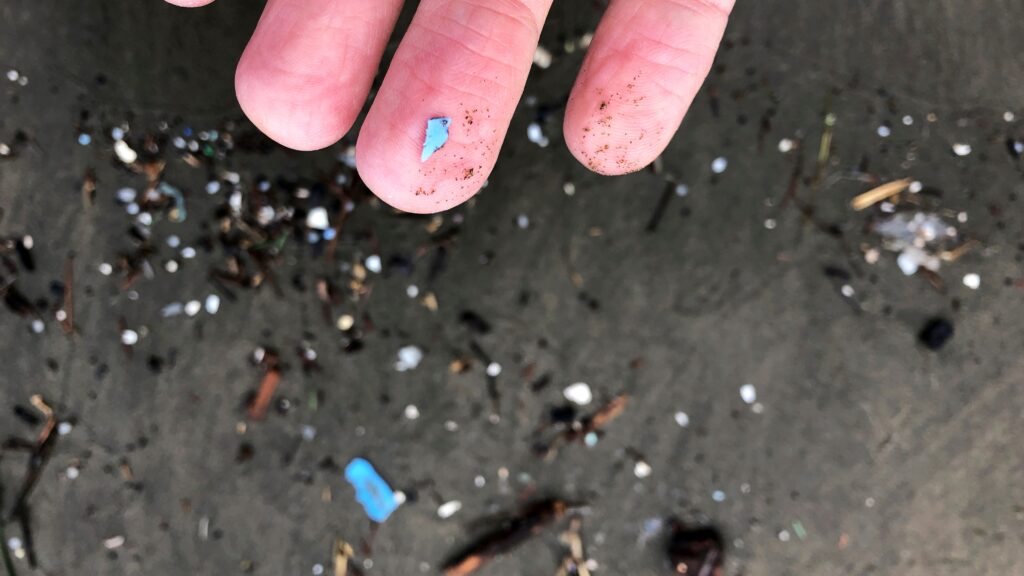
More than 400 million metric tons of plastic are produced worldwide each year, ultimately making their way to landfills and incinerators. From there, plastics break apart into tiny particles, and pollute the air, water and soil.
The particles are also discharged from industrial facilities and wastewater treatment plants into local waterways.
Microplastics and nanoplastics, which contain harmful chemicals, are often invisible to the eye and are easily ingested. These particles have been detected in the human bloodstream, brain tissue and other organs, and some researchers say exposure could increase the risk of heart attack or stroke.
Microplastics in low populated, forested areas
The researchers found that insects were most likely to ingest microplastics by eating algae that contains particles, or by feeding on fine organic silt that settles along stream edges and in pools.
Manatawny Creek, whose headwaters are well-forested and flows through Berks and Montgomery counties, showed the highest level of microplastics in insects.
Related Content
Trump administration proposes new research for microplastics, pharmaceuticals in drinking water
The EPA has proposed adding microplastics and pharmaceuticals to a list of priority contaminants.
6 months ago
Listen 1:20Clay Arango, a professor of biology at Central Washington University, has researched the abundance of microplastics among aquatic insects along the Yakima River in Washington state.
His team found no predictable increase in microplastics from upstream forested areas to the bottom of the watershed, where there is more human activity. The microplastics detected in sparsely populated areas could have fallen off the clothing of hikers and bikers, or may have traveled to the area through atmospheric patterns like storms, Arango said.
“We certainly know that plastic pollution is widespread. We have found microplastics in the top of mountain peaks in the European Alps, and we have found it at the bottom of the Mariana Trench, the deepest point on Earth,” said Arango, who was not involved in the Stroud study. “So, it’s probably fair to say that anywhere we look on the earth, we’re probably going to find plastic.”
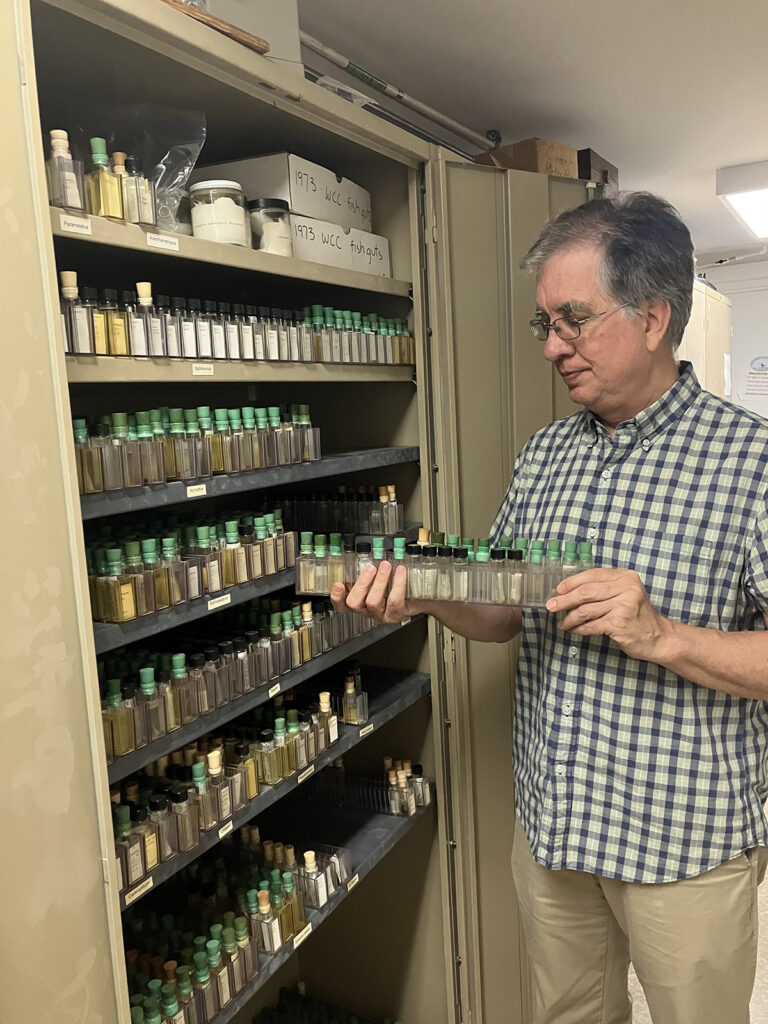
The latest research from California State University, Millersville University and Stroud offered a 30-year history of microplastics pollution levels in southeastern Pennsylvania. The study showed an increase in microplastics among insects collected between 1998 and 2010, but a decline among species collected between 2010 and 2019.
The decrease may not indicate less pollution or greater cleanup efforts, however. Jackson said it’s possible that the water flow pushed the contamination out at a faster rate than new pollution was accumulated.
It’s crucial for researchers to track microplastics patterns over time, said Samantha McBride, an assistant professor at the University of Pennsylvania who has researched microplastics.
“Some microplastics we observe today in rivers may have been released from recent sources, like a water bottle thrown in the river last week, while others originate from older plastic pollution that are still being broken down,” said McBride, who was not involved in the Stroud study, in an email.
“Being able to observe microplastics within archived species lets us look into the past and better understand how microplastics levels are changing with time,” she said. “For example, do microplastics track with current plastic production rates, lag a bit behind, or, are they accelerating due to older plastics finally beginning to break down?”
Arango said researchers are beginning to evaluate how plastic patterns in the environment respond to conditions like heavy storms or drought.
“The fact that we are just producing so much plastic and so much of it is leaking into the environment, we really probably need to start thinking about plastic as a global plastic cycle,” he said.
“And, how that plastic cycle intersects with water moving off the landscape, deposition into ocean environments and possibly even recycling of that plastic through the rock cycle in the same way that the rocks would be melted down and then moved back to the surface of the earth through volcanic activity.”

Get daily updates from WHYY News!
WHYY is your source for fact-based, in-depth journalism and information. As a nonprofit organization, we rely on financial support from readers like you. Please give today.
Part of the series
Anglers warned to not eat PFAS contaminated fish from the Wissahickon watershed
Environmental regulators found high levels of PFAS chemicals in fish tissue sampled from the Wissahickon Creek and its tributaries.
2 days ago
Listen 1:04
Hydropower parts manufacturer in Northeast Philadelphia lands federal research partnership
Kingsbury plans to test new materials for hydroelectric power equipment that can support the needs of modern-day grids.
5 days ago
Listen 1:09
EPA announces commitment to protect fish in the Delaware River
The announcement comes after environmentalists took legal action to speed up the process.
2 years ago
Listen 1:14