

Hydropower parts manufacturer in Northeast Philadelphia lands federal research partnership
Kingsbury plans to test new materials for hydroelectric power equipment that can support the needs of modern-day grids.
Listen 1:09
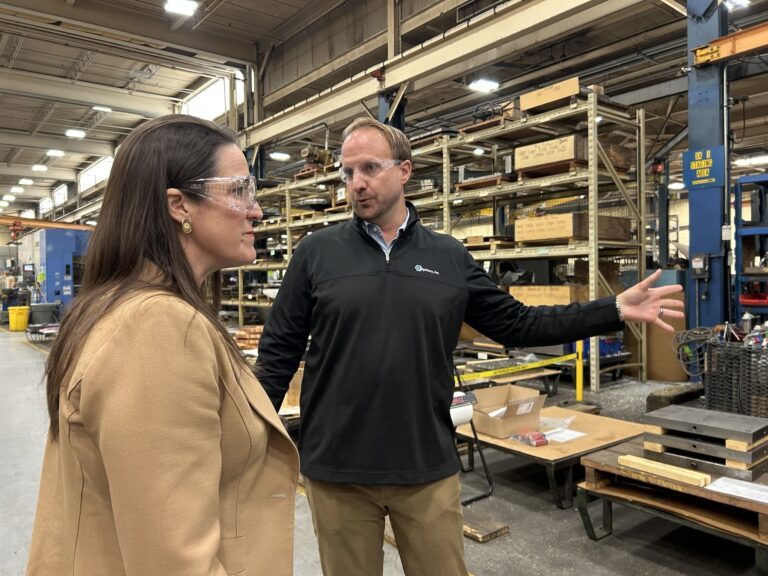
Kingsbury's Director of Engineering, Lou Krajewski (right), shows Assistant Secretary of Energy Audrey Robertson parts of the manufacturing plant in Northeast Philadelphia. (Sophia Schmidt/WHYY)
This story is part of the WHYY News Climate Desk, bringing you news and solutions for our changing region.
From the Poconos to the Jersey Shore to the mouth of the Delaware Bay, what do you want to know about climate change? What would you like us to cover? Get in touch.
Kingsbury, an equipment manufacturing company based in Northeast Philadelphia, is receiving federal support to develop the next generation of parts used in hydroelectric power plants.
The U.S. Department of Energy announced the company’s involvement in a research partnership with the Oak Ridge National Laboratory on Monday.
“One of the challenges with hydropower is that there are not many ways that you can test large new innovations in hydropower,” said Assistant Secretary of Energy Audrey Robertson during a tour of Kingsbury’s Philadelphia manufacturing facility. “We’re able to expedite innovation going from idea to manufacturing to deployment.”
The Department of Energy aims to increase energy production from hydropower and maintain and upgrade existing plants, a spokesperson said. Hydropower makes up just under 6% of the country’s electricity generation. Half of this hydropower is produced in Washington, California and Oregon.
Around 1% of the electricity generated in Pennsylvania comes from hydroelectric power, according to data from the U.S. Energy Information Administration. Most of the electricity generated in the state comes from natural gas.
Kingsbury has manufactured bearings used in hydroelectric power plants, including at the Holtwood Hydroelectric Station in Airville, Pennsylvania, for over a century. The bearings use a thin film of oil between large metal discs to allow pieces to rotate with little friction. Equipment the company invented or made is present in most large hydropower dams across the country, said Mike Brawley, Kingsbury president and CEO. The company also manufactures equipment for the U.S. military, including parts used on Navy warships.
Related Content
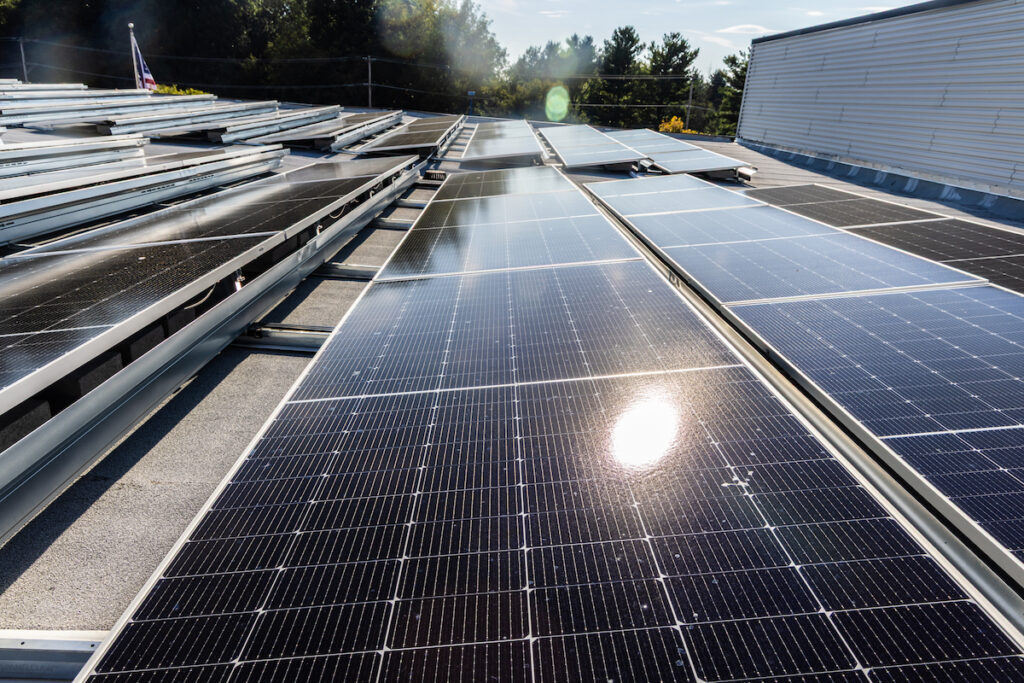
Philadelphia-area schools are tapping the sun’s energy and saving money on utilities
Unionville High School in Kennett Square and Universal Audenried Charter School in Philadelphia are building solar arrays that will slash their energy bills.
2 months ago
Listen 1:04Hydroelectric power is a flexible resource which can adjust the amount of power it sends to the grid more easily than other sources, said Hannah Wiseman, a professor of law at Penn State’s Institute of Energy and the Environment. In western states, grid operators often call on hydropower operators to produce more or less power based on electricity demand and the supply coming from wind and solar, which don’t produce power all the time, she said.
“Hydroelectric power is very important in the modern electric grid,” Wiseman said.
“You can very quickly ramp down or ramp up hydroelectricity simply by modifying the water flow.”
The research partnership between Kingsbury and the Oak Ridge National Laboratory in Tennessee will focus on testing a thermoplastic polymer as a possible material for use in hydroelectric bearings. Brawley said hydropower dams are increasingly being asked to operate intermittently, which means more wear and tear on the traditional equipment.
“That in itself is not a problem,” he said. “Where the challenge is, is because of the unique nature of these very heavily loaded vertical machines, there has not been enough testing done and not enough development done with alternate materials, different materials that will survive better under those conditions.”
Brawley said the new partnership will improve the company’s ability to test the longevity of its designs.
“Hydropower is the original clean energy,” he said. “We’re proud to have been at the start of that and help expand it.”
-
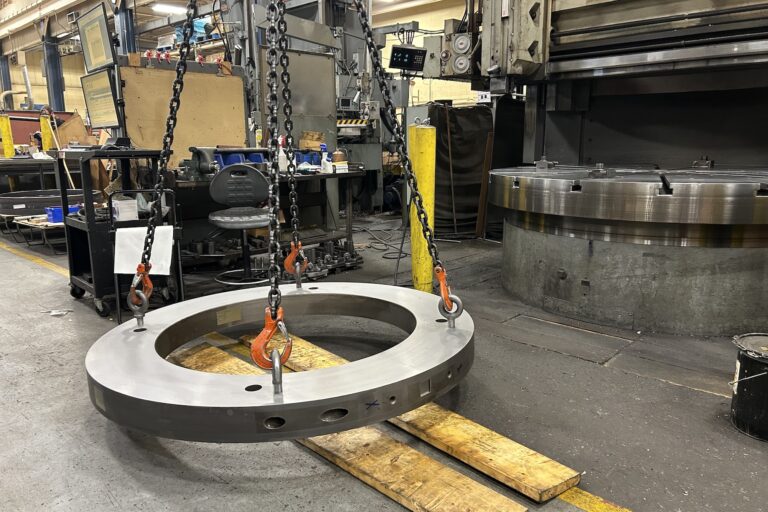
Kingsbury workers use a small crane to lift a more than 5-foot-wide thrust runner that will end up in a hydroelectric dam in Alabama. (Sophia Schmidt/WHYY) -
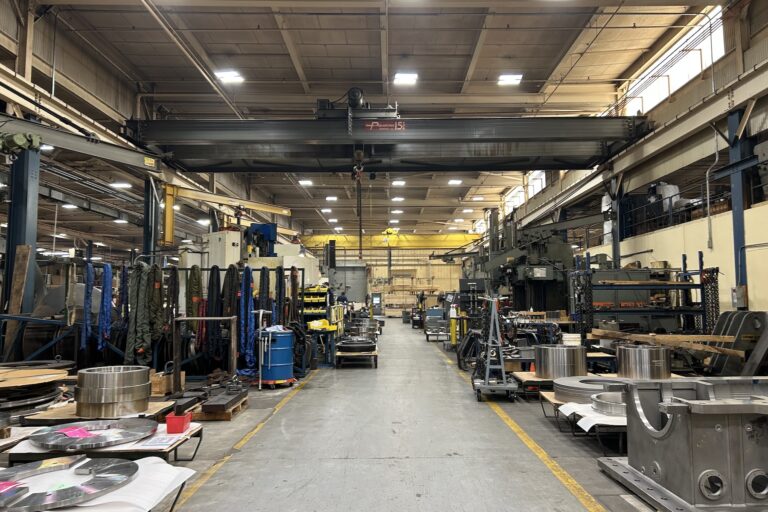
Kingsbury's plant in Northeast Philadelphia manufactures equipment for hydroelectric power plants and the defense industry. (Sophia Schmidt/WHYY)

Get daily updates from WHYY News!
WHYY is your source for fact-based, in-depth journalism and information. As a nonprofit organization, we rely on financial support from readers like you. Please give today.
Part of the series
State and federal environmental officials say air monitoring has “not detected elevated levels” of toxic pollutants after a pipeline was hit last week.
6 days ago
Listen 1:09
Philadelphia releases toolkit to help neighbors talk about climate change
The digital toolkit is meant to help residents get to know each other and prepare their neighborhoods for extreme heat, flooding and more.
2 weeks ago
Listen 0:58
Gov. Shapiro signs law requiring home sellers to disclose more about a home’s flood risk
Sellers will now be required to reveal whether a home has flooded and whether they’ve filed a flood insurance claim.
3 weeks ago
Listen 0:58