

Hotter summer and fall days are extending ragweed allergy season in Greater Philadelphia, experts say
More people are being affected and are experiencing more severe symptoms, says a Philadelphia allergist.
Listen 1:08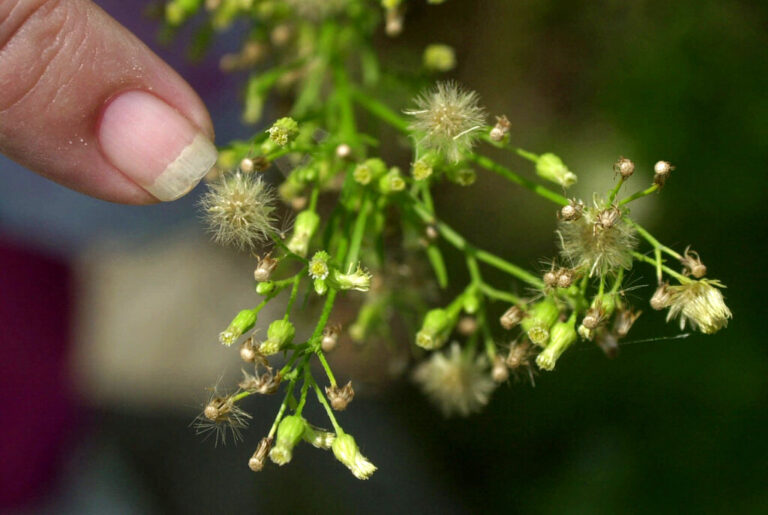
FILE - In this Aug. 14, 2001 file photo, pollen on a ragweed plant in is seen Newark, N.J. (AP Photo/Daniel Hulshizer, File)
From Philly and the Pa. suburbs to South Jersey and Delaware, what would you like WHYY News to cover? Let us know!
Millions of people across the country may soon find themselves sneezing their way through the end of summer and early fall as ragweed allergy season kicks up.
Throughout August and September, the spiky plant native to Pennsylvania, New Jersey, Delaware and other areas releases billions of pollen particles into the air, often invisible to the naked eye.
People with a ragweed allergy can experience symptoms including itchy, watery eyes, sneezing, congestion, headaches and fatigue for several weeks.
Allergy experts predict those symptoms will last longer this year, and in future years, as higher temperatures and increased humidity caused by climate change contribute to more ragweed growth and higher pollen counts.
“More people are being affected as a result, and there’s a greater severity of symptoms,” said Dr. Manav Segal, allergist, immunologist and owner at Chestnut Hill Allergy & Asthma Associates.
What is ragweed allergy and how does it affect people?
Ragweed is a green, weedy plant often found along riverbeds and highways, on playgrounds, in backyard gardens and throughout vacant lots, among other areas.
Some species of the plant have fernlike or palmlike leaves and can grow as tall as 6 feet, Segal said.
“One of the issues with ragweed is it’s a prolific pollinator,” he said. “And the pollen that we’re affected by, it’s lightweight, it’s invisible, it’s carried by the wind and it can travel miles and miles. So, the pollen you’re affected by, you may not see plants immediately around you.”
Related Content
As Pa. measles cases persist, back-to-school vaccine efforts ramp up
As measles infections statewide reach nearly 300 cases, public health leaders are looking toward preventing disease in schools this fall.
2 months ago
Listen 1:56Most people develop a ragweed allergy after being repeatedly exposed to its pollen, Segal said. Over time, the body’s immune system begins to treat the allergen as an unsafe germ or substance that needs to be fought away, like a typical infection.
This overreaction by the immune system causes allergy symptoms and complications for people managing chronic diseases like asthma, Segal said.
“Asthma patients could have increased coughing, wheezing, shortness of breath,” he said. “So, fall can be a time when people’s asthma becomes poorly controlled.”
Some children and adults may experience mild ragweed allergy symptoms, but Segal said others can experience a stronger reaction that disrupts their daily lives.
“It can account for a lot of missed work, missed school for kids, medication expenses,” he said. “These are some of the hidden costs.”
How can people reduce and manage their symptoms?
Ragweed pollen tends to be highest during midday, Segal said, so avoiding outdoor activities and exercise during those peak hours can be a good tactic.
People who need to be outside can wear sunglasses to prevent some pollen from coming into direct contact with their eyes, he said, and wearing masks can help cut down on the amount of pollen someone breathes in.
Over-the-counter nondrowsy antihistamines and steroid nasal sprays are very effective in helping people manage their symptoms, he said. These are the same medications and brands that people use for tree and grass allergies in the spring.
However, those medications might not work for some people, Segal said. They might be good candidates for other long-term treatment options like allergen immunotherapy, which could help reduce the body’s sensitivity to ragweed and other allergens.
“They don’t take immediate effect, but they can, over time, make people less allergic, less symptomatic, reduce medication demands,” he said.

Get daily updates from WHYY News!
WHYY is your source for fact-based, in-depth journalism and information. As a nonprofit organization, we rely on financial support from readers like you. Please give today.

Health experts say there needs to be more attention on addressing predictable side effects of highly curable diseases like prostate cancer.
4 weeks ago
Philly, meet the new normal of spring allergy season
Tree and grass pollen are at extreme levels, according to local pollen counts. Experts say climate change is to blame for longer allergy seasons.
2 years ago
Listen 1:05
Researchers at the Children’s Hospital of Philadelphia studied how exposure therapy can help kids overcome excessive anxiety related to their food allergies.
4 years ago
Listen 4:03