
Princeton University Library marks America’s 250th with Revolutionary War artifacts and stories
Among the artifacts are copies of the Declaration of Independence and U.S. Constitution, as well as a cannonball.

From Camden and Cherry Hill to Trenton and the Jersey Shore, what about life in New Jersey do you want WHYY News to cover? Let us know.
This spring, to commemorate America’s semiquincentennial and the Battle of Princeton, Princeton University Library is displaying its collection of Revolutionary War artifacts and stories.
“Nursery of Rebellion: Princeton and the American Revolution” will feature items that connect Princeton and the surrounding community to the Revolutionary War era. The exhibit will open April 15 at the Ellen and Leonard Milberg Gallery at Princeton University’s Firestone Library and will run through July 12.
In addition to copies of the U.S. Constitution and the Declaration of Independence, visitors can experience other artifacts from the era. Among the prominent items on display is a signed copy of enslaved poet Phillis Wheatley’s book “Poems on Various Subjects, Religious and Moral.” She is considered to be the first African American author of a published book.
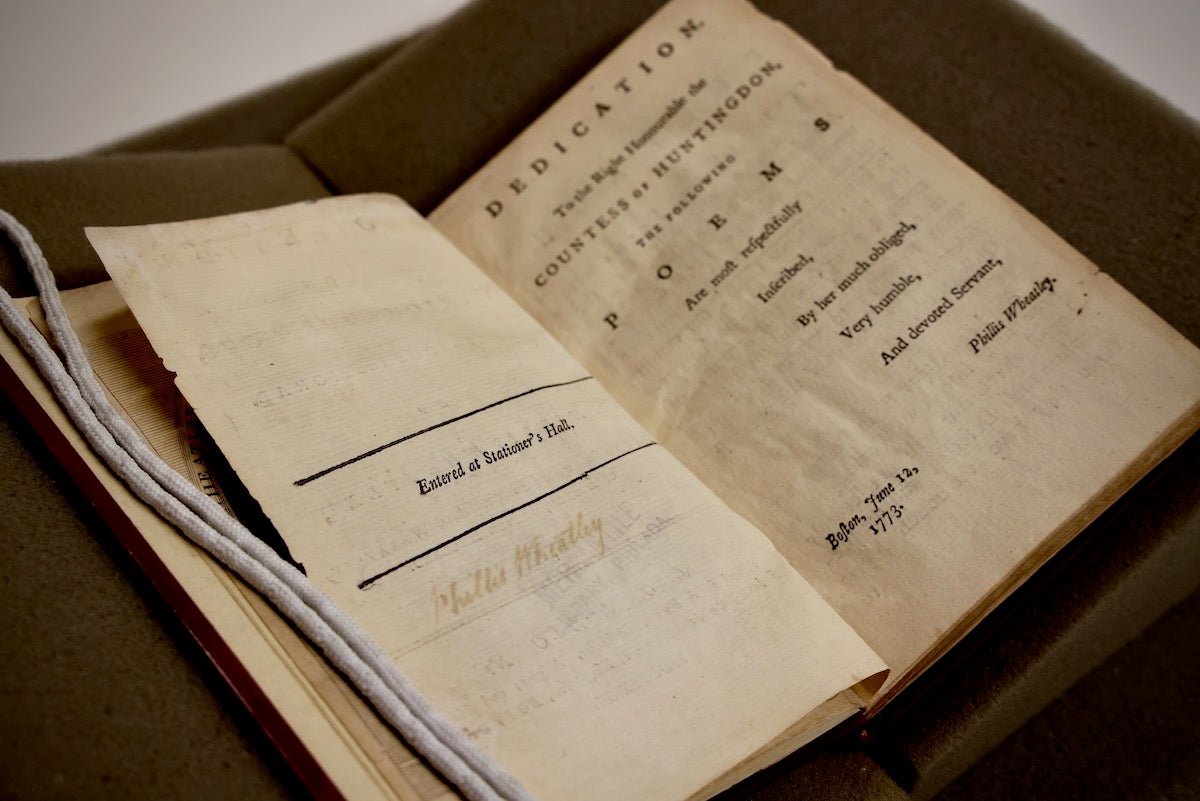
Gabriel Swift, librarian for early American collections at Princeton University Library, said the book, which was published in London, had to go into the stationers’ register.
“This is the equivalent of copyrights,” he said. “We have the attestation of Phillis Wheatley, her hand signing the so-called copyright page showing that, ‘Yes, I wrote this book.’”
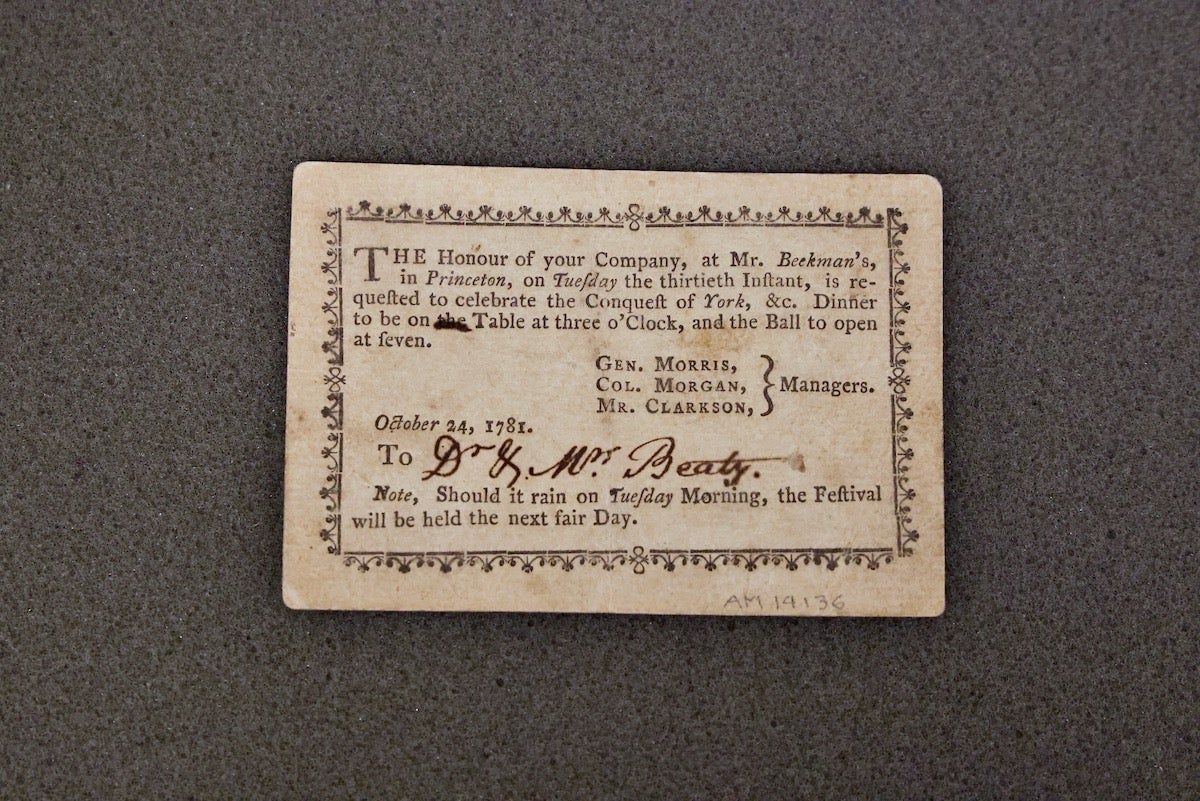
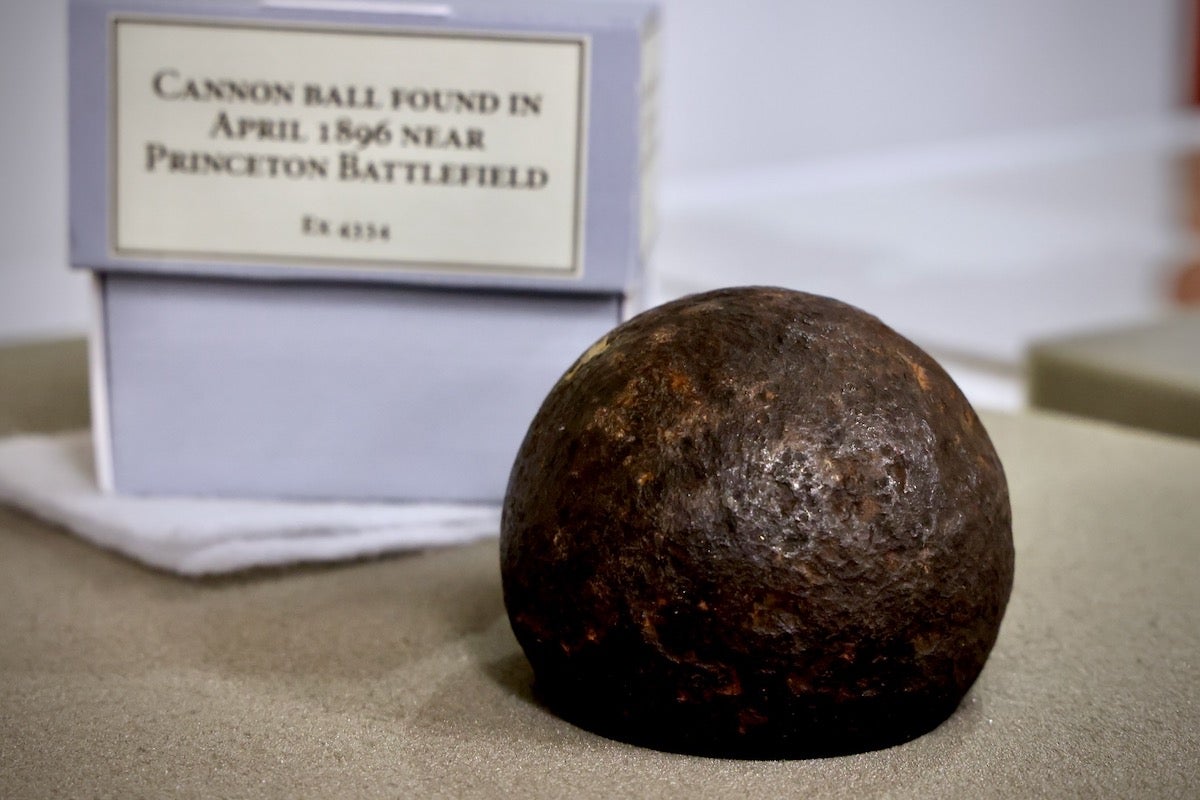
Other artifacts include an invitation to celebrate the victory at Yorktown, Virginia, which was printed on the back of a playing card. Also on display is a cannonball, roughly 10 pounds and a little larger than a baseball, which was reportedly dug up in 1896 near the Princeton battlefield.
Michael Blaakman, associate history professor at the university, said in addition to making the artifacts available for the public, he and Swift wanted to share Princeton-specific stories of the revolution.
“Especially stories of how people experience the revolution,” he noted. “Not just as a moment of political promise or a set of ideas or abstract theories about liberty and freedom in the future, but first and foremost as a war that had really serious consequences for their lives.”
Planning the exhibit began as early as 2022, Blaakman said. Though Princeton University’s collection is extensive, the university still had to source artifacts from other institutions to spotlight Princeton’s place in the revolution. The university reached out to the National Archives, New Jersey State Archives and Princeton Historical Society to seek artifacts.
Related Content
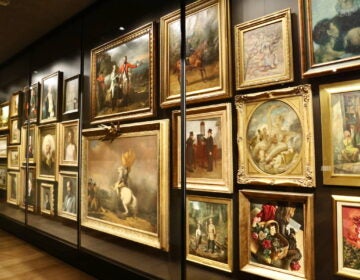
Princeton University to reopen its newly rebuilt art museum
Designed by architect David Adjaye, Princeton’s new museum corrects the problematic old one.
4 months ago
Listen 1:20A separate exhibit commemorating the nation’s independence called “Real and Remembered: Princetonians Caught Between Study and Revolution” will be on display at the Seeley G. Mudd Manuscript Library from May 2026 through April 2027.
That exhibit highlights how the university, whose formation as the College of New Jersey predated America’s independence declaration, became a center of revolutionary thought and youthful activism after the British Parliament passed the Stamp Act in 1765.
-
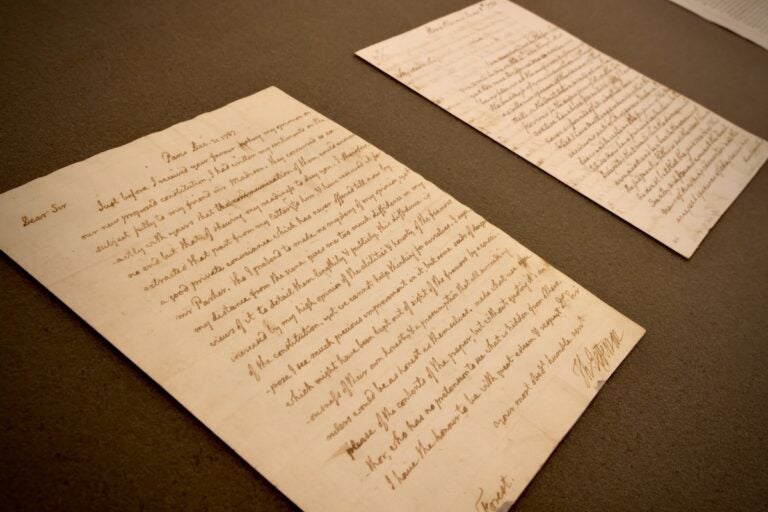
A letter from Thomas Jefferson to Col. Uriah Forrest dated Dec. 31, 1787. In it, Jefferson expresses his opinion about the new constitution. (Emma Lee/WHYY) -
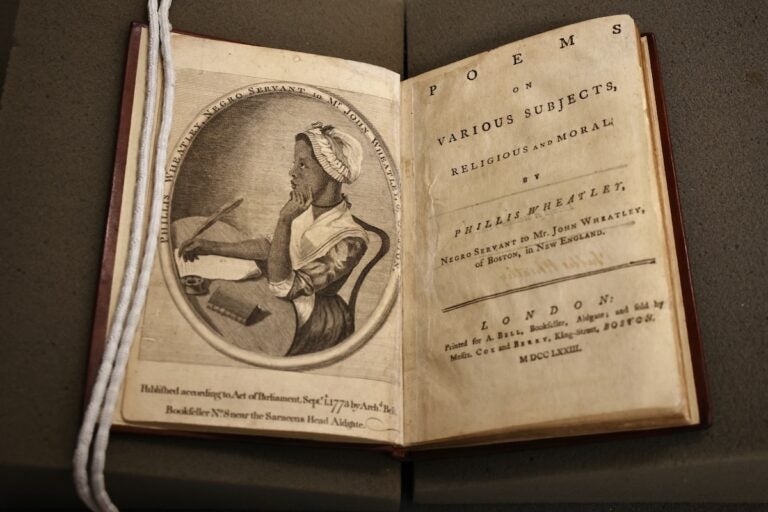
The Princeton University Library collection includes a signed first edition of ''Poems on Various Subjects: Religious and Moral'' by Phillis Wheatley. (Emma Lee/WHYY) -
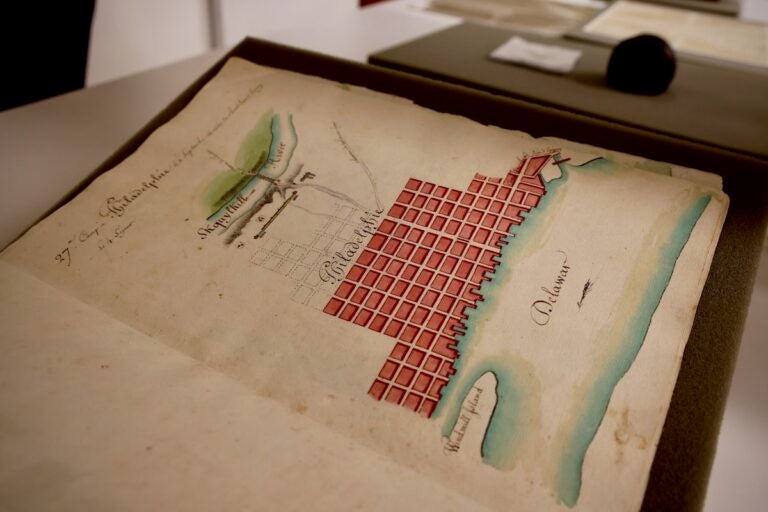
''Plans des differents camps occupés par L'Armée aux ordres de M. Le Comte de Rochambeau'' (often referred to as Amérique campagne 1782) is a manuscript atlas containing detailed maps in ink and watercolor of the French army's encampments during the American Revolutionary War. It includes an undated map of Philadelphia made around 1782. (Emma Lee/WHYY) -
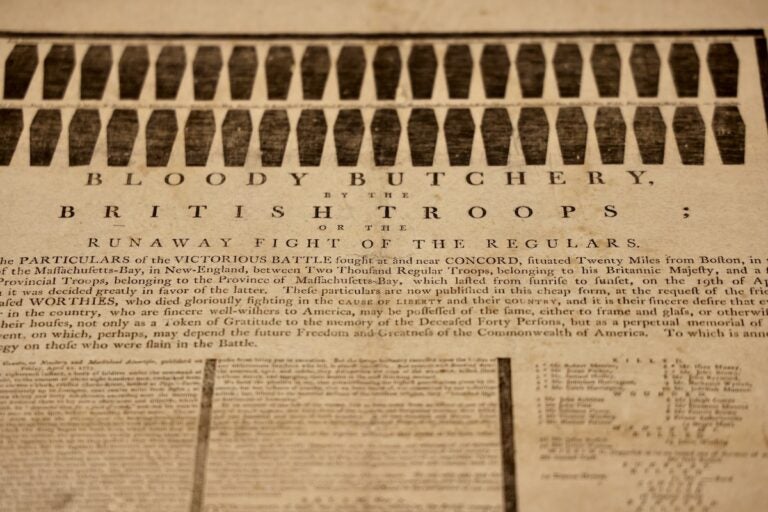
A contemporary account of the battles of Lexington and Concord. (Emma Lee/WHYY) -
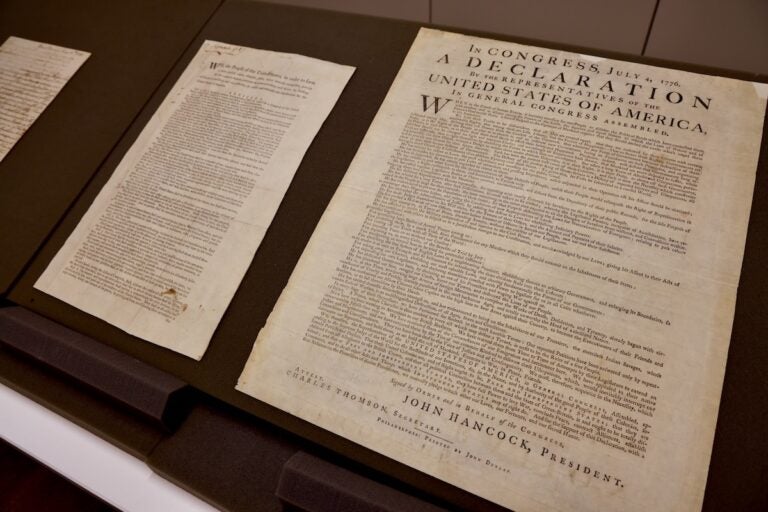
The Princeton University Library collection contains a first printing of the Declaration of Independence and ab official edition of the U.S. Constitution, printed for submission to Congress. (Emma Lee/WHYY) -
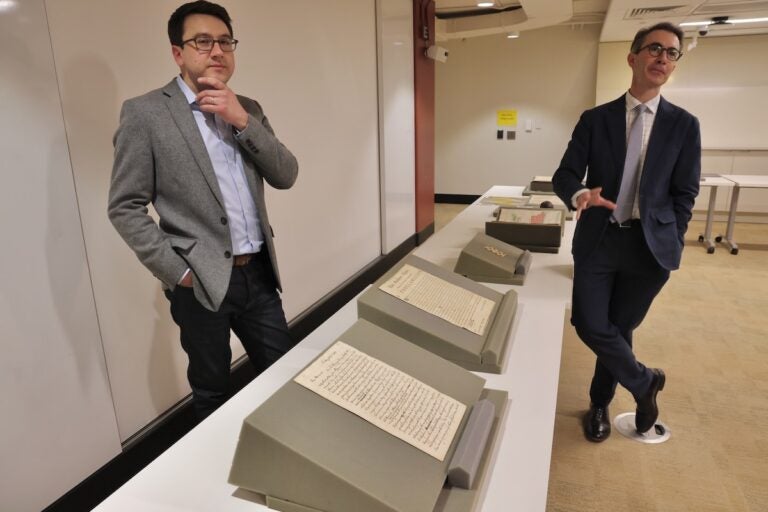
Curators Michael Blaakman (left) and Gabriel Swift have assembled documents and artifacts related to Princeton's role in the American Revolution. ''Nursery of Rebellion'' features items from the collection of Princeton University Library and will be on view in the Milberg Gallery April 15 through July 12, 2026. (Emma Lee/WHYY)

Get daily updates from WHYY News!
WHYY is your source for fact-based, in-depth journalism and information. As a nonprofit organization, we rely on financial support from readers like you. Please give today.
Princeton University to reopen its newly rebuilt art museum
Designed by architect David Adjaye, Princeton’s new museum corrects the problematic old one.
4 months ago
Listen 1:20
Virtual reality classical concert creates new experiences for fans
For four days, audience members were invited to experience performances by the Mahler Chamber Orchestra by strapping on virtual reality headsets and headphones.
2 years ago
Listen 2:17
Princeton home’s history of slavery explored in new contemporary art exhibition
Hugh Hayden’s new installation at Princeton’s Bainbridge House explores slavery and the origins of America through the 18th century home’s own history.
6 years ago