

Philadelphia’s young people learn to lead on violence prevention and restorative justice
The city’s first youth restorative justice cohort completed nearly a year of training designed to help young people address conflict, violence and harm in their communities.
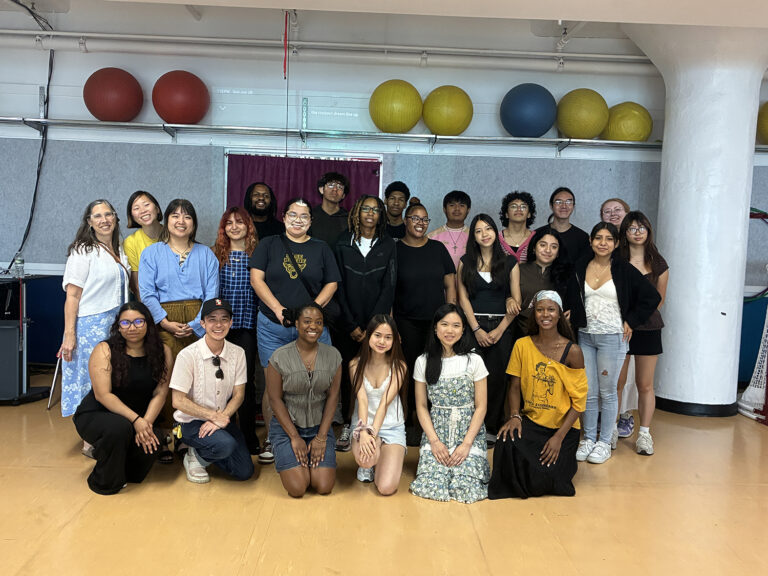
Members of Philadelphia’s first youth restorative justice cohort pose for a photo with Queen-Cheyenne Wade, program director at the Youth Art & Self-empowerment Project, at Folk Arts – Cultural Treasures Charter School in Chinatown. (Hannah Pajtis for WHYY)
From Philly and the Pa. suburbs to South Jersey and Delaware, what would you like WHYY News to cover? Let us know!
Despite the summer break, classrooms at Folk Arts-Cultural Treasures Charter School in Chinatown were full on Sunday as members of Philadelphia’s first youth restorative justice cohort gathered to celebrate the completion of nearly a year of training.
The program, run by Victim/Witness Services of South Philadelphia’s Violence Intervention and Prevention Project, comprised over 30 participants ages 14-20 who underwent monthly restorative justice training that started last summer. The project works with community members from the partner organizations Asian Americans United, Juntos, VietLead and The Youth Art & Self-empowerment Project to expand restorative justice programming in the city, specifically for young people and families from immigrant and limited-English backgrounds.
“We have been thinking about this for years, and to be able to see it all come together on a day like this just feels like — ‘Yeah, this is what the past three years has been building toward,’” said Queen-Cheyenne Wade, program director at Youth Art & Self-empowerment Project.
While gun violence in Philadelphia has decreased in recent years, the rate of gun violence among young people has increased, said Lisa Klinman, project coordinator for the Violence Intervention and Prevention Project.
“We see a trend where young people are more and more impacted by severe forms of violence,” Klinman said. “And as the group of people who are most affected, young people are obviously in the best position to be able to reduce that type of violence and to speak to their community members and their peers.”
Klinman said the idea for the training came after a series of race-based assaults in Philadelphia, many against Asian American communities, in response to the COVID-19 pandemic. Additionally, shootings of youth in Philadelphia doubled during the pandemic, with Black youth disproportionately affected. These trends prompted conversations about the need for programming.
“The young people affected by those incidents felt that those who were responsible for committing the acts of violence needed support to recognize and understand and take accountability for their actions,” Klinman said. “That type of accountability and recognition wasn’t really available to them through the criminal legal system and through the court process.”
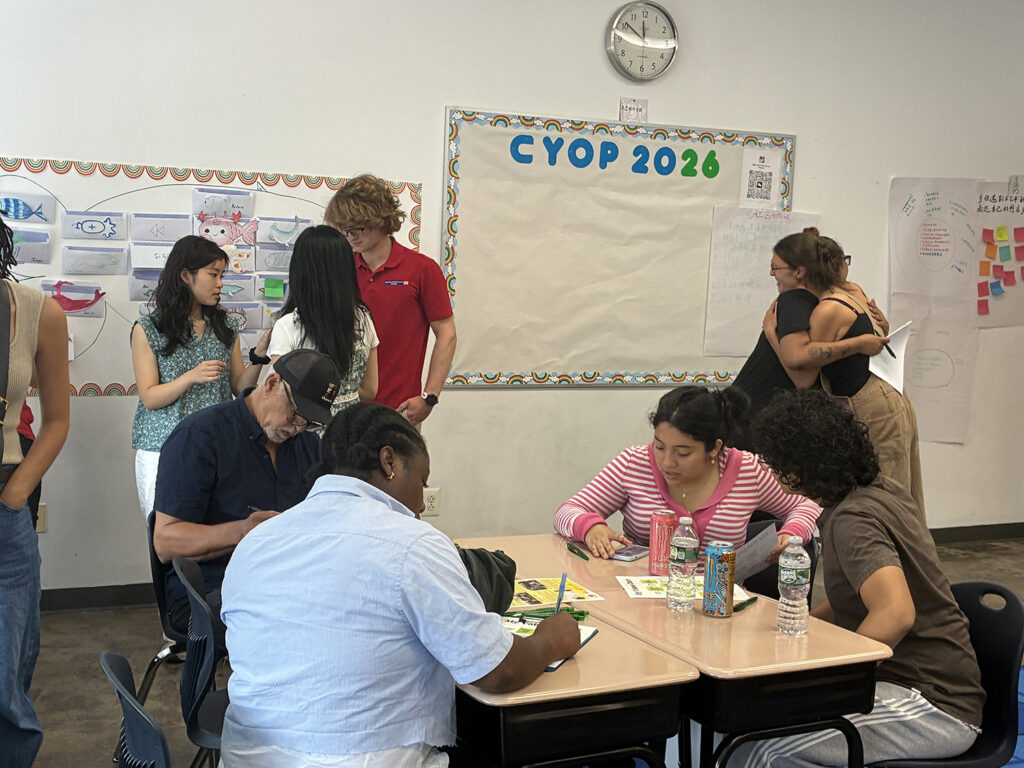
Restorative justice is a community-based, holistic approach to conflict and violence reduction that looks to address systemic harm and promote healing rather than criminalizing parties involved. It is rooted in the values of Indigenous people around the world, including interconnectedness and community balance, and is an alternative to punishment-based models like mass incarceration, policing and Western criminal legal systems.
“Restorative justice is kind of trying to take accountability and justice back into the hands of community, and so that has kind of been like one way that we’ve been training these young people,” Wade said.
Learning restorative justice to reduce violence
The training consisted of discussions, activities, roleplay scenarios and readings that explored the relationship between marginalized communities and justice. Klinman said the goal of the monthly sessions was to increase youth leadership in community violence reduction by teaching techniques in facilitating talking circle discussions and deescalating conflict.
“The types of topics that we cover include the roots and principles of restorative practices … how it’s been used in different kinds of cultures and communities over the world, the differences between the carceral justice system and the restorative justice or transformative justice system, the different types of needs that are met by each of those various systems,” Klinman said.
The Pennsylvania Commission for Crime and Delinquency funded the program. With each partner organization selecting youth for the cohort, the group grew from 13 participants to its maximum capacity of around 30.
“So many of our young people come from so many different backgrounds and have held so many different kinds of conflicts in their life,” Wade said. “For them to be so open to think about how to keep their community safe, how to keep each other safe [in a way] that has nothing to do with systems that they’ve been told are the ones that keep them safe, I think [it’s] such a powerful thing.”
Related Content
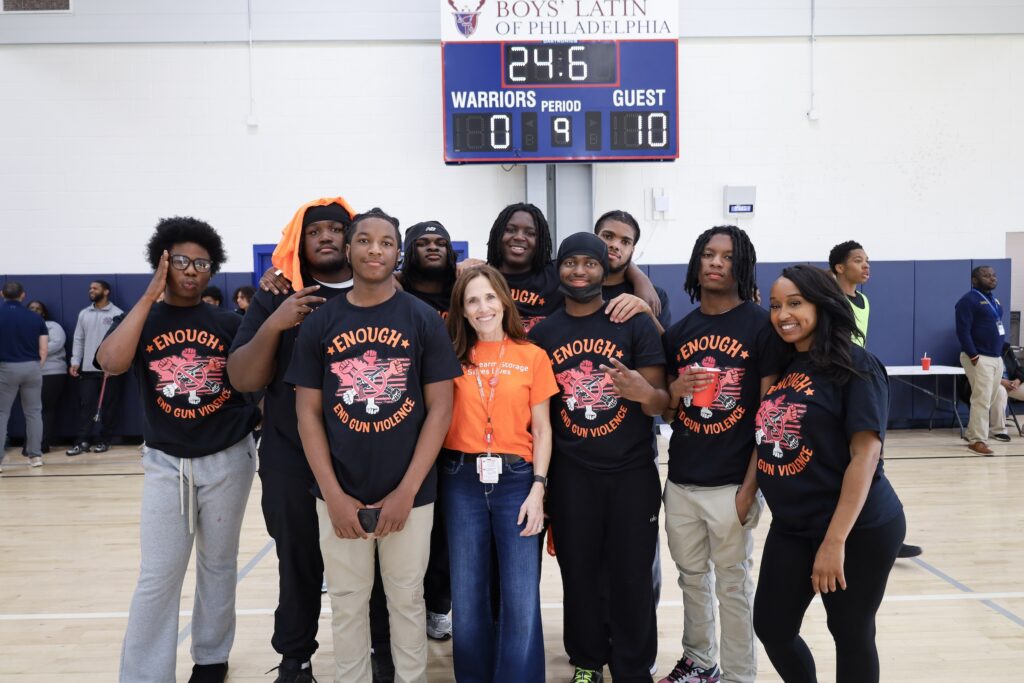
Cobbs Creek students are making gun violence prevention a priority in their West Philly neighborhood
Boys’ Latin students are participants in Children’s Hospital of Philadelphia’s Nursing Pathways Program, which introduces teens to careers in medicine.
6 months ago
Listen 2:06Restorative justice has always been important, but is especially vital now, Wade said.
“When so many immigrant and Black and brown populations are being targeted, whether on a state level, national level, local level, having the ability to really bring community together when harm happens has felt so much more important,” Wade said.
From students to teachers
At Sunday’s two-hour community event, youth participants led four peer-to-peer training stations where they taught other young people the restorative justice principles they learned in the last year, using games, art and other hands-on activities.
Faith Davis, a 20-year-old facilitator with Youth Art & Self-empowerment Project, said it’s important for young people to get proper guidance about justice to prepare them for their adult lives with knowledge about how to succeed.
“They go off of what they see or what’s given to them,” Davis said. “They don’t know nothing else, not if they’re not taught anything else. So I feel like it’s very, very, very important for young people to be involved in community.”
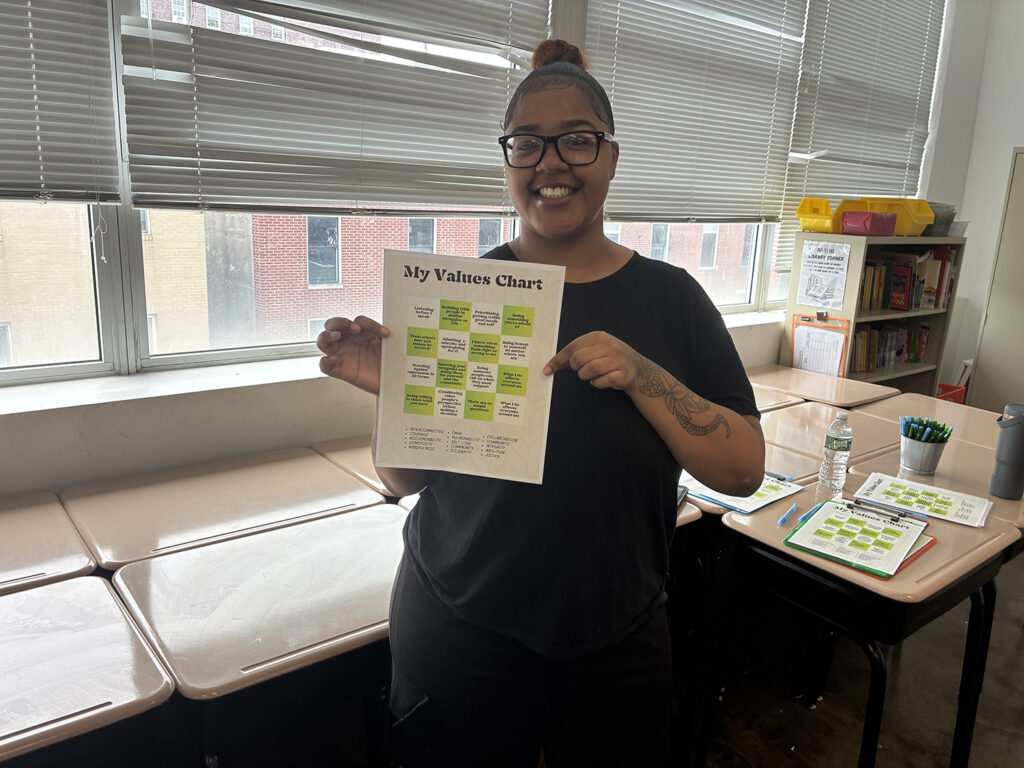
Davis said the training completely changed her views on what justice can look like.
“I was under the impression that the legal system way was the right way, but going through and speaking with them, … I was taught that this legal system is not the only way,” Davis said. “This is actually not even a good way.”
Restorative justice work involves person-to-person interactions centered around healing, said Hazel Heiko, 18, a graduating cohort member.
“Justice is really hard to define, but I think in America we focus on who did the harm, and we send them to jail,” Heiko said. “But restorative justice is really all about who was hurt and focusing on what they need in that moment, not just punishing someone but also helping whoever the victim was whoever got hurt by the actions.”
While this year’s youth restorative justice graduating class was the first of its kind, it will not be the last. A new one will start training in August, funded by a grant that will support three more years of programming.
Justice and violence prevention work isn’t ending here for cohort members like Milani Wu, 18. She said she plans on applying what she has learned when she starts college in the fall.
“I hope that when I get to campus, I can get further involved with my community there and advocate for those who were hurt,” Wu said.

Never miss a moment with the WHYY Listen App!


WHYY is your source for fact-based, in-depth journalism and information. As a nonprofit organization, we rely on financial support from readers like you. Please give today.

Amanda Parezo, who uses a wheelchair, advocates for more accessible spaces and adaptive activities like Life Rolls On surfing events.
2 months ago
Listen 4:46
Cobbs Creek students are making gun violence prevention a priority in their West Philly neighborhood
Boys’ Latin students are participants in Children’s Hospital of Philadelphia’s Nursing Pathways Program, which introduces teens to careers in medicine.
6 months ago
Listen 2:06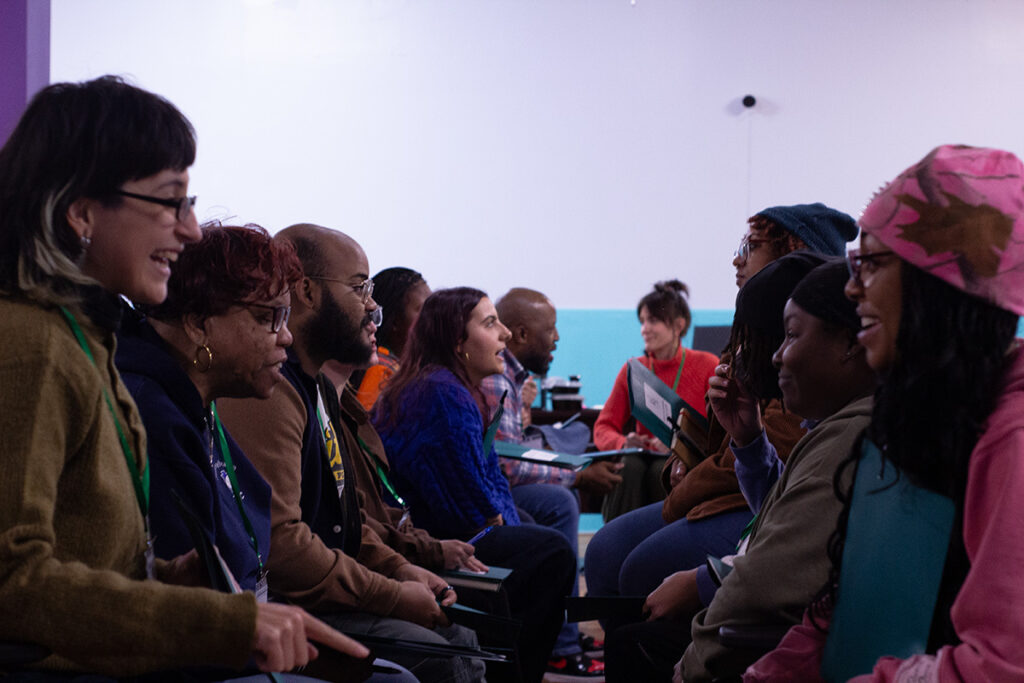
Restorative justice advocates in Philadelphia are rethinking accountability beyond incarceration
Restorative justice is rooted in an empathetic, comprehensive and more solution-based approach to addressing criminal behavior.
7 months ago
Listen 1:42