
Philadelphia researchers fear proposed changes to federal science funding could mean a generation of lost scientists
New proposed rules governing federal grant funding would make it easier to cancel research that has been funded and require grants to align with a president's priorities.
Listen 3:47
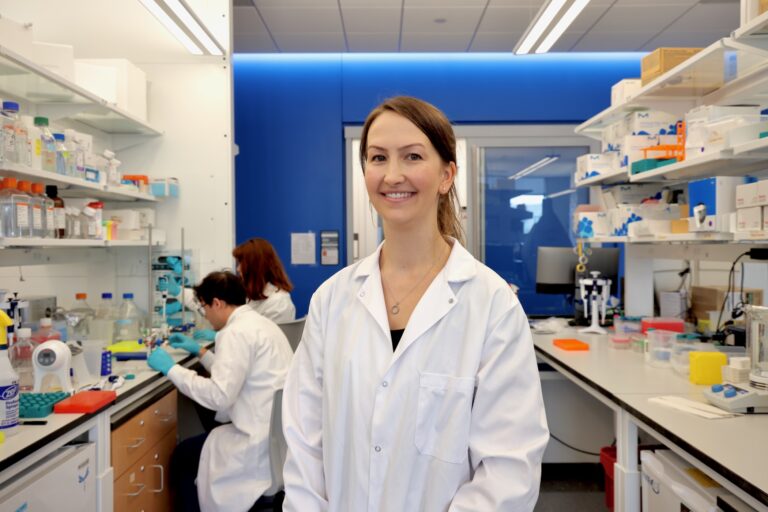
Brittney Allyn, a researcher at University of Pennsylvania's Weissman Labs, received a two-year grant to continue her work on mRNA therapies for celiac disease. (Emma Lee/WHYY)
From Philly and the Pa. suburbs to South Jersey and Delaware, what would you like WHYY News to cover? Let us know!
For the moment, immunologist Brittany Allyn can take a deep breath and focus on her research without worrying about funding.
Allyn received funding from the Philadelphia Foundation’s Brody Family Medical Trust Fund fellowship to continue her research on celiac disease at the University of Pennsylvania.
“It really gives me the security to continue for another at least two years doing research that I’m really passionate about,” Allyn said.
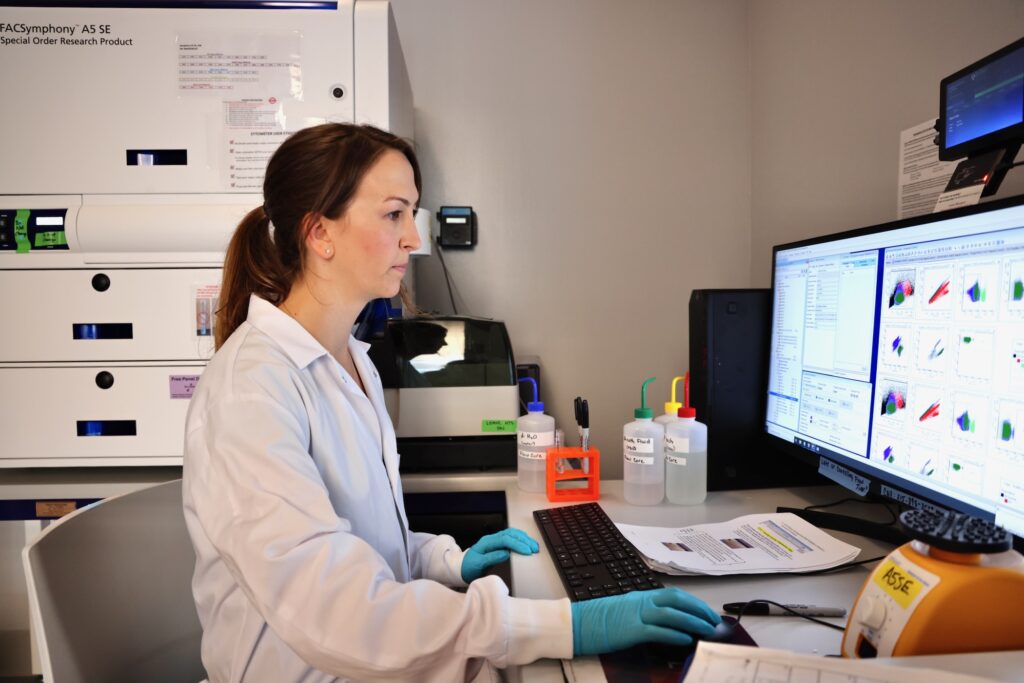
The research is also personal for Allyn. She was in graduate school when she was diagnosed with celiac disease, a condition where dietary gluten triggers a response that can damage the small intestine. Now, she is searching for treatments, which she’s currently testing in animal models.
She received the Philadelphia Foundation’s Brody Family Medical Trust Fund fellowship, which supports early career researchers who are studying incurable diseases in Philadelphia.
“It is a bit of a difficult time to be an early career scientist. I have a lot of colleagues who are brilliant who have had trouble finding jobs, whether that be in industry or academia right now,” she said. “That’s where things like the Brody fellowship really help give me a little bit more support to have some relief for the next two years at least.”
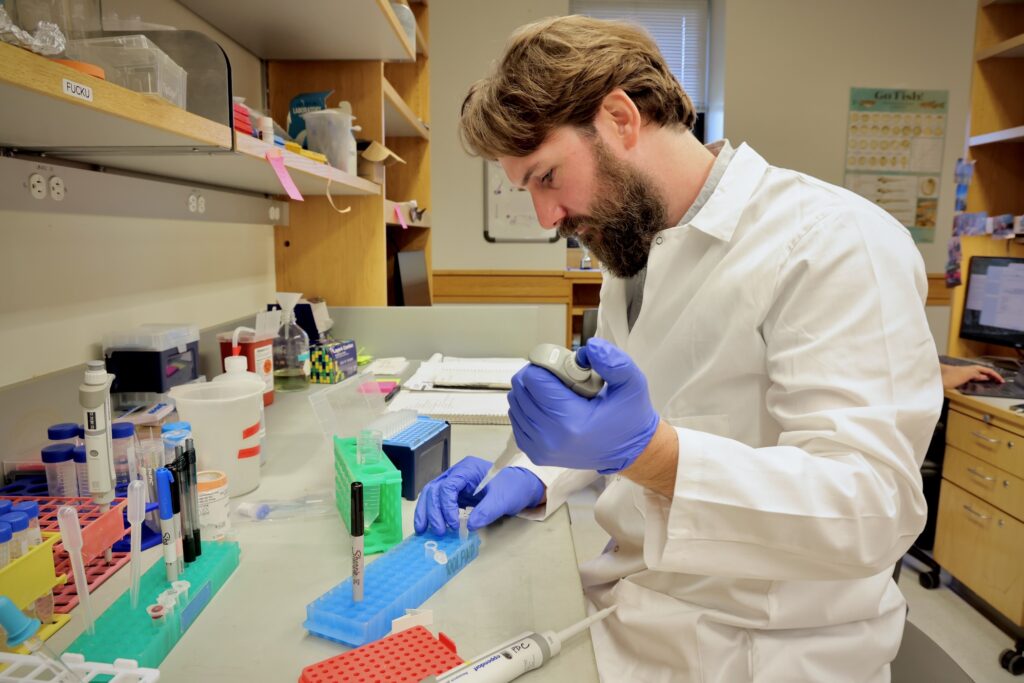
The Philadelphia Foundation also funded cell biologist and geneticist Lucas Restrepo, whose work investigates a hypothesis that conditions like schizophrenia come from problems with the energy sources in brain cells. He studies this by investigating the brains of zebrafish.
He, like Allyn, said that the fellowship gives him relief at a time when many of his fellow colleagues and early career scientists have been laid off, or struggle to find work.
“Science is hard enough as it is,” he said. “Translational research and pharmaceutical research doesn’t happen without basic biology. We can’t understand what genes are doing, we can’t understand what cells are doing without doing the discovery aspect, and that’s the part that’s getting hit the hardest with these funding cuts.”
Proposed changes favor presidential priorities over scientists in the field
Over the past two years, the second Trump administration has disrupted thousands of approved federal science grants, affecting more than $1 billion in funding.
Some private foundations continue to fund research amid the instability from federal agencies, but it only helps up to a point, said Naomi Tjaden, a pediatric gastroenterologist at the Children’s Hospital of Philadelphia.
“They’re helpful at getting you to the next stage, but they don’t pay to keep the lights on,” she said.
Tjaden received foundation funding for her research a few years ago, and she said the longer-term goal was to get funding from the National Institutes of Health to start her own lab, which she just did.
However, it could be harder to get federal science funding in the future. The Trump administration proposed new rules that would, among other things, make it easier to cancel research that has been funded, require grants to align with a president’s priorities, have political appointees oversee funding decisions instead of other scientists in the field and restrict collaborations with overseas researchers.
In the Philadelphia metro region, more than 12% of employment and annual income come from hospitals and higher education, according to the Federal Reserve Bank of Philadelphia.
Related Content
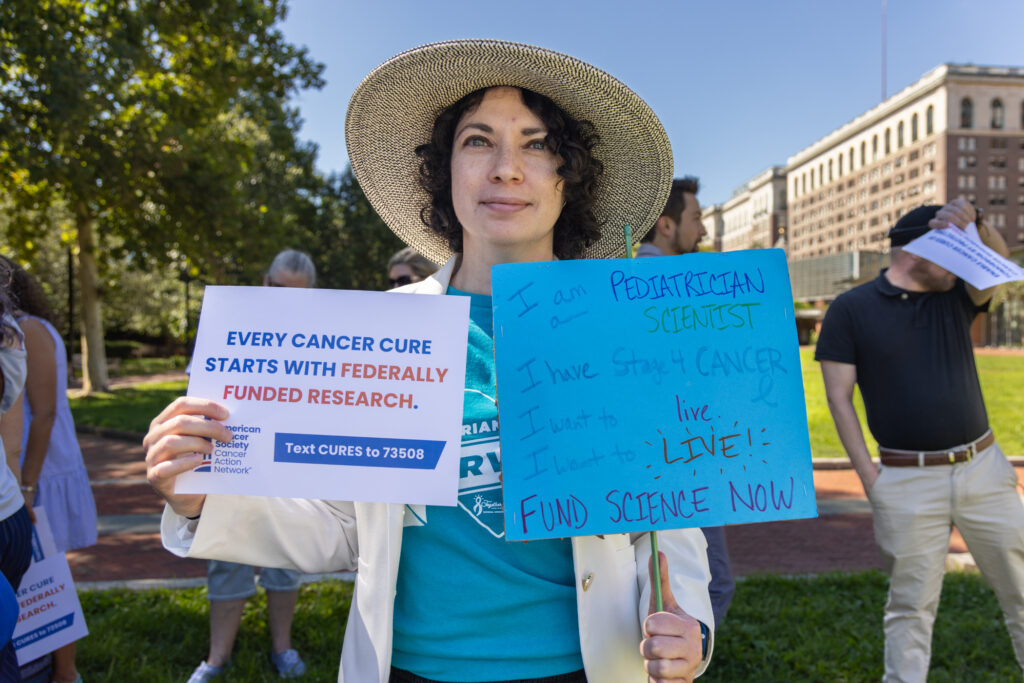
Pennsylvania scientists received about $319 million in funding from the National Cancer Institute in fiscal year 2024, according to the American Cancer Society.
1 year ago
Listen 1:32Researchers around the country have submitted comments objecting to the new rules, including Tjaden.
She said that it will make it harder to do research. For instance, she studies a rare disease called Hirschsprung disease where nerve cells are missing in a baby’s intestine, so the baby cannot relax their colon, leading to backed up bowels and sometimes life-threatening infections. She said much of this research is led by Chinese researchers because China has a much larger population, and there are hospitals that perform surgeries to treat these patients multiple times a week, whereas there are not that many patients in the U.S.
“They’re actually able to push the science forward in a really, really meaningful way that we just can’t do because we don’t have that many people in our population,” she said. “And so to then limit people who study rare diseases from working with those people who have the population to study this, I think that’s another thing that really, really scared a lot of pediatricians and a lot of people who study rare disease.”
She added that it ultimately will be harder for scientists to remain in academia and make advances.
“Many people are considering their backups of, ‘Well, maybe I just won’t be a scientist in academia anymore. And maybe I’ll go into, you know, a more stable job, instead of this,’” she said. “And I think that losing scientists who invested their entire lives up until this point because of something like this is going to be a major, major hit to our scientific community.”
Researchers worry about losing future scientists, discoveries
Graduate students and other early career scientists who might have gone on to have careers in research may look for different options, and the U.S. will lose out on the discoveries they could have made as a result, said Usama Bilal, associate professor of epidemiology and urban health at Drexel University.
“That’s something that we’ll have to reckon with in a few years when we see: Was there a generation of scientists that was lost or not? Maybe we will be able to recover. I’m hopeful that we will be able to recover,” he said.
As an example of the kind of science that may no longer get the sustained federal funding needed for a discovery, Andrew Landstrom, professor of pediatrics at CHOP, pointed to a patient he saw in 2012 — a child who died of cardiac arrest while playing basketball. Doctors didn’t know why he was sick, and by studying his family members, found a new gene. This family had a variant of the gene that caused the heart conditions. By studying the new gene, researchers found that it could be a target for therapies to treat future patients, and published their discovery in a journal article in 2025.
“That’s the kind of work that we strive to do. A tragedy to potentially a new therapy. But that process took nearly a decade,” Landstrom said. “And I worry that when the process of awarding meritorious grants is no longer left to the specialist scientist, the jury of our peers, that the opportunity for those kinds of discoveries that are a long game, that can make big jumps but require time and sustained effort, that that will be lost.”

The White House did not respond to a request for comment.
In response to the scientists’ comments, Mike Gonzalez, a senior fellow at the Heritage Foundation, a conservative think tank, said that no one has a right to federal funding, and the new rules simply make scientists accountable to an elected president who can pick political appointees to make the funding decisions.
“Just stay on real pure science, nothing that will have a political impact is liable to be changed if the next administration changes,” he said. “The fact that they fear that their peer-reviewed investigation is going to be halted if a different administration gets into power shows … this political dimension to their investigation. Otherwise, they wouldn’t be concerned at all. If we’re talking about cancer research, then it doesn’t matter what administration is in charge. We’re obviously not talking here about cancer research or cardiac condition research. It has to do with other things.”
The public comment period for the new regulations have passed, but it remains to be seen what happens in the end. The Senate introduced a plan to delay this rule until mid-December, tying it to a plan to fund the federal government.

Get daily updates from WHYY News!
WHYY is your source for fact-based, in-depth journalism and information. As a nonprofit organization, we rely on financial support from readers like you. Please give today.
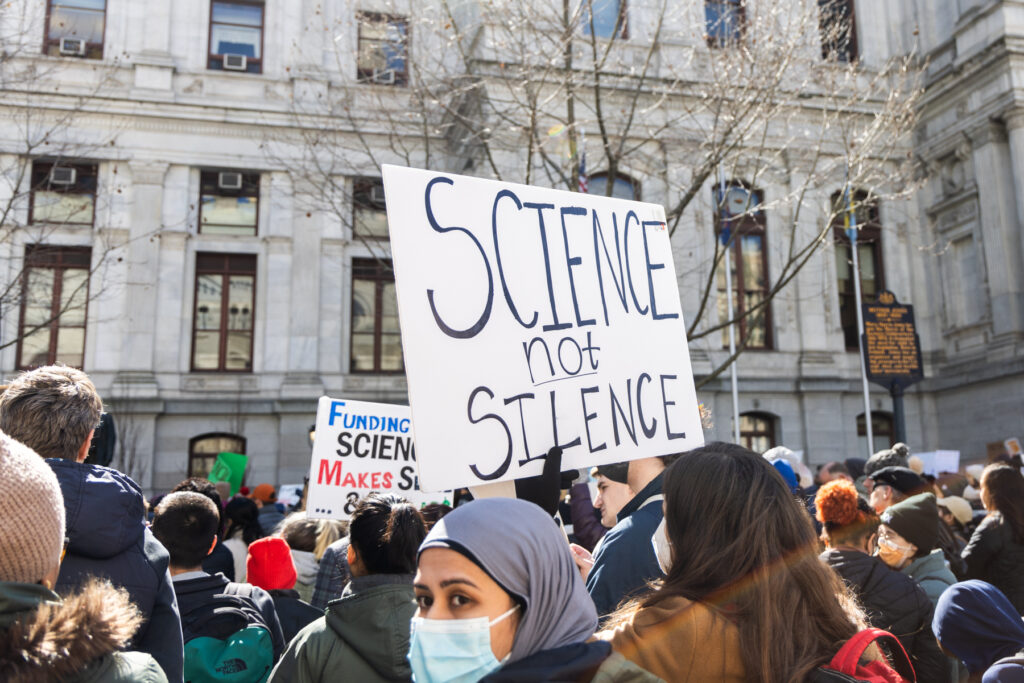
Researchers say that months of instability have already damaged the future pipeline of U.S. scientists and discoveries.
1 year ago
Listen 3:44
Former Mütter Museum forensic anthropologist launches research institute
Longtime Mütter Museum forensic anthropologist Anna Dhody will continue her work analyzing historic samples, but now in a research institute of her own.
2 years ago

Penn researchers’ experiment shows how pigs could help people who have liver failure
Surgeons externally attached a pig liver to a brain-dead human body and watched it successfully filter blood.
3 years ago