Love birds? Philadelphians can help scientists by counting them this Valentine’s Day
Skip the roses this Valentine’s Day, and grab your binoculars and a field guide for science, with this weekend's Great Backyard Bird Count.

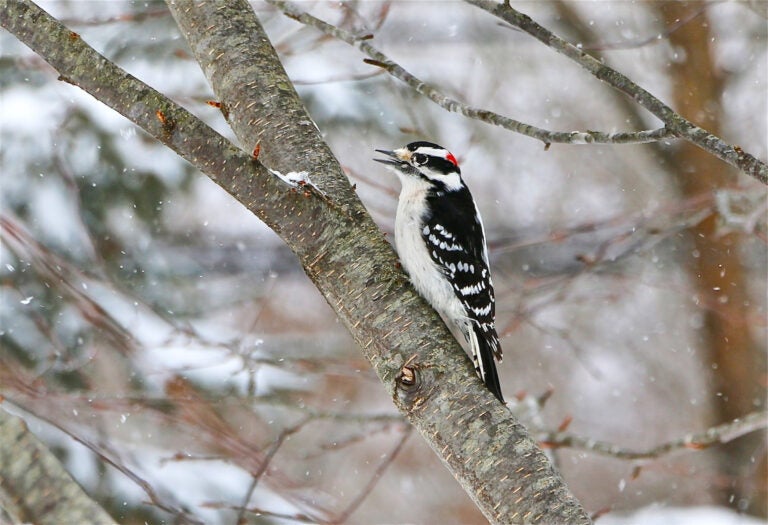
Downy Woodpecker (Photo credit: Elizabeth Jaffin; Courtesy of Audubon Mid-Atlantic)
From Philly and the Pa. suburbs to South Jersey and Delaware, what would you like WHYY News to cover? Let us know!
Valentine’s Day, in some versions of its history, is for the birds.
Medieval birdwatchers chose Feb. 14 as the day that birds choose their mates for spring, some scholars say. Proponents of ornithomancy, the interpretation of bird sightings to foretell the future, spread the belief that the first bird a single person sees on the holiday is a symbol of their own future partner.
No matter the history of the holiday, this Valentine’s Day weekend is an opportunity for residents throughout the Delaware Valley to show their love for birds by participating in the Great Backyard Bird Count.
From the most experienced birder trekking through the woods to the novice looking for feathered friends on their porch, anyone in the world can participate in this citizen science initiative designed to provide critical data to scientists working to understand and protect bird species throughout the world.
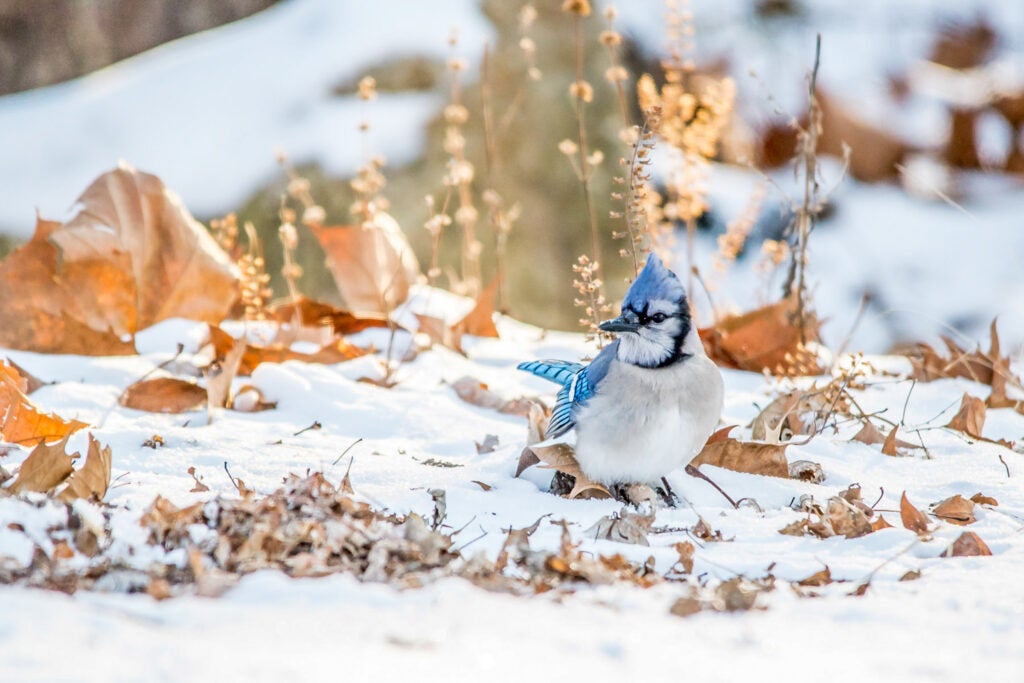
For the Philadelphia area, this weekend is an important time for gathering data because spring migration is “just around the corner,” said Bernard Devlin, communications manager at Audubon Mid-Atlantic, and both migrating and resident bird populations will be in the area.
“This is important because scientists and researchers … are learning more about what birds are doing and how we can protect them and the environment that we share with these birds on a constant basis,” he said. “So these observations really help to build that community citizen science.”
Related Content
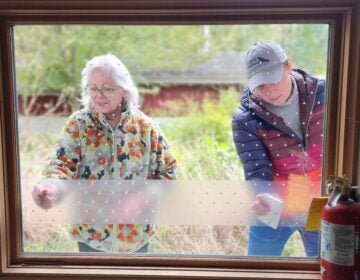
Philly’s push to help birds avoid windows just got a windfall
Bird Safe Philly has been working to lessen bird collisions for five years. Its budget just increased tenfold.
3 months ago
Listen 1:15Anyone who wants to join in the count can do the following, according to the GBBC website:
- Decide where to watch for birds.
- Watch birds for 15 minutes or more, at least once, from Feb. 13-16.
- Identify all the birds you see or hear in your location during that time. Share that information in one of two ways:
- If you’re a beginner and completely new to bird identification, you can use the free Merlin Bird ID app.
- If you’ve done the count before and want to record the numbers of birds, you can submit that information using the free eBird mobile app or on the eBird website.
The count, now in its 29th year, was launched by Cornell Lab of Ornithology and National Audubon Society. Birds Canada joined the effort in 2009, and in 2013, the initiative went worldwide.
On Saturday, the John James Audubon Center in Montgomery County hosted an on-site guided bird count and offered a birdfeeder-building workshop.
For those interested in learning more about their avian neighbors, Devlin said there are many ways to support bird populations beyond this weekend’s events.
“One of the most important things is planting native plants, plants that are originally from our area,” he said. “They can better support birds and other populations of pollinators, more so than plants that are maybe invasive or not from this area.”
Lists of native plant species can be found online at the National Audubon Society’s website, and The Discovery Center in Philadelphia is home to a seed library, where people can “check out” seeds to plant in their yards.
Installing bird feeders outdoors is another way to support bird populations, Devlin said, but he also recommends starting with basic curiosity and observation.
“There’s plenty of resources to read about, but I think the best thing that you can do is go out and just observe what you can see, even in your own backyard,” he said. “I think you learn a lot that way.”

Get daily updates from WHYY News!
WHYY is your source for fact-based, in-depth journalism and information. As a nonprofit organization, we rely on financial support from readers like you. Please give today.

What It Takes to Survive a Disaster
When disaster strikes and the chips are down, who makes it out alive?
Air Date: May 15, 2026
Listen 49:34
Coexisting with urban wildlife, Bakari Sellers ‘The Moment’, NJ’s data privacy law
It’s getting wild. We talk about urban wildlife – from encounters with coyotes to bats who need our help
Air Date: April 25, 2024 12:00 pm
Listen 50:01
We talk to science writer Jennifer Ackerman about her new book, "The Bird Way" and with an organizer of Black Birder week.
Air Date: July 24, 2020 10:00 am
Listen 49:00