

An intestinal parasite is causing ‘explosive’ diarrhea in Pa. and N.J. Here’s what to know about cyclospora
If left untreated, symptoms can last anywhere between a few days and a month or longer.

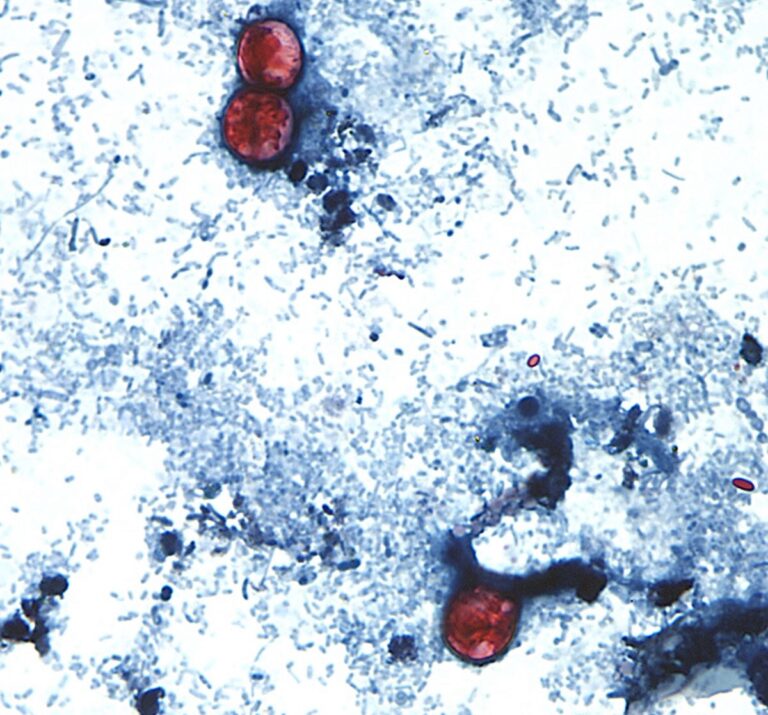
This undated photo taken through a microscope provided by the CDC shows Cyclospora cayetanensis oocysts found in a fresh stool sample which had been prepared with a formalin solution and stained with safranin. (CDC via AP)
From Philly and the Pa. suburbs to South Jersey and Delaware, what would you like WHYY News to cover? Let us know!
An intestinal bug that can send people dashing to the loo with “explosive” diarrhea has public health experts on alert.
The Centers for Disease Control and Prevention recorded 145 reported cases of cyclosporiasis between May 1 and June 16, including a cluster in Pennsylvania and New Jersey. State health officials in Michigan have reported that more than 1,200 people have been diagnosed with the disease as of July 9, and another 177 cases have been diagnosed by health officials in Ohio as of July 2.
According to the Pennsylvania Department of Health, the state has recorded 28 cases of cyclosporiasis in 2026, with 14 occurring in Southeastern Pennsylvania. In 2025, the state recorded 40 cases. In 2024, there were 87 cases.
So far, no one has died this year from the stomach infection, which is typically not considered to be life-threatening. Here’s what to know:
What is cyclosporiasis?
Cyclosporiasis is an intestinal illness caused by cyclospora cayetanensis, a microscopic parasite. Cyclospora is so small that it can only be seen under a microscope.
The parasite is endemic in tropical and subtropical regions of the world; however, people elsewhere can contract it if they consume contaminated food or water. Foodborne outbreaks in the U.S. are usually linked to imported produce such as basil, cilantro, raspberries and snow peas.
“While cyclosporiasis cases can occur year-round, they typically rise during the spring and summer months,” a spokesperson for the Pennsylvania Department of Health wrote Thursday in an email.
According to the CDC, the time between infection and symptom onset is approximately one week.
What are the symptoms of cyclosporiasis?
The main indication of the infection is watery and sometimes explosive diarrhea. Other signs include bloating, cramps, fatigue, increased gas and a loss of appetite.
Less common symptoms include body aches, a low-grade fever and vomiting.
If left untreated, these symptoms can last anywhere between a few days to a month or longer. According to the U.S. Food and Drug Administration, some people show no symptoms.
Related Content
2 new measles cases reported in Chester County as regional Pennsylvania outbreak grows
A measles outbreak that began in April now includes cases in seven Pennsylvania counties as health officials try to increase vaccination rates.
3 months ago
Diagnosing and treating cyclosporiasis
Doctors use stool samples to determine whether someone has cyclosporiasis. Cyclospora is not easy to detect, so oftentimes health providers take multiple stool samples.
Once a diagnosis is confirmed, some health care providers will prescribe an antibiotic. However, according to the CDC, most people with healthy immune systems will recover without any treatment.
Immunocompromised people are at risk of more severe or prolonged illness.
Preventing cyclosporiasis
It is not entirely known how the microscopic parasite enters food and water sources. The CDC recommends avoiding feces-contaminated food or water. However, in an area where the infection is endemic, the CDC warns that routine disinfecting is “unlikely” to kill the parasite.
The CDC and the FDA still recommend safe food preparation practices such as washing produce before cooking, cutting or eating.
“The best way Pennsylvanians can prevent being exposed to cyclosporiasis is by washing their hands with soap and water before, and after, handling raw fruits and vegetables,” a spokesperson for the state Department of Health wrote.
“They should also rinse fruits and vegetables, including herbs, under running water, scrub firm produce, such as melons or cucumbers, with a clean produce brush, cut away damaged areas on fruits and vegetables before eating, and refrigerate cut, peeled, or cooked produce as soon as possible. These steps will greatly reduce the possibility of people ingesting the parasite that causes cyclosporiasis.”
According to the CDC, there is no evidence that the current wave of cases is a “single, multistate outbreak.”

Get daily updates from WHYY News!
WHYY is your source for fact-based, in-depth journalism and information. As a nonprofit organization, we rely on financial support from readers like you. Please give today.

Cyclospora outbreak has Philly shoppers on alert as health department confirms 13 cases
More than 4,100 cases of the parasite have been confirmed nationwide as grocers continue to monitor the lettuce-linked outbreak.
2 months ago
Whooping cough cases are rising to new high levels in Pa.
Whooping cough, or pertussis, is a bacterial infection that can cause painful coughing fits and difficulty breathing. Cases are up across the U.S. this year.
2 years ago

More than 3,290 cases of dengue fever have been reported in the U.S. and its territories, with more than half of cases occurring in Puerto Rico.
2 years ago