Pennsylvania measles outbreak tops 70 cases as health leaders pledge to get spread ‘under control’
The most recent measles outbreak started in the area of Lebanon and Lancaster counties in late April. Cases now span six counties.
Listen 1:14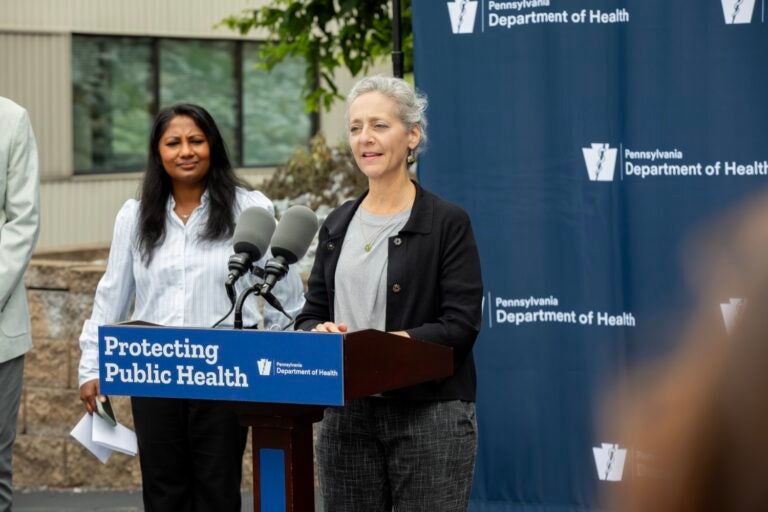
Pennsylvania Secretary of Health Dr. Debra Bogen addresses measles cases and an ongoing outbreak in the Lebanon-Lancaster counties’ region at a press conference in Lancaster, Friday, June 26. (Courtesy of Pennsylvania Department of Health)
From Philly and the Pa. suburbs to South Jersey and Delaware, what would you like WHYY News to cover? Let us know!
A measles outbreak in south and central Pennsylvania is growing, especially among unvaccinated children and adults.
Of the 84 measles cases the state has confirmed so far this year, 72 infections are linked to an outbreak that began in the area of Lebanon and Lancaster counties in late April.
State and local health officials say they’re racing to vaccinate as many people as possible who have not already been immunized and contain the spread of disease among those who are vulnerable.
“Our epidemiologists, our community health nurses, and our local partners are working diligently to get measles under control,” said Pennsylvania Secretary of Health Dr. Debra Bogen during a visit to Lancaster on Friday. “We have a robust, proven contact tracing system in place, and we will not slow down until this outbreak is over.”
However, Bogen did not fully answer questions about the exact origin of this measles outbreak and why it might be specifically affecting the south-central region of the state.
What are symptoms of measles, and what does infection look like?
Measles is a highly contagious viral disease. People who have not gotten the recommended two doses of the measles, mumps and rubella vaccine or have compromised immune systems are most at risk of contracting and then spreading the disease.
Early signs of infection can appear about seven to 14 days after exposure and include cough, runny nose, red, watery eyes and a fever. Small white spots, called Koplik spots, may develop inside the mouth about two to three days after initial symptoms.
A skin rash, the hallmark of measles, appears on the head and other parts of the body about three to five days after first signs of illness, according to the American Academy of Pediatrics. The spots are usually flat, but sometimes raised, and not itchy.
Children and adults with measles may also have diarrhea or ear infections. While most people survive the disease, infection can lead to complications like pneumonia, encephalitis or brain swelling, deafness, intellectual disability and, in rare cases, death.
Penn State Health Lancaster Medical Center is among the local hospitals treating patients in the Pennsylvania measles outbreak.
Penn State infectious disease expert Dr. Fahmida McGann said some people have been hospitalized for several days for electrolyte abnormalities, kidney and liver dysfunction, and blood count abnormalities, “which left them exposed to serious organ failures, secondary infections, as well as bleeding.”
Related Content
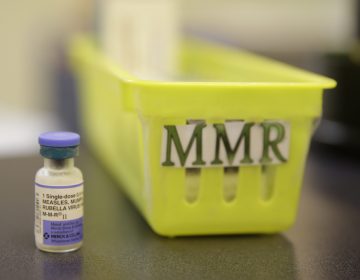
Pennsylvania has reported 12 confirmed cases of measles so far in 2026 and is on track to surpass last year’s total of 16 infections.
6 months ago
Listen 1:15How does measles spread, and when is someone contagious?
A person with measles is contagious from four days before through four days after their rash appears, according to the Centers for Disease Control and Prevention, which means they can spread the virus to other people before even knowing they are infected with the disease.
The virus spreads when an infected person sneezes, coughs or talks and another person comes into contact with their respiratory droplets.
Measles can linger in the air and on surfaces for up to two hours, meaning people can be exposed even without direct contact with the infected person.
A single person with measles can infect up to 18 unvaccinated people, according to the World Health Organization.
Most people who’ve had at least two doses of a measles vaccine are considered immune and protected for the rest of their lives, and face minimal risk overall, even during local outbreaks.
People who are more vulnerable to infection include infants too young to be vaccinated, pregnant women and those who are immunocompromised, which could involve people with certain chronic diseases, patients getting cancer treatment, organ transplant recipients and elderly residents, public health experts said.
“I recently advised a family member against traveling to this area with her preemie newborn, who just got home from the [neonatal intensive care unit],” McGann said Friday in Lancaster.
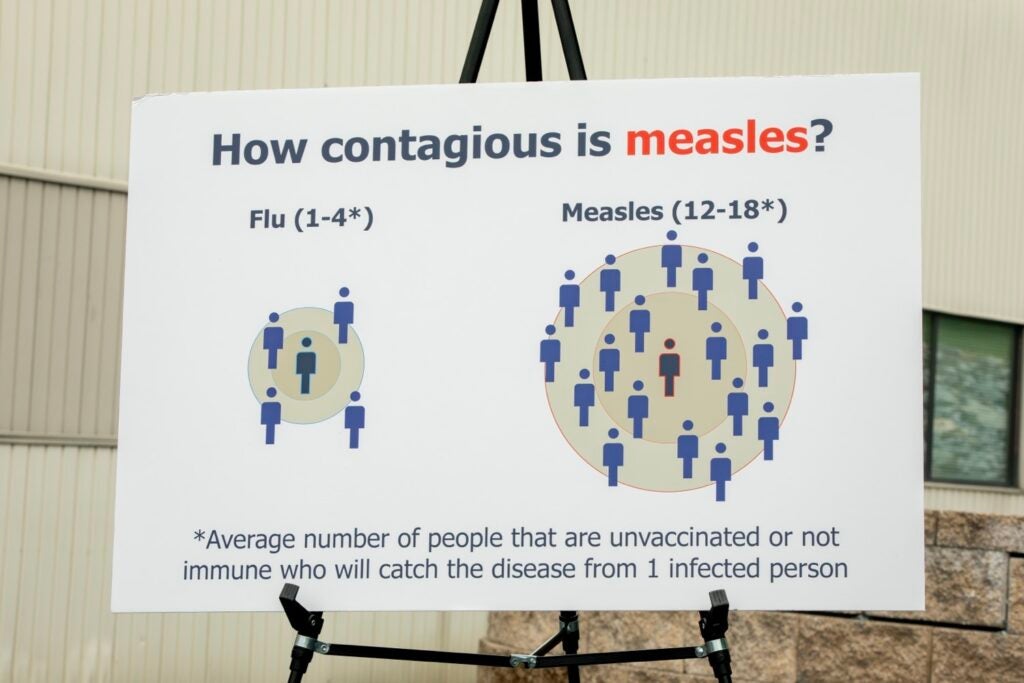
Prevention and protection against measles
Measles vaccination is the best way to protect against infection, Bogen said.
The vaccine, first approved in the United States in 1963, is about 97% effective against the virus. The American Academy of Pediatrics and the American Academy of Family Physicians recommend babies get their first dose after 12 months old and their second between 4 and 6 years old.
Families may be able to get their children vaccinated earlier if they plan to travel to areas with known measles outbreaks or internationally.
Adults can also get a measles shot if they’ve never been immunized or are unsure of their vaccination status.
The Pennsylvania Department of Health, along with county health departments and state health centers, has been working to boost community immunization rates.
State health centers have administered 1,300 measles vaccine doses so far in 2026, including more than 430 doses at recent pop-up clinics in the Lancaster-Lebanon region over the last two months.
“We’re meeting people where they are, answering their questions honestly and breaking down barriers to care,” Bogen said.
Anyone who suspects that they or someone in their family has been infected with measles should call ahead to their pediatrician’s office, health care provider or hospital before seeking in-person care.
Residents can also call the state Department of Health to confidentially report measles symptoms that they are experiencing at home.

Get daily updates from WHYY News!
WHYY is your source for fact-based, in-depth journalism and information. As a nonprofit organization, we rely on financial support from readers like you. Please give today.
Amid CDC turmoil, Pennsylvania joins Northeastern states in regional public health coalition
The Northeast Public Health Collaborative has formed working groups to identify opportunities for states to share emergency public health planning and response resources.
12 months ago
Pennsylvania pharmacies can now refer to major medical organizations for COVID-19 vaccine recommendations in the absence of CDC guidance.
1 year ago
Bucks County health officials report new measles case, warn local residents of possible exposure
A local Bucks County adult tested positive for measles after returning from a trip to Texas, health officials said.
1 year ago
Listen 1:06