PECO strike ends as union and utility announce deal
IBEW Local 614 is celebrating a deal that offers pensions to recent hires and boosts health care coverage. Union members will now vote on whether to ratify the contract.
Listen 1:20
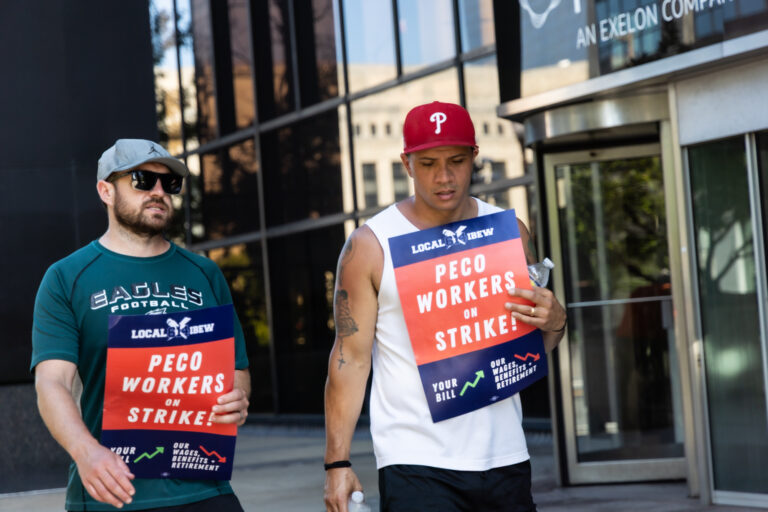
Striking PECO workers walked a picket line in front of the company’s headquarters at 23rd and Market in Philadelphia on July 4, 2026. (Kimberly Paynter/WHYY)
From Philly and the Pa. suburbs to South Jersey and Delaware, what would you like WHYY News to cover? Let us know!
A deal between PECO and its unionized workforce has ended a tense three-day strike, the company’s first walkout in its 145-year history.
Along with wage increases, the International Brotherhood of Electrical Workers Local 614 is celebrating a tentative agreement that includes pensions and retirement health benefits for recent hires, a main sticking point for the 1,600-member bargaining unit that includes linemen, gas technicians and call center workers. The members now need to vote to ratify the five-year contract.
IBEW Local 614 business manager Larry Anastasi called it a “historic win.”
“Tonight, we declare victory,” said Anastasi. “This is the beginning of a new era at PECO, one where greed does not go unchecked and the workers who make modern life possible get the respect and dignity we are owed.”
Related Content
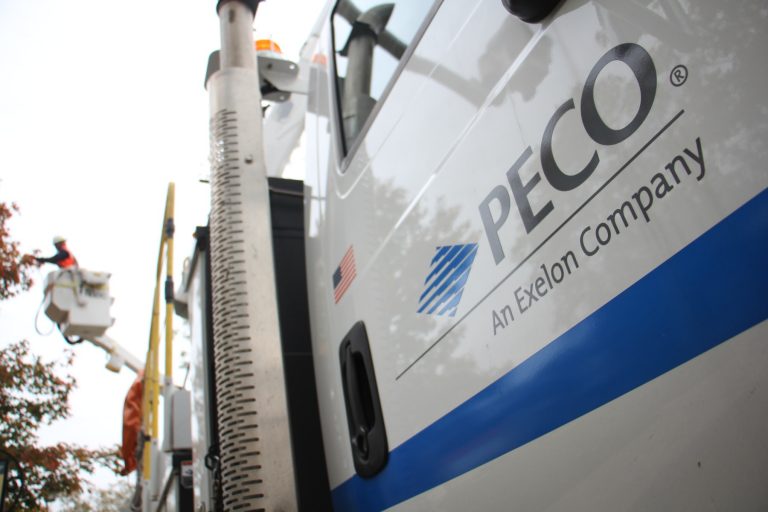
PECO’s profits skyrocket almost 50% after 2025 rate hikes
Critics say investor-owned utilities, which enjoy a monopoly, earn too much at the expense of ratepayers. PECO says the increased rates fund needed infrastructure upgrades.
7 months ago
Listen 1:15What’s in the PECO deal?
About 600 workers, who have been hired since 2021, had not been eligible for the same regular defined benefits as more tenured employees, and instead are provided a 401(k) plan.
The new agreement provides raises of 4% each year for linemen and gas technicians over the next four years, and 4.5% for the fifth year of the contract. Call center employees will receive 3% each year over the five-year length of the contract. The union had sought to raise wages equally across the board, saying the bulk of the call center workforce are women, while the linemen and technicians are primarily men. The agreement also guarantees 24-hour notice of mandatory overtime to call center employees and an increase in upgrade pay, which is compensation for filling in for a higher-paid position.
In a statement, PECO said during negotiations it “remained focused on doing what is right for our customers, employees, and the communities we serve.”
“This tentative agreement reflects our commitment to recognizing the important contributions of our represented employees while ensuring we continue to provide the safe, reliable energy service our customers depend on every day,” PECO said in a statement.
-
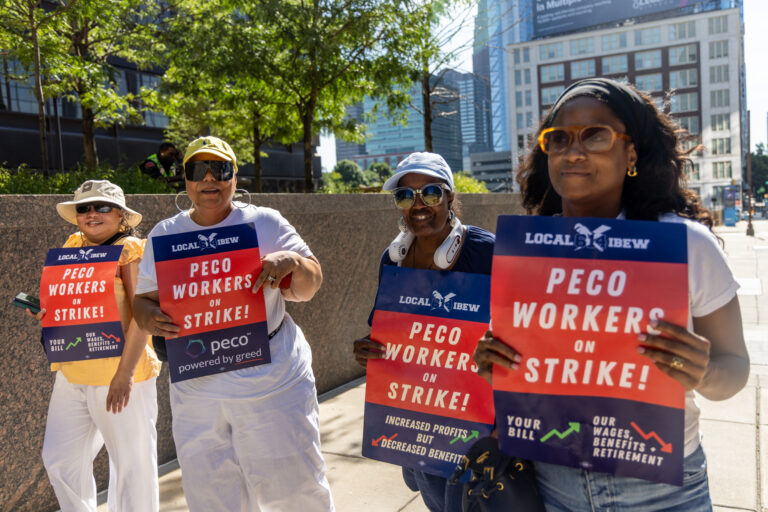
PECO customer service representatives on the picket line outside company headquarters on Market Street in Philadelphia, July 4, 2026. (Kimberly Paynter/WHYY) -
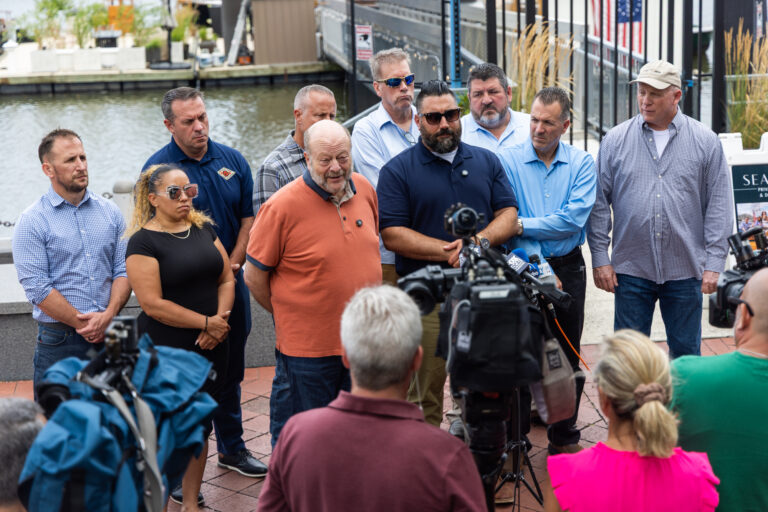
Stuart Davidson, IBEW Local 614 counsel, Larry Anastasi IBEW Local 614 president and bargaining committee members updated the press on the state of negotiations outside the Hilton Penn’s Landing in Philadelphia on July 6, 2026. (Kimberly Paynter/WHYY) -
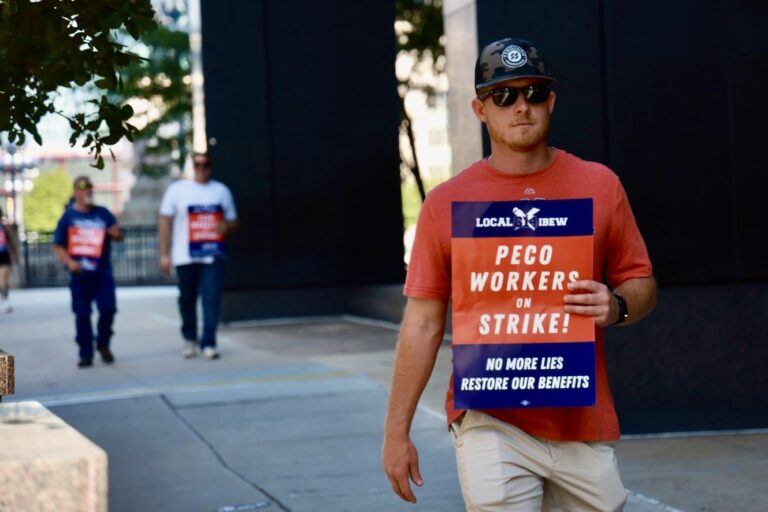
Striking PECO workers picket outside the company headquarters at 23rd and Market Streets in Philadelphia on July 4, 2026. (Kimberly Paynter/WHYY) -
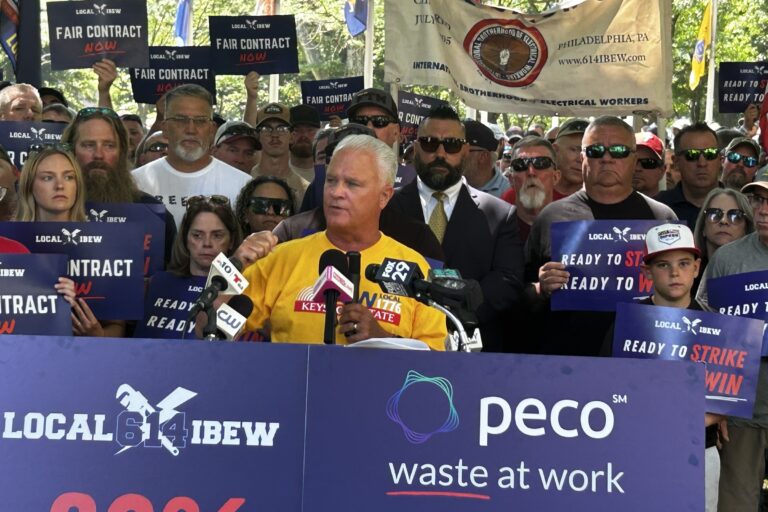
Wendell Young, leader of UFCW local 1776, speaking in Washington Square Park on June 25, 2025. (Susan Phillips/WHYY) -
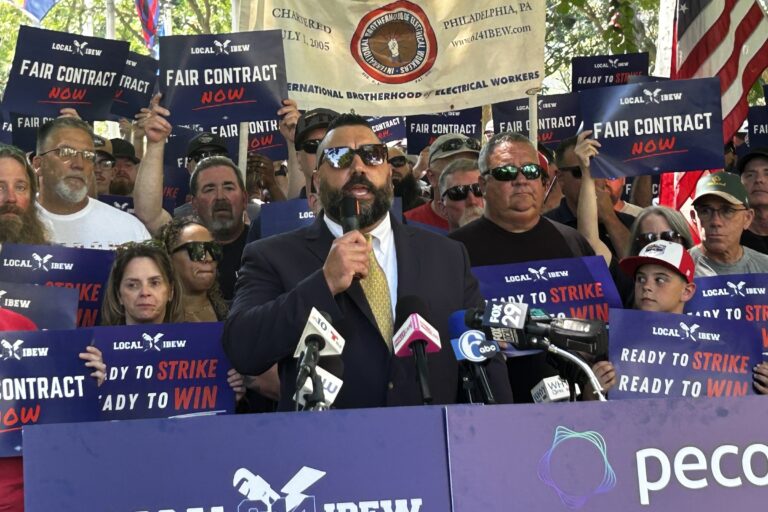
Larry Anastasi of IBEW local 614 speaks at a rally in Washington Square Park on June 25, 2025. The union says it will strike on July 4 if they don’t reach an agreement with PECO. (Susan Phillips/WHYY)
PECO strike ends after dangerous heat, storms and rising tensions
The workers hit the picket lines on Saturday as temperatures soared into the triple digits and storms knocked out power for about 150,000 customers over the weekend, according to PECO. The utility said 99% of those outages have been restored.
The striking employees are expected to return to work Wednesday.
“Our three-day strike showed just how much PECO needs Local 614,” Anastasi said. “Without our labor, our expertise, and our experience, PECO saw widespread outages that they were slow to address. We are not easily replaced. We feel deep appreciation for the ratepayers and the public, whose support for our members never wavered, even in the heat and the storms.”
PECO provides electricity to 1.7 million residents and businesses in Philadelphia and the surrounding suburbs. It also serves about 550,000 suburban customers with natural gas.
The union said some of their workers are paid 30% less than the prevailing wage and pointed to company profits as the reason for wage increases.
“For years, PECO has disrespected, devalued, and denigrated the men and women who keep the lights on and gas flowing,” Anastasi said. “Management stole our pensions, eroded our medical benefits, and exploited our wages while jacking up rates, recording record profits, and skimming the fat for the C-suite. This contract begins to right those wrongs.”
PECO’s profits jumped 50% last year as a result of the 2025 rate increase. PECO is a subsidiary of Exelon, a publicly traded company that owns six utilities, including Atlantic City Electric and Delmarva Power and Light. Exelon’s President and CEO Calvin Butler earned $24.6 million in 2025, including stocks.
The deal means PECO will not have to rely solely on out-of-state contractors at the height of storm season.
It also avoids ratcheting up the tension that had already plagued the picket line, with each side lobbing accusations against the other.
On Saturday, the union said three of its members were assaulted by company security in separate incidents. PECO denied the allegations.
PECO said it has had to beef up security to accompany non-union workers to repair outages because “union protestors are showing up at restoration sites and impeding that work.”
The union disputed that, saying it had engaged in lawful pickets and accused PECO of deliberately disabling its publicly accessible power outage map to avoid transparency. The company said it disabled part of the website detailing outages due to security concerns, but said the number of outages is still viewable.
Anastasi said earlier on Monday that if IBEW Local 614 workers were in the field, instead of out-of-state contractors, the lights would have been turned on quicker.
PECO and the union have also been at odds regarding each side’s commitment to reach an agreement. Both have filed unfair labor practice complaints.
But by Monday night, both sides seemed eager to move forward.
“We value our long-standing relationship with IBEW Local 614 and appreciate the efforts of both bargaining teams in reaching this agreement,” PECO said in a statement. “The proposed contract recognizes the contributions of our employees while supporting our responsibility to deliver reliable, affordable service across southeastern Pennsylvania.”
“We look forward to continuing our partnership with IBEW Local 614 as we remain focused on serving our customers, powering our communities, and supporting the region’s continued growth and success.”

Get daily updates from WHYY News!
WHYY is your source for fact-based, in-depth journalism and information. As a nonprofit organization, we rely on financial support from readers like you. Please give today.

PECO strike continues as union says company won’t budge
The union says PECO is dragging its heels to wear them out. PECO accuses the union of blocking restoration work.
3 months ago
PECO bills will rise by about $5 on average starting June 1
The increase comes as rising demand and infrastructure costs continue pushing electricity bills higher.
4 months ago
Listen 1:01
PECO employees union allege company isn’t bargaining in good faith as midnight deadline nears
The stalemate comes one day after PECO filed a rate hike request with the Pennsylvania Public Utility Commission.
6 months ago