‘Strawberries to collard greens’: The Original American Foundation grows free food in Kingsessing
Founders of the Original American Foundation say their goals are to lower food costs for neighbors and prevent gentrification.
Listen 0:55
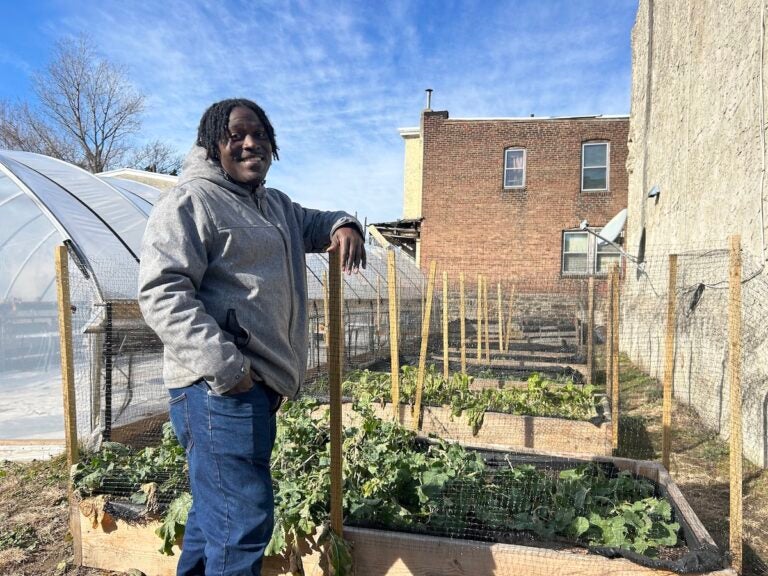
Original American Foundation co-founder Jovian Patterson stands next to a raised bed filled with greens overwintering at the community garden in Southwest Philadelphia. (Sophia Schmidt/ WHYY)
Have a question about Philly’s neighborhoods or the systems that shape them? PlanPhilly reporters want to hear from you! Ask us a question or send us a story idea you think we should cover.
When Jovian Patterson returned to Philadelphia in 2008 after six years away in the U.S. Navy, he found that the block where he’d grown up in the Kingsessing neighborhood had changed.
More of the rowhouses had been demolished and replaced by empty lots.
“It was a lot of trash, a lot of overgrown grass. It was just so much land out here,” Patterson remembered. “One of the first things I thought about was gentrification. Like, I knew what was going to happen here.”
So Patterson, who now lives in the Cobbs Creek neighborhood of West Philadelphia, teamed up with his childhood friend, Robert Haley, who remained in Kingsessing where the two had grown up. They decided to use that vacant land to benefit the community.
Now, Patterson and Haley run a small nonprofit called the Original American Foundation. They grow crops, plant trees and host community events on roughly two dozen vacant lots in a three-block area in Southwest Philly.
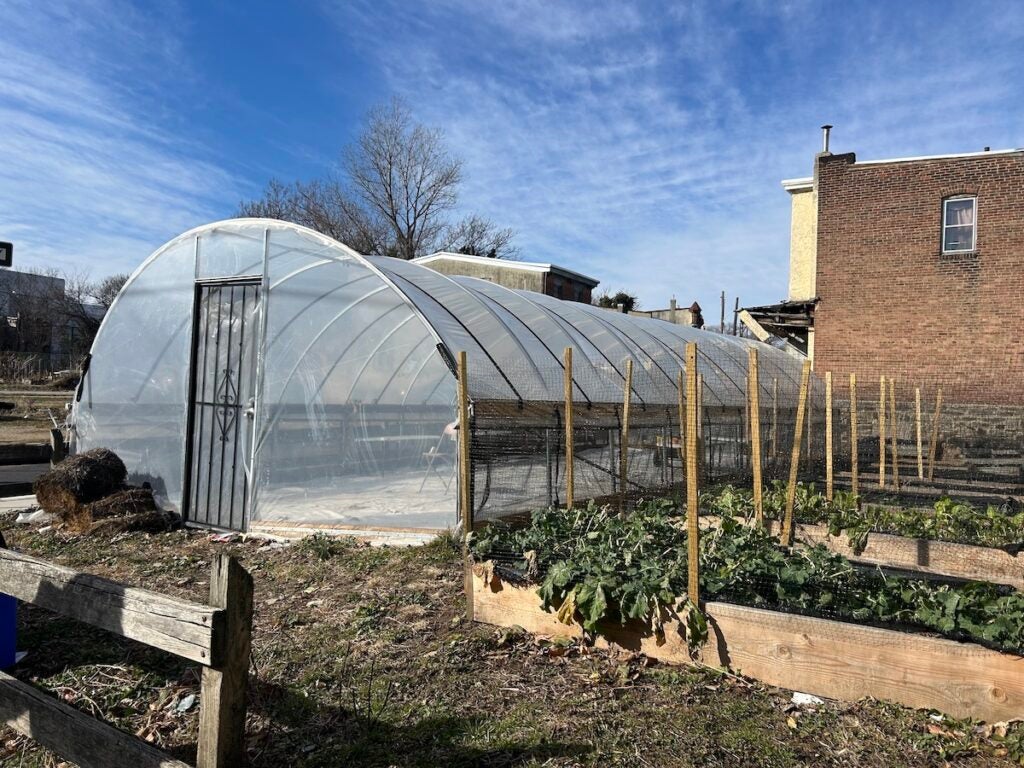
Last year, the organization took a significant step toward securing vacant land for community purposes: purchasing its first parcels from the Philadelphia Land Bank.
Free produce for neighbors
The Original American Foundation started growing food six years ago in just two raised garden beds, said Haley, who lives down the street from the garden.
At the time, Haley’s goal was to lower the cost of living for his neighbors and provide another option for fresh produce. The area has a single grocery store, supplemented by corner stores that Haley said “price gouge.”
“I wanted to make a small difference in that, with the two boxes,” he said. “I never dreamed that it would grow to be what it is now.”
The organization now grows food in dozens of raised beds built by Haley, a general contractor and woodworker. The organization plans to start growing seedlings in a new greenhouse in the coming months.
Last year, the organization delivered free bags of produce to several dozen households on the surrounding blocks, Haley said. Patterson, the organization’s executive director and lead gardener, said the group’s focus is on crops native to the Americas and culturally significant to neighbors.
“We grow everything from watermelons to elderberries to strawberries to collard greens,” Patterson said. “We do sweet potatoes, white potatoes, sorrel, ginger.”
Related Content
Philadelphia Land Bank buys 35 garden lots, advancing land preservation plan
The lots were once tangled up with privately held tax liens. The Land Bank can now transfer them to gardeners and land trusts.
5 months ago
Listen 1:06The organization also aims to teach nearby residents, especially kids, basic gardening and carpentry skills. Community events last year featured archery and botanical art. Haley leads workshops on how to build raised garden beds.
“Hopefully this will spark creativity or even spark a career for some of the younger ones that come through, just to see how cool it is to be able to build something and use it,” Patterson said.
Purchasing lots from the Land Bank
Until last year, the Original American Foundation did not own the vacant land it farms on. That’s the case for many community gardens in Philadelphia, which are considered at risk of being lost to development.
That started to change for the Original American Foundation last year. The nonprofit purchased six lots from the Philadelphia Land Bank last spring — five along S. Allison Street and one on Paschall Avenue, where the greenhouse now stands.
The land bank can transfer vacant lots to community gardens at discounted or nominal prices. But Patterson said the process was complicated and took years to complete.
In 2022, City Council passed a resolution approving the land bank to dispose of the properties Patterson had applied for. Almost two years later, he testified before a City Council committee that he was still waiting for the process to move forward.
“We got the resolution for [the lots], but it just stopped at the resolution,” he said. “We’re still confused as to what happens next.”
Land bank spokesperson Jamila Davis said it took over a year for the city-owned parcels to be transferred into the land bank after the project was approved, then the Original American Foundation required time to review the purchase agreement before signing it.
“The application itself was very, very complicated,” Patterson said. “I speak English, but I don’t speak legalese.”
The nonprofit turned to the Public Interest Law Center for help navigating the legal documents, Patterson said.
The Original American Foundation then found a title company familiar with the land bank’s process through another community garden, the César Andreu Iglesias Community Garden in the Norris Square neighborhood of North Philadelphia.
While the land itself cost just a few dollars, Patterson said paying the title company and closing costs totalled around $4,000. He said the organization used grants from William Penn Foundation and the city’s Community Resilience & Environmental Justice Fund.
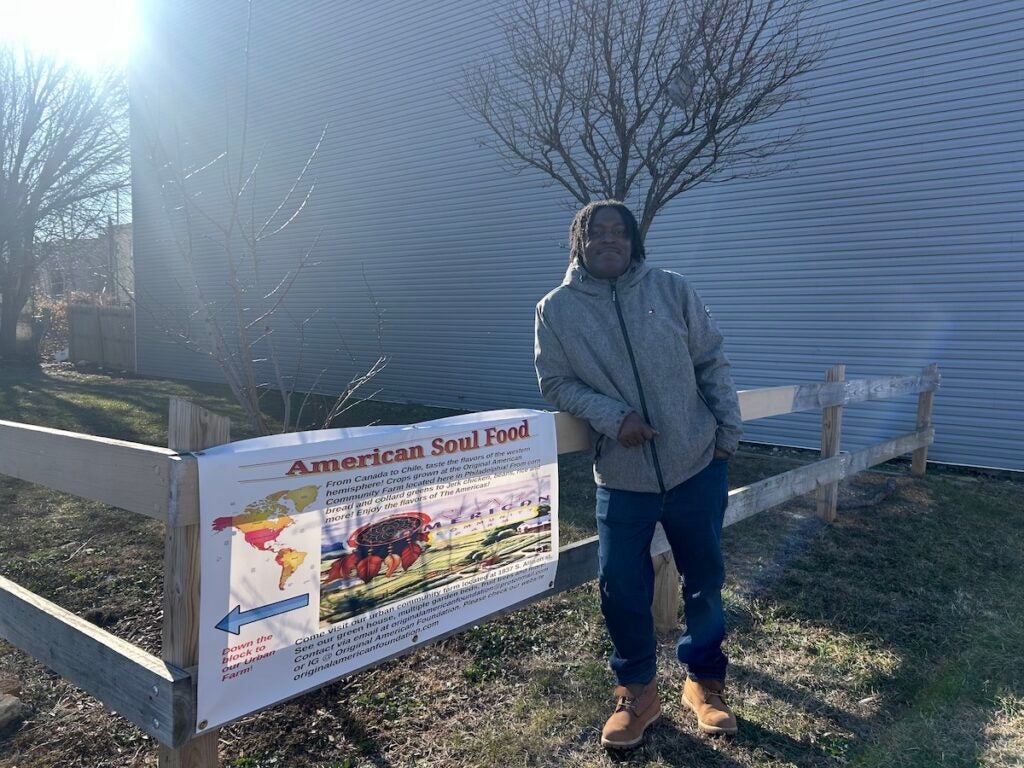
Patterson’s advice for other organizations looking to replicate their success in purchasing land: Do your homework about the land bank’s processes on the front end, have several thousand dollars in a business bank account before starting the process and connect with other gardeners to exchange resources and information.
“Getting in the network of the gardeners and the farmers within Philadelphia, I would say, it’s almost a must,” Patterson said.
Related Content
Concrete is a big contributor to climate change. Penn researchers say they can shrink its footprint
Concrete reabsorbs some of its carbon emissions over time. Alternative ingredients and 3D printing could help supercharge that by making the finished concrete more porous.
2 months ago
Listen 1:12Securing vacant land
Patterson said the Original American Foundation has applied for a few more parcels from the land bank. He hopes the organization can obtain several others under a city plan to preserve garden lots that were previously tangled up with privately held tax liens.
Some of the vacant lots hold memories for Patterson: an old basketball court where he used to play with friends and the space where his first home once stood.
“It used to be houses with family members and friends that used to live here, that no longer live in this area,” he said.
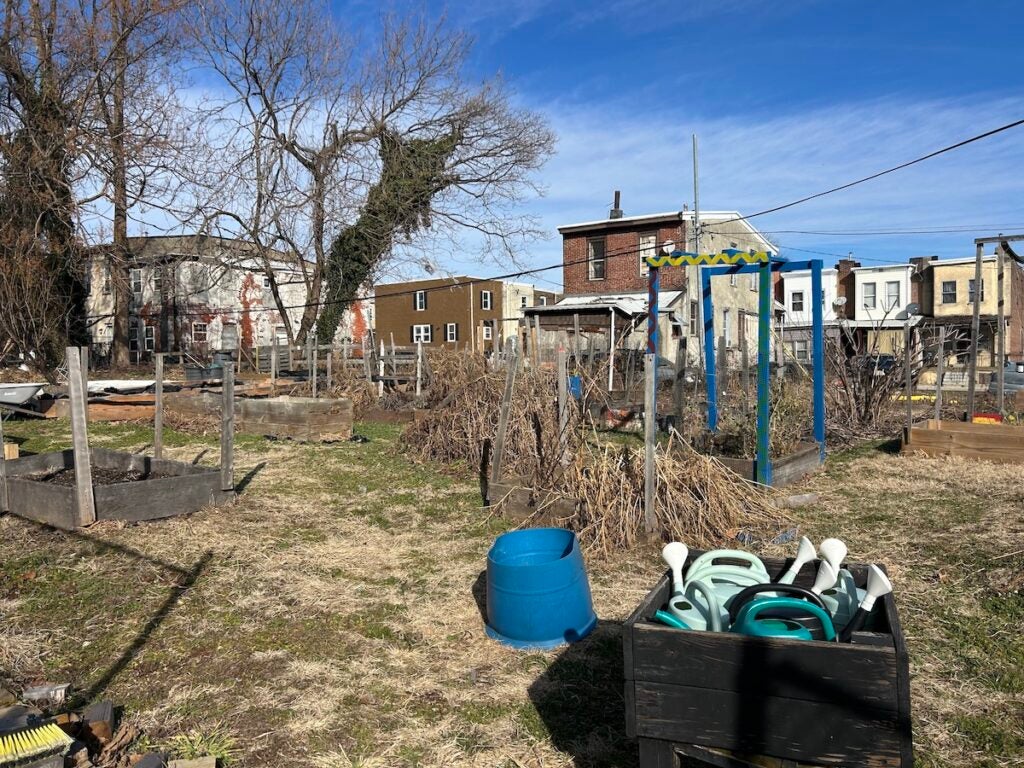
Owning land makes the organization eligible for more grants and ensures its work can continue, he said.
“When you have that ownership, that stops [the land] from being sold right up under you,” he said.
Patterson also hopes that by purchasing the land it farms on, the Original American Foundation can help prevent developers from gentrifying Kingsessing.
“If it blocks the sheriff’s sales, it blocks the people from coming in and building a high rise and things like that,” he said.
Haley said while he doesn’t think the organization can stop gentrification, it can ensure that green spaces remain in the neighborhood, even if developers build on other parcels.
“That was always my goal, is to lock down those green spaces,” he said.
Disclosure: The William Penn Foundation supports WHYY. WHYY News produces independent, fact-based news content for audiences in Greater Philadelphia, Delaware and South Jersey.

Subscribe to PlanPhilly
WHYY is your source for fact-based, in-depth journalism and information. As a nonprofit organization, we rely on financial support from readers like you. Please give today.
Brought to you by PlanPhilly

PlanPhilly
In-depth, original reporting on housing, transportation, and development.
No new Philly anti-dumping initiatives in Parker’s third budget proposal
Parker’s $7 billion budget proposal would continue existing efforts to combat litter and illegal dumping and add funding for 125 cameras.
5 hours ago
The investments are meant to bolster the mayor’s plan to create and preserve 30,000 housing units amid an affordable housing crisis.
16 hours ago
‘Not salvageable’: Inside William Way’s decision to build a new Center City headquarters
The nonprofit plans to demolish its longtime home on Spruce Street to make way for a new building that will also feature affordable apartments.
3 days ago
Listen 1:05