


After 2 centuries, this historic Mt. Airy home may be demolished
The city recently determined that the Leibert House is “imminently dangerous.” It’s unclear if its owners will move to repair the property.
Listen 1:13
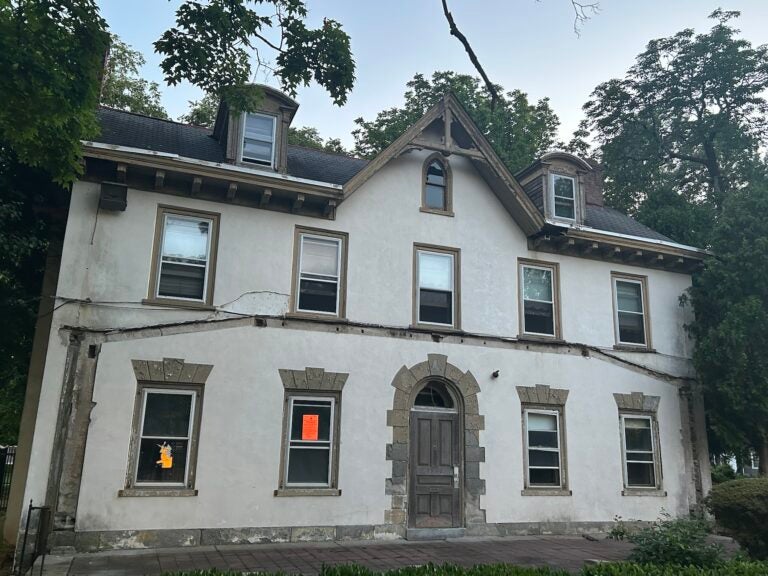
The Leibert House in Mount Airy is considered "imminently dangerous" and may be demolished. (Aaron Moselle/WHYY)
Have a question about Philly’s neighborhoods or the systems that shape them? PlanPhilly reporters want to hear from you! Ask us a question or send us a story idea you think we should cover.
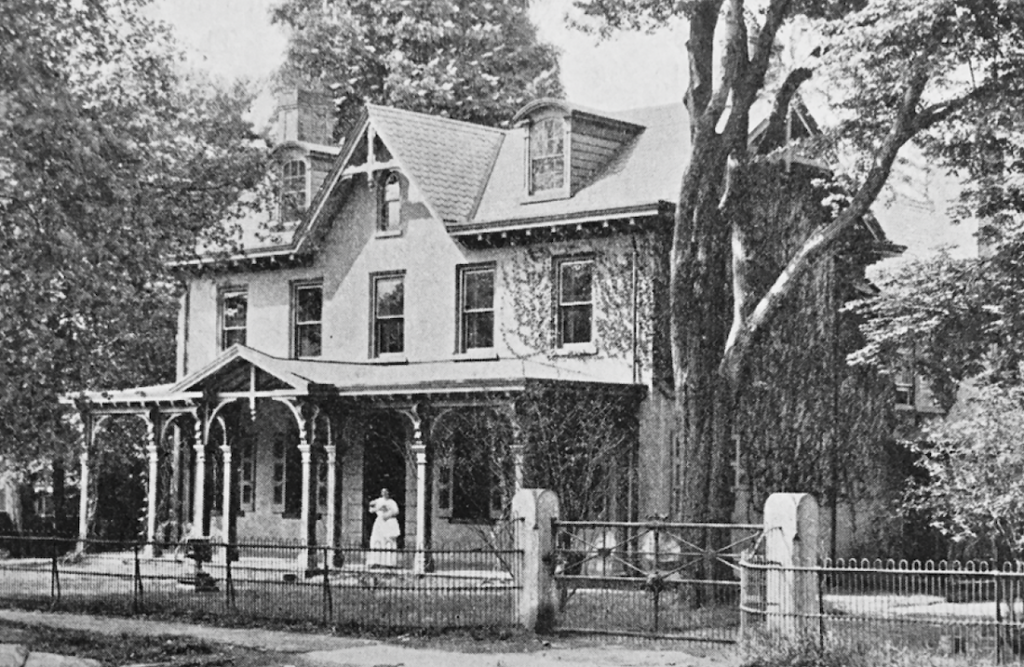
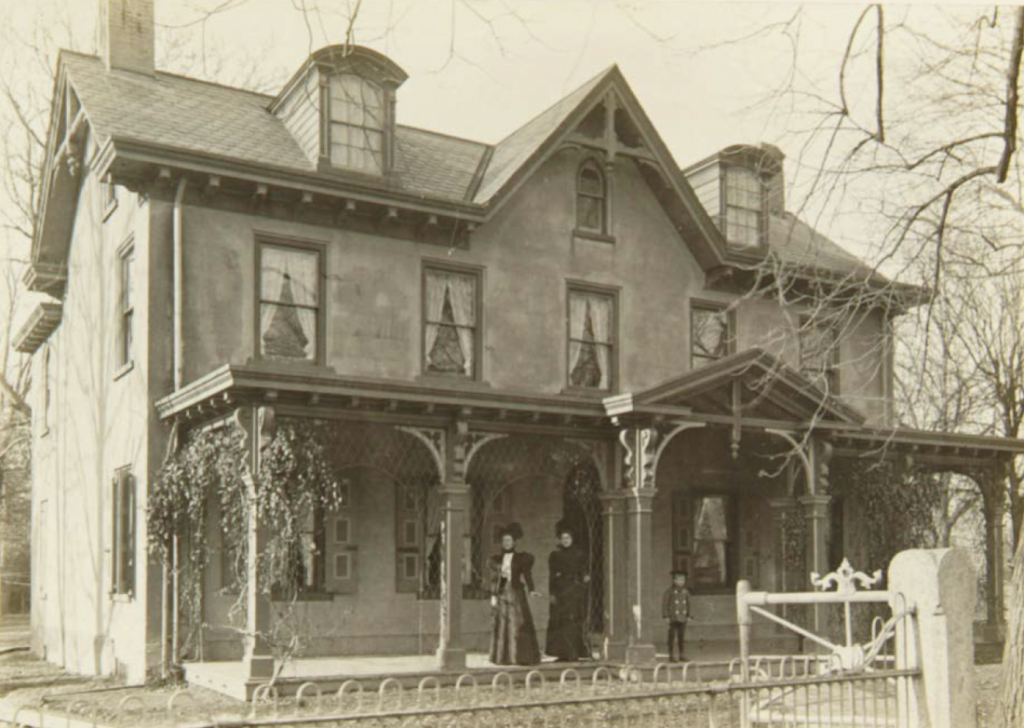
Around 1808, decades before Mount Airy became part of Philadelphia, a prominent bookbinder finished building a stone mansion along Germantown Avenue near Gorgas Lane.
The L-shaped property would remain in William Leibert’s family for nearly a century. It was then sold to the Evangelical Lutheran Church and used as an orphanage and home for the “aged and infirm.”
These days, though, the historic building is vacant and falling apart, alarming preservationists who worry the home’s next chapter could involve a wrecking ball.
“My fear is that they will just demolish the whole building,” said Oscar Beisert, director of the Keeping Society of Philadelphia.
For now, the property’s future is murky.
In May, the city’s Department of Licenses and Inspections deemed the building “imminently dangerous,” meaning it could collapse. The determination is rooted in a handful of violations, including issues related to the home’s interior, load bearing walls and main roof, according to public records.
There are no immediate plans to demolish the Federal-style building, however.
“The department will continue to monitor the situation and if conditions warrant emergency action to protect public health or safety, it will take the appropriate measures in accordance with its authority,” a L&I spokesperson said in a statement.
Related Content
Philadelphia Housing Authority to develop long-vacant Fairhill lot, benefitting low-income seniors
Amid a shortage of senior housing, the project will bring deeply affordable apartments for older adults and new homeownership opportunities to the neighborhood.
3 months ago
Listen 0:52Next steps for preservation
Repairing the property would fall to NewCourtland. The nonprofit operates nearly 600 units of affordable housing, primarily for older adults. The portfolio includes a 180-bed nursing and rehabilitation facility, which sits on the same grassy campus where the Leibert House is located.
NewCourtland has expressed interest in tearing down the building to expand its facility on the campus, but it’s unclear if that remains the case. The house is now historically designated at the city level, meaning NewCourtland would need approval from the Philadelphia Historical Commission to do any demolition.
NewCourtland President Joe Duffey said the organization is taking a “thoughtful, informed approach” to evaluating the future of the Leibert House.
“To inform our decision-making, we are in discussions with the Preservation Alliance for Greater Philadelphia, engineering experts, and government officials to better understand the opportunities, challenges, and responsibilities with the site as we determine the most appropriate next steps,” Duffey said in a statement.
A spokesperson for NewCourtland called the decision a “priority” but could not provide a timeline for the process.
The city has ordered the nonprofit to hire a licensed engineer to assess the property to “determine the extent of the structural defects,” according to public documents. The company must also install “temporary protections of the public way and adjacent properties” and pay for a detailed remediation plan before making any repairs, among other requirements.
L&I cannot force a private owner to make repairs, however, even if the building is historically designated. The department can only impose fines and place liens on a property to enforce the building code.
The historical commission also lacks that authority.
“There’s no preservation jail, we often say,” said Paul Steinke, executive director of the Preservation Alliance for Greater Philadelphia.
Tearing down a historic property that’s been neglected is not unheard of in Philadelphia, but it is uncommon. The most recent example, said Steinke, was 19th Street Baptist Church in South Philadelphia. Designed by famed architect Frank Furness, the 19th century building was demolished last year after a protracted, and ultimately unsuccessful, effort to save it.
The front porch of the Leibert House was previously removed, but Beisert, who nominated the building for historic designation, is cautiously optimistic that the rest of the property can be preserved if it’s repaired.
As Philadelphia prepares to celebrate the nation’s 250th anniversary, he said it would send the wrong message if it wasn’t.
“The 250 priorities to me are just totally out of whack,” Beisert said. “We’re restoring meaningless commercial buildings on Market Street and these buildings are rotting.”

Get daily updates from WHYY News!
WHYY is your source for fact-based, in-depth journalism and information. As a nonprofit organization, we rely on financial support from readers like you. Please give today.
Brought to you by PlanPhilly

PlanPhilly
In-depth, original reporting on housing, transportation, and development.
North Philly development will bring 129 affordable rentals to Temple University area
The six-story project represents the final phase of a yearslong effort to redevelop Norris Homes, a traditional public housing site that was demolished between 2011 and 2019.
1 week ago
Listen 1:04
Mayor Parker vows to help preserve hundreds of subsidized rentals in the West Philly area
The announcement comes more than a year after the owner of Neighborhood Restorations told the city he planned to sell his portfolio of affordable units.
2 weeks ago
Listen 1:34
Why Philly’s public housing costs an average of $315,000 per unit
PHA’s $6.3 billion plan would remake its aging housing portfolio. Its per-unit estimate, which rivals the value of many Philadelphia homes, doesn’t tell the full story.
4 weeks ago
Listen 1:59