

‘Blink of an eye’: Penn researchers launch clinical trial for faster form of cancer radiation therapy
FLASH radiation therapy delivers a high-velocity proton beam at tumor sites. The approach could be a faster, more accurate type of cancer treatment.
From Philly and the Pa. suburbs to South Jersey and Delaware, what would you like WHYY News to cover? Let us know!
Roughly half of all people with cancer need radiation therapy. It’s an effective way to kill cancer cells and shrink tumors, but the treatment can cause side effects and long-term health issues.
The process can also be time-consuming, as it requires people to get small doses of treatment spread out over many appointments for weeks at a time.
Researchers at the University of Pennsylvania are now testing a new type of radiation treatment that they hope is both faster and more effective at sparing healthy tissue. Known as FLASH proton therapy, the team is launching the first pilot clinical trial of its kind this fall, Penn Medicine officials announced Tuesday.
“We are now able to deliver radiation at very high velocity,” said Dr. Alexander Lin, an oncologist and professor at Penn’s Perelman School of Medicine and the study’s lead investigator. “That’s why we call it FLASH. We can deliver treatment literally in less than one second.”
The pilot study will recruit about 10 patients this fall with recurring head and neck cancers that cannot be removed with surgery and need additional radiation therapy.
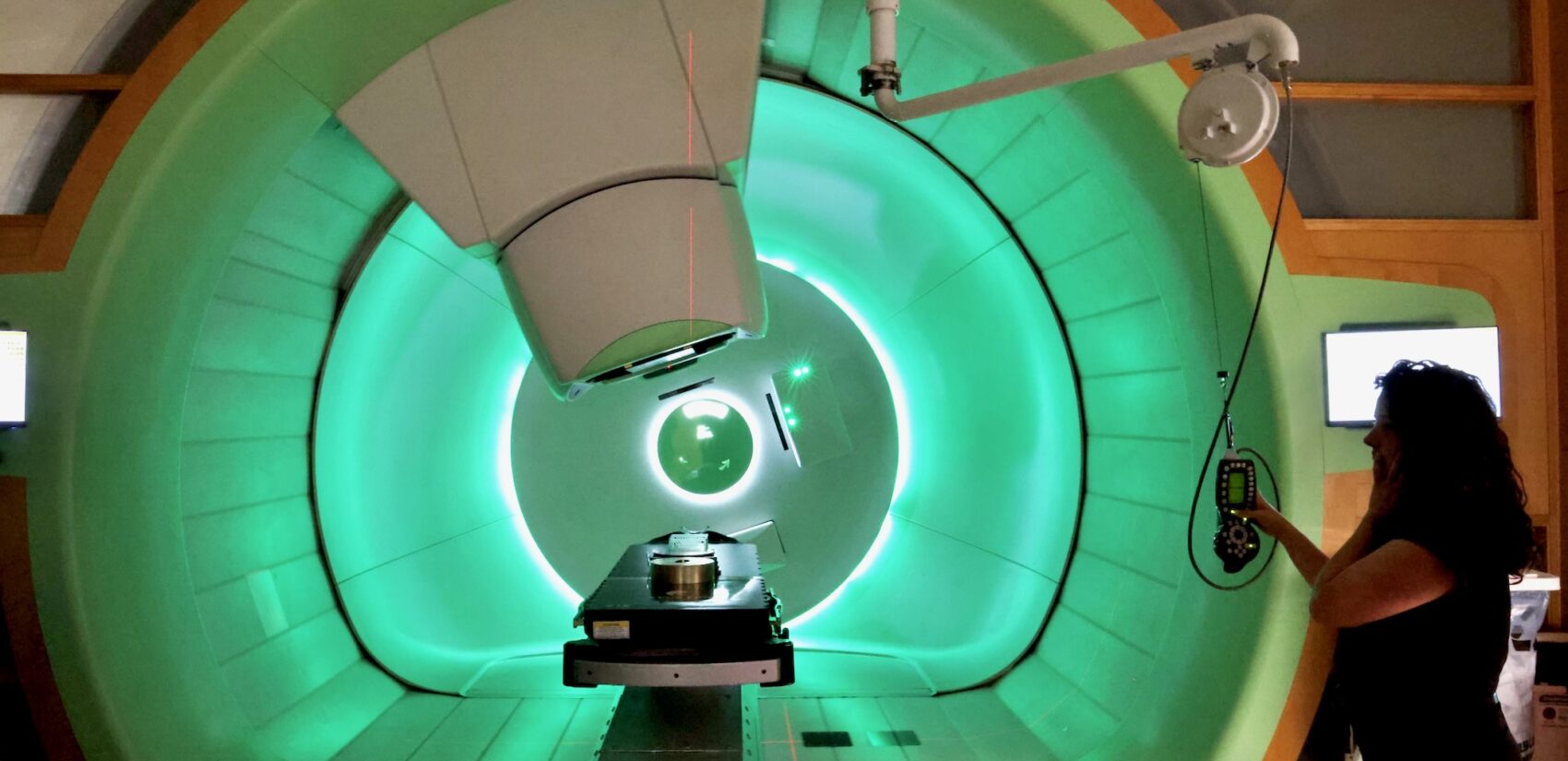
If researchers can prove that FLASH is feasible and safe, they will move on to larger nationwide clinical trials in the hopes of one day making it a standard option for cancer treatment everywhere.
“I think something as transformative as FLASH, where you’re actually significantly increasing the velocity and the dose rate of radiation, that’s a major leap forward, potentially,” Lin said.
Related Content

Medical advances mean that more people are surviving cancer. But not everyone is benefiting from those gains equally, a new report shows.
4 months ago
Listen 2:06Using precise proton radiation therapy for cancer
More than 10,000 patients have been treated at Penn Medicine’s Roberts Proton Therapy Center in West Philadelphia since it opened in 2010. Patients come from near and far to get radiated with beams of protons, or positively charged particles that destroy cancer cells at specific points inside the body.
Inside a single treatment room at the center, several machines hum along in the background. In the middle of the room, a flat, hard table sits under a massive dome. The protons are fired from a nozzle-type device attached to the dome that is aimed directly at the table.
“This whole thing rotates,” Lin said as he gestured to the dome. “When a patient gets treatment on the table, let’s say you have to treat a specific location, this rotates around the patient to use beams of radiation customized to the anatomy of a patient.”
It’s an impressive setup. Proton radiation therapy was approved for cancer treatment in the late 1980s as an alternative option to traditional photon radiation, which is still widely used today.
But it took time for health systems and hospitals to adopt the technology due to costs and logistics. A cyclotron, or particle accelerator, is needed to generate the protons used in treatment, but the machine can weigh up to 200 tons.
“It literally had to be crane-lifted down into the ground when we built this center,” Lin said. “That’s what powers and produces all the protons we use for every patient who gets treatment. So, we have one cyclotron and there are these lines, called a beam line, that sends [protons] to each one of our rooms.”
Unlike photon radiation, which uses X-ray beams that enter the body to reach the tumor and then continue through the body to exit, proton radiation was designed to be more precise.
Charged protons hit the tumor site, but the particles stop there, meaning the radiation doesn’t continue through the body, sparing more healthy tissue from damage.
But the treatment still comes with consequences and lingering health issues, especially for patients with head and neck cancers, Lin said.
“They’re cured, but then they live with side effects such as dry mouth or changes in taste or the ability to enjoy food,” he said. “Sometimes difficulty swallowing or scar tissue in their neck that can make their neck feel pretty tight.”
Proton therapy is also still delivered in small doses over the course of many days and weeks. A person with a certain kind of head and neck cancer could need treatment five days a week for nearly two months, Lin said.
“And when they come in, we’re going to ask them to lie on this table, we’re going to put a mask on their face that’s tight that doesn’t allow them to move very much,” he said. “They’ll have to be on this table for 20 to 30 minutes to get one treatment.”
But researchers are hopeful that the high-dose, high-velocity FLASH proton therapy will change that.
“We can shorten that treatment to as short as maybe one to five treatments, and they can be done in one to two weeks,” Lin said.
There’s also evidence that this kind of approach may improve long-term health outcomes in cancer survivors. Pre-clinical animal trials in pet dogs with cancer showed that not only could FLASH deliver radiation faster, but the therapy seemed to spare more healthy tissue around tumor sites.
Related Content
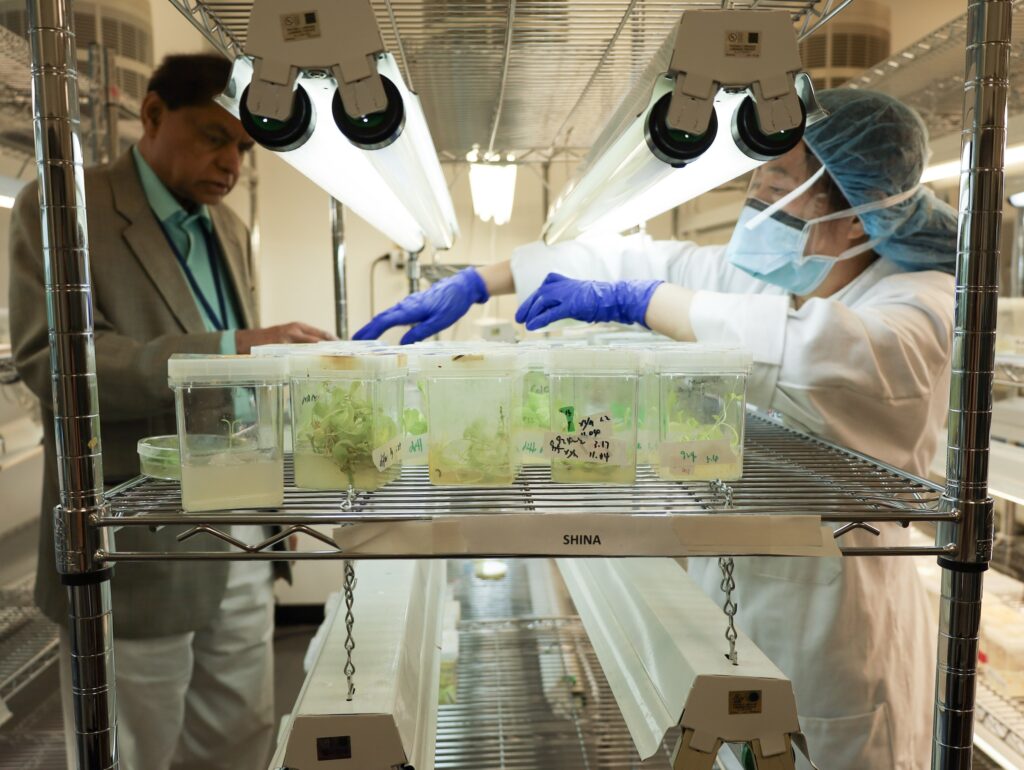
Can bioengineered chewing gum help prevent oral, head and neck cancers? Penn researchers are hopeful
The gum is made from a bean plant and contains antiviral, antibacterial and antifungal properties. It’s being tested against HPV, influenza and other diseases.
5 months ago
Listen 1:42Delivering proton radiation in a ‘flash’
The FLASH proton radiation pilot treatments will take place in a single room at the Roberts Proton Therapy Center, part of Penn’s Abramson Cancer Center.
The dome nozzle in this room has already been modified to deliver a more powerful beam of protons in “a blink of an eye,” said Kevin Teo, director of the medical physics division at Penn’s Department of Radiation Oncology.
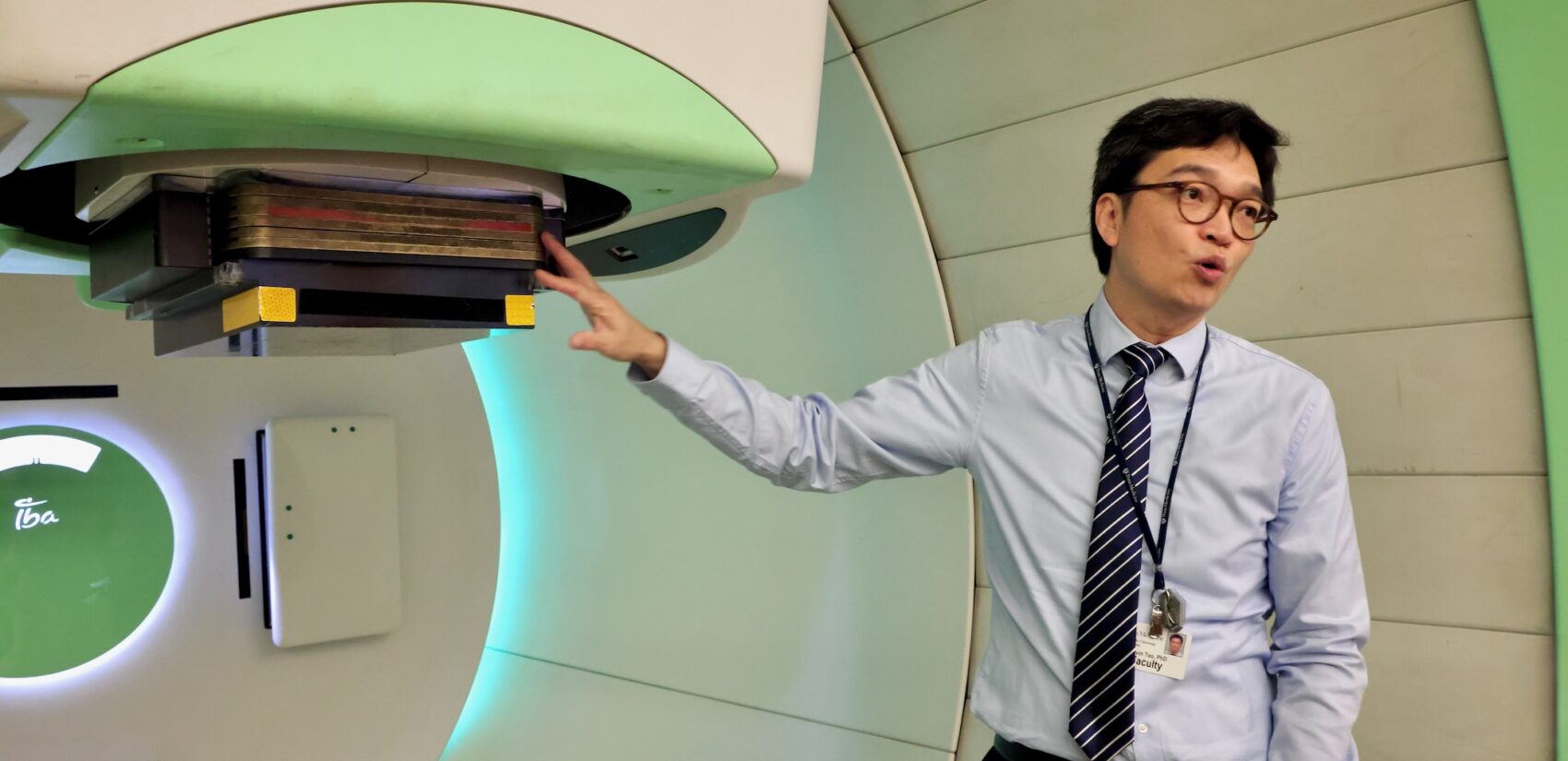
The team at Penn will also need to make sure that the high-velocity beams are safe and effective for human patients. That’ll involve using additional hardware and accessories made out of plastic, aluminum and brass to control the protons.
Teo held out a 3D-printed box made of plastic. A group of plastic spikes — all different lengths — stuck into the center of the box.
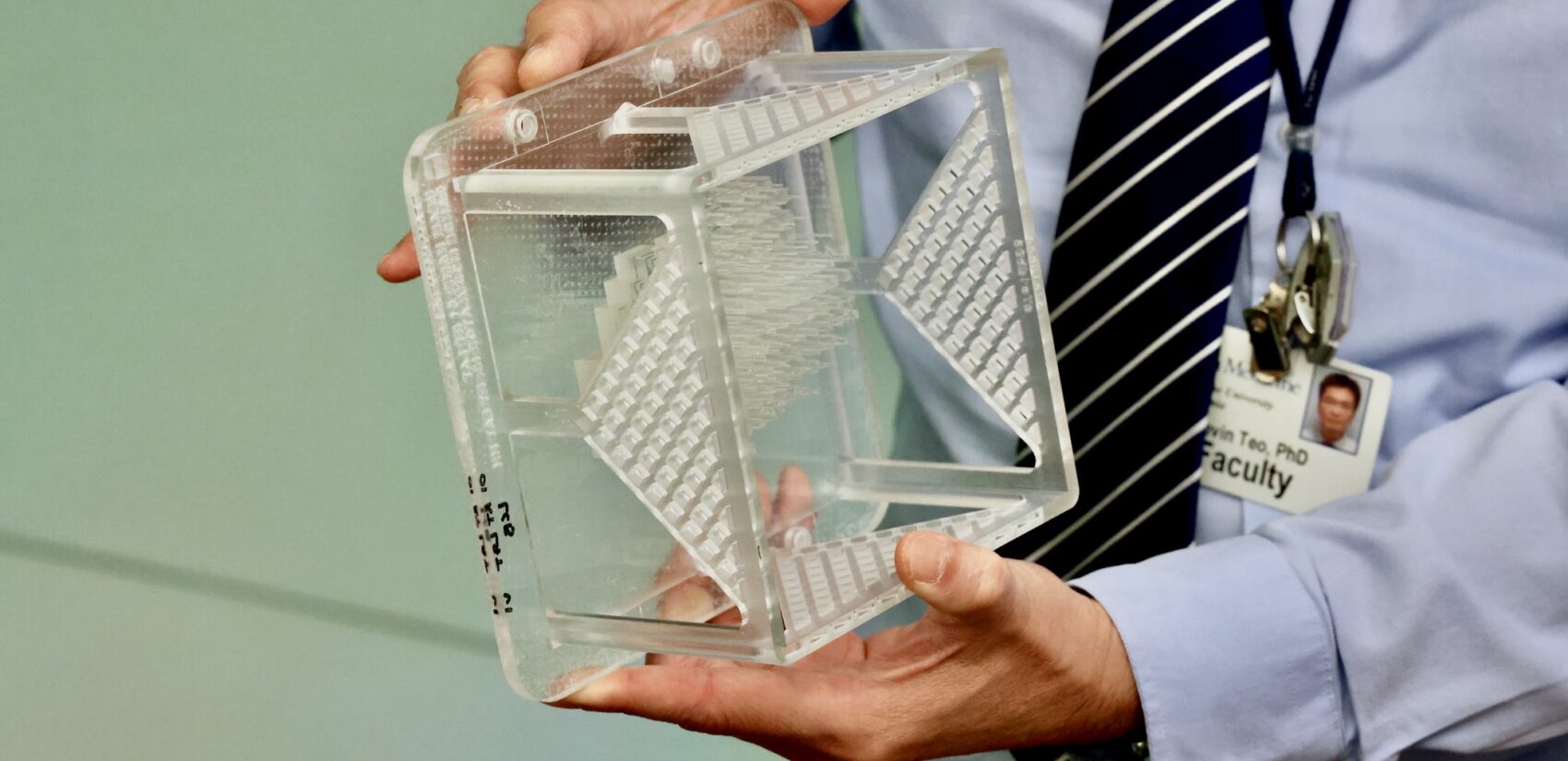
The spikes formed a cluster in the exact shape and size of a patient’s tumor. The device is an energy modulator, just one type of accessory that researchers will use during FLASH treatment.
“So when the beam passes through it, it creates an array of different energies,” Teo said. “Different energies stop at different depths within tissue, so that’s how we can get a precise dose within a body.”
Teo grabbed four square, energy-shifting plates made of aluminum. These will be mounted to the dome nozzle and help control the amount of proton energies entering the body.
A heavy wheel of brass at least 5 inches thick also sat on the table. A cutout in the center will be custom-made to match the exact parameters of each patient’s tumor. This brass aperture is designed to keep the protons concentrated on the tumor and protect healthy organs and tissue nearby.
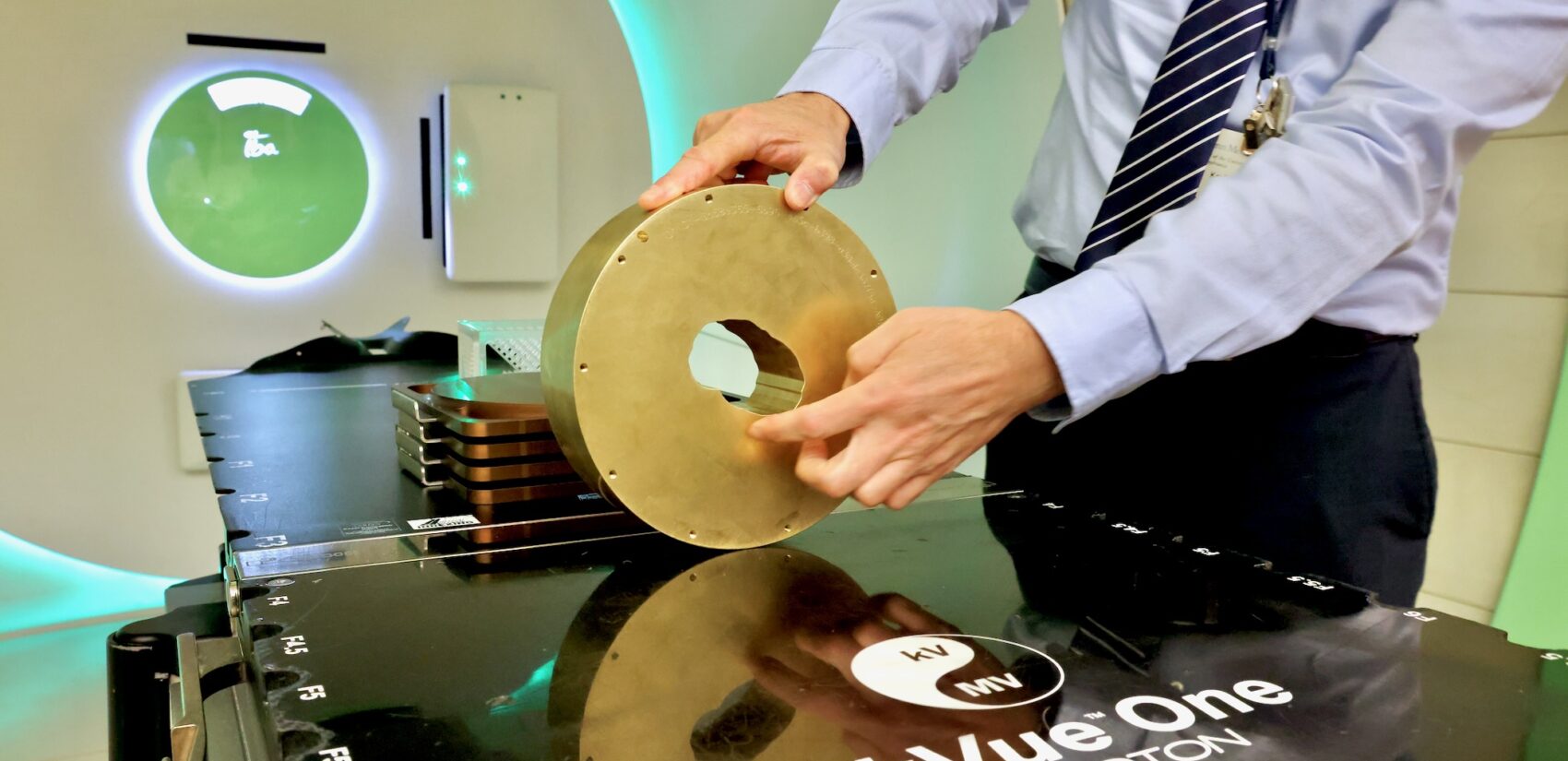
“When a proton beam passes through a lot of material, they scatter. It’s just like light. When you pass light through a piece of plastic, it scatters, so it becomes larger,” Teo said. “So, we want the radiation beam to have a nice, sharp edge so that if you’re treating next to an organ at risk, that organ at risk is not getting radiation.”
Related Content
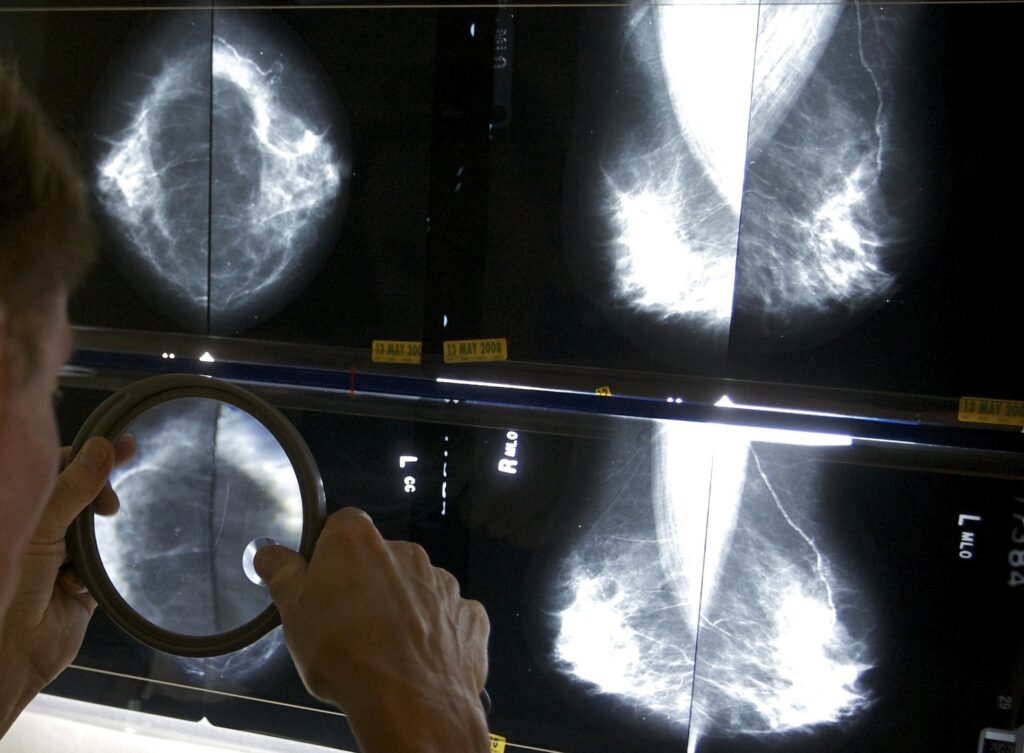
Women in the study who were obese and taking GLP-1 weight loss medications were 30% less likely to develop breast cancer than other women.
4 months ago
Listen 1:23Cancer survivors hopeful for a new generation of treatment
In 2014, Patrick Sullivan was 48 years old when he was diagnosed with squamous cell carcinoma of the tonsil. It had spread to his lymph nodes and was considered stage 3.
It came as a complete shock, he said. After a long career in the U.S. Marine Corps, he still served in the reserves and stayed fit. But that January, he felt a tumor in his jaw, which quickly led to a cancer diagnosis.
Sullivan, who is now 60 and lives with his family in Malvern, Pennsylvania, had multiple surgeries at Penn Medicine to remove as much cancerous tumor as possible. Then, he was referred to proton radiation therapy.
At the time, he agreed to participate in a clinical trial, led by Lin, that spared parts of his mouth from radiation treatment.
Although he avoided some of the more painful mouth sores, lesions and inflammation that had affected others with head and neck cancers, the side effects of treatment were still considerable.
“I lost about 30 pounds from beginning to end of treatment,” Sullivan said. “Food tasted horribly, so even though my mouth was spared, it changed the way food tasted.”
And then there was the fatigue.
“Even when you finish treatment, that fatigue will stay with you,” he said.
Still, he made the hour’s drive to and from West Philadelphia every day for over a month to get proton radiation therapy. The results, he said, were worth it, as he’s remained cancer-free ever since.
Sullivan has since joined a program at Penn Medicine that pairs cancer survivors and former radiation patients with people who are currently going through treatment to help guide them through the process.
Through a relationship he’s maintained with Lin, Sullivan likes to keep up with the latest research and advancements in cancer treatment, including FLASH proton therapy.
“It’s really amazing to me to think back to when I had this cutting-edge proton treatment that was a game changer, and now it’s even better,” Sullivan said. “To think that somebody’s not going to have to spend six weeks of their life driving into Philly, this FLASH therapy is really exciting, and I’m really happy to hear that this is a reality for today’s head and neck cancer patients, because it’s yet another game changer.”

Get daily updates from WHYY News!
WHYY is your source for fact-based, in-depth journalism and information. As a nonprofit organization, we rely on financial support from readers like you. Please give today.
Stroke rates rising among younger adults, hitting Philadelphia’s Black communities hardest
Doctors say strokes remain a leading cause of death and disability, as younger adults and underserved Philadelphia communities face rising risks due to health disparities.
6 months ago
Listen 2:07
Penn graduate workers reach historic tentative agreement with university, averting strike
Union organizers say the contract will transform their quality of life. Efforts to unionize graduate students started more than 20 years ago.
8 months ago
Listen 1:36
Penn senior and family host 10th annual fundraiser for Duchenne muscular dystrophy
Between classes at Penn and DJ gigs, Yuva Gambhir manages the rare degenerative disease with grit and determination.
1 year ago