

After months of unanswered pain, a Philly woman learned she had Stage 3 colon cancer. Now she’s pushing for equitable care
Medical advances mean that more people are surviving cancer. But not everyone is benefiting from those gains equally, a new report shows.
Listen 2:06
Janaylon Wright, of Philadelphia, fought for a colon cancer diagnosis at age 29. Four years later, she’s cancer free and is expecting her first child with her husband. (Courtesy of Janaylon Wright)
From Philly and the Pa. suburbs to South Jersey and Delaware, what would you like WHYY News to cover? Let us know!
Janaylon Wright had just turned 29 years old when she started having a persistent pain in her lower abdomen. It was concerning enough that she went to a hospital emergency department close to where she lived in Philadelphia.
“At the time, they were like, ‘Well, we don’t see anything that’s wrong. You know, if it continues, just come back,’” she said.
The pain not only continued, but it got worse, so she went to a different emergency room.
“They were like, ‘Oh, well, maybe it’s, you know, woman stuff,’” said Wright, who had a history of ovarian cysts. “‘So, maybe it’s just that.’”
But the pain eventually became so severe that she could barely manage to stand upright at her job as a supervisor within the city’s Department of Public Health.
This time, she tried urgent care, but health providers there told her they didn’t have the right tools or resources to properly diagnose her symptoms. They suggested she should go to a hospital.
Wright then visited a third emergency department, which was crowded and busy. She was put in a bed in the hallway and never made it to a room. Doctors there told her she had fibroids on her uterus, which were causing constipation and abdominal pain.
“They’re like, ‘If you treat your constipation, everything will be fine, that’s why you’re having all the pain,’” she said.
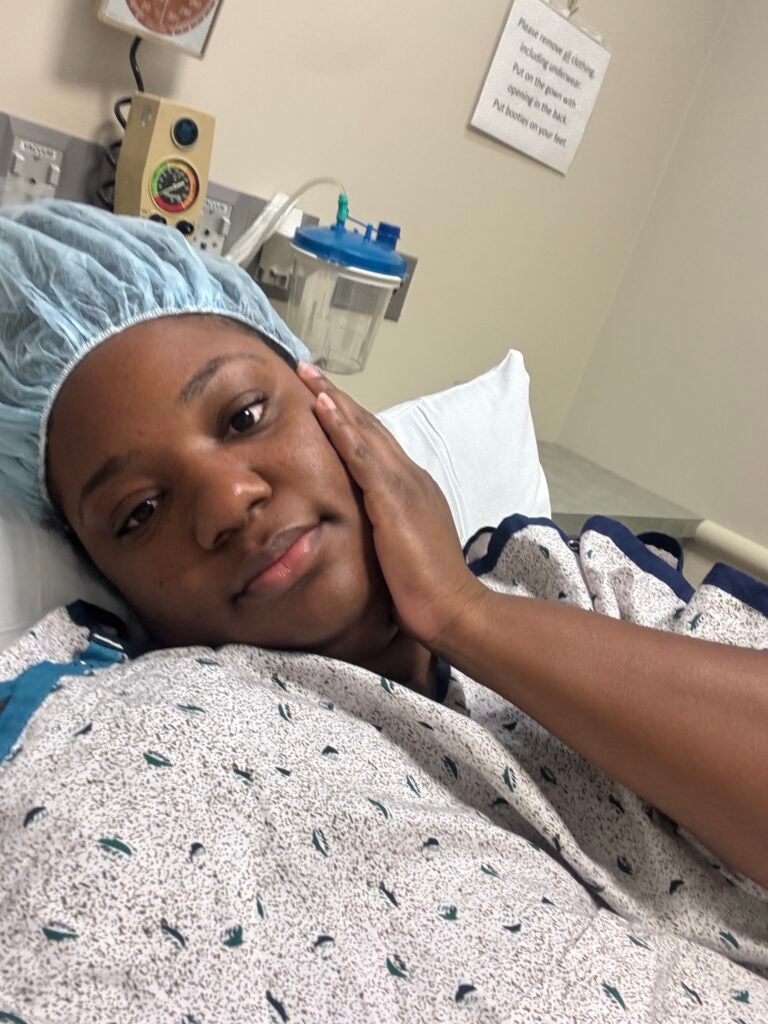
Wright tried all sorts of medications and home remedies to alleviate the problem, but nothing worked. Meanwhile, nearly five months had passed since she first felt the pain in her lower abdomen.
When she began to vomit water, which can be a sign of a serious bowel obstruction, Wright went to a fourth hospital. Accompanied by her grandmother and aunt, they were determined to not leave without answers.
Doctors at Jefferson Einstein Medical Center Elkins Park, which closed as a general hospital in 2023, ran a gamut of medical tests and imaging to rule out other causes before confirming a blockage in her colon.
“I was just honestly elated,” Wright said. “I was happy to feel like a person and get a real-life conversation about what is wrong with me.”
But that elation was short-lived. After a colonoscopy, a biopsy revealed that the blockage was actually a tumor. Specifically, adenocarcinoma, a common type of colorectal cancer. Doctors told Wright it was Stage 3, meaning that it was advanced.
“That was the moment when, I was in the car with my aunt, I cried like a baby,” she said. “Because there’s only four [stages]. There’s only four. And when you hear three, you feel like it’s the end.”
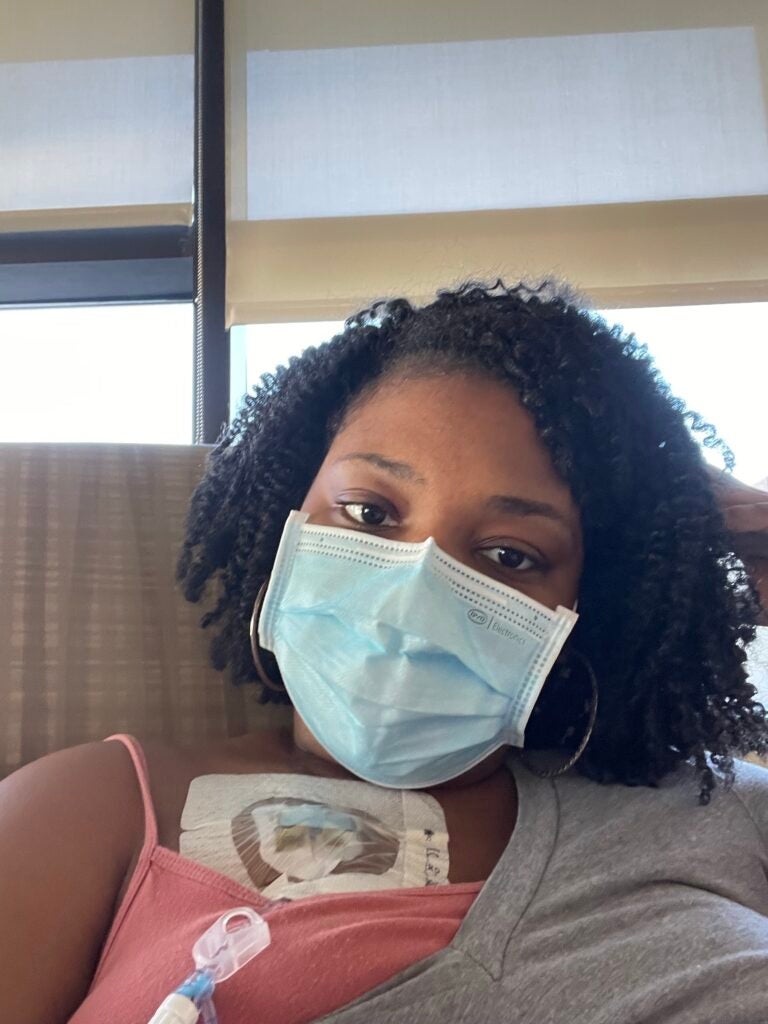
But Wright survived the horrible diagnosis, with the support of her boyfriend and family. After surgery to remove the tumor and six rounds of chemotherapy infusions, she was declared disease free. Four years later at 33 years old, she remains in remission.
However, she can’t help but wonder if her cancer could have been caught earlier, which may have saved her from time spent in pain and from invasive cancer treatment.
Did her young age lead doctors to discount the possibility of cancer prematurely? Was her pain too quickly attributed to reproductive health issues because she was a woman? Was her pain downplayed because she was a Black woman? These are the questions Wright asks herself when she looks back on her experience.
“These are all the things that I feel like not even just for myself, but for other people, can cause gaps in care,” Wright said.
Related Content
Women in the study who were obese and taking GLP-1 weight loss medications were 30% less likely to develop breast cancer than other women.
3 months ago
Listen 1:23Disparities in cancer survival get smaller, but gaps remain
More people are surviving cancer than ever before thanks to innovations in cancer detection, diagnosis and treatment options.
But not everyone is benefitting from those gains equally, and disparities in cancer health outcomes remain, according to the American Association for Cancer Research’s 2026 Cancer Disparities Progress Report.
Authors presented the report to members of Congress in Washington, D.C. on June 24.
Young adults, people who live in rural areas and impoverished neighborhoods, Hispanic and Black residents, and those who identify as LGBTQIA+ are still most likely to receive late-stage cancer diagnoses and die from the disease, the findings show.
Many people still face challenges in maintaining healthy diets, managing obesity, regularly seeing a primary care provider, avoiding air pollution and dangerous environmental substances, and accessing genetic testing – all methods that can help lower a person’s risk of cancer.
And when people do develop cancer, there continue to be more barriers, said Margaret Foti, CEO of the national cancer association, who is based in Philadelphia.
“Too many patients are never offered the opportunity to participate in a clinical trial. Too many patients live very far from high-quality cancer care,” she said. “And [for] far too many patients, financial, logistical, cultural and other structural barriers continue to shape their chances for survival. These consequences are profound.”
A new and growing concern is the rise in cancer diagnoses and fatalities in people under 50, including young adults who develop colorectal cancer, “who are too young for routine screening and are being diagnosed too late,” said Mariana Stern, a cancer epidemiologist and professor at the Keck School of Medicine of the University of Southern California in Los Angeles.
The report also highlights progress being made to address disparities. The gap in cancer death rates between Black and white Americans has narrowed, from a 34% difference in the 1990s to about 9% today, Stern said.
Prevention and screening strategies have led to a sharp drop in cervical cancer deaths among Latina women over the past 20 years, Stern said, as gaps in care were addressed.
But more work remains in closing existing inequities in cancer outcomes, Foti said. Leaders at the cancer association are calling on Congress to stabilize funding for cancer research and disparity studies, to invest in the cancer care workforce, to ensure access to cancer screenings and reduce cost barriers to genetic testing, to expand Medicaid insurance coverage for cancer treatment, and to diversify participation in clinical trials.
A cancer survivor turned advocate
Wright didn’t know much about colorectal cancer before her diagnosis. She had no family history, and wasn’t aware that the disease was affecting more young adults, or that Black Americans face a higher risk.
But since completing treatment, she’s become an advocate for more awareness about the signs and symptoms of colon cancer, better support for young people going through treatment, routine screening at earlier ages, and solutions to the challenges people face in accessing preventative care and treatment.
Wright still works for the city’s health department. The boyfriend who she was with during her diagnosis is now her husband, and they’re expecting their first child.
“I will do whatever is necessary, whatever is possible, to whatever capacity, even if I just go and stand somewhere and yell on a soapbox all day. I feel like it’s my responsibility,” she said. “And it’s not necessarily about me. It’s about the next 29-year-old person who ends up getting diagnosed with colon cancer out of absolutely nowhere.”

Get daily updates from WHYY News!
WHYY is your source for fact-based, in-depth journalism and information. As a nonprofit organization, we rely on financial support from readers like you. Please give today.
Can bioengineered chewing gum help prevent oral, head and neck cancers? Penn researchers are hopeful
The gum is made from a bean plant and contains antiviral, antibacterial and antifungal properties. It’s being tested against HPV, influenza and other diseases.
3 months ago
Listen 1:42
Dennis Massimo’s genetic diagnosis and cancer treatment plan was coordinated at the new King Center for Lynch Syndrome at Penn Medicine.
6 months ago
Listen 1:44
Specialized urgent care for cancer patients is becoming more accessible in Philly
As cancer treatment evolves, health systems are adapting by providing oncology urgent care clinics to patients.
9 months ago
Listen 1:57