
Philly’s next budget could double staff at the Fair Housing Commission. Here’s what that would mean for renters
Advocates say additional staffing would enable employees to prepare more cases for administrative hearings, positioning the agency to make more rulings.
Listen 1:25
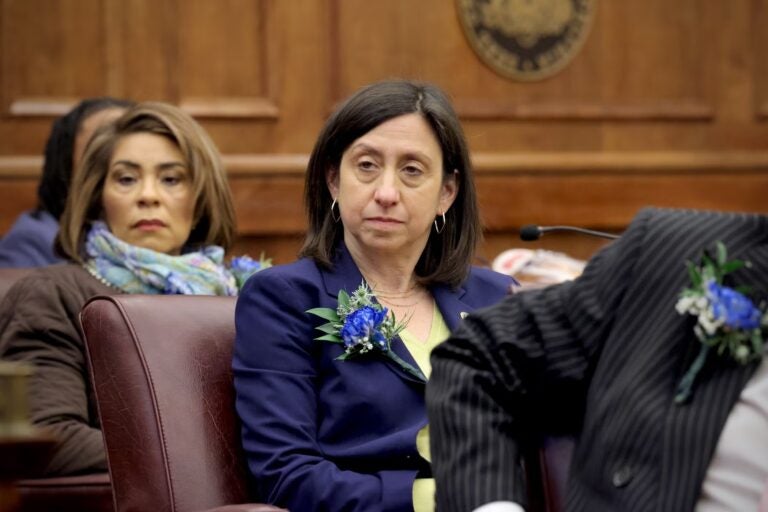
File - Philadelphia City Councilmember Rue Landau in 2025. (Emma Lee/WHYY)
Have a question about Philly’s neighborhoods or the systems that shape them? PlanPhilly reporters want to hear from you! Ask us a question or send us a story idea you think we should cover.
City Council wants to double the staff at Philadelphia’s Fair Housing Commission, a budget request aimed at clearing a backlog of cases and keeping pace with new ones as its purview expands.
The commission, which polices many of the city’s renter protections, currently has four dedicated employees. To that, lawmakers want to add three investigators and a deputy director, a new position proposed in Mayor Cherelle Parker’s $6.9 billion spending plan.
If approved, the commission’s budget would jump more than 50% next fiscal year to roughly $1.2 million.
“Over the years, City Council has taken important steps to bolster our great civil rights and housing enforcement laws. And with those strong additions comes an obligation to fund the agencies at a level so they can properly administer justice,” said Councilmember Rue Landau, vice chair of the housing committee.
The commission has a long history of being understaffed, and its caseload is expected to increase again after July 1, partly because of new renter protections enacted by Council.
The agency is projected to process more than 700 cases next fiscal year. During the current fiscal year, that total has surpassed 600. Before that, it eclipsed 500 cases.
Landau, who oversaw the commission for more than a decade, said additional staffing would enable employees to prepare more cases for administrative hearings, which would position commissioners to make more rulings.
Their decisions, which are legally binding, stem from a wide range of unfair rental practices. Commissioners frequently hear cases centered on security deposits, rent increases and lease agreements. They also consider a variety of complaints involving tenants facing an eviction they suspect is rooted in retaliation.
“This is the place where tenants in Philadelphia get to play offense. They get to affirmatively file a complaint because of allegations that their landlords have committed an unfair rental practice. That’s a really heavy load to carry, and it’s a very important function of our city government,” Landau said.
Related Content
Bills to protect Philadelphia renters are poised for passage following landlord lawsuit
The bills are part of the Safe Healthy Homes Act, a legislative package that has drawn considerable opposition from independent landlords.
4 months ago
Listen 1:00Increasing capacity
The commission’s rulings often save tenants from having to fight an eviction in Landlord-Tenant Court, an experience that can make it much harder for them to secure safe and affordable housing going forward — even if they win. Simply having an eviction filing on their record can be viewed as a red flag by a prospective landlord.
Fair housing advocates say that reality has become more perilous amid a tight housing market with little mobility, particularly for low-income renters.
“The greatest benefit of the Fair Housing Commission is it allows tenants to vindicate their rights without the risk of a public record,” said Vincent Montoya-Armanios, staff attorney at the SeniorLAW Center in Philadelphia.
Recently, cases are taking longer to close, putting some tenants in limbo as they await the outcome, Montoya-Armanios said. Increasingly, the delay is caused by the lack of a quorum of commissioners to hear cases in real time. In those instances, commissioners review video of the hearing and related evidence later. That can add weeks to the process, which typically spans two to three months.
In addition to the budget request, Landau has introduced legislation to reduce wait times and increase the number of hearings the commission can hold. Her bill would raise the per-hearing stipend for commissioners from $85 to $100, and increase the annual stipend cap from $8,500 to $14,000.
Council’s finance committee is scheduled to consider the bill during a hearing next month. Advocates say the measure, along with more staff, would help boost the commission’s capacity as new laws expand the scope of its enforcement.
“Whether it is tenants recognizing rights that need to be respected or whether it be just more of a breakdown between [landlords and tenants], the commission needs more capacity to be able to address what’s incoming,” said Councilmember Nicolas O’Rourke.
Related Content
Fair housing advocates hope the decision empowers more tenants to speak out in a city where fears of retaliation run deep.
3 months ago
Listen 1:09New renter protections
Lawmakers recently passed four bills that are expected to contribute to a larger caseload for the Fair Housing Commission.
Starting in November, the city’s “good cause” protections will apply to all renters, regardless of the term of their lease. Currently, the law only applies to renters who have leases that are month-to-month or run for less than a year. For these tenants, landlords must provide written notice stating why they want to terminate or not renew their lease.
Advocates say the rare exception has provided cover for unscrupulous landlords to use this form of eviction to retaliate against tenants with longer leases, because they aren’t required to justify their decisions or even give renters advance notice.
The legislation also expressly bars landlords from ending or modifying a tenant’s lease solely because that tenant is cooperating with a city investigation, has discussed their living conditions with a council member or reporter, or joined a tenant organization.
Separately, lawmakers approved legislation that requires some landlords to allow renters to pay a portion of their security deposit in installments — if the deposit is more than one month’s rent. In that case, renters can elect to pay the balance in equal installments over three months.
Another restricts when landlords can charge an application fee and how much they can charge.
“Now that all tenants will have a right to stay in their homes except for good cause, certainly thousands more tenants fall under FHC protection,” Montoya-Armanios said.
City Council must pass a new budget by June 30, the end of the current fiscal year.
A mayoral spokesperson declined to discuss whether the administration supports adding four new staffers to the Fair Housing Commission, saying it doesn’t comment on “items related to budget negotiations.”

Subscribe to PlanPhilly
WHYY is your source for fact-based, in-depth journalism and information. As a nonprofit organization, we rely on financial support from readers like you. Please give today.
Brought to you by PlanPhilly

PlanPhilly
In-depth, original reporting on housing, transportation, and development.

Why Philly’s public housing costs an average of $315,000 per unit
PHA’s $6.3 billion plan would remake its aging housing portfolio. Its per-unit estimate, which rivals the value of many Philadelphia homes, doesn’t tell the full story.
5 days ago
Listen 1:59
North10 is helping contractors and households pay to dispose of waste legally, diverting thousands of pounds of trash from illegal dumpsites.
6 days ago
Listen 0:59
A vacant 126-year-old school in Strawberry Mansion will become senior housing
The $34 million project will repurpose the historic property through a partnership with the Philadelphia Housing Authority.
3 weeks ago