

Philly-area cancer survivors, doctors say new, nonhormonal menopause drug expands treatment options
Certified menopause doctors say elinzanetant, a nonhormonal drug for hot flashes, could be a new option for women who can’t take hormone treatment therapies.
Listen 4:20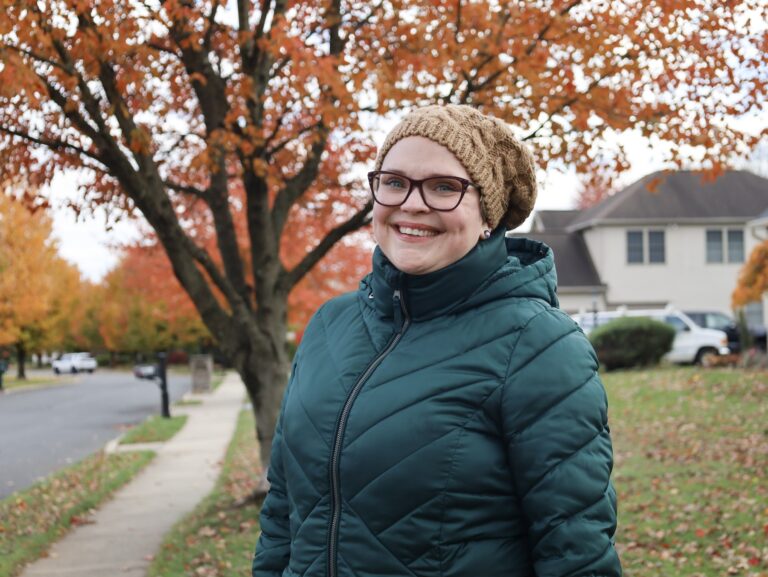
Charlotte Safrit, of Allentown, Pennsylvania, was diagnosed with triple-positive breast cancer at 42 years old. Her treatment involved a double mastectomy, chemotherapy and radiation, as well as medications that suppress hormone production, which have put her into menopause. (Nicole Leonard / WHYY)
From Philly and the Pa. suburbs to South Jersey and Delaware, what would you like WHYY News to cover? Let us know!
Charlotte Safrit was only 42 when she started experiencing intense episodes of sweating and feeling overheated. The symptoms began shortly after she had a double mastectomy, chemotherapy and radiation for triple-positive breast cancer.
“I was talking to my oncologist one day and I was like, ‘Sometimes I just get really sweaty all of a sudden and I don’t know why,’” she said. “And then mid-sentence I was like, ‘Oh wait, that’s a hot flash, isn’t it?’”
Safrit, who lives in Allentown, had also started taking medications to suppress estrogen, a primary hormone produced by ovaries, to reduce her risk of cancer recurrence.
Soon, she also had night sweats, brain fog and joint pain — all hallmarks of menopause, which can also include weight gain, vaginal dryness, dry skin and low libido.
The natural aging process typically starts between ages 45 and 55, on average. However, cancer treatments can abruptly plunge younger women into early menopause. Hormone therapies can be effective treatment options, but they’re not usually recommended for people who’ve had hormone-positive cancers.
Doctors hope that a newly approved nonhormonal medication that treats hot flashes and night sweats offers these cancer survivors and other women a different choice in managing menopause symptoms.
The U.S. Food and Drug Administration last month approved the drug elinzanetant under the brand name Lynkuet. It works by targeting two neuron receptors in a part of the brain that regulates temperature.
The drug then blocks hot flashes and night sweats by preventing the body from overreacting to subtle changes in temperature throughout the day or night without going through hormone pathways that other medications use.
Lynkuet is expected to be available to patients and providers beginning this month, according to pharmaceutical manufacturer Bayer.
In addition to giving many patients a new treatment option, OB-GYN Dr. Elizabeth Clement hopes it signals the need for more investment in women’s health.
“Historically, we haven’t had many great options in the nonhormonal range,” said Clement, medical director of the Helen O. Dickens Center for Women’s Health at Penn Medicine. “After decades of disinvestment in women’s health, to see medications coming to market that are helpful for our patients is very exciting.”
Related Content
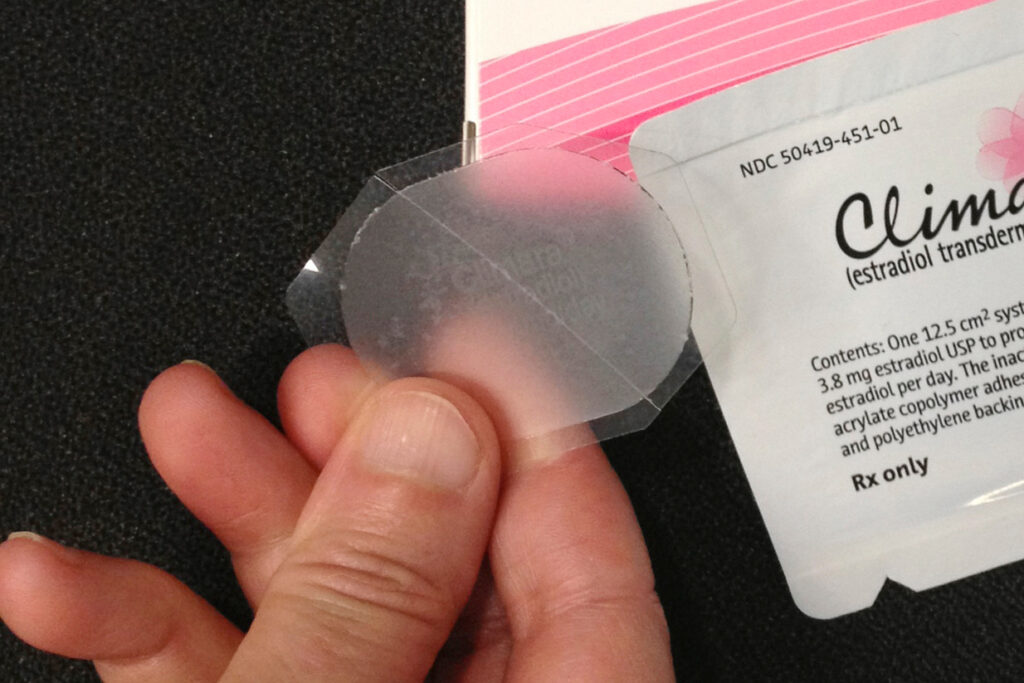
Health care providers say patients should be careful before getting easily accessible prescriptions for hormone products.
12 months ago
Listen 4:38New treatment for menopause hot flashes and night sweats
Women who experience menopause symptoms can have them briefly and temporarily, or for as long as a decade. They can be incredibly disruptive to sleep, mood, cognition, sexual health, physical health and daily productivity at work and in daily life, Clement said.
Hormone therapy injections or pills have been safe and effective in treating multiple menopause symptoms at once, but women who can’t take these medications because of hormone-positive cancers, a history of blood clots or past strokes are left with fewer options.
Antidepressant or anticonvulsant medications are alternative, nonhormonal drug options sometimes used for menopause symptoms, but doctors say they’re often not as effective.
That makes the development of a new, nonhormonal drug significant, said OB-GYN Dr. Julia Switzer, program director of obstetrics and gynecology residency at Thomas Jefferson University.
It highlights a gap in care and the need for more medications and treatments broadly for menopause, whether it’s occurring naturally or after cancer and other medical conditions, she said.
“It really makes you feel like you can make your toolbox bigger and provide a treatment that would be effective for almost every patient that you see,” Switzer said, “which is really empowering as a physician and obviously for patients.”
For cancer survivors like Safrit, the new drug could be a helpful tool as they navigate a new reality.
Before her diagnosis, Safrit said menopause seemed so far off, something she had plenty of time to figure out.
But she quickly became her own advocate and researcher as she sought answers and relief to menopause symptoms following her cancer treatment.
Safrit, who is now 47, runs a breast cancer support group in the Lehigh Valley and works with organizations like Living Beyond Breast Cancer to increase awareness about the long-term effects of survivorship, including menopause.
“People are afraid to talk about it,” she said. “And I’ve always been an oversharer. I call it my superpower, because I overshare with people and all of a sudden, they feel comfortable and they’re like, ‘Well, you know, I guess I can tell you about these weird things that are happening in my body.’ And it’s helpful.”

Get daily updates from WHYY News!
WHYY is your source for fact-based, in-depth journalism and information. As a nonprofit organization, we rely on financial support from readers like you. Please give today.
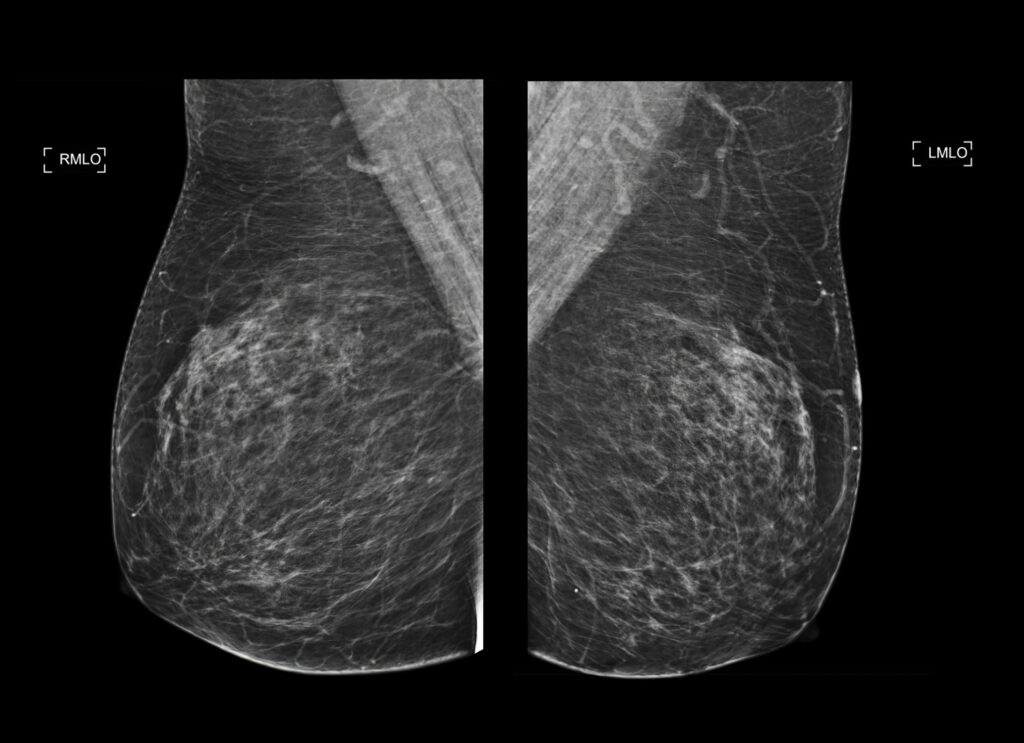
Pennsylvania doctors say mammograms could be used to detect early heart disease in women
Mammograms can detect the presence of breast arterial calcification, which is associated with a higher risk of future heart attacks and stroke.
8 months ago
Listen 1:11
The legislation would require employers to provide reasonable accommodations for disruptive symptoms of menstruation and menopause.
11 months ago
Health care providers say patients should be careful before getting easily accessible prescriptions for hormone products.
12 months ago
Listen 4:38