

Delaware program aims to expand maternal care access in rural communities
A new initiative in southern Delaware aims to reduce maternal health disparities by bringing prenatal and postpartum support directly to women.
Listen 1:23
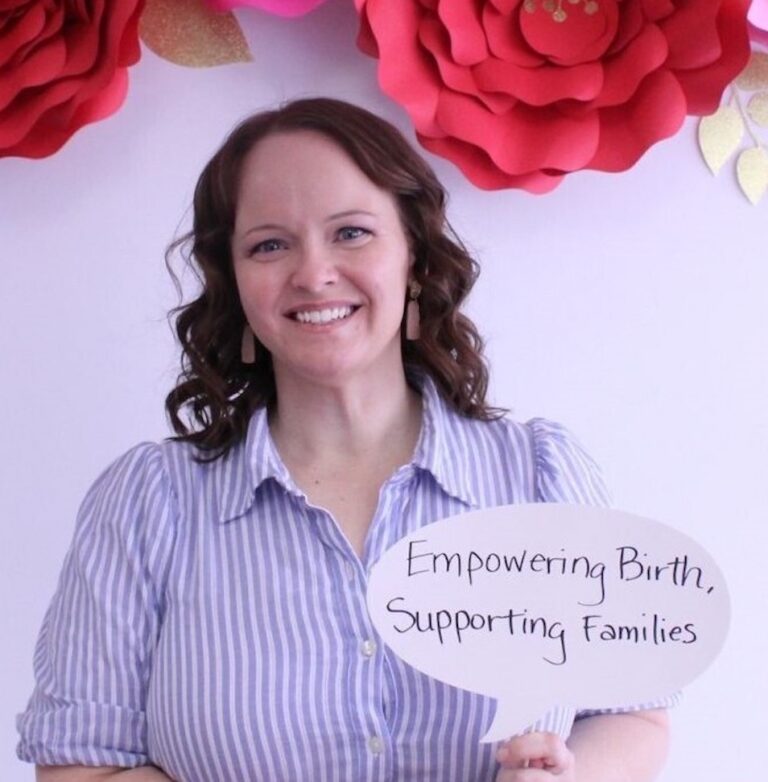
Lisa Butterworth works at La Red Health Center, where she serves a predominantly Latino patient population in maternal health. She says there are underlying barriers to care, including transportation challenges, a shortage of providers, and lack of insurance coverage. (Courtesy of La Red Health Center)
What are journalists missing from the state of Delaware? What would you most like WHYY News to cover? Let us know.
Maternal health providers in Sussex County are launching a new initiative aimed at connecting pregnant women in rural Delaware with care earlier in their pregnancies, particularly women of color and immigrant families who often face barriers accessing services.
Last month, La Red Health Center partnered with the Delaware State Housing Authority and several community organizations to launch the Maternal Outreach and Mobile Services: Advancing Health for Rural Delaware Families initiative, known as MOMS.
The program uses community health workers, doulas and La Red’s mobile health unit to bring maternal health services directly into underserved communities throughout southern Delaware.
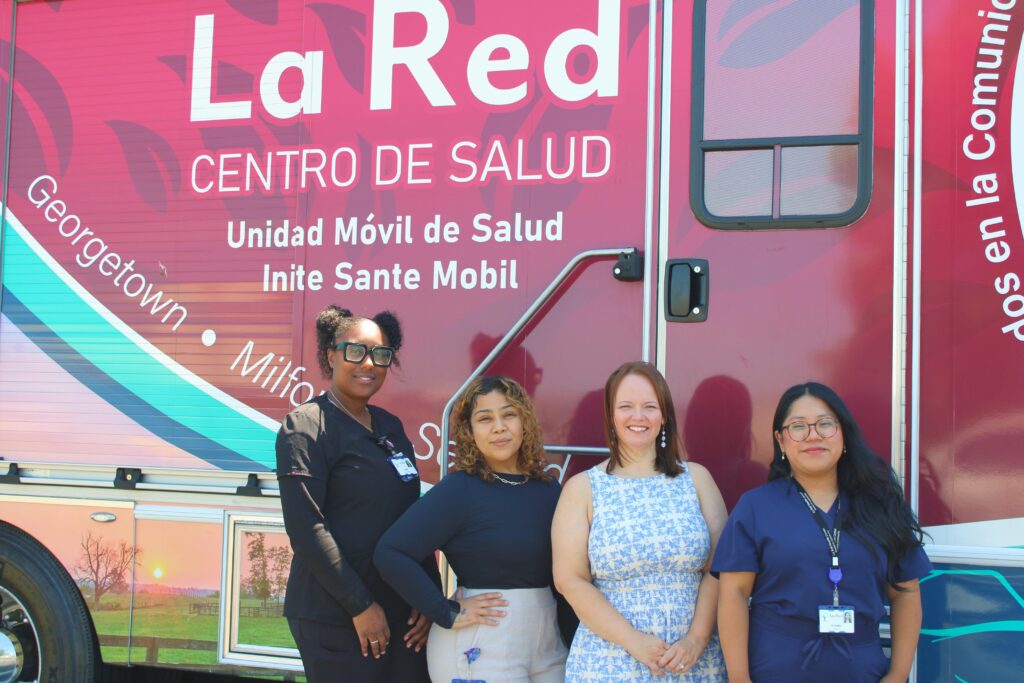
“Far too many women in Southern Delaware have difficulty accessing women’s health care services,” said Rachel Hersh, CEO of La Red Health Center. “Some of the reasons are as simple as a lack of transportation. Ensuring that all women have the opportunity to receive care, but also care that is well-coordinated will only help improve outcomes for Delaware women. Ultimately, that will lead to healthier communities, which benefits us all.”
For Lisa Butterworth, a certified nurse midwife and clinical director of women’s health at La Red, the initiative is part of a larger effort to address longstanding disparities affecting women of color.
“We know that women of color face a much higher maternal morbidity and mortality rate, and it’s not genetic,” Butterworth said. “It is because of systemic failures.”
“When we address the issues that are affecting Black and minority women, we know that improving the Black and minority women’s health is going to improve all of our health,” she added.
Addressing barriers to care
Butterworth said Latina women in Sussex County often face multiple barriers when seeking prenatal, postpartum and reproductive health care.
“We noticed with the Latina population, they have a lot of barriers to health,” she said. “In Sussex County, we don’t have enough obstetrical providers in general, and then to have obstetrical providers who can provide culturally competent care and provide language services when needed is even harder for this population,” Butterworth said.
Many women also remain uninsured during pregnancy, causing them to delay care.
“They often don’t come into prenatal care until late in the pregnancy,” Butterworth said, adding that cost is also a barrier. “They just can’t afford the visits, the ultrasounds, blood work, all the things that come along with prenatal care,” she said.
Transportation can also be difficult, especially for families living in rural communities.
“Getting to one of the offices that exist for maternal health care can be difficult,” Butterworth said. “A lot of families share a car, a vehicle, and doctors’ offices are open during the day when their husbands are at work.”
The challenges often extend beyond health care itself.
“If you have a mother who’s trying to provide for her kids and she can’t put food on the table and they’re hungry, going to a doctor’s appointment isn’t going to be her priority,” Butterworth said. “Her priority is going to be finding a way to make money to feed her family.”
To help address those barriers, La Red’s MOMS initiative brings services directly into communities through its mobile health unit and a team that includes a bilingual community health worker and a bilingual Latina doula.
“We saw that Sussex County really needed to expand and get out of the building to reach some of these people,” Butterworth said. “That’s kind of why we applied for this grant and we’re so happy to get it to bring the care to the more rural areas of Sussex.”
Related Content
A critical funding gap could force House of Hope to close, leaving vulnerable residents without safe housing or support services.
2 months ago
Listen 1:40Bridging cultures through doula care
A key component of the initiative is connecting women with doulas who can provide emotional support, education and advocacy throughout pregnancy, childbirth and postpartum recovery.
For Elisama Garcia-Aguilar, La Red’s bilingual doula, the work often involved helping women navigate both the health care system and cultural differences.
Garcia-Aguilar, who is of Guatemalan heritage, said she grew up hearing stories about “comadornas” – traditional midwives who often support women through pregnancy and childbirth in Guatemala.
“Growing up, my mom always told me stories about comadronas, like the midwives in Guatemala,” she said.
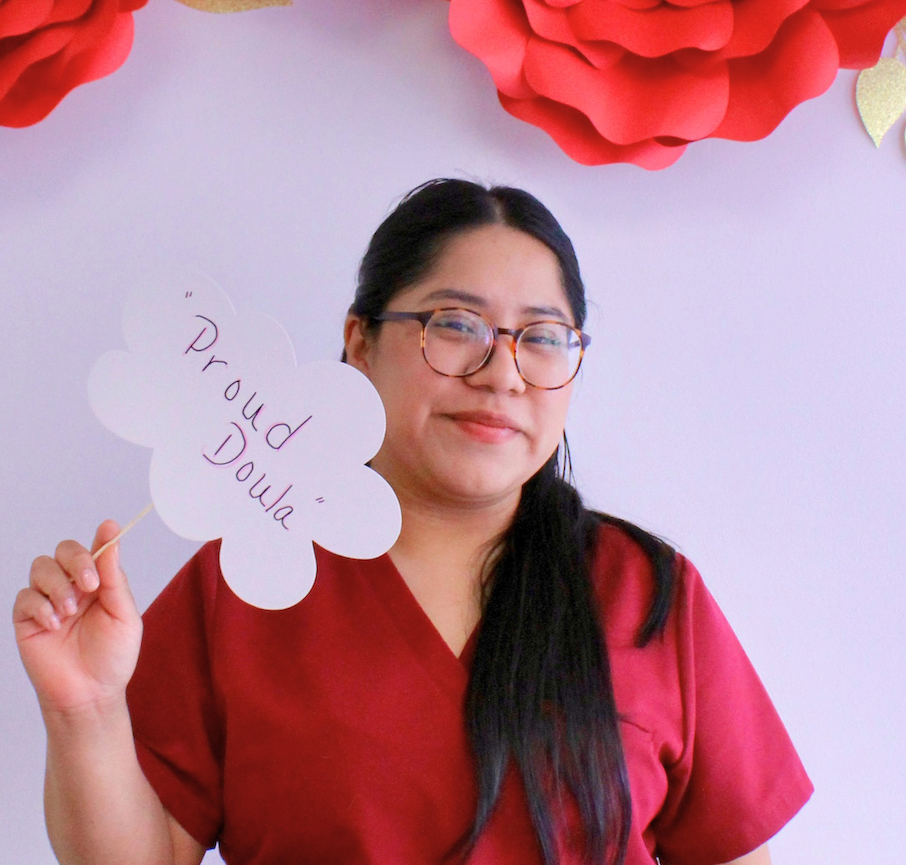
Earlier this year, she traveled to Guatemala to learn more about those traditions and better understand the cultural backgrounds of any of the women she serves at La Red.
“To see where our patient’s culture is from, and to see that come here, it’s eye-opening, it builds a bridge,” Garcia-Aguilar said. “To be able to connect that from there to here was amazing.”
She said many immigrant mothers arrive with experiences and expectations that differ from those commonly found in the American health care system.
For example, a doctor introduced her to a family where the pregnant person never heard of a doula. The partner then questioned her role and what she does. Then, Garcia-Agular tried to describe her role as a comadrona, but clarified that she does not deliver babies.
“When I try to explain to the patients what a doula is, the closest I can get to explain it to them is close to being a comadrona, but I’m not delivering the baby,” she said. “I’m very straightforward and say I don’t deliver babies but I’m here to help you feel comfortable during your birth.”
Despite the unfamiliarity, she said mothers quickly recognize the value of having support.
“By the end of the birth, they’re always telling me, ‘Thank you. I did not know that I needed that comfort,'” Garcia-Aguilar said.
Related Content
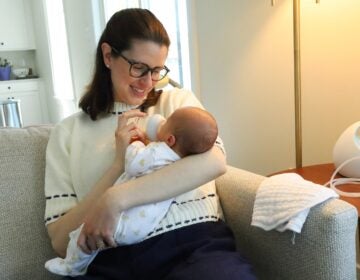
Family Connects NJ offers at least one free home health visit to all families with newborns. Services will be offered in all 21 counties by January 2027.
2 months ago
Listen 5:37A mother’s perspective
For Yazmin Paul, a first-time mother of Mexican heritage, whose daughter is now 10 months old, having access to a doula offered reassurance while navigating pregnancy in a health care system she was still learning.
After moving from Dover to Wilmington, Paul said she found herself navigating long waitlists for providers while also dealing with a high-risk pregnancy that included bleeding episodes, a hemorrhage and restrictions on physical activity.
Near the end of her pregnancy, Paul said she believed she was already in labor, but felt her concerns were initially dismissed by providers.
“I felt like I was advocating for me and my child at every visit,” Paul said. “At the very end I felt like I was dilated already. And they’re like, “No, it’s too early. It’s too early.” And they didn’t want to do a cervical check. I felt her coming down.”
Paul later connected with a doula who provided virtual support throughout her pregnancy and helped her navigate appointments while staying focused on the birth plan she wanted.
“There were times where they would try to force things that I did not want,” she said. “She had to keep on reminding me that I did not want a [cesarean section] and I don’t want no medicine either.”
Although her doula was unable to be present during labor, Paul believes having that support physically in the room could have made a difference regarding emotional support, advocating for her during times she might not have been able to speak.
For her, culturally competent support extends far beyond language. She noted that within Hispanic culture, the postpartum care after labor can be different. It’s called “la cuarentena,” a postpartum tradition practiced in many Latino families that focuses on recovery during the first 40 days after childbirth.
“The cuarentena process starts from the day you deliver to 40 days after,” she said. “Basically letting your body rest.”
Paul said traditions like those illustrate why cultural understanding can be just as important as medical knowledge.
“It’s very important, especially if you don’t have family around,” she said. “Also the language barrier, to have someone that speaks your language instead of you trying to figure out how to say things or fully communicate what’s needed at that time when it’s basically dire need.”
Today, she encourages other Latina mothers and mothers of color to seek out doula support whenever possible.
“I think everybody needs a doula,” Paul said. “I think it’s great that you can have somebody with the experience guide you through the system and guide you through motherhood.”
As La Red continues expanding its MOMS initiative across Sussex County, health leaders hope more women will gain access to that kind of support before, during and after pregnancy.

Get daily updates from WHYY News!
WHYY is your source for fact-based, in-depth journalism and information. As a nonprofit organization, we rely on financial support from readers like you. Please give today.
How services, housing gaps and policy made Georgetown, Delaware a focal point for homelessness
A new study sheds light on why homelessness is concentrated in Sussex County’s Georgetown and what leaders say is needed to address it.
6 months ago
Listen 1:40
A new report shows how Haitian and Latino immigrants in southern Delaware are often caught in an economic divide.
1 year ago
Listen 1:40
A 2,000-square-foot community center is under construction with a kitchen, meeting rooms and office spaces to support residents in transition.
2 years ago
Listen 1:28