

Sneezing, runny nose, itchy eyes: Allergy symptoms start earlier with climate change
Temperature and precipitation pattern changes mean trees are blooming earlier.
Listen 1:01
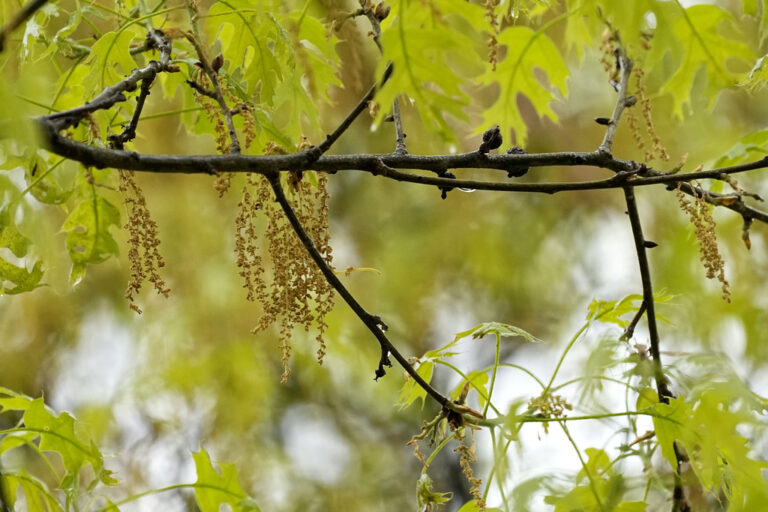
File: An oak tree with new leaf growth also shows pollen and a drop of water hanging among the branches at a park in Richardson, Texas, Thursday, March 21, 2024. (AP Photo/Tony Gutierrez, File)
From Philly and the Pa. suburbs to South Jersey and Delaware, what would you like WHYY News to cover? Let us know!
Early spring means beautiful tree blooms, but also an increase in pollen that can trigger allergy symptoms like itchy eyes, runny nose and sneezing.
Allergists say these symptoms may become more intense as allergy season starts earlier than past seasons because of the effects of climate change. Temperature and precipitation pattern changes mean trees are blooming earlier and vegetation is growing more rapidly, producing more pollen in the atmosphere.
“The growing knowledge and awareness that things are changing is of paramount importance … our health is also being impacted by the changes in temperature and precipitation patterns associated with global warming,” said Dr. Neelu Tummala, an ear, nose and throat physician at New York University Langone Health.
Pollen allergy season typically begins in the beginning of March, while grass allergens occur during the summer and ragweed pollen is more common in the fall.
Related Content
Climate change and the rise of seasonal allergies
Experts say allergy symptoms are getting worse each year and larger environmental issues could be a factor. If even hearing the wo ...
12 years ago
ListenDaniel DiGiacamo, a pediatric allergist and immunologist at Hackensack Meridian Health in New Jersey, said allergy symptoms can have serious impacts on young patients.
“I see predominantly kids, and there is good data to show that uncontrolled seasonal allergies or allergic rhinitis can have impacts on sleep, and also impacts on school and productivity and school achievement,” DiGiacamo said.
DiGiacamo and Tummala recommend patients start their nasal allergy medications before they become symptomatic, which could be earlier in the year than in years past.
“With more pollen in the atmosphere, patients also may need to adjust the medications that they’re on,” Tummala said. “The medications that worked for them 15, 20 years ago may not be the same medications that are working for them now.”
She said patients should consult with their doctors about allergy medication management.
The physicians say allergy sufferers can also find relief by keeping their windows closed during allergy season, using an air purifier and changing their clothes and washing their hair after spending time outdoors.

Never miss a moment with the WHYY Listen App!


WHYY is your source for fact-based, in-depth journalism and information. As a nonprofit organization, we rely on financial support from readers like you. Please give today.
Part of the series

Philly gets failing grades for air pollution that makes asthma worse
In its annual report, the American Lung Association flunked the city for its levels of ozone and particle pollution. The 2023 wildfires played a role.
1 year ago
Listen 1:09
Kent County, Del. chickens test positive for bird flu
More than 120,000 chickens on the farm were impacted by the outbreak, according to the Delaware Department of Agriculture.
2 years ago
Extreme heat and human health, how to cool cities, could index funds go bust?
A heat wave is coming to our region with temperatures expected to reach triple digits by the end of the week. Why heat is deadly? And how can we cool down our cities?
Air Date: June 20, 2024 12:00 pm
Listen 45:43