



Some people rely on air quality forecasts for their health, but it’s hard to measure
Wildfires have brought record breaking bad air to the U.S. in recent years. But sometimes it’s difficult to measure just how bad the air is.
Listen 8:00
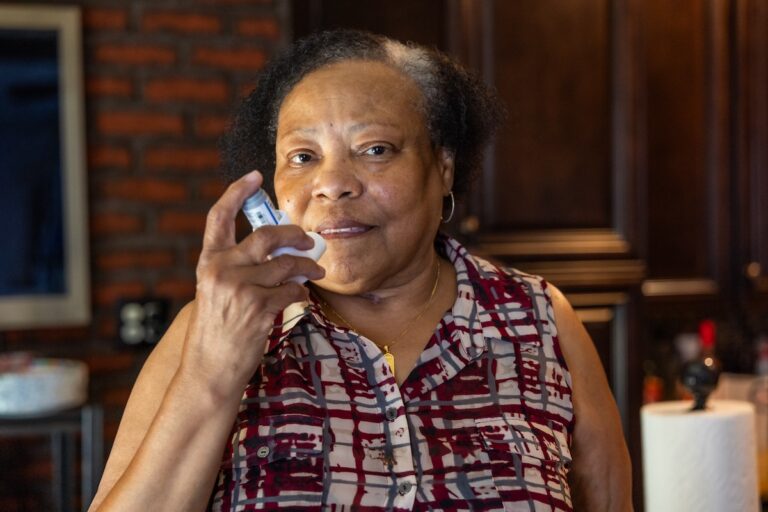
Carolyn Moseley lives with asthma, and she must monitor air quality measurements for her health. (Kimberly Paynter/WHYY)
This story is from The Pulse, a weekly health and science podcast. Subscribe on Apple Podcasts, Spotify, or wherever you get your podcasts.
Find our full episode on weather and our health here.
In the summer of 2023, Carolyn Moseley was at home in southwest Philadelphia, when she couldn’t breathe. She’s in her 60s, and has had asthma for more than 40 years.
That summer, wildfires in Canada brought hazy and smoky air to the east coast, making it hazardous for people to be outside. She called 911, but struggled to open the door when the ambulance arrived.
“My last thought was, ‘so this is how it’s going to end for me,'” she recalled. “Then the next thing I saw were some men coming toward me. And I must have blacked out. And when I regained consciousness, which was about two weeks later, I was in intensive care in the hospital.”
Moseley later found out that a combination of the bad air, and a virus, led to her airway collapsing.
She had to stay in the hospital for months, two weeks of which she had to breath through a ventilator. After she left the hospital, she went to various rehabilitation programs for months to regain muscle strength so she could stand, walk, and sit up on her own.
When she was released from rehab, she couldn’t speak, so she lived with her brother for a while, with a supply of oxygen. Now she’s in speech therapy to rebuild the muscles she needs to use her damaged vocal cords.
Moseley returned home more than a year ago, and is making a good recovery. She sees her pulmonary doctor twice a year, and recalled him saying, “You have defied all of the odds. I never thought that you would be in a good as position as I see you right now.'”
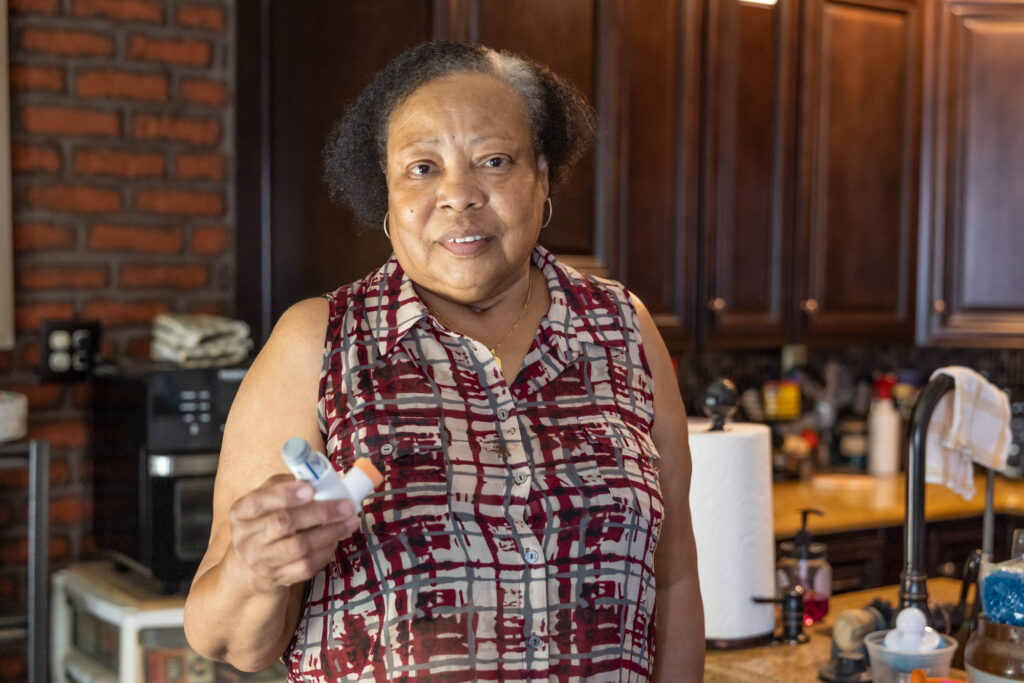
Now, every morning, she checks the local news for the weather and the air quality to decide if it’s safe for her to go outside or not, and so does everyone else close to her.
“If people hear that it’s gonna be bad air quality days, my phone rings off the hook. They tell me, ‘Carolyn, it’s not good. Do not go outside. If you need anything, you call me and you let me know.’ And this is family friends, neighbors, you name it.”
Jendaiya Hill can relate to this. She has severe asthma so checking the air quality is also part of her daily routine.
“I literally cannot breathe if I’m not paying attention,” said Hill, a community organizer at the Clean Air Council, a Philadelphia-based health advocacy organization focused on the environment.

“You can check the air quality like you check the weather,” she said. “That’s actually a big part of some of the educational work that we are doing through our community meetings is really trying to grow that skill set.
She said this is important regardless of how healthy people are.
“Folks may think, ‘oh, I don’t have asthma,’ or ‘I don’t have like a health issue, so this doesn’t really concern me.’ But actually what we’re starting to see … particularly with the wildfire smoke, is that you can be perfectly healthy, able-bodied, have absolutely no underlying health conditions, and be having respiratory distress.”
Subscribe to The Pulse
In 2026, the U.S. has already reached the highest number of wildfires, and highest number acres burned, compared to every year over the past decade. Much of the U.S. also experienced heat waves this summer, which can often lead to poor air quality, because of the heat and stagnant air.
Breathing in air pollutants leads to inflammation and stress, and affects organs like the lungs, heart, and brain.
However, Hill points out that even though most weather apps will track air quality, and the Environmental Protection Agency has a network of more than 10,000 well-calibrated air quality sensors across the U.S., there are some difficulties with tracking air quality.
Problem 1: hyperlocal sources of pollution
First of all, she explained that air quality problems can be very local, like a scrapyard or construction site. It also depends on what weather conditions are like.
“Sometimes just because we’re seeing something that is a pollution concern doesn’t mean that actually the people right next to it are the most impacted depending upon where the wind is blowing,” she said. “You can have the source of a pollution event be actually very far away, and the pollution itself can travel.”
Part of the Clean Air Council’s work is to take calls from residents concerned about bad air in their neighborhood, and do the detective work to figure out why.
To address the hyperlocal air pollution problems, the Clean Air Council has installed a network of sensors across south and southwest Philadelphia that connect to a platform called Purple Air.
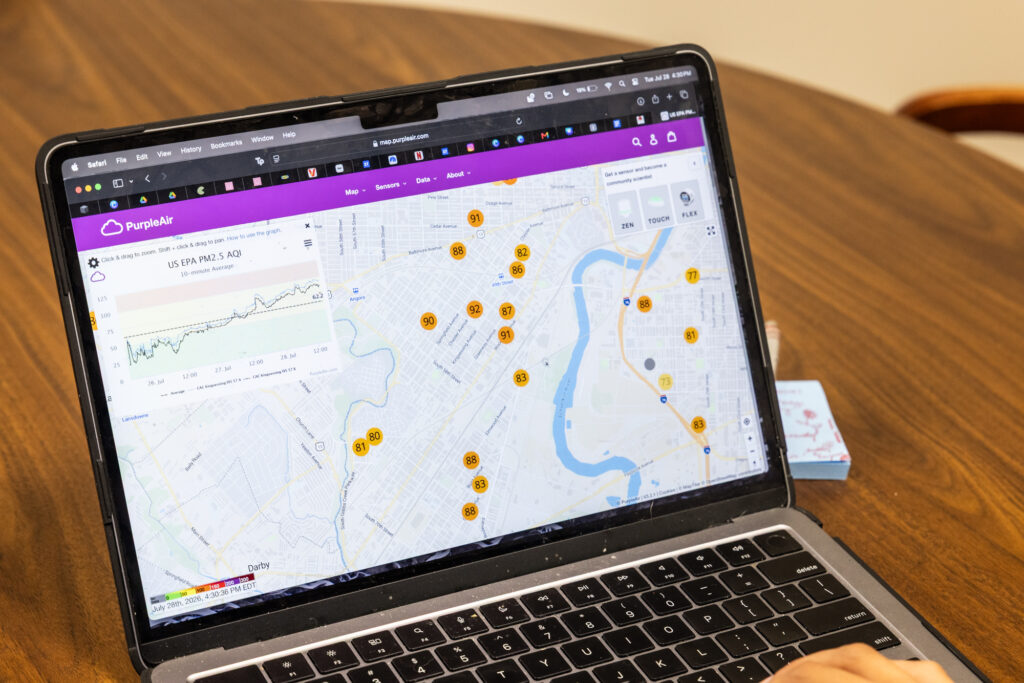
Anyone can buy a Purple Air Sensor for around $200, and the device will provide local air quality measurements that are uploaded to a global network.
The EPA’s air quality sensors track six different air pollutants, like lead, ozone, and particulate matter. Of the six, Purple Air sensors track particulate matter that are 30 times smaller than the diameter of human hair, which are dangerous because they can be inhaled, and are small enough to enter the lungs.
Problem 2: Is that chemical smell actually coming from a pollutant?
The second complication with getting accurate local air quality measurements is that Purple Air sensors, “can tell you something’s in the air, but they can’t always tell you what’s in the air more specifically,” Hill explained.
One concern are volatile organic compounds, which can be anything that smells bad, like evaporating gasoline, or the smell of paint thinner. It’s more of a concern for indoor air pollution, but it can be a problem outside as well.
A lot of chemical smells can be volatile organic compounds, so someone has to figure out which of these chemicals are in the air and at what levels, before they can say whether it’s a health concern or not. Some of these chemicals have health impacts by themselves, but they can also react with nitrogen oxide to create ozone pollution, which is also known as smog.
Civil engineer Jaimie Ritchie went through this long process for Albuquerque, New Mexico.
A few years ago, residents got so concerned about strange smells and their hazy skies that they tasked the city to investigate. The city installed a trailer full of equipment to measure the chemicals in the air. Ritchie went through years of this data to find out why the air smelled strange.
To do that, the trailer had to be “manned basically five days a week during work hours. They are technically autonomous instruments. However, the amount of instrumentation and effort required is basically a full-time job,” she explained.
She recently concluded that the chemicals come from car exhausts, natural gas, and various industries. The good news for the people of Albuquerque is that the chemicals do not reach harmful levels.
Here in Philadelphia, the Clean Air Council has also installed 10 sensors that measure volatile organic compounds.
However, despite the record breaking wildfire season this summer, there is also good news for Philadelphia, said Kabindra Shakya, an environmental scientist at Villanova University who studies air pollution. He went through air pollution data in the Philadelphia region from the 1980s to 2021, and concluded that overall pollution levels are going down. He said that shows Philadelphia is doing the right thing, and needs to continue to enforce strict environmental policies to continue in this direction.
WHYY is your source for fact-based, in-depth journalism and information. As a nonprofit organization, we rely on financial support from readers like you. Please give today.
Brought to you by The Pulse
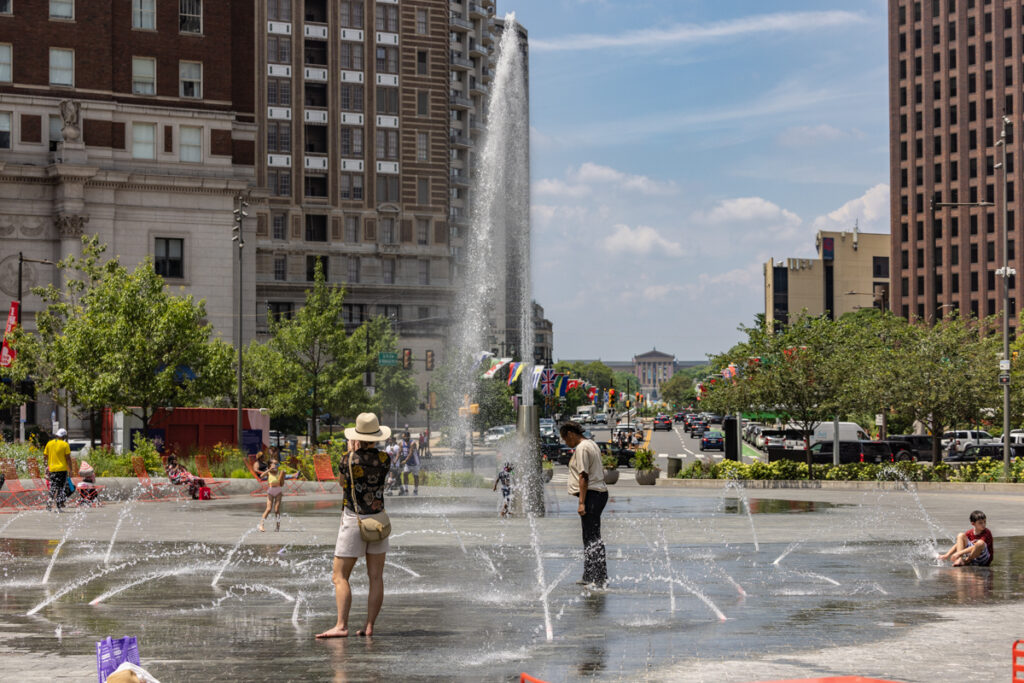
Why heat waves often bring air quality warnings to the Philadelphia area
When temperatures spiked last month, so did air pollution. Here’s why.
1 year ago
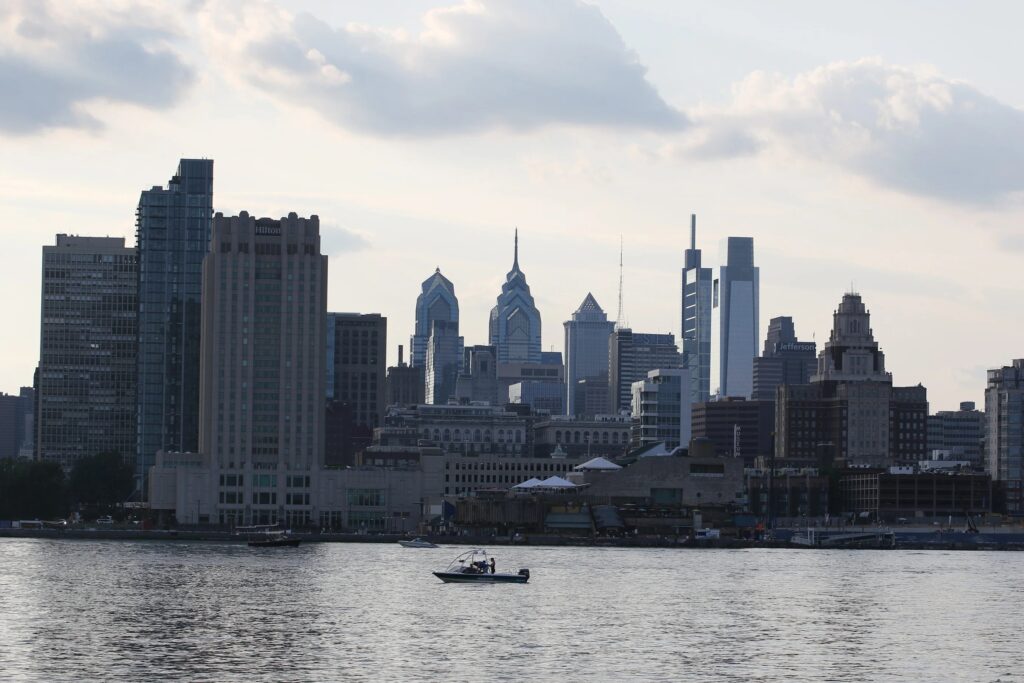
Philly gets failing grades for air pollution that makes asthma worse
In its annual report, the American Lung Association flunked the city for its levels of ozone and particle pollution. The 2023 wildfires played a role.
1 year ago
Listen 1:09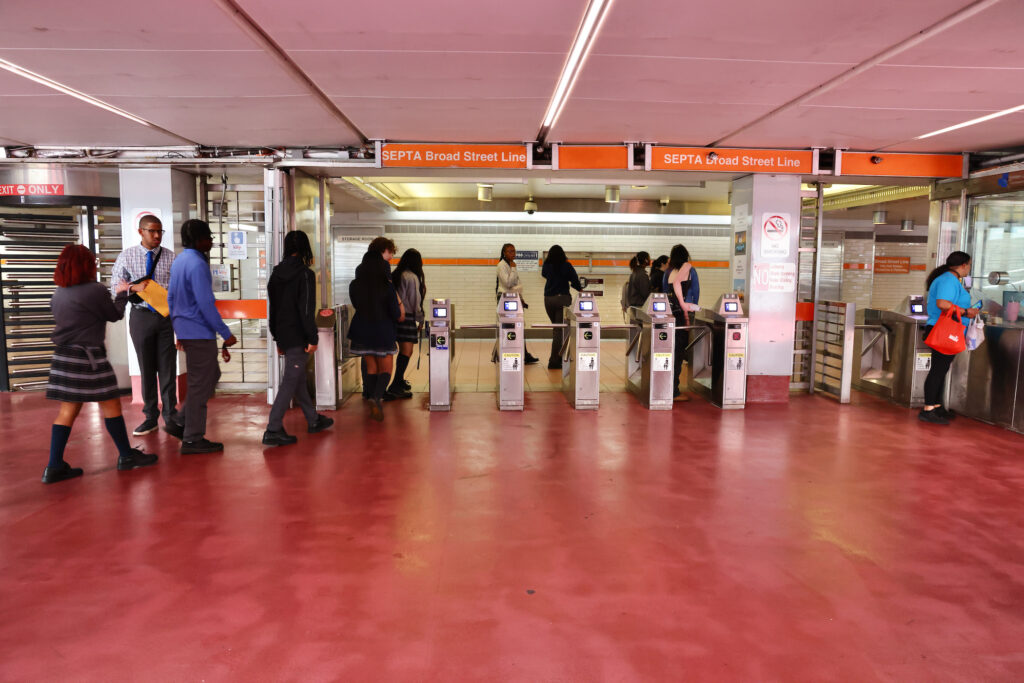
Air pollution at Philadelphia’s 15th Street subway station ‘considerably higher’ than EPA standard
Local researchers say it’s unclear what the health impact is, but public transit is still preferable to driving.
2 years ago