


SCOTUS weighs birthright citizenship
What does it mean to be an American? And how should we decide who gets to be one? Those are the questions facing the Supreme Court this week.
Listen 51:14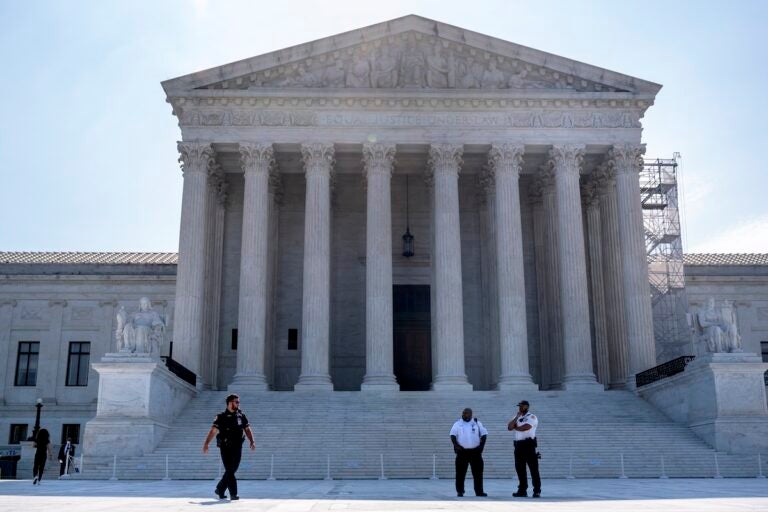
The Supreme Court building is seen on Friday, June 28, 2024, in Washington. (AP Photo/Mark Schiefelbein)
What does it mean to be an American? And how should we decide who gets to be one? Those are the questions at the center of a landmark Supreme Court case this week, as justices weigh the constitutionality of ending birthright citizenship.
Jus soli — Latin for “right of soil” — was enshrined in the 14th amendment to the Constitution in 1868. It was ratified in the aftermath of the Civil War and overturned the Court’s infamous Dred Scott decision, granting citizenship, and the rights that come with it, to formerly enslaved people. Thirty years later, United States v. Wong Kim Ark established that jus soli applied to all children born on U.S. soil regardless of their parents’ immigrant status. The policy makes the U.S. an outlier among other leading developed countries, and yet, in the decades since its adoption, birthright citizenship has been the source of little debate –until now.
In recent years, President Trump has called the right a “crazy policy” and claimed that it costs Americans billions every year. And on the very first day of his second term, he issued an executive order titled “Protecting the Meaning and Value of American Citizenship,” denying the children of undocumented immigrants and temporary residents’ automatic American citizenship.
Tomorrow, the Supreme Court will hear oral arguments in Trump v. Barbara and weigh the constitutionality of Trump’s executive order. Their decision, expected this summer, might very well reshape the fabric of American society. So ahead of those arguments, we’re looking at the history of the 14th amendment and the current debate around it.
Guests:
- Carly Goodman, assistant professor of history at Rutgers University – Camden and the author of Dreamland: America’s Immigration Lottery in an Age of Restriction
- Anil Kalhan, professor of law at Drexel University
WHYY is your source for fact-based, in-depth journalism and information. As a nonprofit organization, we rely on financial support from readers like you. Please give today.
Brought to you by Studio 2
Federal judge finds Trump violated First Amendment by ordering NPR, PBS defunded
The decision leaves the future of federal funding for public media “unresolved,” WHYY’s CEO said Tuesday, but it’s a positive sign.
4 days ago
Listen 1:15
A report detailing the “troubling connections” between the music behemoth and concert venues was released the same day the trial resumed. Here's what to know.
2 weeks ago
Police are finding suspects based on their online searches as courts weigh privacy concerns
The U.S. Constitution’s Fourth Amendment protections were at the heart of a Pennsylvania Supreme Court decision that upheld what is known as a 'reverse keyword warrant'.
1 month ago