

‘It’s an outrage’: Critics demand transparency on source of Delaware funding for Edgemoor port project
Delaware’s use of its unclaimed property funding has led some to call it a “piggy bank.”
Listen 0:56
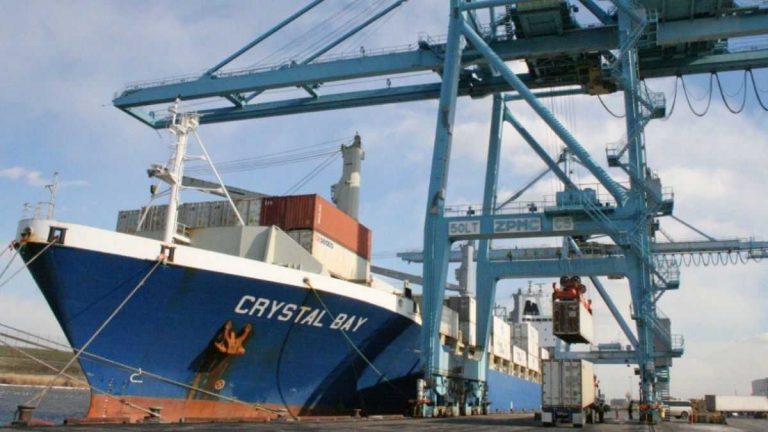
The Port of Wilmington in Delaware. (Courtesy of Port of Wilmington)
What are journalists missing from the state of Delaware? What would you most like WHYY News to cover? Let us know.
Speculation is swirling around how Delaware Gov. Matt Meyer’s administration plans to prop up the Port of Wilmington’s Edgemoor project, as officials continue to dodge questions about where additional state funding will come from.
The administration revealed last month that the Phase 1 costs of the Edgemoor container terminal construction had ballooned from $415 million to $669 million. The state agreed to pitch in an additional $110 million to help cover a $189 million shortfall.
The source of that $110 million is publicly unknown, and the lack of transparency is drawing criticism from current and former state lawmakers and open government advocates.
“I don’t know why this is such a state secret, but the public has a right to know,” said John Flaherty, spokesperson for the Delaware Coalition for Open Government. “There’s no justification for not sharing it.”
Some Delaware lawmakers said they’ve been told the administration will use unclaimed property revenue from the general fund. Others say the state could use surplus money socked away in savings and could find even more revenue when the budget forecasting council meets later this month.
More taxpayer dollars go to Edgemoor project despite initial promises
When the state struck a deal in 2018 with Emirati port operator GT USA Wilmington, a subsidiary of Gulftainer, Carney said that privatizing the port would allow the state to “get out of the business of subsidizing” it.
But since then, the state has kept pouring in taxpayer dollars to keep the port project afloat throughout Gulftainer’s troubled tenure and after its replacement by Massachusetts-based Enstructure in 2023. State officials and lawmakers argue the terminal will bring good jobs and drive economic development.
The latest example came with the new amended agreement recently announced between the Diamond State Port Corporation and Enstructure. Because the price of the Edgemoor project has increased to $669 million, the first phase will now require $325 million in state funding, $225 million from Enstructure and another $119 million in federal funding. To cover the budget deficit, the state agreed to put in an additional $110 million, Enstructure is kicking in another $75 million and the project will get another $69 million in federal funding.
‘It’s an outrage’
While meeting recently with reporters, Meyer refused to identify the origin of the state’s additional contribution to the Edgemoor project, saying only that it is a “one-time money source that we’ll discuss at the appropriate time.”
Meyer’s office did not respond to a request for comment seeking clarity on when that appropriate time will be.
Secretary of State Charuni Patibanda-Sanchez, who chairs the Diamond State Port Corporation board, has said a state funding source had been identified but declined to say what it was.
Also lacking clarity are the circumstances surrounding the sudden resignation of Mike Houghton from the Port Expansion Task Force just days after questioning Brian Devine, the interim director of the Diamond State Port Corporation, about where the funding would be coming from. The Diamond State Port corporation is a quasi-public entity that oversees the Port of Wilmington.
Former Republican state Sen. Greg Lavelle is critical of the Edgemoor project and the money the state has pumped into it. He said “it’s an outrage” that Devine was reluctant to be forthcoming about the source of the funding.
“They sit there in a public meeting and say we’ve identified $110 million to continue this fiasco, but we’re not going to tell you where it is, where we’re getting it from,” he said.
Houghton directed questions about his resignation to the email he sent the task force. He also said that as of May 29, he was no longer affiliated with Morris Nichols, the law firm that represents the port, an assertion the law firm denied to WHYY News.
Meyer fired Houghton in March from the Delaware Economic and Financial Advisory Council, known as DEFAC, just days after WHYY News reported that he voiced concerns during that month’s meeting about corporate franchise data.
Related Content
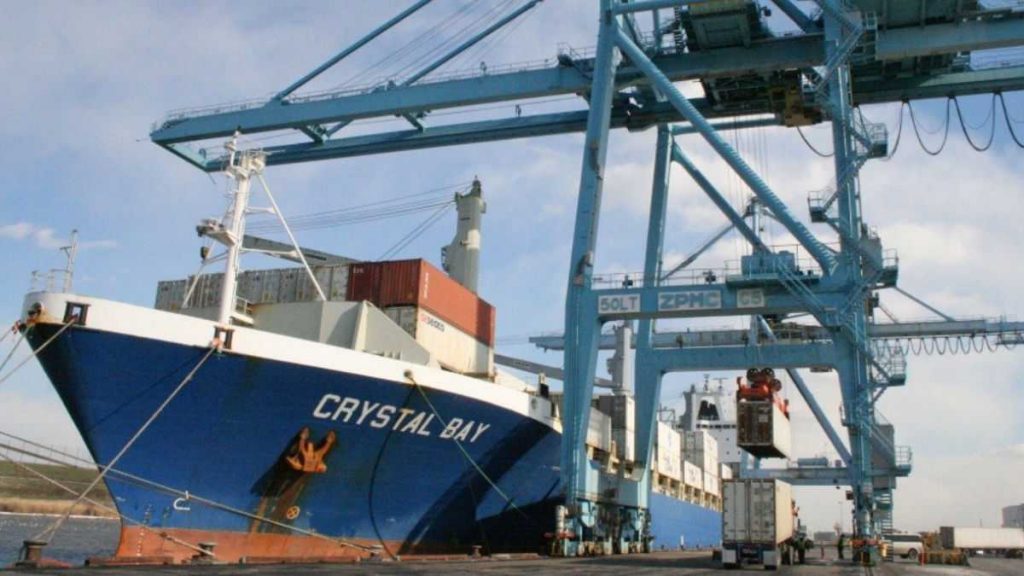
Phase-one costs of the Edgemoor container terminal construction have ballooned from $415 million to $669 million.
5 months ago
Listen 0:50Delaware unclaimed property used as a ‘piggy bank’
Meyer did tell reporters that the funding will come from a reserve fund, which could mean unclaimed property. The funding has earned the reputation of being a “slush fund” or “piggy bank” because it’s been raided for other uses, with past administrations using the money and declining to answer questions about it.
In 2024, Carney officials said that the state would pay about 30% of the cost, around $195 million, for the Edgemoor project. His administration tapped excess escheatment funds and ran them through that fiscal year’s bond bill for the Edgemoor project. That transfer prompted an audit that was highly critical of how the port had been managed.
Delaware unclaimed property is the state’s third-largest source of revenue. Because Delaware is a top destination for business incorporation, unclaimed property provides an outsized revenue source for the state. Companies must turn over items, such as someone’s uncashed checks, old bank accounts and stocks and bonds after a certain period. It can vary based on the type of property, ranging from three years to 15 years.
The state transfers, or escheats, the funds into the state’s general fund after the property is declared abandoned, subject to time limits and no communication from the owner. The Delaware Department of Finance also maintains an escheat special fund.
“After a certain period of time, it becomes truly abandoned, and that’s where the piggy bank aspect comes in,” said Bob Byrd, lobbyist and former DEFAC member. “There’s always money there that you can go in and get, simply with a change of law, which you do in the bond bill or the budget bill.”
A finance department spokesperson did not respond to questions about the state’s unclaimed property revenue. According to May DEFAC projections, the state has nearly $400 million in unclaimed property revenue.
Some Delaware lawmakers, like state Rep. Mike Smith, R-Hockessin, say they’ve heard that Meyer’s administration is considering going that route again. Smith said he would oppose that.
“It’s funny money, right? At some point it’s someone else’s money,” he said. “But also, why are we taking it out for that specifically? It should be for an emergency, it should not be for cutting economic development deals.”
Another possible source for funding Edgemoor?
Delaware also has nearly $1 billion in reserves, including the rainy day fund, budget smoothing fund and the 2% cushion that is set aside in case of an estimated budget shortfall. The Meyer administration could use some of those savings for Edgemoor.
Byrd said he wouldn’t be surprised if DEFAC projected that the state had even more revenue at its June 15 meeting.
“Given all of the needs of the state, if I was in the legislature, I would be spending more money,” Byrd said. “They have plenty.”

Get daily updates from WHYY News!
WHYY is your source for fact-based, in-depth journalism and information. As a nonprofit organization, we rely on financial support from readers like you. Please give today.
Part of the series

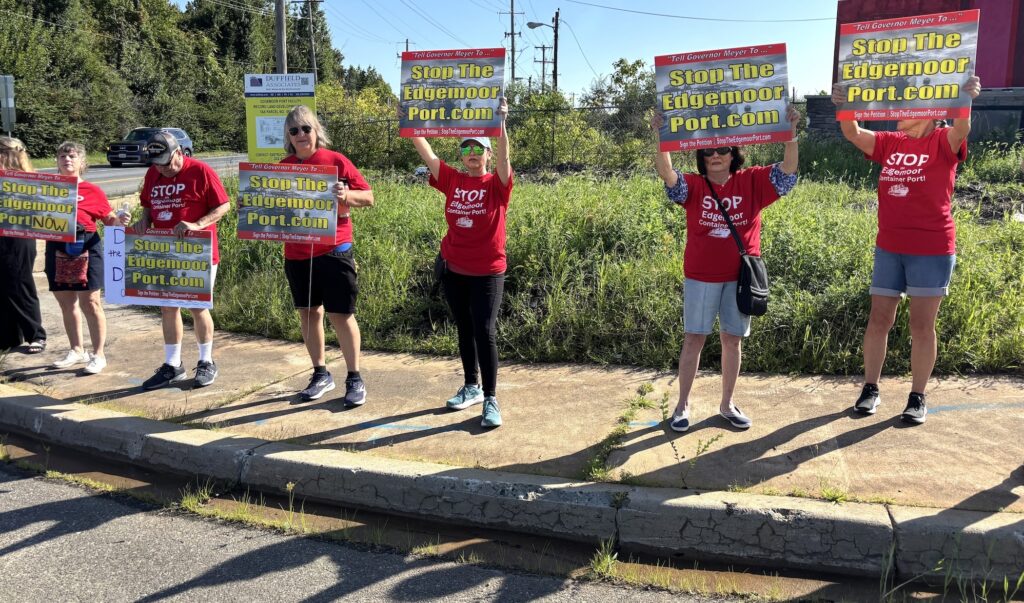
‘Slowly poisoned’: Neighbors protest controversial Delaware port project over health concerns
Neighbors living near the Edgemoor site say they’re concerned about truck exhaust, noise and harm to local wildlife.
1 month ago
Listen 0:49
Public Service Commission members, who approved Delmarva Power’s interim rate request, questioned the scope of its oversight authority.
3 months ago
Listen 0:52
Phase-one costs of the Edgemoor container terminal construction have ballooned from $415 million to $669 million.
5 months ago
Listen 0:50