

Rittenhouse Chess Club turns pickup games into lasting friendships in Philadelphia
Twice a week, players gather for free games in Rittenhouse Square, where a club that started with one chessboard has grown into a community.
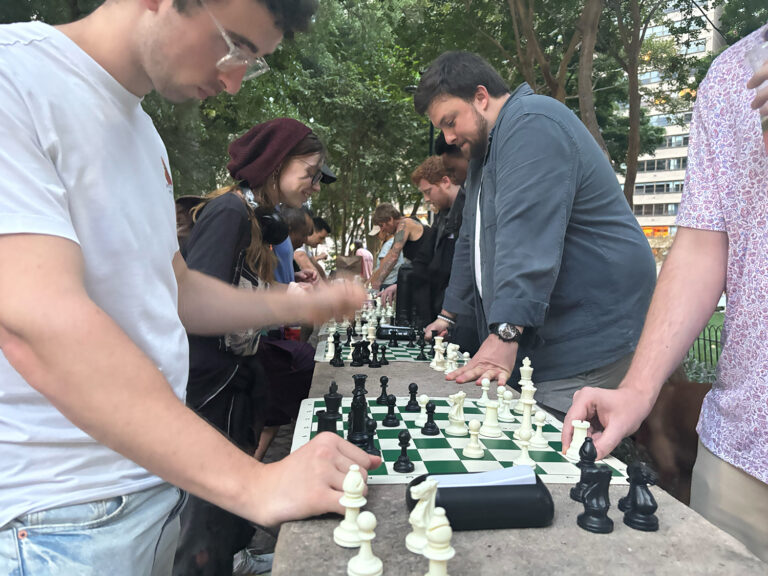
Members of the Rittenhouse Chess Club play chess during their Wednesday meeting in Rittenhouse Square on Sept. 2. (Jassmyn Nesmith/WHYY)
From Philly and the Pa. suburbs to South Jersey and Delaware, what would you like WHYY News to cover? Let us know!
On Wednesday evenings and Sunday afternoons, weather permitting, chess players gather in Rittenhouse Square to challenge friends and strangers to games that can stretch for hours.
Some come every week. Others happen upon games while walking through the park. Skill level does not matter. If there’s an open board and a willing player, there’s a game.
The Rittenhouse Chess Club has been bringing people together for free games in Center City since 2021. Over time, the club has become a third space for its regulars — somewhere outside home and work where friendships can form over a chessboard.
It started as something much smaller.
For founder Andrew Graham, the club grew out of his own search for connection after relocating to Philadelphia.
“I moved to Philly, and I didn’t know anybody here, and I moderately liked chess,” Graham said.
In 2021, Graham began bringing his chessboard to Rittenhouse Square and inviting strangers to play. As those people returned, they became friends, and the club gradually took shape.
Sarah Court found the club in its earliest days.
Court had recently learned to play chess when she spotted Graham in the park with his board.
“I saw him out here, and walked up, and we started playing. And that was right when he was starting the club,” Court said. “And I like to say I was the first member.”
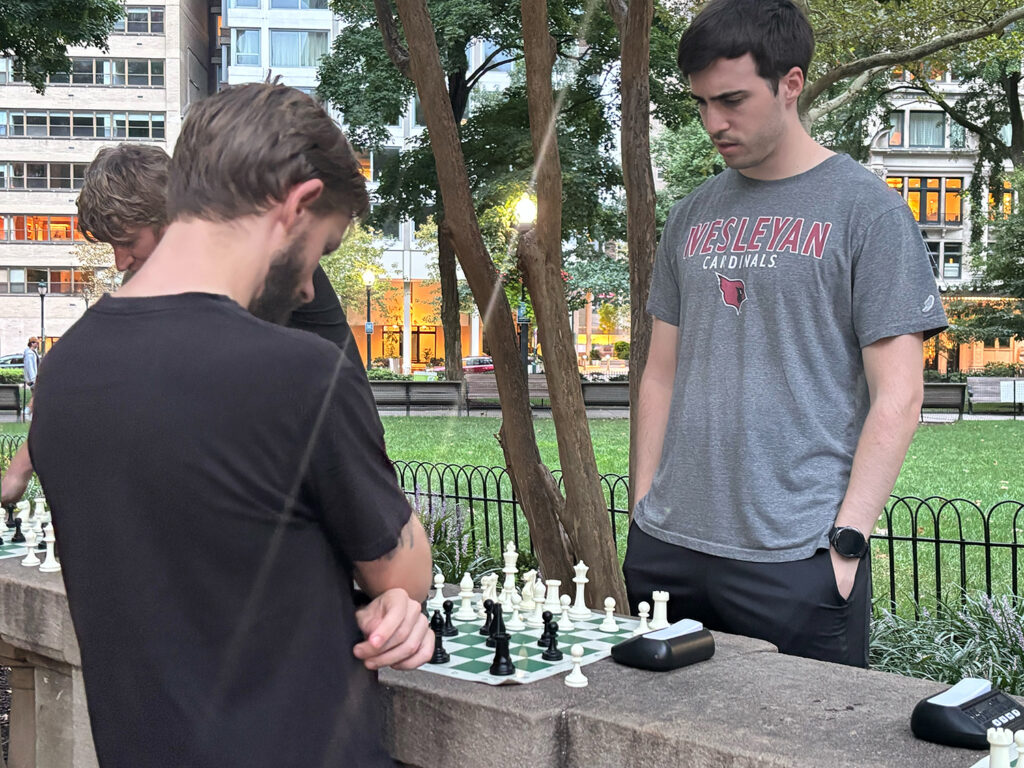
Five years later, Court is still a part of the club. She helps with its Instagram and with coordinating events such as the recent charity tournament the club held for Children’s Hospital of Philadelphia.
Other regulars have taken on responsibilities, too, volunteering their time to help keep the club running.
For Graham, that was an important part of establishing a community, giving people a reason to see one another regularly.
“In the beginning, I was running this chess club,” Graham said. But now, he said, it’s run by “the community of people.”
That community includes players of all experience levels.
“Some chess players, maybe, are not the most social people, so it’s really nice to have a game that you can connect with someone with,” Court said. “And then it’s just nice to talk to people and get to know them.”
That face-to-face interaction has become increasingly important as more chess has moved online.
“Chess is an inherently social game, because you play another person,” Graham said. “But with the surge of online chess, it’s become a very reclusive game for a lot of people.”
Related Content
Fall in love with our list of Philly autumn festivals
From Oktoberfests to apple picking parties, the city is brimming with fall celebrations.
1 month ago
In Rittenhouse Square, the game disrupts such reclusiveness and places two competitors directly across from each other. Court said that having a chessboard between two people can make it a little easier to get to know each other.
“Are you looking for a game?” is enough to start a conversation.
For some members, those conversations have grown into relationships that extend beyond the club’s weekly meetings.
Donovan Levine began coming to the club last year. He says the people he has met through the club are now people he sees around the city. He said that members often get together for other activities, including weekly trivia nights.
“I’ve made, honestly, some of the closest friends in Philly now, who I’ve known for five, six years now,” Court said. “We don’t even really play chess when we hang out. They’ve just become really good friends in my life.”
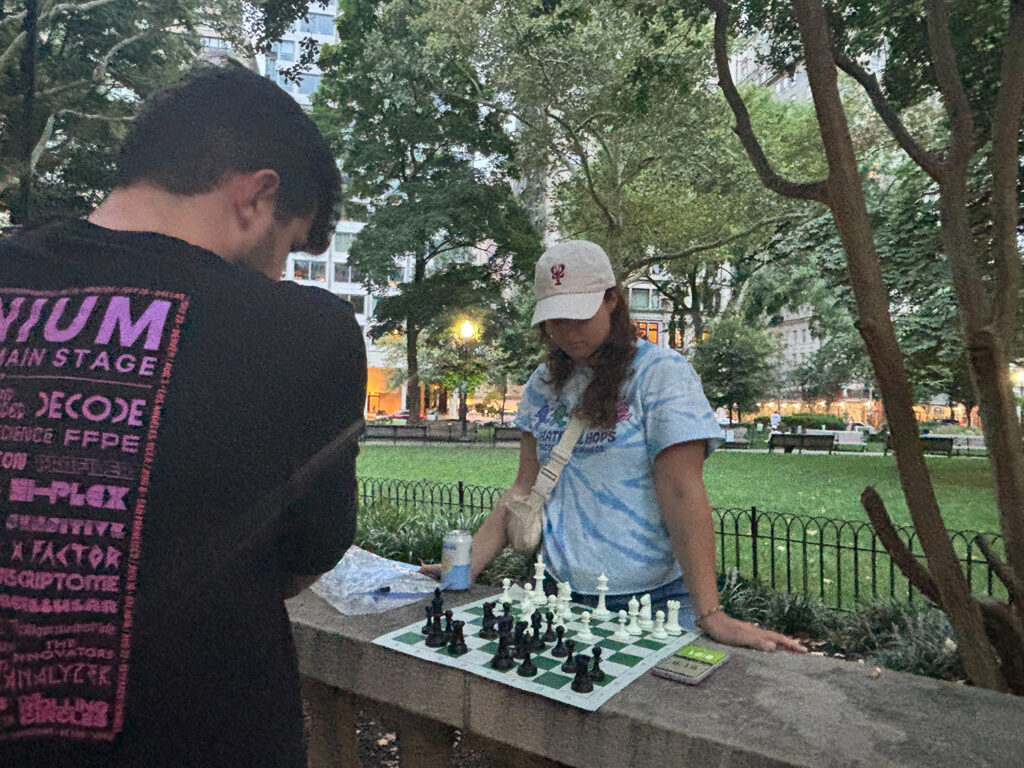
Other members Brian Meehan and Andrew Tsen said that the friendship is what keeps them returning each week. For Meehan, it’s simple: “A lot of friends, you know, are here, so I look forward to see these guys.”
Tsen said chess has helped him make connections he might not have made otherwise.
“I think I’ve met at least 100 people here just by playing chess,” Tsen said. “I just play for fun, and the friends I make along the way.”
The club has grown beyond its twice-weekly gatherings, with members organizing tournaments, charity events and other activities. But the games at Rittenhouse Square remain its foundation.
Games continue until the clock runs out or players are ready to call it. Pieces are reset, opponents change and conversations carry on between moves.
And when one game ends, there is always someone waiting to start the next.

Never miss a moment with the WHYY Listen App!


WHYY is your source for fact-based, in-depth journalism and information. As a nonprofit organization, we rely on financial support from readers like you. Please give today.

Historic Wetherill Mansion in Philadelphia’s Rittenhouse Square damaged by fire
One firefighter was taken to the hospital to be treated for heat exhaustion.
1 year ago

Hanukkah gathering in Rittenhouse Square brings hundreds together
The eight nights of Hanukkah conclude on Jan. 2.
2 years ago
Suspect identified and charged in Rittenhouse Square sex assault: Police
According to police, the 27-year-old victim left a bar and was walking home when the attack happened.
4 years ago