
Philadelphia social clubs and small businesses plead for legalization of skill game machines before October deadline
Clubs, bars and nonprofits say revenue from the machines helps keep their doors open as lawmakers weigh regulation.
Listen 1:40
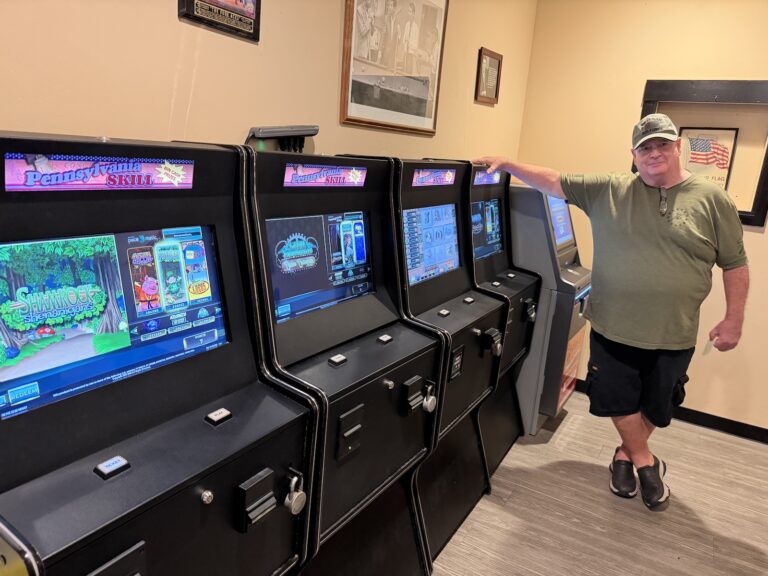
Pat McMullen, president of the Knights of Columbus Regina Coeli Home Association in Northeast Philadelphia, stands next to skill game terminals in the organization’s bar. (Meir Rinde/WHYY)
From Philly and the Pa. suburbs to South Jersey and Delaware, what would you like WHYY News to cover? Let us know!
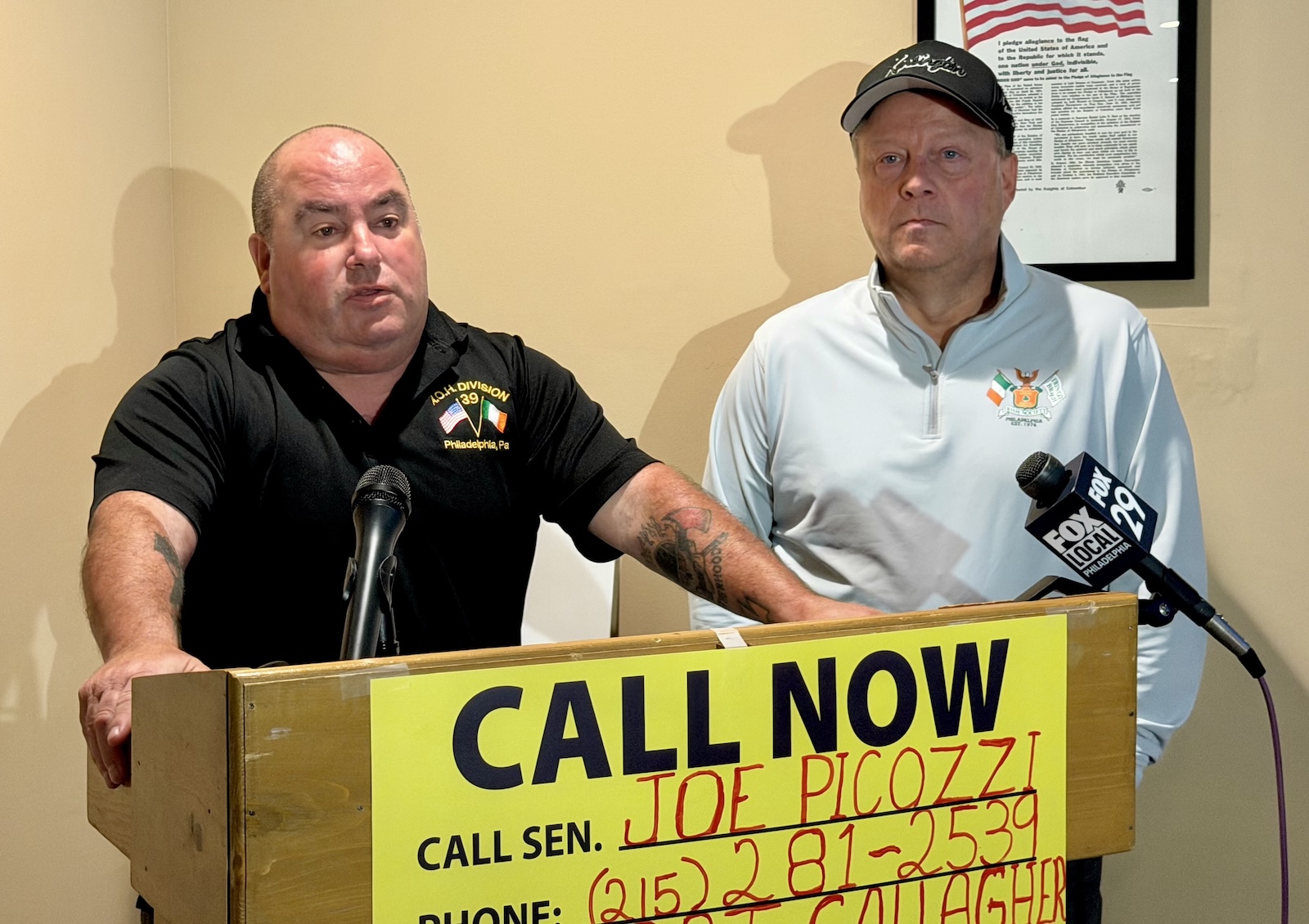
Rising taxes, the summer slowdown and a broken air conditioner that’ll cost at least $3,000 to fix have Shawn Anderson looking for every dollar he can find to keep the lights on and charitable activities going at the Ancient Order of Hibernians Division #39 in Tacony.
That’s why Anderson, president of the Irish Catholic fraternal organization, says it’s critical that state lawmakers come up with a way to let AOH 39 keep earning some money from a set of slot machine-like skill game terminals at its bar.
“It’s probably between $500 and $2,000, depending on the month. For us, it’s a lot,” he said. “Whether it’s $100, $200, $1,000, that money every month allows us to keep our building open. It allows us to help feed all the families during the holidays. It really helps us keep going.”
The state Supreme Court ruled in June that the estimated 70,000 skill game terminals in use around Pennsylvania are illegal slot machines under state law, and gave the legislature 120 days to create a regulatory framework for them.
If lawmakers don’t act by Oct. 13, social clubs, bars, gas stations and fire halls that have the machines must turn them off and could see them seized by state police. Multiple bills permitting the devices and taxing them at different rates have been proposed, but the legislature has yet to act.
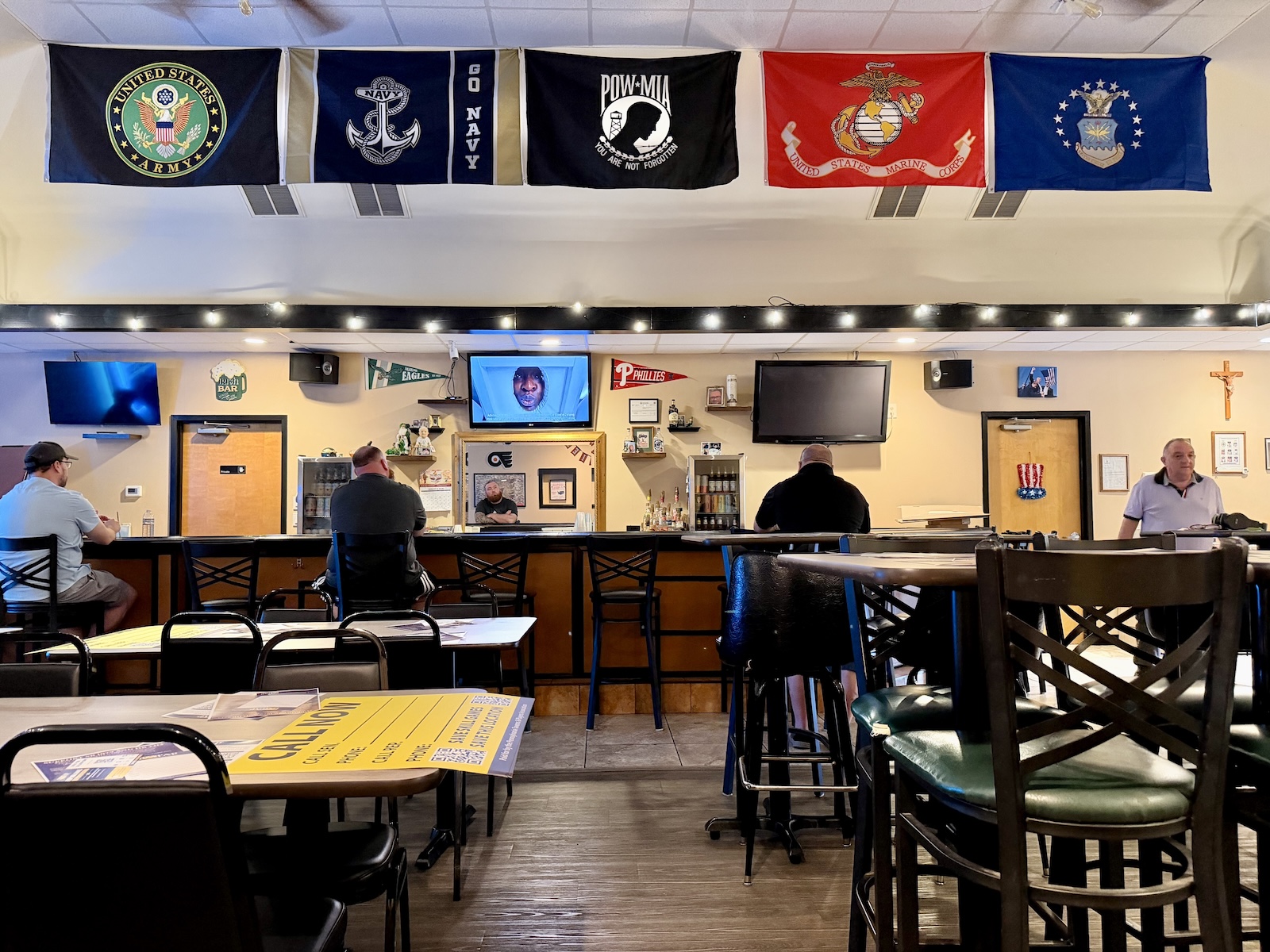
Anderson and representatives of other affected establishments held a press conference at the Knights of Columbus hall in East Torresdale on Thursday, along with local politicians and video terminal manufacturers, to urge lawmakers to pass a bill before the court-imposed deadline.
“What I would ask everyone is to contact your legislator, tell them that this is important,” said Mike Barley, chief of public affairs at Pace-O-Matic, the Georgia company that produces many of the games used in Pennsylvania. “Tell them that we need action, and the time’s running out.”
Casinos vs. skill game makers
Pace-O-Matic wants lawmakers to pass bills sponsored by state Sens. Anthony Williams, D-Philadelphia, and Gene Yaw, R-Lycoming, and state Reps. Danilo Burgos, D-Philadelphia, and Rep. Jonathan Fritz, R-Susquehanna/Wayne, that would regulate the games and set a monthly, $500 per-terminal fee.
The sponsors say it would generate $300 million for the state in its first year.
Gov. Josh Shapiro has proposed a 52% tax rate on the devices, close to the 55% rate for casino slot machines. Senate Republican leaders have backed a 35% rate, and Yaw — whose district includes skill game maker Miele Manufacturing — has separately sponsored legislation that would impose a 16% tax rate.
The debate has pitted game manufacturers like Pace-O-Matic, which has lobbied fiercely for a lower rate, against casino interests, who see skill games as competition and want a higher rate. Barley and several others pointed out that revenue at the state’s casinos has been growing steadily and argued they faced no threat from skill games at small businesses and clubs.
“We’re not taking money from the casinos,” said Jeff Millay, chief operating officer at Miele, which builds machines for Pace-O-Matic at a facility in Williamsport. “We’re getting the guy that just got done working at the factory, who wants to stop by his local bar and have a beer. He wants to have a little bit of entertainment, so he puts a $20 bill in a machine and gets to have a little bit of fun. He’s not going to the casino.”
The gaming terminals have also been an issue in annual state budget negotiations. Shapiro has sought to increase funding for priorities like public schools and transit agencies through new taxes on skill games and legalized marijuana, while Republican leaders have accused him of overspending and rejected his proposals.
Shapiro wants to put the devices under the state’s existing rules on video gaming terminals. He would cap their number at 40,000 and limit establishments to five machines.
However, some of the governor’s allies have said the devices should remain illegal, or their use be highly restricted, because they sap resources from low-income communities and attract crime and nuisance behavior.
Related Content
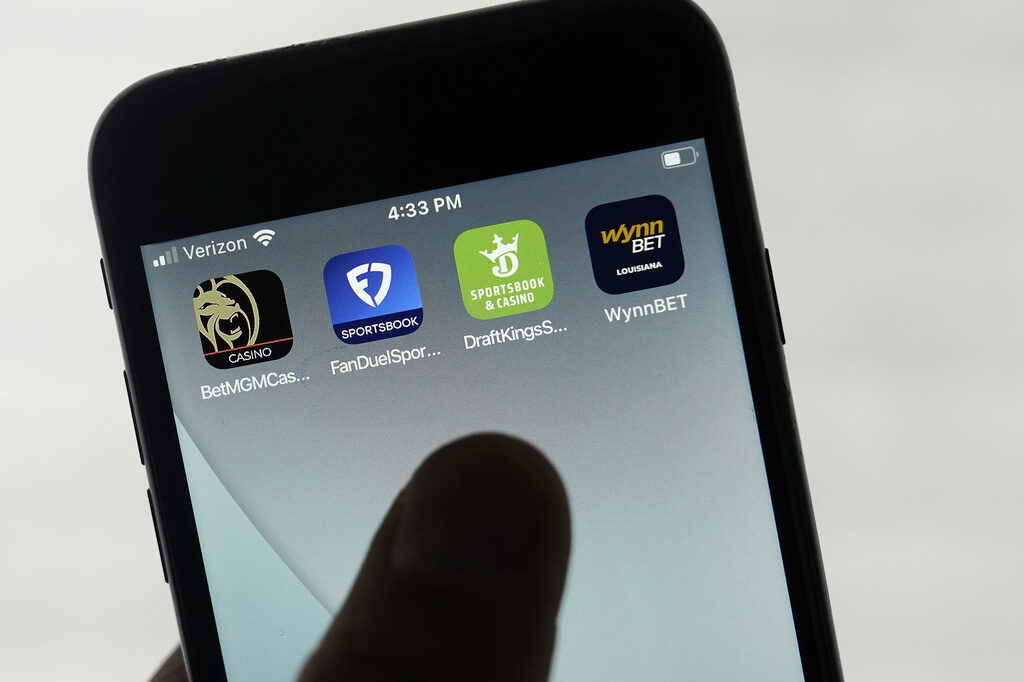
How the Philly region became an online gambling epicenter
The Philadelphia region is now the marketing epicenter for the online gambling boom. With that, comes more problem gambling.
Air Date: December 16, 2025 12:00 pm
Listen 51:09Philadelphia City Council voted in 2024 to ban them from most businesses, except casinos and establishments that have a liquor license and room for at least 30 people to eat or drink. A court subsequently blocked that law from going into effect.
Mayor Cherelle Parker applauded the Supreme Court decision in June, calling skill gaming a “predatory activity” that “only exacerbates seemingly intractable problems,” and saying they should only be allowed, at most, in private clubs and casinos.
‘The only way to survive’
Patrick McMullen, president of the Knights of Columbus Regina Coeli Home Association, said that without the four skill games machines in a corner of the organization’s bar, it would have closed during the steep falloff in member visits during the COVID-19 pandemic.
Those revenues also help fund the group’s donations to aid Toys for Tots, veterans organizations, people with cancer and community members who are struggling at Christmas time, he said.
“They always pick a family in the community who just lost a parent and had a rough time going, and they’ll buy all the toys for the kids and food and all that. All that stuff, that comes from this,” he said, referring to the skill games. “That’s the thing that breaks my heart, because those people are going to be hurt, too.”
Daniel Varon, who said he runs a lounge called Azucar in Feltonville, said many small bars depend heavily on the machines, which he said can bring in $1,000 to $1,500 a week and provide more than half of their revenues. He said immigration enforcement activity has hurt some businesses.
“People are scared to go to Latino bars. The income went down a lot, and then the machines are the only way to survive,” he said. “People think they’re making a fortune. They’re not, because it depends how much [people] play and how much they win.”
Rep. Burgos, who is Dominican American and formerly owned a grocery story, told those assembled at the Knights of Columbus hall that the potential crackdown on skill games was an example of Wall Street — in the form of politically powerful casino operators — trying to “take everything” from small businesses.
“A lot of forces in the industry do not want you, mom-and-pop businesses, to make an extra penny, and that’s unAmerican,” he said. “This bill is about fairness, making sure that halls like this one that we’re here this afternoon have an opportunity to make an extra dollar.”
State Rep. Pat Gallagher, D-Philadelphia, said negotiations over skill games have been underway over the summer and that he believes Democrats who lead the House and the Republicans who lead the Senate will come to agreement, hopefully before the Oct. 13 deadline.
“We don’t want to take away an opportunity for revenue streams for small businesses, but you also want to make sure consumers are protected,” he said. “So there’s a lot of balls in the air that we’re trying to figure out.”

Never miss a moment with the WHYY Listen App!


WHYY is your source for fact-based, in-depth journalism and information. As a nonprofit organization, we rely on financial support from readers like you. Please give today.
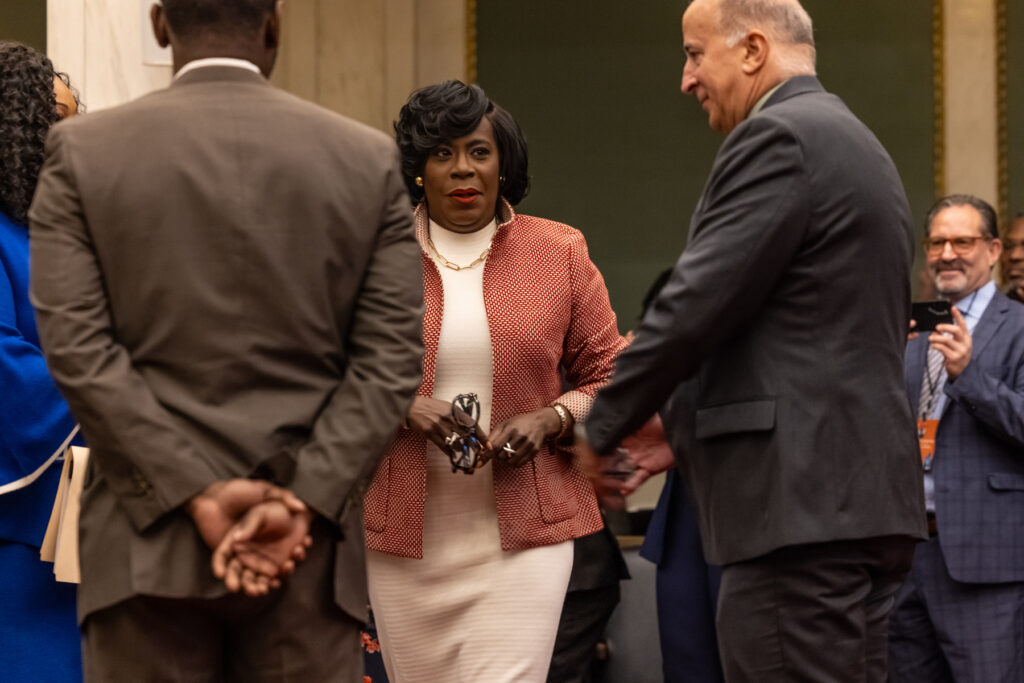
Mayor Parker signs bills targeting quality of life in Kensington
The actions ban gambling devices in convenience stores, outlaw flipping devices and mandate an 11 p.m. business curfew in Kensington.
3 years ago
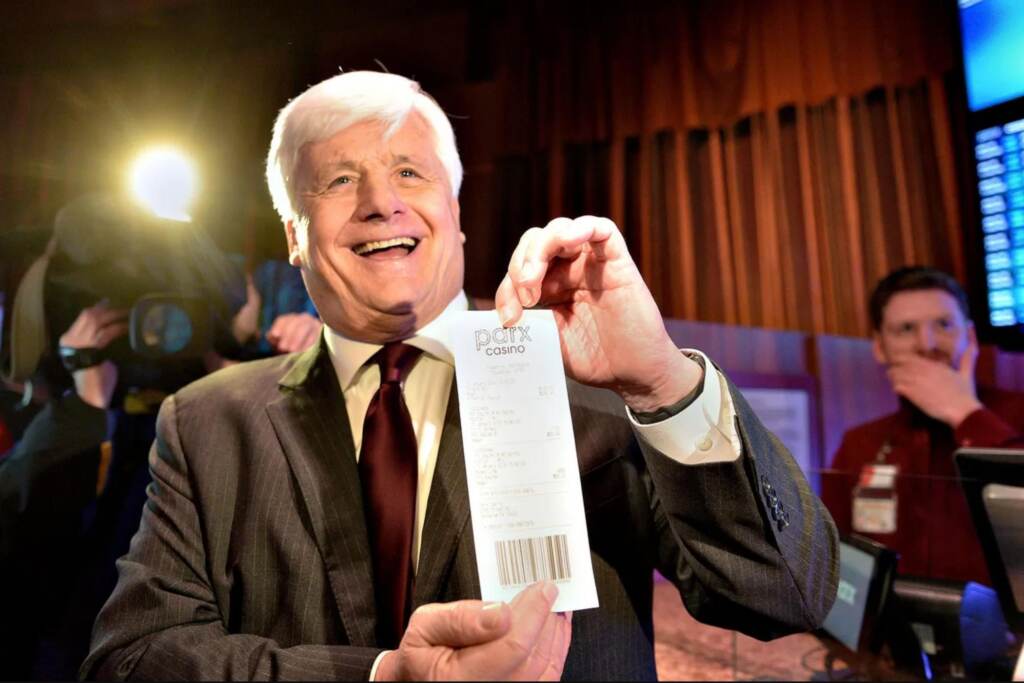
Draft bills and late-night emails reveal cozy ties between Pa. state lawmaker, casino lobbyists
Representatives of Parx Casino and state Sen. Tommy Tomlinson have worked in lockstep to ban unregulated, slot-like skill games that pose a threat to traditional gaming.
5 years ago
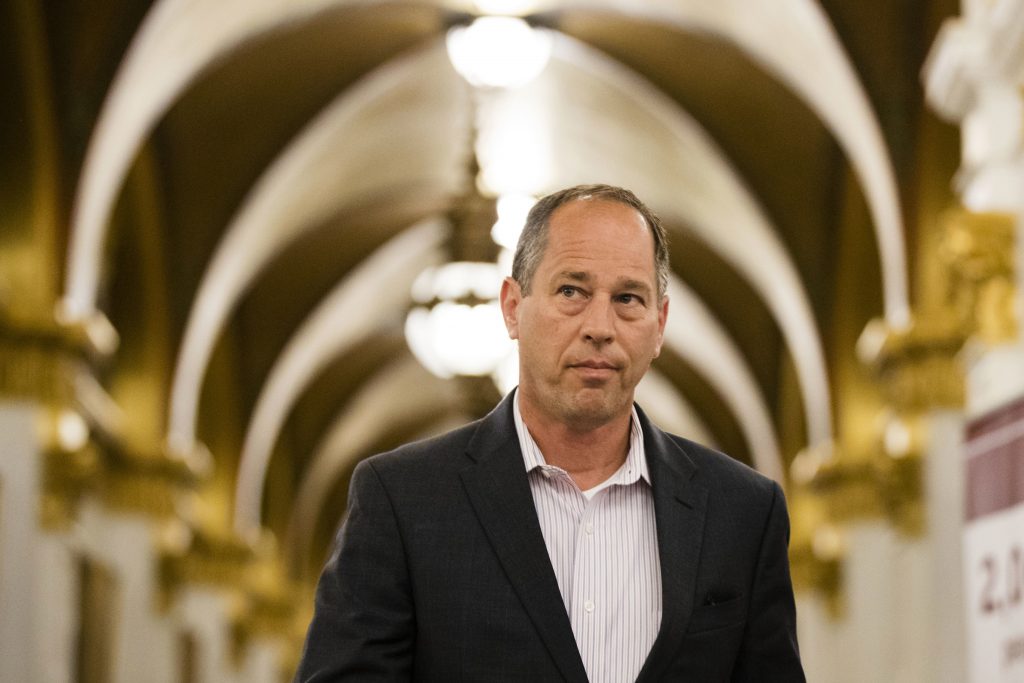
The maneuvering offers a window into the raw intersection between politics and policy-making in Pennsylvania, and how campaign dollars can drive the legislative agenda.
6 years ago