

Philadelphia Museum of Art and PAFA assemble one of the largest American art exhibitions
In “A Nation of Artists,” the two institutions take different paths to represent 250 years of American creativity.

From Philly and the Pa. suburbs to South Jersey and Delaware, what would you like WHYY News to cover? Let us know!
With over 1,000 works of art spread across roughly 20,000 square feet in two of Philadelphia’s major art museums, “A Nation of Artists” is a lot to take in.
Each iteration of the exhibition at the Philadelphia Museum of Art and the Pennsylvania Academy of the Fine Arts is substantial enough to be a destination show. As part of the United State’s 250th anniversary, the two institutions have partnered to present one of the largest single exhibitions of American art, ever.
PAFA and the PMA were founded 71 years apart in the 19th century, but Alexandra Kirtley, curator of American decorative art at the PMA, said the two organizations have shared the same donors over the last 150 years.
“We were not meant to be in competition. We are meant to be complementary,” she said. “I strongly hold up the idea that a rising tide lifts all ships.”
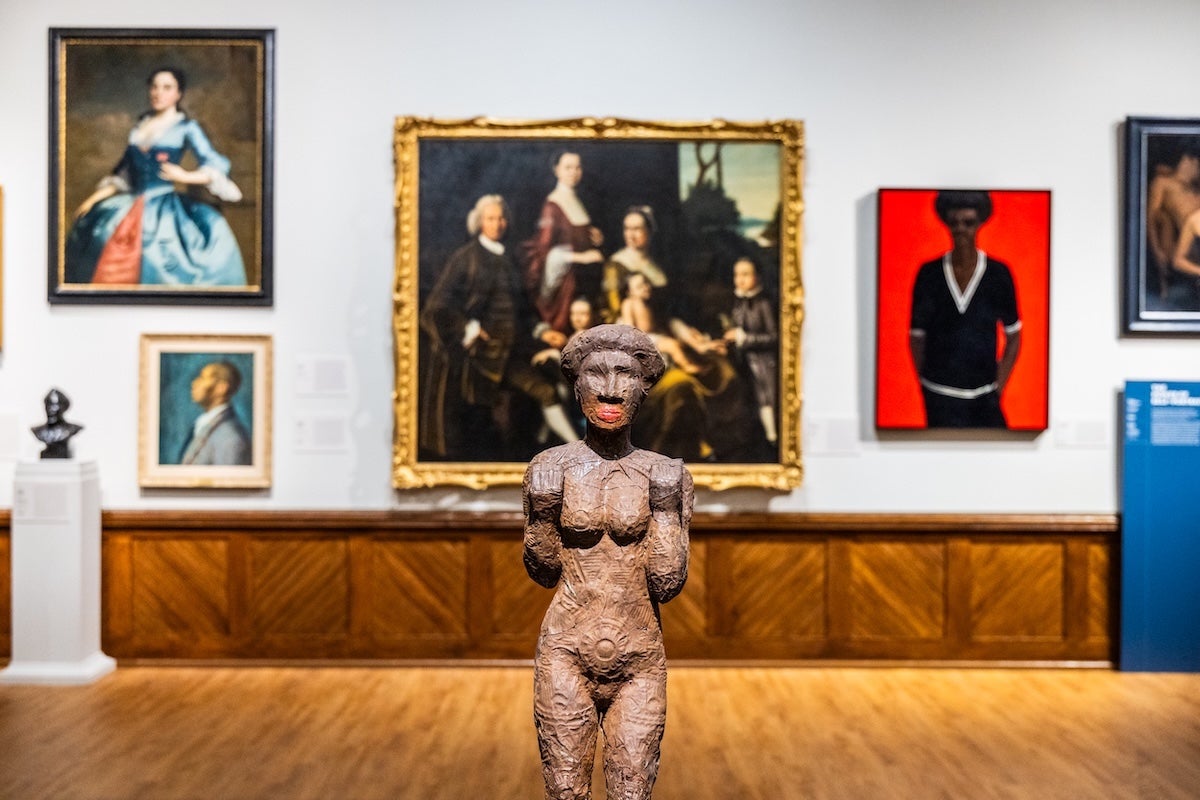
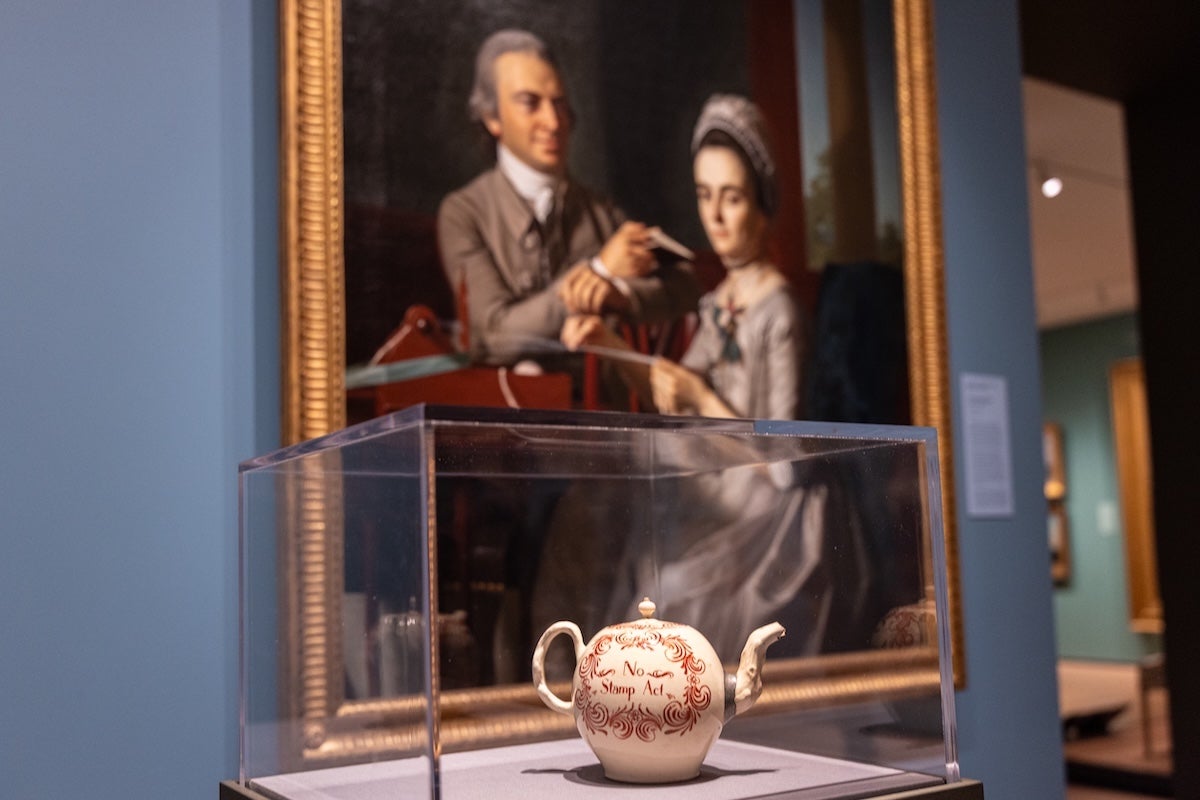
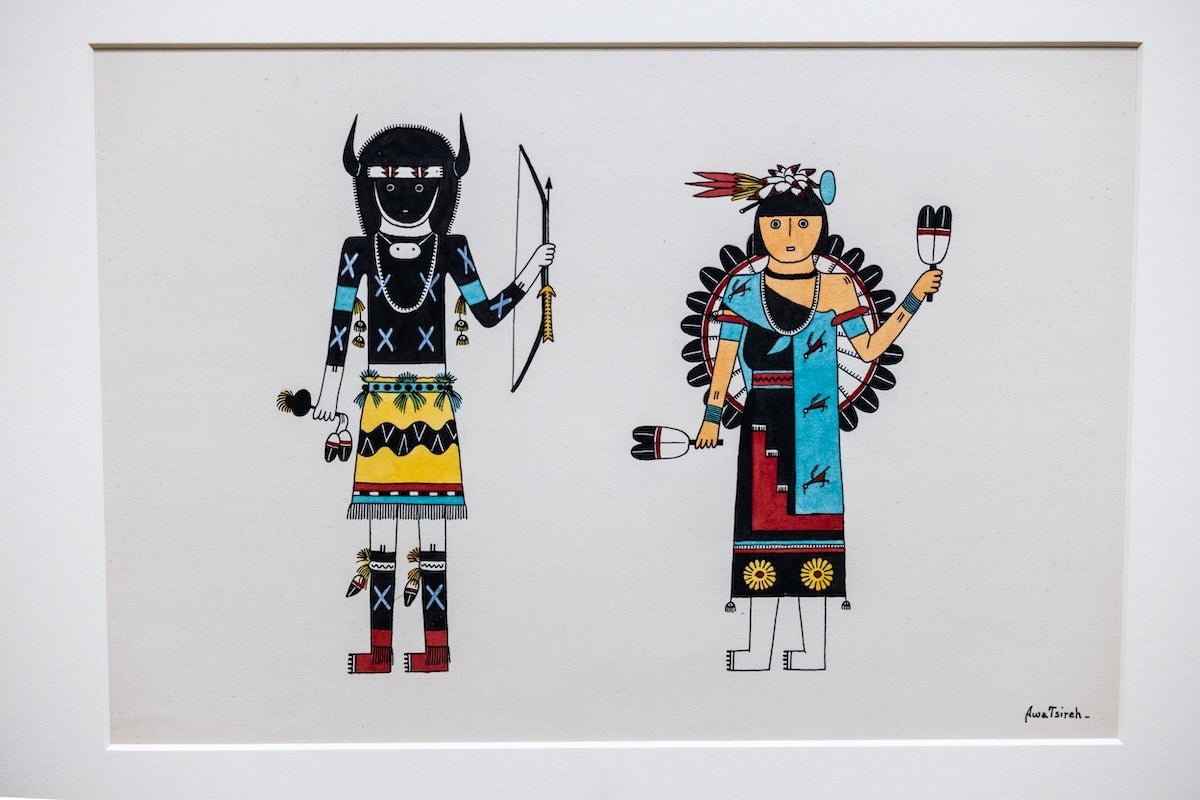
The scope of “A Nation of Artists” spans from 1779, when artist Charles Wilson Peale depicted Gen. George Washington’s victory at Princeton, to 19th century Hudson River School’s impossibly grand American landscapes, to 20th century modernist art of the Southwestern deserts, to a whimsical painting made just a few months ago by Philadelphia artist Kati Gegenheimer depicting her dog Mars romping in the Belmont Plateau in the style of Winslow Homer’s painting “Fox Hunt.”
The impetus for the museums to combine forces came from John Middleton, the controlling owner of the Philadelphia Phillies. With his wife, Leigh, they have one of the finest private collections of American art.
The Middletons loaned many works to the PMA and PAFA to augment their respective collections.
The Middleton collection is particularly strong in Hudson River School paintings, for example, in which neither the PMA nor PAFA is particularly deep. The borrowed paintings give the PMA the opportunity to show how America imbued its landscape with a quasi-spiritual quality and the belief in a “manifest destiny” to occupy and conquer the west.
At PAFA, those sublime views of romanticized wilderness are treated as gateways to examine America’s enduring imagery of the West, including Marsden Hartley’s paintings of New Mexico deserts and an Andy Warhol screenprint of a Buffalo nickel.
“We don’t pretend to have the whole national story, because every museum is unique,” said Kathleen Foster, senior curator of American art at the PMA. “We’re very strong on a local, regional story. We’ve tried as much as we can to open it up to tell a more national story, to include Indigenous voices, to include artists from the South and from the West. But the truth is, there is no museum that is encyclopedic.”
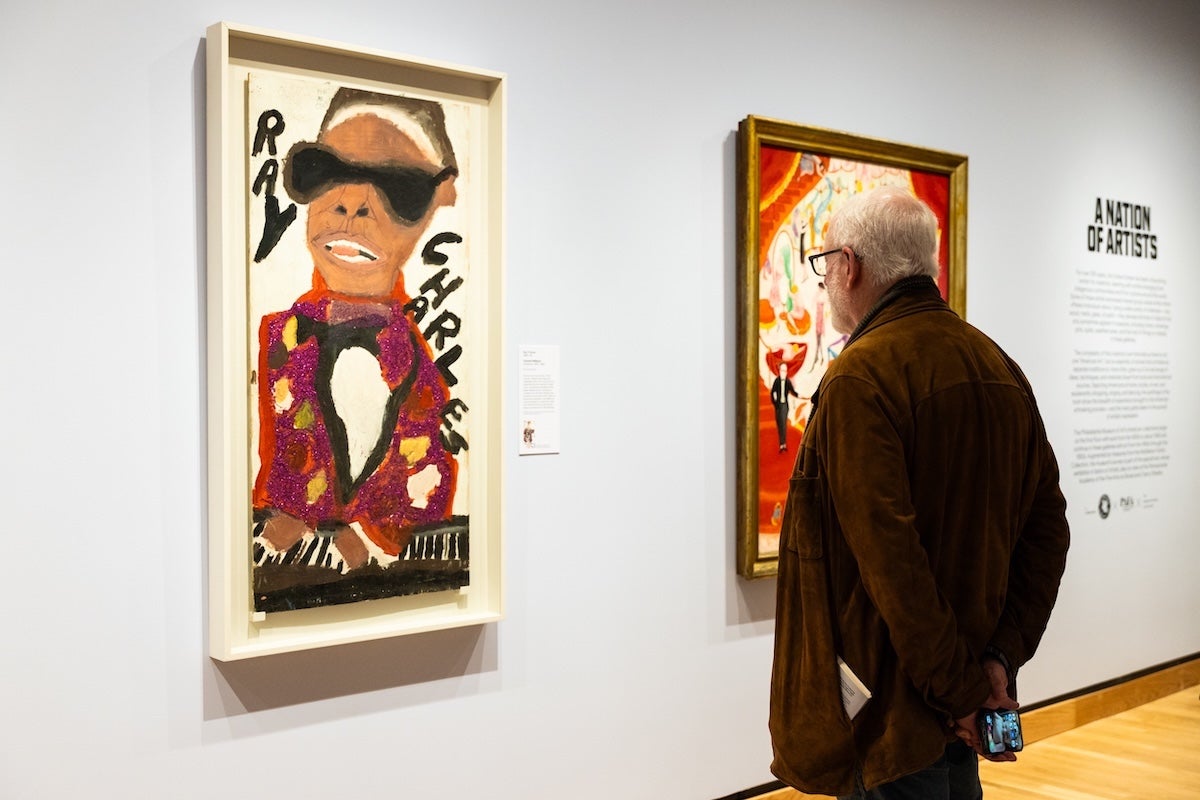
PAFA installed contemporary artists alongside historic works, sometimes in jarring ways. Benjamin West’s large-canvas “Penn’s Treaty with the Indians” (1771-1772), depicting an imagined scene of William Penn peacefully negotiating with the Lenape people, directly faces Odili Donald Odita’s abstract of similar size called “Future Perfect,” a series of horizontal bars of color that resemble a horizon.
“I was thinking about a landscape, moving left to right, and an idea of expansion and hope,” Odita said.
Although one is abstract and the other is a historic scene, Odita says, his painting and West’s share a similar optimism about the aspirations of the American experiment, even if those aspirations never materialize.
“America is a beautiful idea. If we could ever permanently fix it, it might not be what potentially it could be,” he said. “It always has to be a dream worth realizing without necessarily coming to the end of that dream.”
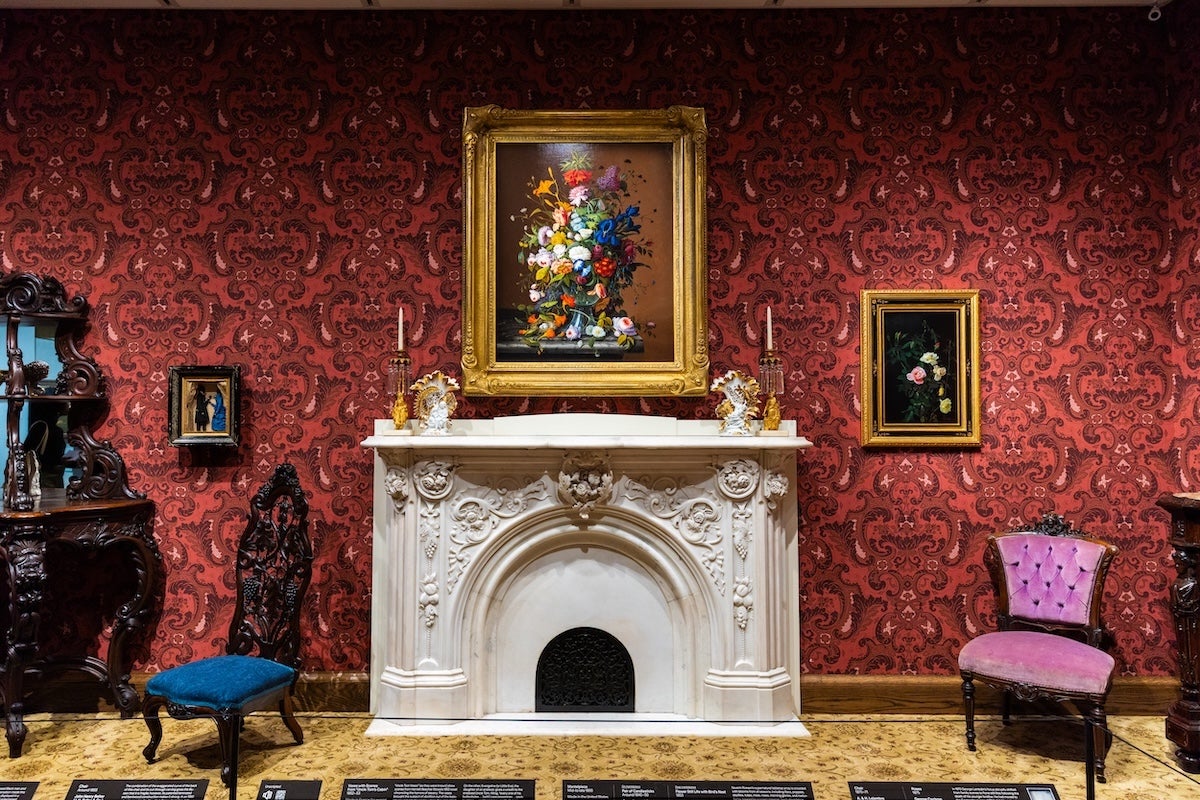
“A Nation of Artists” also unveils at both locations newly renovated gallery spaces. The PMA’s American galleries, which had been a series of fairly narrow rooms connected by twisting pathways, are now expanded and aligned along straight halls that act as spines through the spaces.
PAFA’s historic building, designed by the famed architect Frank Furness, has been closed for almost two years while its climate control system was updated for the first time in 50 years. The galleries have not been altered, but new floors and a lighter color on the walls make them feel much brighter.
“It is one of the greatest works of art in Philadelphia,” said John Middleton of the 1876 building. “Not just a great building. A great work of art.”
“Philadelphia in 1876 was an industrial city, a railroad city, a city of engineers who built things from iron and steel and understood the dynamism of the machine age,” he said. “Furness spoke that language. He didn’t design a classical temple to art. He designed a factory for art using modern materials, state of the art engineering and natural light, all driven by his conviction that making art is serious work worthy of a serious building.”
The PMA used one of its new galleries to create a parlor room that might have been owned by industrialists of Furness’ age. Called “Prosperity, Abundance and Inequity,” the room is wallpapered with an ornate rococo pattern, furnished with elegant Gothic revival furniture and decorated with a “supernatural” floral still life by Severin Roesen featuring blooms from every season that would be impossible to assemble in real life.
In the middle of the room is a large, plain clay vessel that would have been used to store lard. It was made in 1859 by an enslaved man named David Drake in South Carolina. The jar dominates the room as a reminder that wealth was often made possible because of the labor of enslaved people.
“What we wanted to address was the price of the abundance and the prosperity in America in the 1840s and 50s,” Kirtley said. “When people think of that so-called antebellum period, they think of the excess of the rococo revival, of the Gothic revival. They think of draperies and yards and yards of fabric dripping with trimmings. They forget: What were the underpinnings of that wealth and that prosperity?”
“A Nation of Artists” will run at the Philadelphia Museum of Art and at the Pennsylvania Academy of the Fine Arts until September 2027.
Related Content
Rocky statue heading into the Philadelphia Museum of Art for the first time
The sculpture will be part of the museum’s monuments exhibition, before it returns outside to a permanent spot at the top of the steps.
3 months ago

Get daily updates from WHYY News!
WHYY is your source for fact-based, in-depth journalism and information. As a nonprofit organization, we rely on financial support from readers like you. Please give today.

Former Philadelphia Art Museum CEO accused of misappropriating funds, filing states
Sasha Suda is alleged to have awarded herself three salary increases, despite being told they needed approval from the Board's Compensation Committee.
7 months ago
Philadelphia Art Museum’s new director and CEO will be Daniel H. Weiss
Weiss has ties to the Philly region and had been the head of the Metropolitan Museum of Art in New York.
7 months ago
Listen 0:55
Recently fired CEO of Philadelphia Art Museum sues over her ousting
Days after being terminated “for cause,” Sasha Suda described the museum board as “corrupt” and “dysfunctional.”
8 months ago