

‘We’re people too’: Philadelphia Haitians fear deportation after Supreme Court terminates temporary protected status
The end of the Obama-era policy could mean an imminent deportation threat for Haitians who have been living in the U.S. for over 15 years.
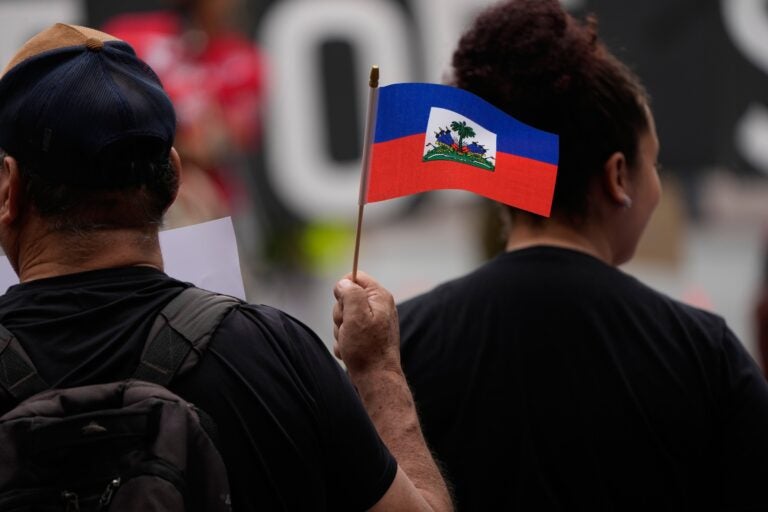
People hold Haitian flags and signs during a rally in support of immigrants living in the United States with temporary protected status, or TPS, Thursday, July 9, 2026, in San Diego. (AP Photo/Gregory Bull)
From Philly and the Pa. suburbs to South Jersey and Delaware, what would you like WHYY News to cover? Let us know!
When he was 11 years old, Alain Jean-Baptiste fled Haiti with his mother and two brothers after the catastrophic 2010 Haiti earthquake, rebuilding a life in Philadelphia. Sixteen years later, the Trump administration is moving to end temporary protected status, the program that allowed some of Jean-Baptiste’s family members to remain and work legally in the United States.
“When the earthquake happened, it caught everybody by surprise,” Jean-Baptiste said. “The conditions that we were living under, my dad just felt like he just couldn’t watch his family be under this type of pressure.”
On June 25, the Supreme Court ruled 6-3 that the Trump administration can end temporary protected status, or TPS, for Haitian and Syrian migrants, opening hundreds of thousands to deportation. TPS is a short-term immigration status given to individuals from countries facing ongoing armed conflict, environmental disasters, epidemics or other extraordinary temporary circumstances. Individuals from countries with a TPS designation can live and work in the U.S. without the risk of deportation or detainment.
Jean-Baptiste and his younger brother were born in the U.S., but his mother and older brother were not, having come to Philadelphia under the policy before obtaining citizenship. Jean-Baptiste described Port-au-Prince, Haiti’s capital, where his father resides, as “an active battleground.”
“These people, they left Haiti for a certain reason,” Jean-Baptiste said. “You have the state saying that Haiti isn’t safe for their citizens. If it’s not safe for the American citizens, we’re people too. It’s also not safe for the Haitians.”

‘Completely ransacked’
About 331,000 Haitians and 3,900 Syrians fleeing violence and natural disasters are under TPS, according to the latest congressional data from March 2025. An estimated 12,000 Haitians live in Philadelphia, with many living in the Olney and Mt. Airy neighborhoods.
The Obama administration first granted Haiti the protected status policy in 2010 after a magnitude 7.0 earthquake devastated the country and killed more than 300,000 people. Since then, the U.S. has repeatedly redesignated Haiti in response to ongoing natural disasters and civil unrest.
In Haiti, locals are facing a dire humanitarian and safety crisis. The nation has been without a president since former President Jovenel Moïse was assassinated in 2021. Gangs control up to an estimated 90% of Port-au-Prince, and 2,300 people have been killed across Haiti in 2026. An estimated 1.4 million people are displaced. Sexual abuse of women and children is widespread, and 2,000 incidents of gender-based violence were recorded during the first three months of the year.
“My dad sent me a video not too long ago, and it’s completely ransacked; the whole place is destroyed,” Jean-Baptiste said.
Jean-Baptiste said the ruling did not surprise him. He pointed to years of derogatory rhetoric about Haitians and immigrants, including the baseless claim repeated during Donald Trump’s 2024 presidential campaign that Haitians in Ohio were eating pets. He said Haitians have long served as scapegoats for the nation’s broader problems.
“Our names being completely run through the dirt is again really frustrating,” Jean-Baptiste said. “I think we’re just tired of it and Haiti’s gone through so much over the last 16 or so years, so it just feels like it’s another thing, just another on top of it.”
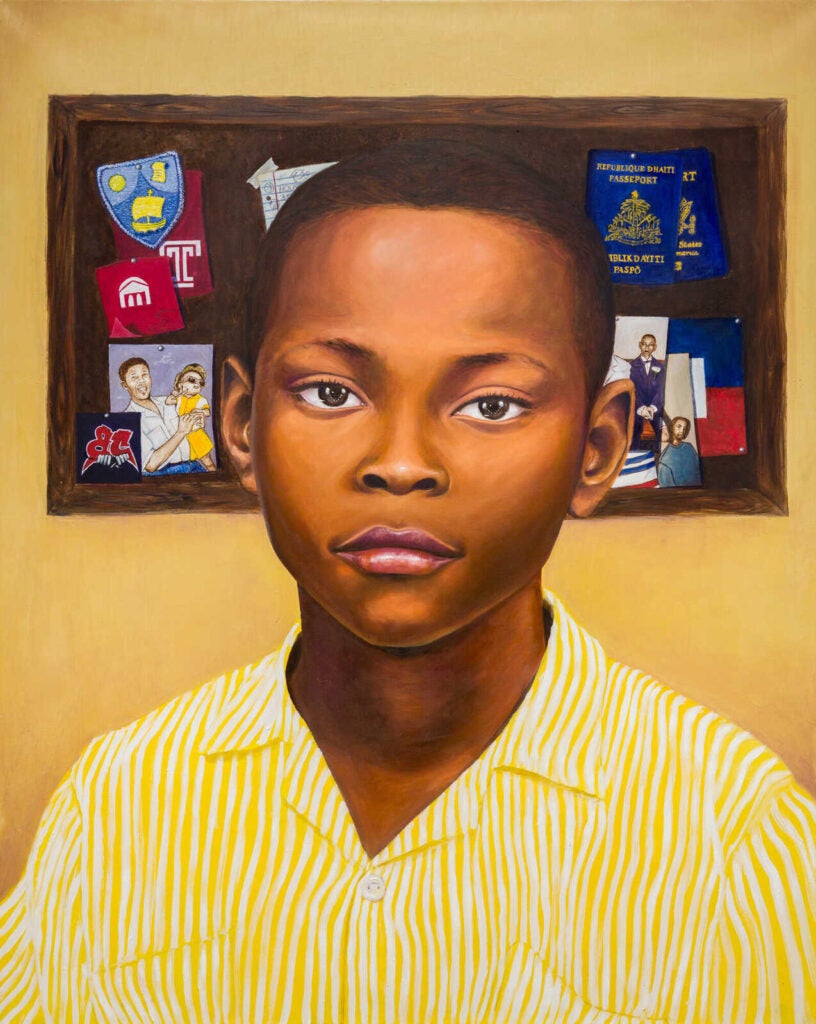
The uphill battle for citizenship
Retired immigration attorney Judith Bernstein-Baker said people under the policy “need to know all their options” and should look for alternative ways to stay in the U.S., if possible, before their status expires. Potential options could include citizenship sponsorship from a family member or applying for asylum, Bernstein-Baker said.
However, asylum is not always in reach. In fiscal year 2026, 36,109 Haitians in the U.S. applied for asylum, according to Transactional Records Access Clearinghouse. Asylum was granted to only 6,065. Odds are similarly low in Philadelphia, where 384 Haitians applied for asylum but only 94 were successfully granted it.
Applying for a visa from Haiti is not an option because of Trump’s June 2025 travel ban, Bernstein-Baker said.
“The problem is that Haiti is on a list of countries that the United States has banned right now from getting many kinds of visas, particularly immigrant visas, but other kinds of visas too,” she said. “So, if they’re forced to leave and apply from abroad, they will be barred from entry due to President Trump’s travel ban on certain countries.”
Related Content

The latest event in the series recounted Haiti’s fight for independence and how Haitian immigrants led to Philly’s role as capital of the catering industry.
3 months ago
Listen 1:28Jean-Baptiste said that at the current moment, Philadelphia Haitians are “just trying to plan and figure out what’s gonna happen next.”
“I know there’s some people looking at Canada,” Jean-Baptiste said. “I have friends that [have] left to Mexico. There are all these different places. I think they’re just trying to figure out where to go.”
Rachelle Leger, founder of Haitians of Philadelphia, an Instagram account dedicated to connecting Philadelphia’s Haitian community, said many are uncertain about the changes the next day, or even the next hour, could bring. Community members are “keeping their heads down and just honestly just hoping for the best,” Leger said.
“I think most people at this point, they just continue to do what they do, just go to work, take care of family, pay bills, until the moment comes where they can’t.”
The decision to leave involves more than just one person, Leger said. Many Philadelphia Haitians have built lives in the city, owning houses and businesses. Additionally, some have American-born children whose lives they don’t want to disturb.
“There’s nothing structured to go back to,” Leger said. “It would separate families, and the children and whoever will probably end up staying here in the States to continue their education, because that’s really important to Haitian people.”
Jean-Baptiste said the Supreme Court’s ruling is a letdown for people who believe in the American Dream and were optimistic about building a life in the U.S.
“It’s always been the sentiment that, ‘Hey, if you come to the United States, you follow the rules, you have an equal opportunity to make this life for yourself,’” Jean-Baptiste said. “I think all the actions of the state recently have been the total opposite.”
‘We need the support of all Americans’
The deportation of Haitians from the U.S. would have broader international effects, Bernstein-Baker said, deepening economic hardship back in Haiti, where 43% of the population is already under the poverty line, according to the most recent 2025 data from Statista.
“One reason [Haiti] is even surviving is that Haitian people here are sending money back home,” Bernstein-Baker said. “It’s the most effective foreign aid policy, and if they have to go back to Haiti, that’s going to cut off a source of income for hundreds of thousands of people.”
The removal of Haitians from the American workforce would also impact the U.S. economy, as many Haitians work in service industries. In Philadelphia, Haitians play integral roles in fields such as caregiving and agriculture, said Josephys Dafils, founder and executive director of Philadelphia-based organization Haitian-American United For Change.
“Pleasant people, peaceful people, they just want to work,” Dafils said. “They just want to be in a safe place, and they bring their ethic to the workplace to make it a better place here in Philadelphia and beyond. So we need the support of all Americans sustaining and supporting Haitians at this point.”
Jean-Baptiste said it’s frustrating to see the demonization of Haitian people after seeing firsthand the time and money invested in building a life under TPS.
“Watching my mom work two jobs to feed three kids, put them through college, buy a house, pay for that house every month without missing or going overdue any time, and then you turn up the TV or you hear the news, and people are calling Haitians animals, or they’re saying that we’re kind of freeloaders, that we’re taking advantage of whatever, is very frustrating, tiring,” Jean-Baptiste said. “I think it’s belittling us.”
Jean-Baptiste said Philadelphians can support their Haitian and Syrian neighbors by advocating for their rights, connecting them with resources, and, if they are able, helping cover the high costs of immigration services.
“It’s just being there, supporting,” Jean-Baptiste said. “If you have better resources, if you’re able to help out financially, all of those things, really help your fellow Haitians and Syrians.”
While times are uncertain, Haitians know how to persevere, Leger said.
“Haitian people, we’re very resilient, and no matter the situation, we always find a way to come back,” she said.

Get daily updates from WHYY News!
WHYY is your source for fact-based, in-depth journalism and information. As a nonprofit organization, we rely on financial support from readers like you. Please give today.

Gorsuch and co-author Janie Nitze discussed their new children's book, “Heroes of 1776,” and the lessons the country’s founding era still offers today.
2 months ago
Listen 1:13
The latest event in the series recounted Haiti’s fight for independence and how Haitian immigrants led to Philly’s role as capital of the catering industry.
3 months ago
Listen 1:28
A 2026 dinner series will ask native-born, immigrant Philadelphians to talk about citizenship
The semiquincentennial event will reach more than 1,000 Philadelphians in seven of the city’s most diverse neighborhoods.
9 months ago
Listen 1:48