

Philadelphia officials question city’s lack of power over driverless cars
City Council members warned that autonomous vehicles could threaten jobs, raise safety concerns and operate beyond Philadelphia’s regulatory control.
Listen 1:04
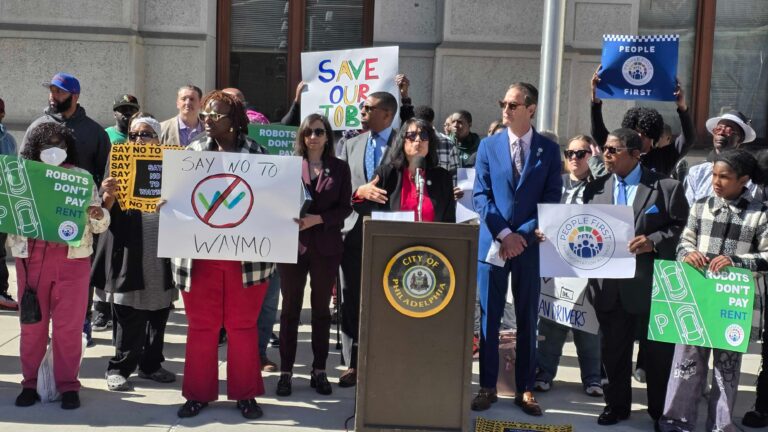
Anti-Waymo protestors gathered outside City Hall before a hearing, May 12, 2026. (Tom MacDonald/WHYY)
From Philly and the Pa. suburbs to South Jersey and Delaware, what would you like WHYY News to cover? Let us know!
Philadelphia officials say they are alarmed about driverless cars operating on city streets without the city having much power to regulate them.
About 100 people rallied outside City Hall on Tuesday ahead of a City Council hearing, urging lawmakers to push back against autonomous vehicles and protect jobs for taxi and ride-hailing drivers. They say Waymo, a self-driving taxi company operated by Google’s parent company Alphabet, could kill thousands of jobs in the city.
Councilmember Jim Harrity, who chaired the hearing, acknowledged the city can’t stop the vehicles from operating.
The Philadelphia Parking Authority regulates taxis, limousines and ride-hailing services locally, but Pennsylvania oversees autonomous vehicle policy, leaving the city with limited authority.
Harrity said officials are worried about public safety and the potential loss of driving jobs.
“The fact of the matter is these things are driving on our streets, and we’re worried about safety. We’re worried about jobs,” Harrity said.
Harrity said there are tens of thousands of human drivers in the city.
Councilmember Nina Ahmad argued that replacing human drivers with autonomous vehicles could redirect transportation revenue away from local workers and toward large technology companies headquartered outside Philadelphia.
“It’s not only just the jobs. It’s the safety and indirect impact of what will happen if we transfer our modes of transportation to these robotic cars,” Ahmad said.
She also questioned whether the city should embrace autonomous transportation simply because the technology exists.
“Just because we can doesn’t mean we do it,” she said.
Related Content
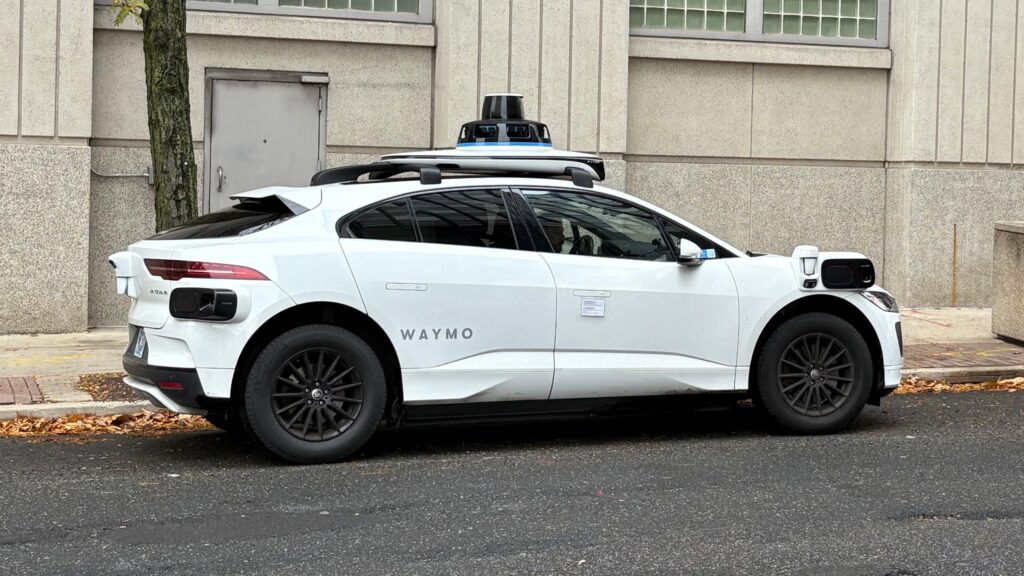
The company will expand to more than 20 cities, including Pittsburgh and Baltimore, but no word yet on when people will get to ride.
10 months ago
Listen 1:04Councilmember Rue Landau said she’s concerned about issues ranging from hacking vulnerabilities to situations where passengers or emergency responders may have limited ability to intervene when autonomous systems fail.
Landau also brought up concerns about how video generated by the vehicles could be used in ways that violate civil rights or personal privacy.
“Can we trust the companies behind these autonomous vehicles, who videotape our communities every day, to keep data about us? To protect our civil rights? Can we trust these companies to ensure that, with this new technology and our aging infrastructure, that everyone will be safe in our city?” Landau said.
Drivers also testified about the potential loss of jobs to automation. Uber and Lyft drivers are independent contractors and rely on fares and tips to cover food, housing and everyday living expenses.
Full-time driver Mustafa Toure said autonomous fleets could reduce demand for human drivers.
“What happens to the people who will be displaced?” Toure asked, adding that he didn’t want to be “replaced by a software update.”
One Waymo rider said she got caught in a car that froze, fearing severe injury as human-driven cars sped by.
Waymo riders cannot sit in the driver’s seat or take any actions to move the car.
Waymo sent a statement saying its technology can react faster than a human driver and that there is no definitive decline in other ride-hailing services because of its cars. The company’s decision not to appear at the hearing upset many council members. Harrity said he still wanted answers from the company to many more questions.
Waymo also said council members are using “aggregate and uncontextualized crash data to question the safety of driverless cars.”
A statement from the PPA said it is continuing to monitor developments to autonomous vehicle technology, and that it remains “engaged in broader discussions surrounding transportation, public safety and regulatory considerations as the technology evolves.”

Get daily updates from WHYY News!
WHYY is your source for fact-based, in-depth journalism and information. As a nonprofit organization, we rely on financial support from readers like you. Please give today.
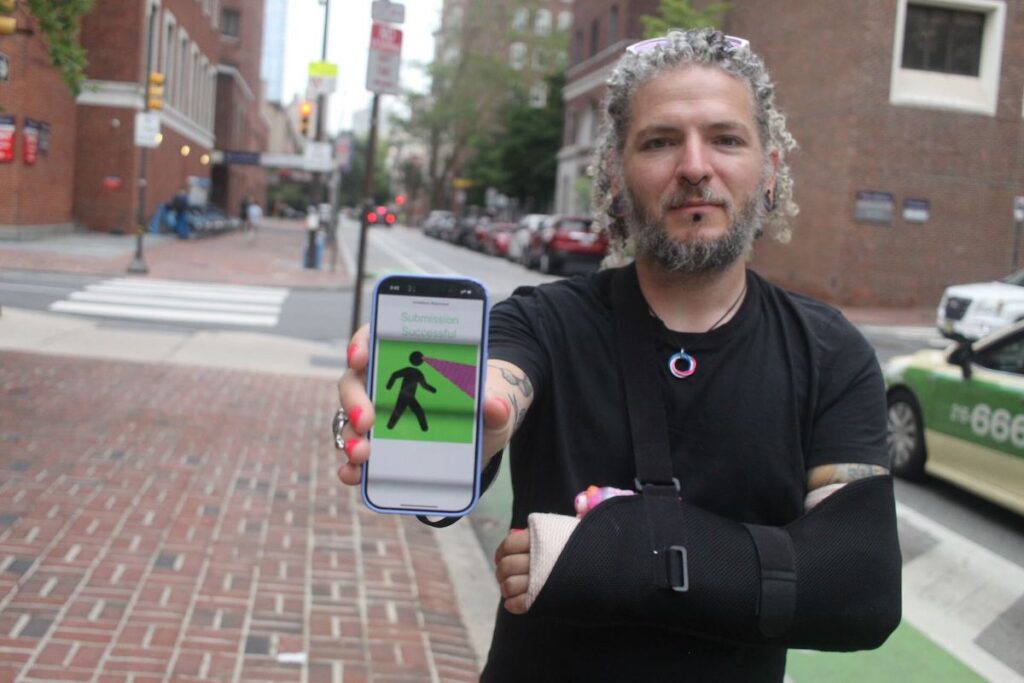
A new app allows Philadelphians to report parking violations using ‘laser vision’
From illegal sidewalk parking to bike lane obstructions, violations captured by photo trigger an automatic report that gets sent to the PPA.
1 year ago
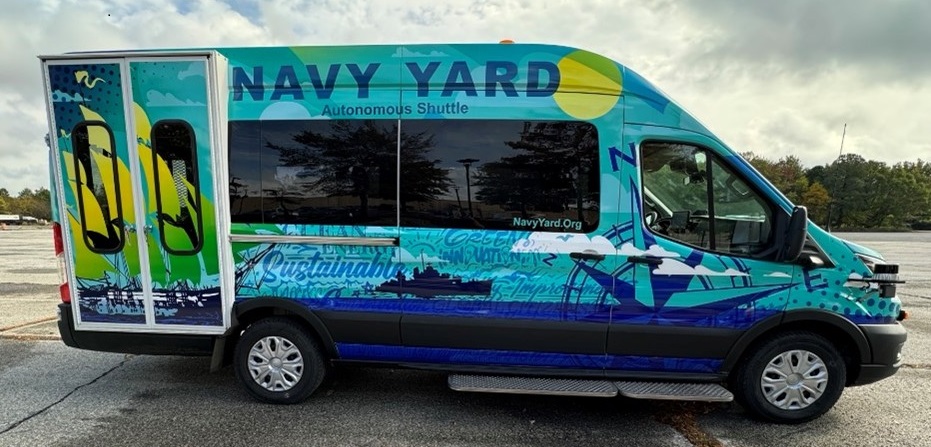
Philadelphia Navy Yard begins autonomous, electric shuttle service
The Navy Yard’s AV shuttle can fit nine seated passengers and a wheelchair.
3 years ago
Listen :47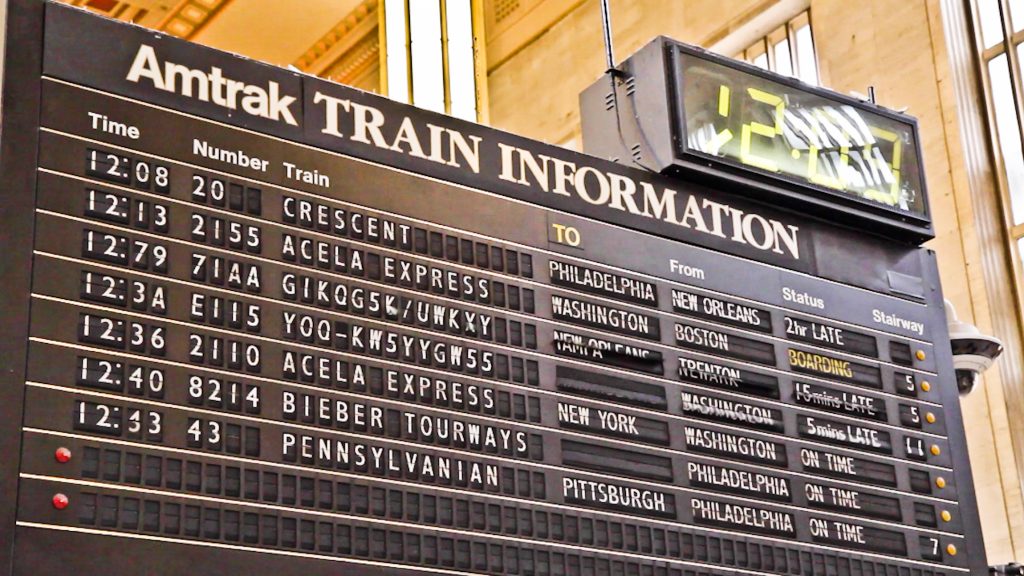
Amtrak may spare 30th Street Station’s beloved flipping board
The beloved split-flap sign at 30th Street Station, in Philadelphia, may have earned an 11th hour reprieve.
8 years ago