
How the costly digital age is leaving behind Pa.’s rural, underfunded schools
Students in remote school districts like Otto-Eldred are using failing, outdated technology. In some cases, it's costing them their futures.
Listen 4:12
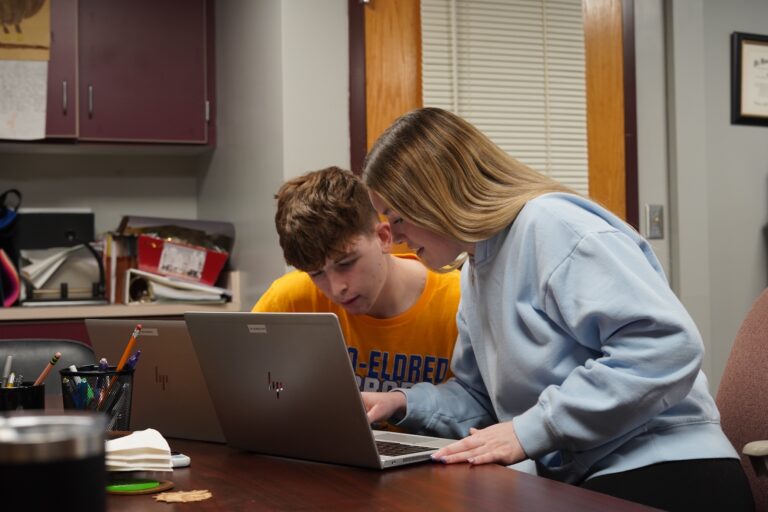
Otto-Eldred students Jack Sherry and Alexis Prince boot up their refurbished, school-issued laptops. (Kenny Cooper/WHYY)
This reporting is part of the newest season of “Schooled,” a WHYY News podcast that examines how technology is reshaping the educational experience in Pennsylvania’s schools.
Find “Schooled: Rewired” on Apple Podcasts, Spotify or wherever you get your podcasts.
Matthew Splain, superintendent of the Otto-Eldred School District, said schools in his district are struggling to keep aging, refurbished laptops from dying on students.
The district’s struggles are not isolated.
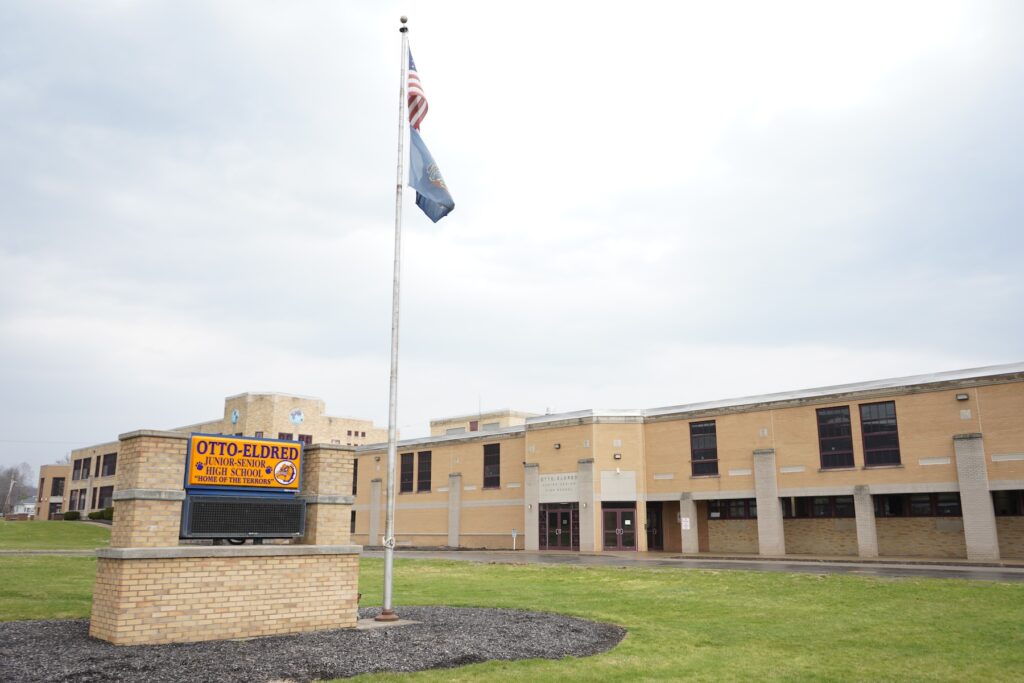
Otto-Eldred is nestled in the mountains of rural McKean County. Like other schools in Pennsylvania’s remote areas, this district, too, faces recurrent fiscal challenges, is chronically underfunded and struggles to deliver students a future that promises technological innovation.
Alexis Prince remembers her computer woes during her senior year. Her device had memory issues, which made completing book reports, essays and research projects nearly impossible.
“ I found myself having to rewrite it like two or three times because my computer would not save my project at all,” Prince said.
For high school students, access to Bluebook, an online platform from College Board where students can take the SAT, is crucial. During his junior year of high school, Jack Sherry said the laptops were unreliable when students needed them the most.
“ It was like a meltdown with the SATs, because there was 10 [to] 15 students that couldn’t get into the app, and it was just a big struggle,” Sherry said.
Adrianna Woodruff, an eighth-grade English teacher and secondary librarian, said the computer issues are disrupting her students’ ability to participate in learning activities.
“We’re preparing kids for jobs that don’t exist yet, and we’re trying to give them the skills so that they can be successful in the future,” Woodruff said. “And when you don’t have technology that’s keeping up with this ever-transforming tech landscape, it can be really hard to do that.”
Otto-Eldred faces budgetary squeezes
The Otto-Eldred School District serves a little less than 550 students — all of whom are highly dispersed across Eldred Borough, Eldred Township and Otto Township, which spans approximately 86 square miles in northwest Pennsylvania.
“ We do not have a stoplight in our school district,” Splain said. “There’s not a lot of industry. We’re kind of a commuter location when it comes to people going other places. I think by far we’re the largest employer in our entire district.”
Like many rural areas across the United States, the cluster of close-knit communities anchored in the Allegheny Plateau has been hemorrhaging population. To put this in perspective, in 1920, 1,235 people were living in Eldred Borough, according to the U.S. Census.
As of 2020, there were just 765 residents. A declining population means a shrinking tax base.
“We don’t have the ability to raise taxes and make a significant impact in our budget,” Splain said.
During the 2025-26 school year, the district’s budget was approximately $13.6 million. According to Splain, Otto-Eldred’s aid ratio is 0.82, meaning it is heavily reliant on state and federal funding just to keep the lights on.
Only about $2 million of revenue comes from local sources. Even a significant property tax increase would not make much of a dent in the district’s bottom line.
“That’s not going to go very far when you have the cost of everything going up,” Splain said.
Splain said the district has to ensure it offers competitive wages and health care to retain teachers. On top of that, the district must manage high transportation costs for busing kids near and far, all while maintaining Otto-Eldred Jr./Sr. High School and Otto-Eldred Elementary.
“The money left over to buy some better laptops isn’t often there,” Splain said.
Related Content

Centennial School District launches summer lunch bus
Bensalem Township School District’s summer lunch program inspired Centennial’s initiative.
3 months ago
Following historic education trial, more funding slow to reach schools
In 2014, six school districts, a handful of parents, the Pennsylvania Association of Rural and Small Schools, and the NAACP Pennsylvania State Conference filed a lawsuit against the state, making two substantial claims.
“The first was that the way that we were funding schools in Pennsylvania was not meeting the constitutional requirement within the Pennsylvania Constitution, the education clause, to maintain a thorough and efficient system of public education,” said Margie Wakelin, a senior attorney with the Education Law Center. “The second is that the way that we were funding schools was discriminating against students who were in low-wealth districts because we knew that they had significant needs and we weren’t meeting those.”
Lawyers with the Education Law Center, the Public Interest Law Center of Philadelphia and O’Melveny & Myers argued on behalf of the petitioners.
“After a series of procedural turns, we went to trial beginning in November of 2021 and then after a four-month trial and post-trial filings, the Commonwealth [Court] ruled in February of 2023 that both the system was unconstitutional and that it was discriminating against students in low-wealth districts,” Wakelin said.
Following the ruling, a state commission eventually determined that it was underfunding Pennsylvania schools by about $5 billion. To close the gap, the commission introduced an “adequacy target,” or what each district needs to provide an adequate education. Schools falling short of the spending target have an “adequacy gap,” Wakelin said.
Since 2024, legislators have included adequacy payments in the state budget. But the rollout has been far slower than public education advocates feel is necessary. In 2025, Pennsylvania awarded just $50,000 in adequacy funding to Otto-Eldred.
Splain is unsure what exactly is preventing the district from benefiting more from the adequacy formula. He said that it could be the district’s low student count. However, he said he’s certain of one thing. So far, Splain said the district has not seen “any new money that is significant.”
Wakelin said the turtle-paced delivery of adequacy funds worries her. What keeps her up at night is a scenario where elected officials fail to close the gap any further.
“If the advocacy that we’re doing to educate our leaders about the need for funding — if that’s not sufficient, then we need to be prepared to figure out is there another type of legal challenge we need to pursue,” Wakelin said.
‘We don’t even have half of what they do’: Students aware of disparities
The last school funding fight took nine years from the initial filing to the final ruling.
Students and teachers at Otto-Eldred said they need reprieve now.
But solving this problem is not as simple as returning to pen and paper, officials said. Rural districts like Otto-Eldred share resources and often rely on online instruction to teach certain courses due to staffing shortages. Prince took Chemistry II online.
“It’s kind of been an up-and-down struggle this year because we don’t have that in-person teacher to do the labs with us that has all the knowledge that a professor does on the computer,” Prince said.
The opportunity gap between the districts with resources and their own is not lost on the students. Sherry said it’s not fair.
“It’s right next door and we don’t even have half of what they do,” Sherry said.
Adrianna Woodruff and her husband Ryan work for the school district. They previously worked in Western Alaska for the Bering Strait School District, which sits in a remote fishing village. They came back to Pennsylvania to be closer to family, but sometimes she worries.
“I’ll take off my hat as a teacher. I am a parent. My three children attend school in this district, and we made an intentional choice to send our kids here because of the staff and the school, and I’m really proud of our school and our teachers, and I think they’re getting a great education,” Adrianna Woodruff said. “But there are times as a parent where I think, ‘Man, are my kids getting the same opportunities here that they would get in a different district?’”
-
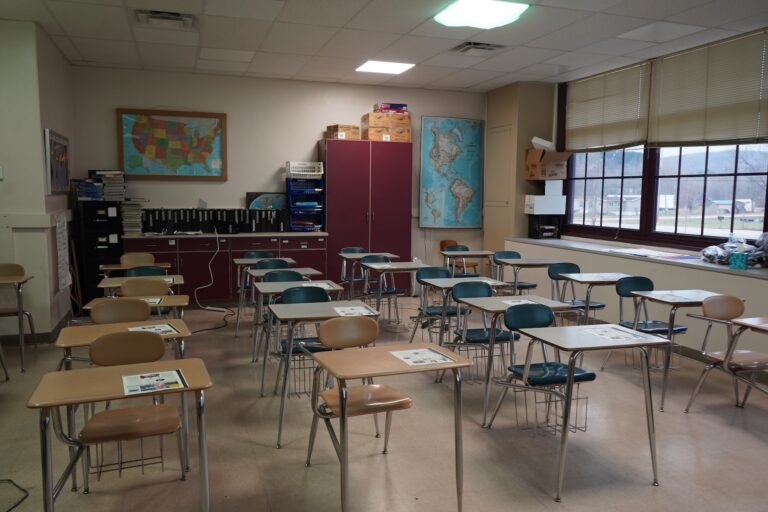
An empty classroom at Otto-Eldred Jr./Sr. High School. (Kenny Cooper/WHYY) -
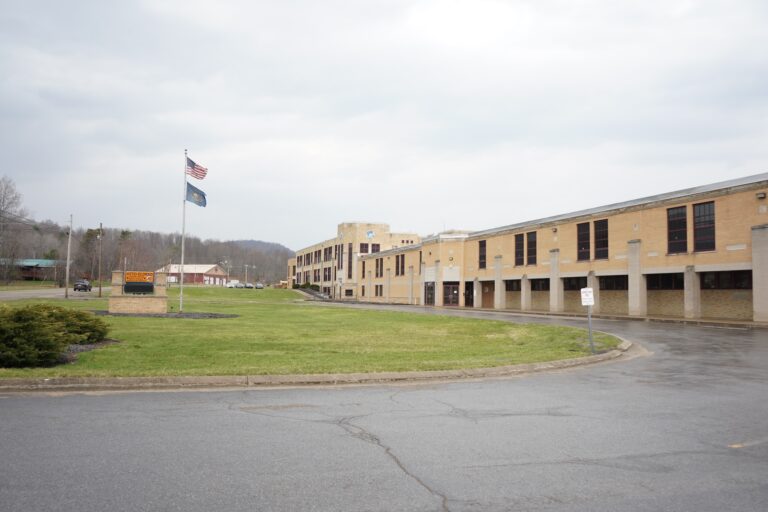
The Otto-Eldred School District serves a little less than 550 students in rural McKean County in northwest Pennsylvania. (Kenny Cooper/WHYY) -
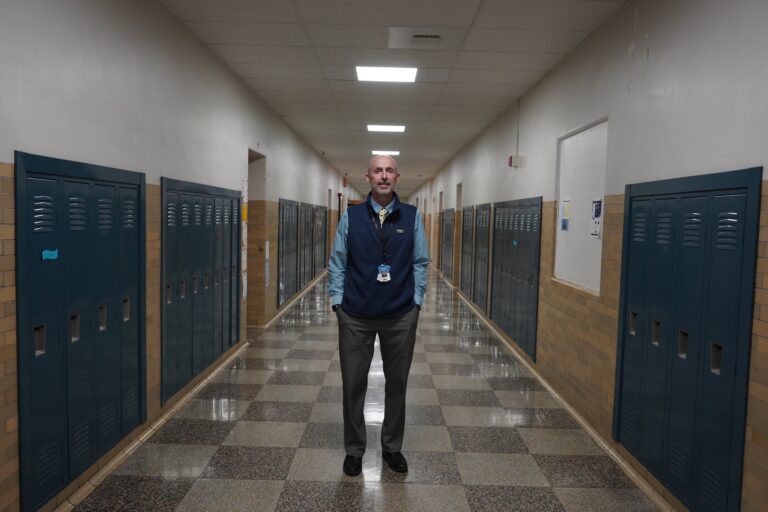
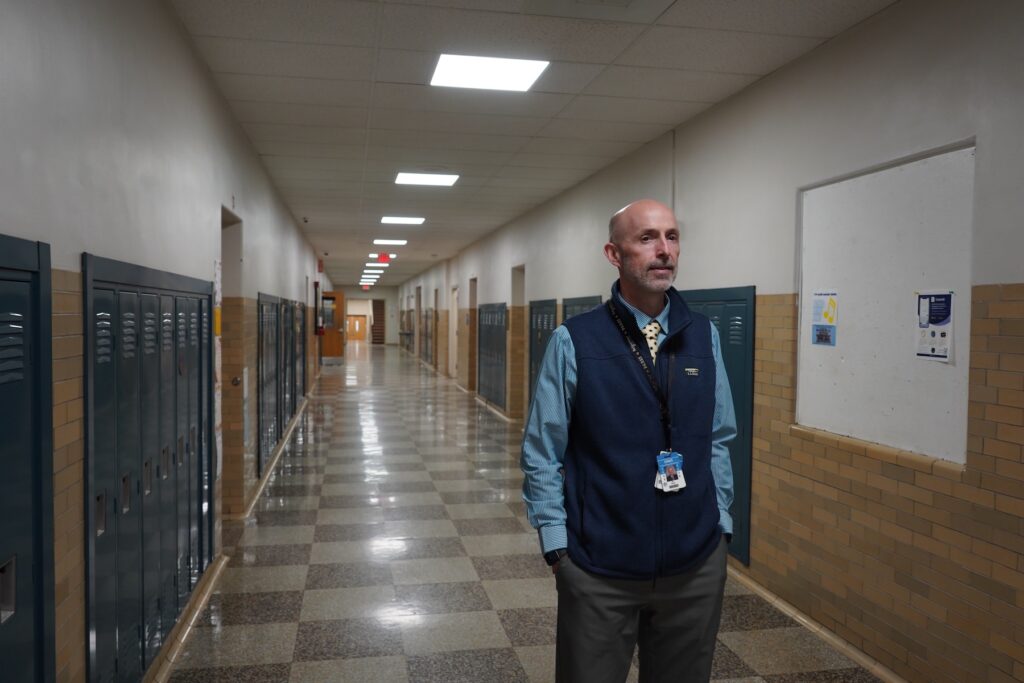
Otto-Eldred School District Superintendent Matthew Splain is also president of the board of directors of the Pennsylvania Association of Rural and Small Schools. (Kenny Cooper/WHYY) -
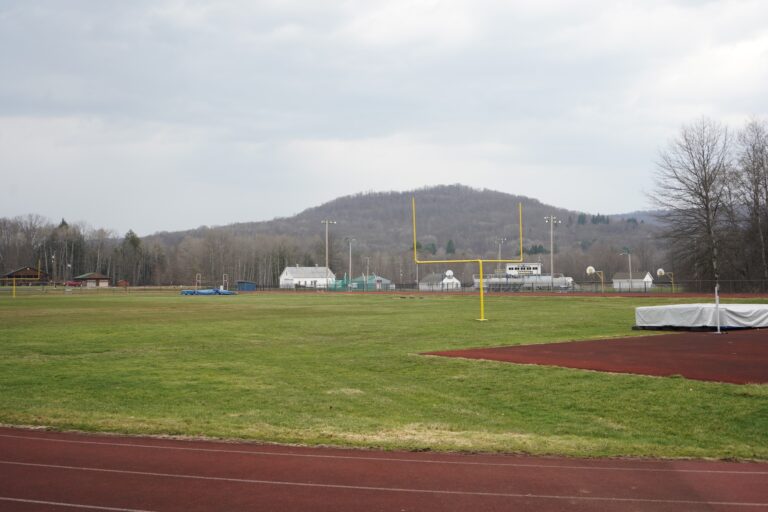
The mountainous terrain of northwest Pennsylvania are visible from the track and football field behind Otto-Eldred Jr./Sr. High School. (Kenny Cooper/WHYY)

Get daily updates from WHYY News!
WHYY is your source for fact-based, in-depth journalism and information. As a nonprofit organization, we rely on financial support from readers like you. Please give today.
Part of the series
Pennsylvania Gov. Shapiro signs legislation guaranteeing 30 minutes of recess to elementary students
The governor signed a bill Wednesday that was approved by the state legislature as part of the 2026-27 budget.
3 weeks ago
The “bell-to-bell” bans face skepticism from students and parents. After going phone-free, early adopters say the difference is striking.
1 month ago
Listen 3:44
Kensington High School students will travel to a building 7 miles away on shuttle buses after an asbestos issue shuttered their school.
1 month ago
Listen 1:14