

After water emergencies in Pennsylvania and New Jersey, an expert shares tips for staying safe in oceans and rivers
Open water presents risks that pools don't. A New Jersey swim coach explains how to handle currents, waves and other hazards.
Listen 6:23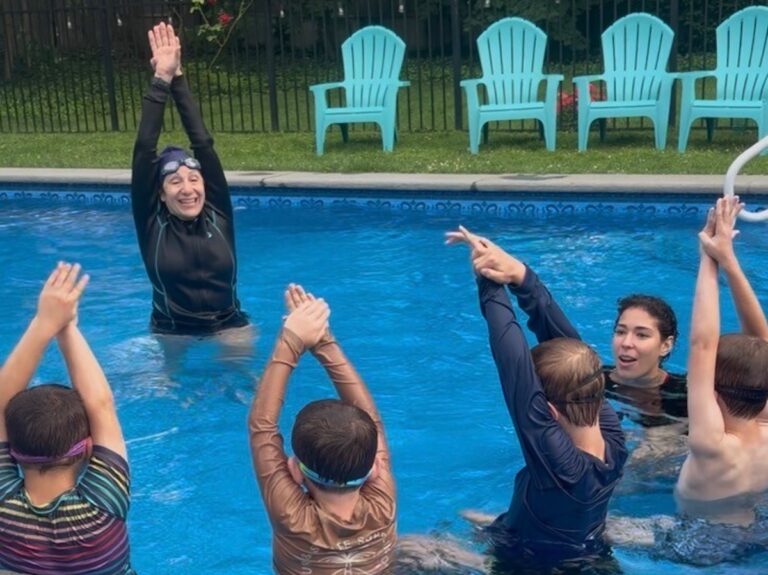
Jennifer May is the founder and swim coach of Water Ready Swim School in Montclair, N.J. (Courtesy of Jennifer May)
From Philly and the Pa. suburbs to South Jersey and Delaware, what would you like WHYY News to cover? Let us know!
A series of recent water emergencies in New Jersey and Pennsylvania is drawing renewed attention to the dangers of swimming in open water.
Authorities are continuing to search for two people reported missing off the New Jersey coast. Fourteen-year-old Davoris Carter was swept into the ocean off Wildwood during a class trip earlier this week, while a 20-year-old man disappeared off the coast of Ocean City while boogie boarding with friends last month.
A third incident occurred early Friday morning in the Delaware River near Philadelphia’s Torresdale section. Rescue efforts shifted to recovery operations after a man who entered the water while boating with friends reportedly told them he could no longer swim, struggled to return to the boat and never resurfaced.
The incidents serve as a reminder that open-water environments can become dangerous quickly, even for experienced swimmers.
So, what should someone do if they find themselves in a dangerous situation in the water?
WHYY’s “Morning Edition” host Jennifer Lynn spoke with Jennifer May, founder and swim coach at Water Ready Swim School in Montclair, New Jersey. As concerns about water safety grow, the school is expanding its curriculum to include ocean-safety instruction.
Note: This transcript has been edited for clarity.
Related Content

Several laws aim to stop pop-up parties and flash mobs promoted on social media before they cause a problem.
5 months ago
Listen 1:01Jennifer Lynn: What does being water ready mean in the most basic way?
Jennifer May: Being water ready really means that you have a tool belt filled with different types of survival and safety skills to handle all kinds of different situations, whether you’re in a pool or in an ocean or any open water.
JL: What’s the difference between being water ready for a swimming pool and water ready for the ocean?
JM: A swimming pool has walls that you can grab and swim to. The water is clear. There’s not a current. In a public community pool, there’s always a lifeguard.
When you’re swimming in the ocean, you’re dealing with all kinds of things like currents and waves. You’re dealing with marine life, rocks and jetties, and all kinds of things that can be hidden in the water.
JL: And you say most swimmers have never been taught how to recognize and survive dangerous ocean conditions, or maybe any ocean conditions.
JM: And it’s really only just starting to change in the learn-to-swim industry.
JL: You point out that teen boys and young men, in particular, can be at higher risk in the ocean. They can overestimate their ability and take risks. Tell me more about that.
JM: It’s really a shocking statistic. Of all water incidents, regardless of age and regardless of venue, 80% [involve male swimmers]. We do special awareness education for parents of boys.
Not, not to diminish the safety that we have to also teach girls — it’s just that toddler boys, kid boys and even older men are statistically at higher risk.
JL: So if I’m in a bad current, what safe practices really do exist for the swimmer in that moment?
JM: Well, the first thing is you really should always be swimming at a lifeguard beach. Do not swim at any beaches that don’t have a lifeguard. That’s number one.
There’s also going to be warning flags at a beach that the lifeguards are going to put out just for double assurance. You should always know what the flag system is where you’re swimming.
If you are identifying that you’re in a current, you want to stop, take some deep breaths, tread water and signal to someone at the beach. And then you can try to swim parallel to the shore. There’s two ways you can go. One way might be easier than another.
So if you’re still feeling that resistance, you may have chosen the more difficult path. That’s still okay. Roll on your back and just float. You’ve already signaled. We’ve already told you to stay at a lifeguarded beach. So someone will be coming out to get you. In the meantime, you float and stay calm.
The way the currents work is once you’re floating, it will carry you potentially out a little bit more, but then it will start to bring you parallel, and then will return you back to where the waves are going in the direction toward the shore.
JL: There’s also just navigating the range of waves from small to medium to large.
JM: That’s another thing we teach: What do you do for small waves, medium waves and large waves?
The first thing is, you never turn your back on the ocean. You never want to be surprised by a wave. So, you’re always facing the direction that the waves are coming from. Even if you’re visiting or chatting. You have at least your peripheral vision in that direction.
If you have small waves, you just bend your knees and let the wave pass by you. It’s maybe somewhere between your ankles and your mid-shin. You just let it pass by you.
If you have medium waves, you’re still facing the waves and you want to jump. So you jump up, and then you land back down with two feet. That’s jumping over the waves.
If you get to larger waves, you take a deep breath, hold your breath and go under the wave and let it pass over you, and then you come up after that.
JL: What about the nonswimmer trying to enjoy the ocean?
JM: Well, this is life jacket time. The thing about life jackets is they need to be fitted properly. An ill-fitting life jacket can be even more dangerous than not having a life jacket, to some degree.
A life jacket that is too big is going to rise up and cover your mouth and your nose. And if it’s too small, it’s not going to provide enough buoyancy for you.
Life jackets are designed to keep the body vertical in the water so that you can breathe and be buoyant in the water. Sometimes they’re designed to keep you on your back. They’re not designed to help teach swimming. That’s not what life jackets are for. They’re really for boating. That’s what they’re approved for. U.S. Coast Guard-certified life jackets are approved for boating.
JL: You make it sound very easy.
JM: It’s not easy. That’s the whole thing, right? People are just taught almost from, you know, the dad or an uncle or the mom. You know, it’s just really kind of word of mouth, and it might not be right. It might be right. So, I think we’re trying to create more legitimate and bona fide information about how to handle surf, waves and rip currents.
JL: Jennifer May of Water Ready Swim School, have a great, safe summer.
JM: Thank you so much. You too.

Get daily updates from WHYY News!
WHYY is your source for fact-based, in-depth journalism and information. As a nonprofit organization, we rely on financial support from readers like you. Please give today.
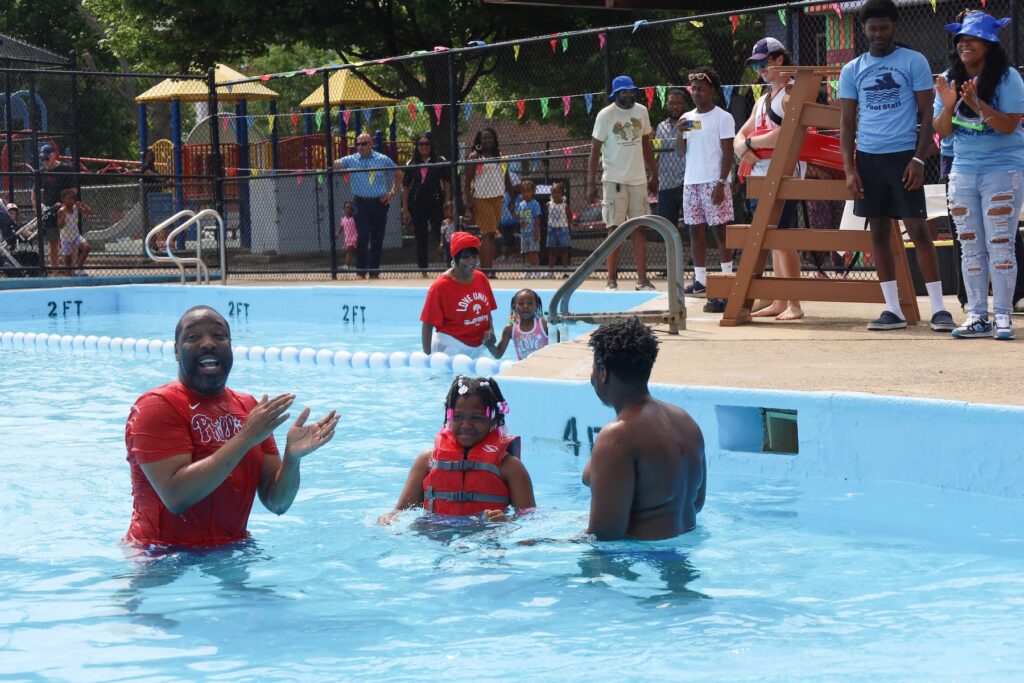
Fatal drownings among young children nationally rose 12% from 2020 to 2021, according to a new federal report.
2 years ago
Listen 1:58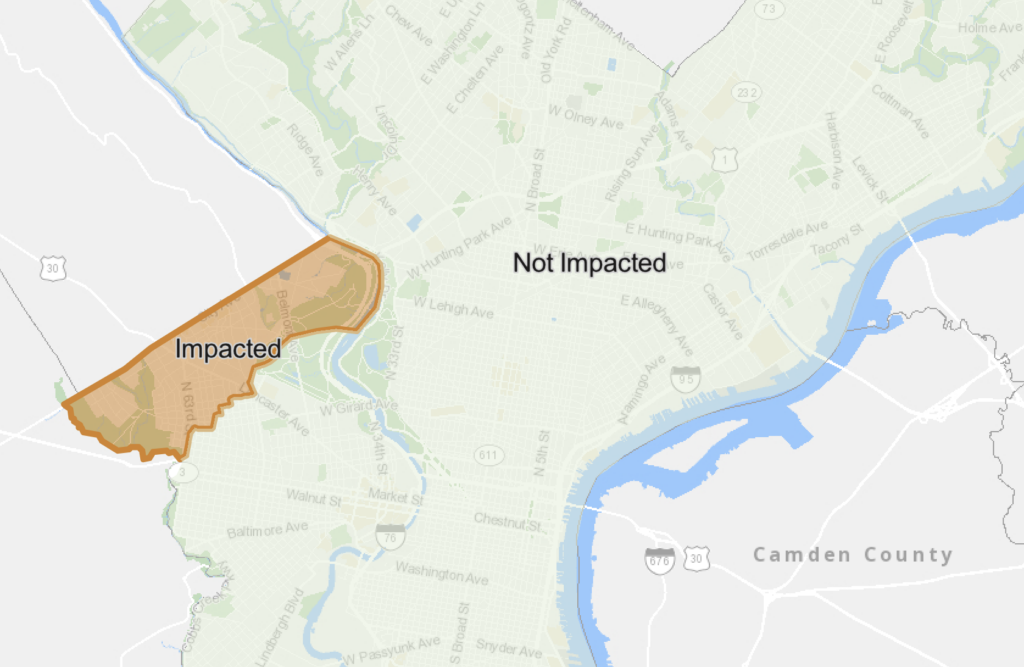
Boil water advisory ends for parts of West Philadelphia
Equipment failure led to a boil water advisory for parts of West Philadelphia between Sunday and Tuesday morning.
3 years ago
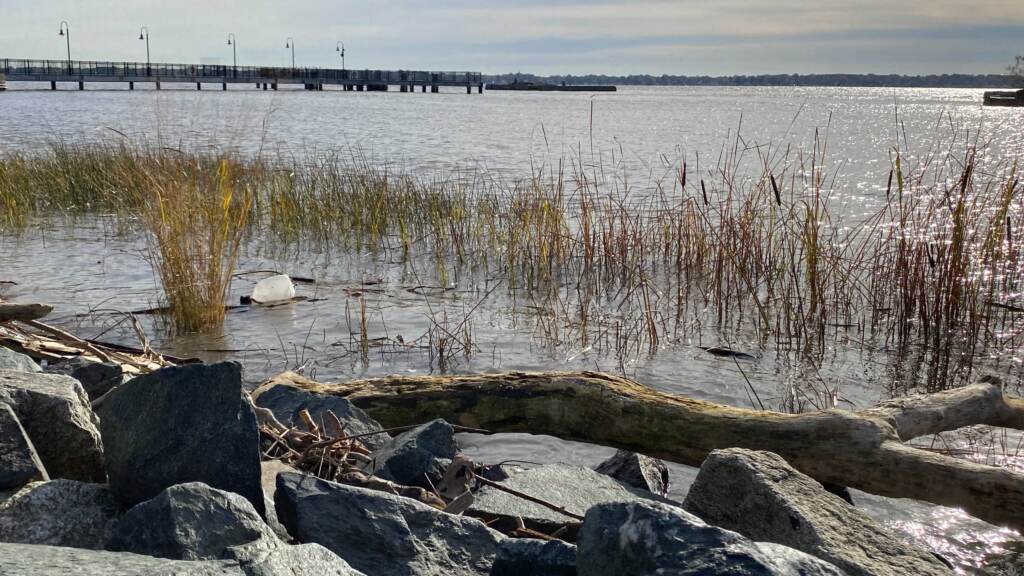
Delaware’s rivers and streams are the most polluted in the U.S., a new report says
Environmental Integrity Project evaluated waterways classified as impaired, unfit for swimming, recreation, aquatic life, fish consumption, and drinking.
5 years ago