

Artist Roberto Lugo debuts new America 250 ceramic at Michener Art Museum
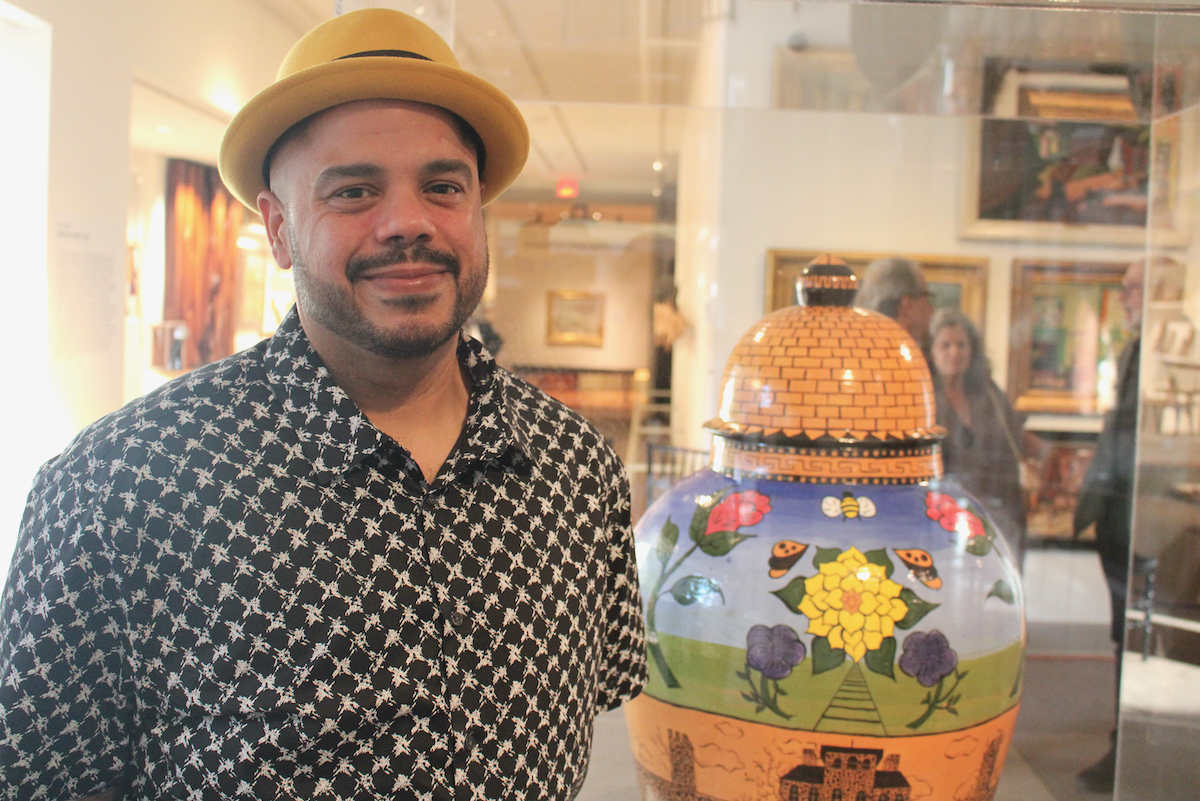
“Permanence: We Were Here” is a four-foot-tall ceramic vessel that explores the Pennsylvania museum’s history as the former site of the Bucks County Jail.

From Delco to Chesco and Montco to Bucks, what about life in Philly’s suburbs do you want WHYY News to cover? Let us know!
The Michener Art Museum in Doylestown, Pennsylvania, unveiled a site-specific, permanent work from artist Roberto Lugo on Thursday night to commemorate the 250th anniversary of the adoption of the Declaration of Independence.
“Permanence: We Were Here” is a 4-foot-tall ceramic vessel that commemorates the museum’s location within the walls of the former Bucks County Jail, which opened in 1884.
“The piece blends the museum’s history as the former Bucks County Jail, its future in its mission to elevate and diversify our collection through the work of some of the most notable contemporary artists in our region, and it commemorates our nation’s shared history at the moment of its 250th year,” Anne Corso, executive director and CEO of the museum, said at the unveiling.
‘Permanence: We Were Here’
Lugo, an artist, educator and poet from Philadelphia’s Kensington neighborhood whose work is featured in museums throughout the U.S., said the piece’s design incorporates artwork that he discovered in “Pine Street Express,” a series of newsletters made by people who were incarcerated in the prison in the 1970s.
“There was this sort of moment, I think, of fate, where I set one of the newsletters on a windowsill with another sheet of paper, and it sort of transferred over, and I thought it was one of my drawings, because it looked just like the way that I draw a flower,” Lugo told WHYY News.
Lugo then integrated the flower drawing into the upper portion design of the piece to include a record of the people who had once lived in and been imprisoned in the jail.
“Their memories are sort of ephemeral in many ways, but I think ceramics — that’s one of its strengths — is that it gives permanence,” he said. “We know about cultures throughout history in anthropology, because of clay. And so, it seemed like the perfect medium to document their lives.”
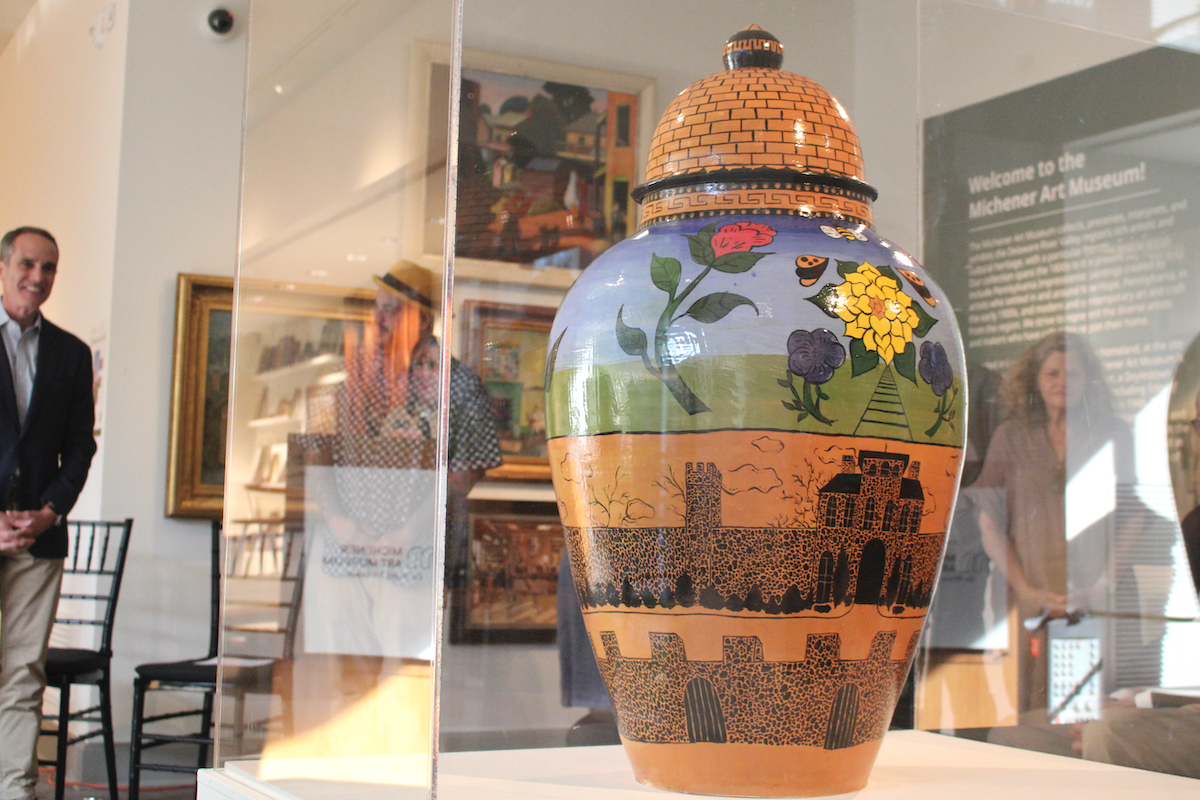
The lower half of Lugo’s piece includes a representation of the stone walls of the prison, which still form the museum’s entrance.
The vessel was commissioned with a grant from Pennsylvania’s Department of Community and Economic Development, awarded by state Sen. Steve Santarsiero, D-Newtown.
“This whole story about what this museum was, as the county jail for about 100 years, and now that it’s been reborn as this beautiful space for art is really quite a transformation,” Santarsiero told WHYY News. “And, of course, Roberto’s work tries to tell that story, and I think it does so in a really amazing way.”
As the region celebrates its role in the birth of the nation during its 250th anniversary, it’s important to recognize and remember all aspects of local and national history, Santarsiero said.
“I think part of the greatness of the founders of our country is that they understood that they weren’t completing the work either in July of 1776, or frankly at the conclusion of the Constitutional Convention,” he said. “But that it was a work in progress that was going to continue to unfold, and that the point was that we were always striving to be better.”
“I think remembering all aspects of our history, the good and the bad, is important to enable us to do that, and this work is part of that story,” he added.
Related Content
Moore, who died last year, championed Black artists and left an indelible mark on the art world. His collection numbered in the "hundreds, maybe thousands."
2 years ago
Listen 1:06‘Art is really for everyone’
This is a “very busy year” for the artist, Lugo said. In addition to the Michener piece, he has a solo exhibition, “American Crib: What’s Happening,” on display at the Clay Studio in Philadelphia through July 9, which tells his family’s story through the lens of the American experience.
He also has an exhibition, “Alfarero del Barrio,” on display this year at Madison Square Park in New York City. The installation includes a 20-foot-tall urn featuring portraits of eight Puerto Ricans, including Lugo’s own parents, Gilberto and Maribel, as well as historical and contemporary Puerto Rican leaders and artists, such as Lin-Manuel Miranda, U.S. Supreme Court Justice Sonia Sotomayor and Roberto Clemente.
-
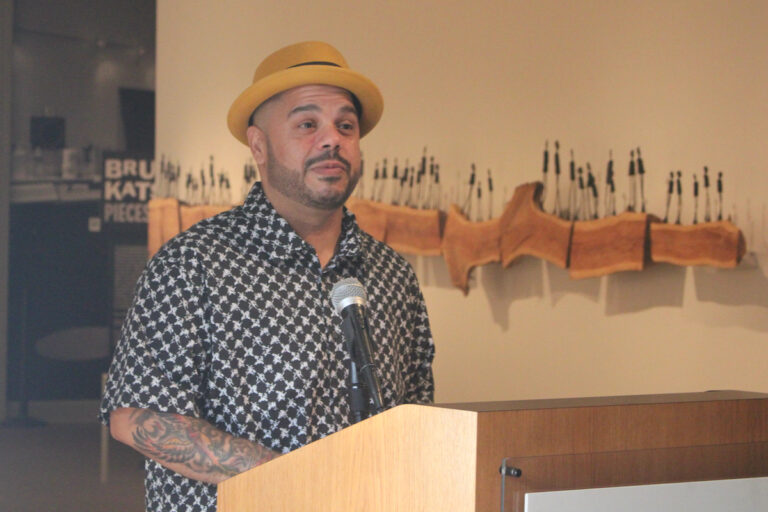
Philadelphia-based artist Roberto Lugo created "Permanence: We Were Here" by integrating the history of the Michener Museum's location at the site of the former Bucks County Jail. (Emily Neil/WHYY) -
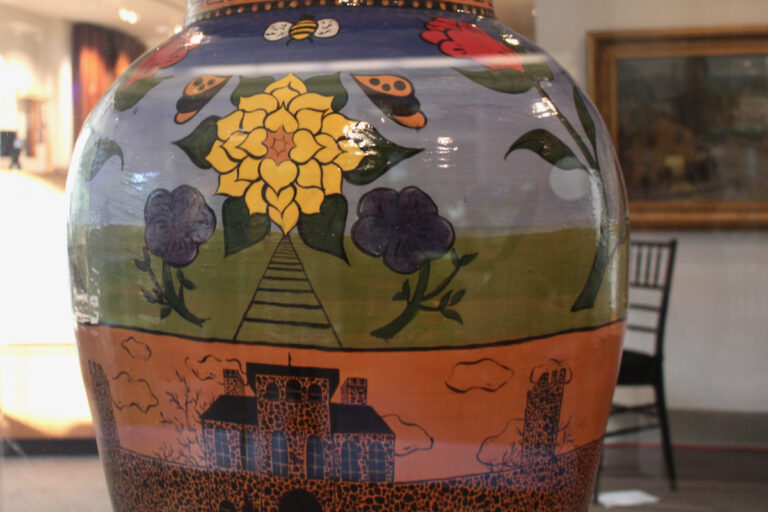
“Permanence: We Were Here,” by Roberto Lugo, is a 4-foot-tall ceramic vessel that commemorates the Michener Museum's location within the walls of the former Bucks County Jail, which opened in 1884. (Emily Neil/WHYY) -
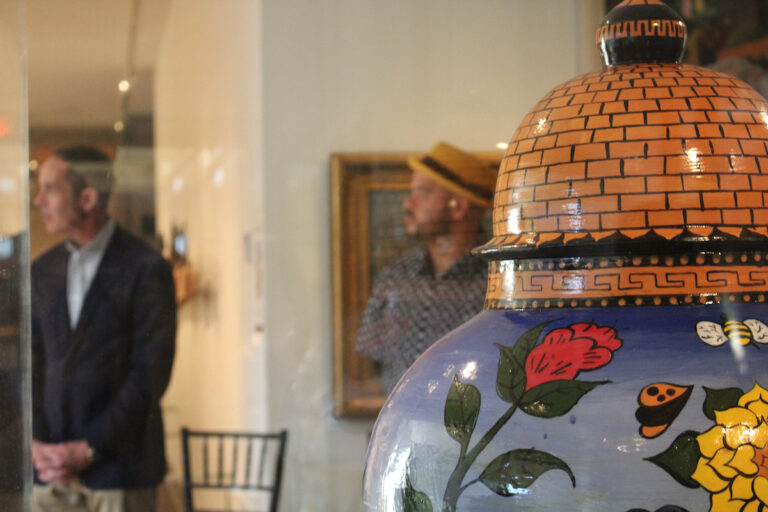
“Permanence: We Were Here,” by Roberto Lugo, is a 4-foot-tall ceramic vessel that commemorates the Michener Museum's location within the walls of the former Bucks County Jail, which opened in 1884. (Emily Neil/WHYY) -
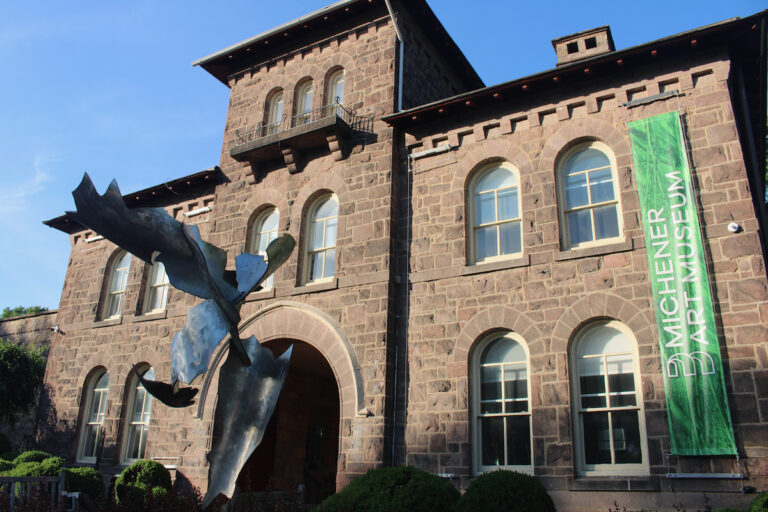
The Michener Museum in Doylestown, Pennsylvania, is located within the walls of the former Bucks County Jail. (Emily Neil/WHYY)
Members of the public are able to wander through an archway included in the urn, pose next to a 15-foot-tall fire hydrant and play dominos at tables that Lugo designed with his father.
“It’s all interactive, because I feel like public art should be for everyone, and then in a way that maybe sheds light on … how art is really for everyone, and giving an opportunity for stories that maybe normally would not be represented in the [semi]quincentennial are sort of the center of the conversation,” he said.
Lugo said that the narrative behind his piece, “Permanence,” can “make people feel like art is not sort of a singular section of cultural society, but it’s really for all of us to tell our stories, even people who come from humble beginnings or have had challenging moments in life.”
“It’s restorative, it’s therapeutic, it’s expressive,” he said. “I just think art is beautiful and meant for people of every culture.”

Get daily updates from WHYY News!
WHYY is your source for fact-based, in-depth journalism and information. As a nonprofit organization, we rely on financial support from readers like you. Please give today.
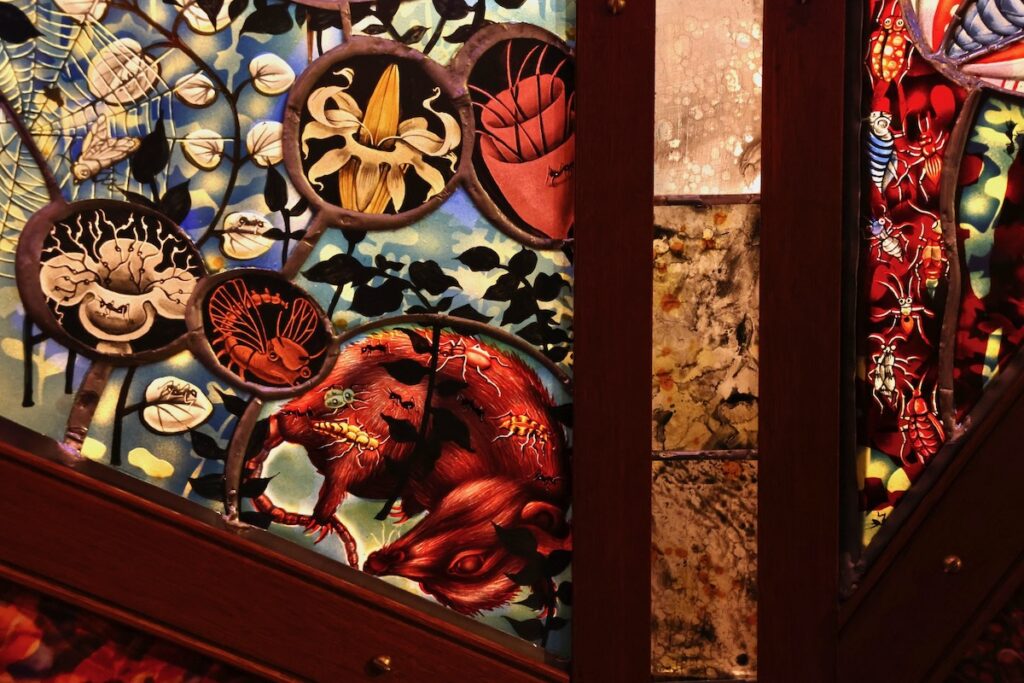
Explore your place in the universe inside ‘Super/Natural’ at Doylestown’s Michener Museum
Stained-glass artist Judith Schaechter built a cathedral for a congregation of one inside the Michener Art Museum.
1 year ago
Listen 1:27
Moore, who died last year, championed Black artists and left an indelible mark on the art world. His collection numbered in the "hundreds, maybe thousands."
2 years ago
Listen 1:06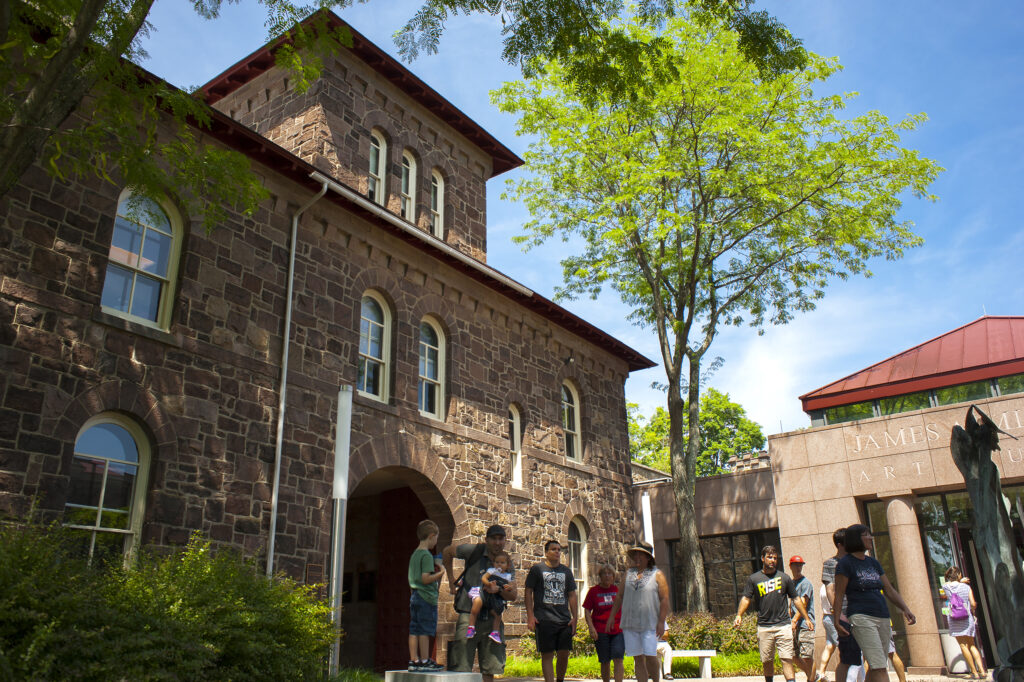
The Michener Museum offers free admission days, extended hours
The Doylestown art museum will not charge admission on 2nd Sundays, and has added Thursday evening hours to increase community accessibility.
3 years ago
Listen 1:00