Why are NJ Transit fares to New Jersey’s 8 FIFA World Cup matches so high? And what benefit will the state get?
The World Cup is expected to generate billions of dollars in economic activity for the region, but New York City may get the lion’s share.
Listen 1:06
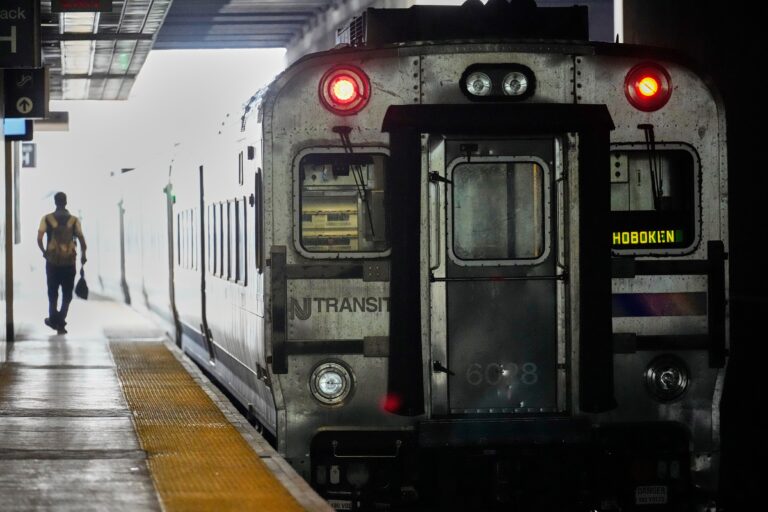
FILE - An NJ Transit train leaves the Secaucus Junction station in Secaucus, N.J., Wednesday, May 14, 2025. (AP Photo/Seth Wenig)
From Camden and Cherry Hill to Trenton and the Jersey Shore, what about life in New Jersey do you want WHYY News to cover? Let us know.
If you have tickets to attend any of the eight FIFA World Cup soccer games at MetLife Stadium in East Rutherford, New Jersey — currently branded as New York New Jersey Stadium by the New York New Jersey Host Committee — it will probably be more costly than you had planned for, and somewhat more complicated as well.
A small number of tickets went on sale in the fall of 2025 for $60, but they quickly sold out, and with the World Cup starting in less than two months, ticket prices are rising. The current resale range for early games taking place at the Meadowlands is $450-$900 from FIFA and secondary ticket marketplaces, but for higher-demand games involving teams from Brazil and England, ticket prices start around $1,000 and can soar as high as $10,000.
And then there’s the cost of actually getting to the stadium.
While parking is allowed for most events at MetLife, FIFA, the international governing body of soccer, has designated the World Cup site in New Jersey as a no-parking, transit-only event, because of security and congestion concerns.
Limited expensive options
NJ Transit at the end of last week announced that a round-trip train ticket from New York’s Penn Station to the stadium will cost $150 on match days. The same trip normally costs $12.90. Train tickets go on sale on May 13 and will only be available to World Cup match ticket holders.
The NY-NJ Host Committee will offer shuttle bus service from the Hackensack Meridian School of Medicine in Clifton. The cost for a match-day round-trip ticket, which must be purchased in advance, will be $80.
Fans who don’t want to take a train or a bus will have the option of paying $225 to park at the American Dream mall and walking to the stadium over existing pedestrian bridges. Organizers said a limited number of parking spaces are available and must be purchased in advance.
Ride-hailing companies like Uber and Lyft will be operating on match days, but premium pricing is anticipated and drop-offs will not be allowed on stadium property. All rideshare drop-offs will be at a designated location at Meadowlands Racing & Entertainment, which is close to the stadium.
The result is that, even if soccer fans were fortunate enough to buy inexpensive tickets to matches in New Jersey, they may wind up paying hundreds of additional dollars for the privilege of getting to them.
In Philadelphia, where six FIFA World Cup matches will be played, the story is quite different.
The cost of traveling to Lincoln Financial Field on SEPTA will remain at $2.90, and fans heading home from the stadium will be able to ride for free, thanks to an arrangement with Airbnb. The cost of bus and rail travel from Philadelphia to North Jersey would be unaffected on MetLife Stadium match days.
Related Content

Philly World Cup fans get free rides home from games this summer thanks to Airbnb
Soccer fans in other cities like Boston and New York face soaring transportation costs amid fights with FIFA, but Philly fans will get a reprieve.
6 months ago
Why are transportation costs so high in New Jersey?
Before NJ Transit announced its Regional Stadium Mobility Plan, New Jersey Gov. Mikie Sherrill complained about the World Cup’s cost to New Jersey in a video posted on X. While FIFA stands to make $11 billion from the tournament, including selling tickets for $10,000 for the final match, it was paying nothing for transportation, and NJ Transit was forced to cover an extra $48 million to get fans to and from the stadium.
Sherrill pointed out that her administration had “inherited” the FIFA agreement, which was worked out when her predecessor Phil Murphy was governor, and she was not going to allow New Jersey commuters to “get stuck paying that tab for years to come.”
When NJ Transit unveiled its plan to charge $150 for rail service and $80 for bus service last Friday, president and CEO Kris Kolluri was asked to explain in detail the additional $48 million the agency will have to spend.
He said the cost of labor for additional train and bus service would be around $20 million, and providing additional security would cost almost $11 million. Kolluri also said there would be additional costs for air conditioning units and other equipment, including rail axles and wheels.
NJ Transit did not immediately respond to a request from WHYY News for a follow-up interview with Kolluri about cost breakdowns.
On Sunday, U.S. Senate Minority Leader Chuck Schumer, D-New York, criticized FIFA for refusing to help cover transportation costs. During a news conference, he said the New Jersey and New York region is different from other locations, and the matches at MetLife stadium will cause disruptions along the Northeast Corridor, the nation’s busiest commuter rail network.
“What the hell? Who the hell do you think you are?” he said at one point, referring to FIFA.
FIFA officials have voiced surprise in response to the criticism. Heimo Schirgi, chief operating officer for FIFA World Cup 2026, suggested in a statement that NJ Transit’s plan to charge high prices to get to the stadium was unwise.
“Elevated fares inevitably push fans toward alternative transportation options. This increases concerns of congestion, late arrivals, and creates broader ripple effects that ultimately diminish the economic benefit and lasting legacy the entire region stands to gain from hosting the World Cup,” he said.
Related Content
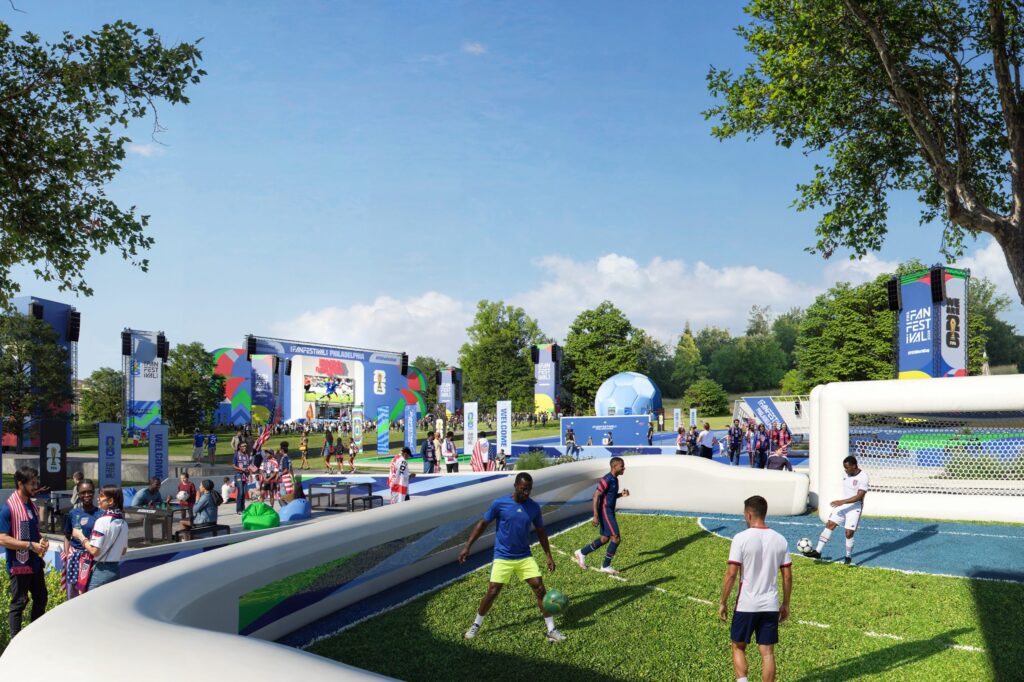
Free World Cup fan zones expanding to 3 other cities across Pennsylvania
Gov. Josh Shapiro says free World Cup fan zones in Reading, Scranton and Pittsburgh will expand the soccer celebration beyond Philadelphia.
7 months ago
What benefits will New Jersey get?
An economic analysis commissioned by FIFA projects tourists attending World Cup games in the New Jersey and New York region and other parts of the United States will spend $6.4 billion, which will benefit the hospitality, transportation and retail sectors. The report also finds the event provides a platform to promote the host cities as global tourist destinations.
Former New Jersey Lt. Gov. Tahesha Way, who oversees tourism as New Jersey’s secretary of state, said in a statement that having several FIFA World Cup matches in the Garden State is expected to generate an economic impact of more than $2 billion to the New Jersey and New York region.
“This is an exciting opportunity for our local businesses, and one that will create a proud legacy for Garden State residents,” she said. “We are ready to welcome the world to the incredible state of New Jersey.”
Jill Hirsch, the president and CEO of the New Jersey Sports and Exposition Authority, said earlier this year that having World Cup matches in New Jersey will elevate the state’s global profile.
“This is an especially exciting moment for our state, with the World Cup and the World Cup Final coming to New Jersey and creating a once-in-a-generation opportunity to drive jobs, tourism, and long-term investment while showcasing New Jersey to a global audience,” she said.
While the World Cup matches will be played in New Jersey, the most direct and probably the easiest way to get to the stadium will be by NJ Transit train from New York Penn Station. For that reason and others, including planned celebrations for the nation’s semiquincentennial celebration, the event is expected to bring the largest single influx of visitors to New York City.
Editor’s note: This story has been updated to clarify that the NY-NJ Host Committee will offer shuttle bus service from the Hackensack Meridian School of Medicine in Clifton. The cost for a match-day round-trip ticket will be $80 when bought in advance.

Get daily updates from WHYY News!
WHYY is your source for fact-based, in-depth journalism and information. As a nonprofit organization, we rely on financial support from readers like you. Please give today.
Part of the series

For George Norcross’ new Atlantic City property, the possibilities are endless
Atlantic City Mayor Marty Small Sr. hopes Norcross’ influence can help his city in Trenton and boost investor interest nationally.
1 day ago
Listen 1:03
Eagles tickets are among the most expensive in the league. Are Philly fans the reason?
Seeing the Eagles away from the Linc can cost far less than catching a home game. Here’s what keeps Philadelphia ticket prices so high.
3 weeks ago
Philadelphia sports industry insiders hope summer festivities will translate into new opportunities
Five panelists spoke at WHYY on Thursday, exploring the opportunities and challenges the city faces as America’s 250 celebrations include a packed sports schedule in Philly.
5 months ago