Delmarva Power’s rate hike request slammed as ‘largest in Delaware history’
Delaware Gov. Matt Meyer says the average annual Delmarva Power bill went up nearly $400 over the past five years.

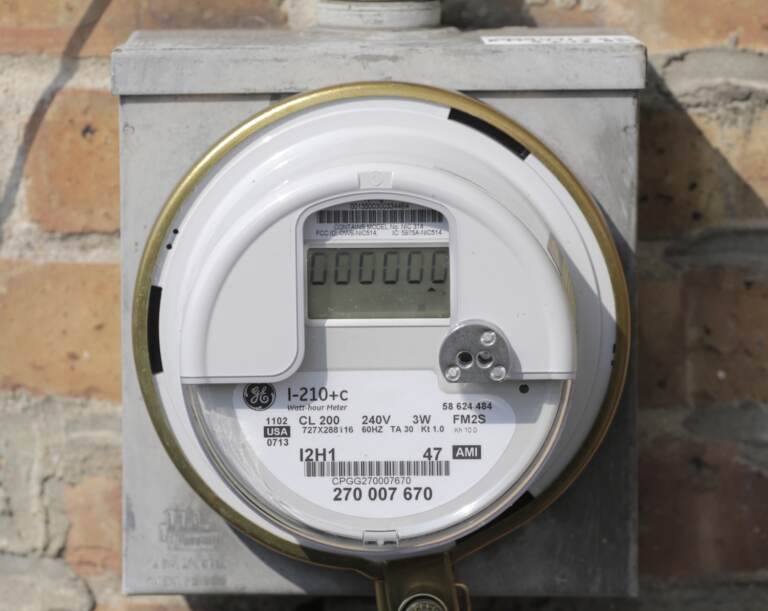
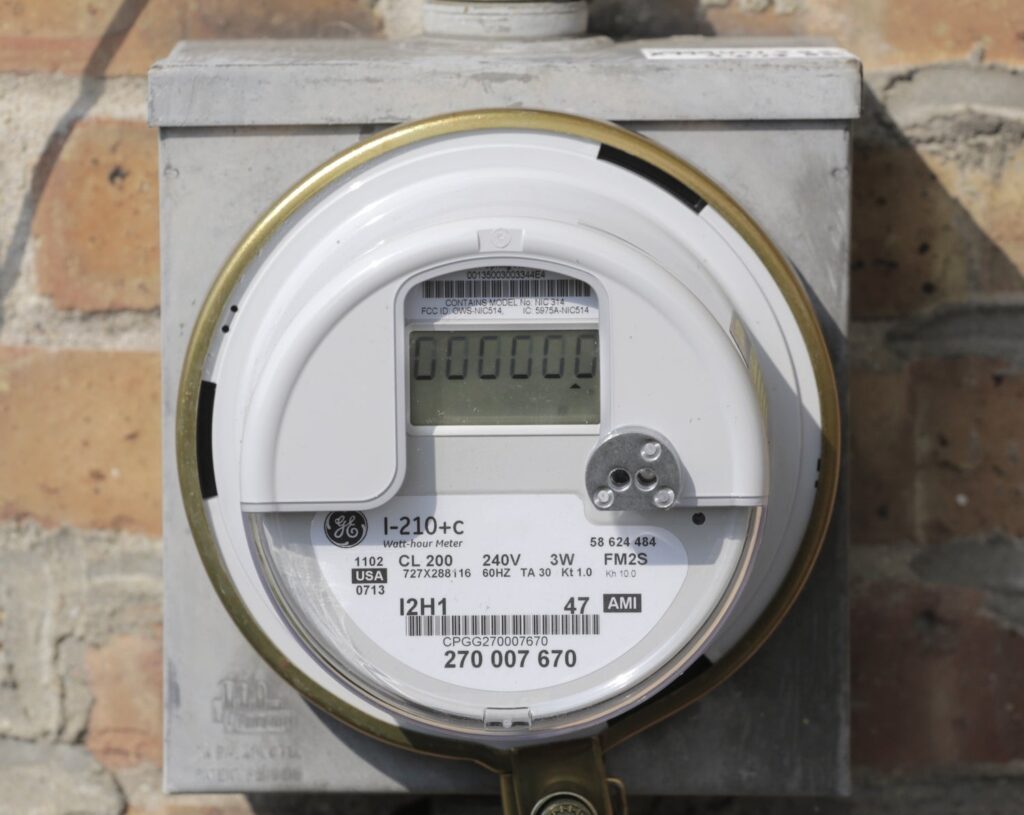
A utility meter is seen in a file photo. (AP Photo/M. Spencer Green)
What are journalists missing from the state of Delaware? What would you most like WHYY News to cover? Let us know.
Delmarva Power is defending itself against criticism from Delaware Gov. Matt Meyer and frustrated customers who say the company’s ongoing pursuit of millions of dollars in rate increases is devastating for seniors, families and people with disabilities.
Delmarva Power is an investor-owned utility that serves 344,000 customers in the state. Its parent company, Exelon Corporation, is the nation’s largest regulated electric and gas utility.
The company filed a rate case with the Public Service Commission in December, asking for an overall revenue increase in electric base rates totaling $67.8 million. Of that, $44.6 million would be borne by customers. Commissioners approved an interim rate last month retroactive to July 9, which was less than Delmarva Power wanted.
Just before Labor Day, the company asked the Delaware Superior Court to strike down the interim rate.
Delmarva Power also recently requested permission from the Public Service Commission to raise the amount of revenue it’s seeking to collect from $68 million to $76 million. That would represent an about 24% increase over existing base rates and a 12% rise over its original ask.
The Delaware Public Advocate said in a Facebook post that it was the largest rate request in history.
“Since this case was filed, Delmarva has heard significant and sustained concern from its customers about the impact of the proposed rate increase,” said Deputy Public Advocate Samantha Hajek during September’s Public Service Commission meeting. “Given that public outcry, it is particularly egregious that Delmarva has now increased its request by nearly 12% at a time when energy affordability is a real concern for Delaware families.”
The commission has to approve any rate increase.
Delmarva Power told WHYY News that the requested increase reflects investments have already been made to maintain the grid and replace aging infrastructure.
Delmarva Power breaks out charges on its gas and electric bills for supply and distribution. The supply charge is for the actual cost of the energy to the customer, and the delivery charge is for the distribution of the energy to one’s home or business. The supply charge is a pass-through and the company profits through the delivery charge.
This is the third rate hike sought in five years by Delmarva Power, with the cases being filed in 2020, 2022 and 2025. In a letter from Meyer that was read during last week’s Public Service Commission meeting, the governor asserted that the utility had raised the average customer’s bill by $383 a year over the past five years, independent of pass-through electric supply charges beyond the utility’s control. His office said they calculated the amount using the company’s updated 12 months of actual financials.
Delmarva Power Region Vice President Marcus Beal said he disputed that number. A spokesperson said the average monthly bill has increased $18 since December 2020, for an annual total of $216.
Dozens of ratepayers have submitted comments opposing the rate increase, saying the rise in their bills is outpacing their income, forcing some to choose between paying their electric bill or buying food or gas.
PSC commissioners criticized the company in July, saying it was “cruel” and “tone deaf” to press for rate hikes.
Beal said supply charges, not Delmarva, are driving up costs and disputed that the company was out of touch.
“We recognize that we have a major affordability issue with not just electricity, but with all products and goods and services right now,” he said. “We’re trying to be as prudent as possible about the projects that we select.”
Related Content
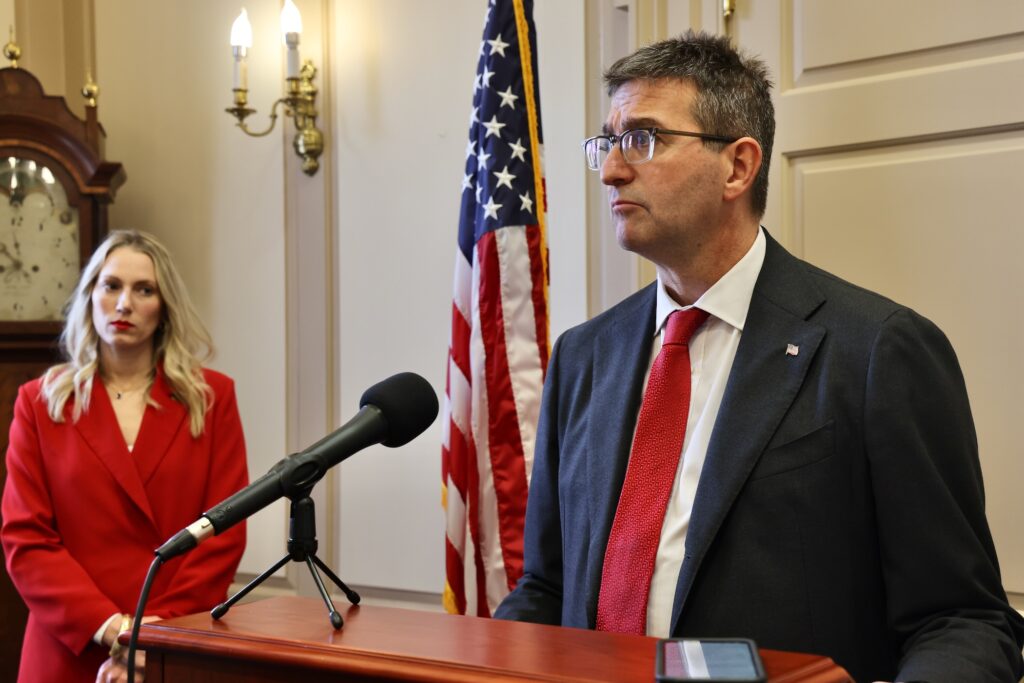
Public Service Commission members, who approved Delmarva Power’s interim rate request, questioned the scope of its oversight authority.
3 months ago
Listen 0:52Delmarva argues commission broke laws setting interim rate
The July 1 Public Service Commission meeting kicked off just a day after state lawmakers approved Senate Bill 326, which limits how much utilities can collect in interim rates. Meyer signed it July 13.
Feeling the pressure from lawmakers and other elected officials, the company presented an amended request that voluntarily reduced the amount of revenue they were asking for.
The commissioners approved the rate as 50% of Delmarva Power’s total ask, $34.3 million, which included half of the $23.2 million distribution system improvement charge. That drew objections from the company, who argued the entire DSIC fee should be part of the interim rate.
“My suggestion is, if you don’t like it, appeal it,” Commissioner Regina Iorii said. Iorii is one of four members recently appointed by Meyer.
The utility is arguing in its Superior Court appeal that commissioners improperly drove down the interim rate by not including the full DSIC amount.
“The commission reset that to zero in this case to lower the interim rates even lower than the lower amount that we actually requested,” Beal said. “Our legal team did not feel like that wasn’t within the bounds of the law, so they’re challenging that.”
Beal has been pushing for Delaware lawmakers to change the law and allow the company to own its own generation. Delaware deregulated the state’s energy market in 1999. The power supply comes from PJM Interconnection, a regional energy grid servicing Washington, D.C. and part or all of 13 states, including all of Pennsylvania, Delaware and New Jersey.
Beal called into the August WHYY News’ and Delaware Public Media’s “Ask Governor Meyer” show to advocate for his proposal to the governor live on air.
Meyer countered with a proposal of his own: He would sit down with Delmarva officials to discuss Beal’s idea if they would drop the rate hike request. The show ended without a deal.
“While Delmarva keeps telling us affordability matters, they push every day for higher rates for Delaware families,” Meyer said in a statement. “We cannot continue to pay outrageous bills to keep our lights on. Delmarva wants to make this an issue about reliability, but it is really only about increasing their multi-million-dollar profits.”
Editor’s note: This article has been updated to clarify the amount of Delmarva Power’s average increase of delivery charges since December 2020.

Get daily updates from WHYY News!
WHYY is your source for fact-based, in-depth journalism and information. As a nonprofit organization, we rely on financial support from readers like you. Please give today.
Part of the series

El gobernador de Delaware, Matt Meyer, afirma que la factura anual promedio de Delmarva aumentó casi $400 en los últimos cinco años.
4 weeks ago

Delaware necesita unas 24,400 viviendas adicionales para el año 2030 a fin de satisfacer la demanda prevista, según un informe estatal.
4 weeks ago
‘Slowly poisoned’: Neighbors protest controversial Delaware port project over health concerns
Neighbors living near the Edgemoor site say they’re concerned about truck exhaust, noise and harm to local wildlife.
1 month ago
Listen 0:49