

‘We will not be bullied’: Plymouth Township pushes back against proposed Conshohocken data center
Plymouth Township Council is speaking out after the developer of a proposed data center in Conshohocken challenged its zoning ordinance.
Listen 1:03
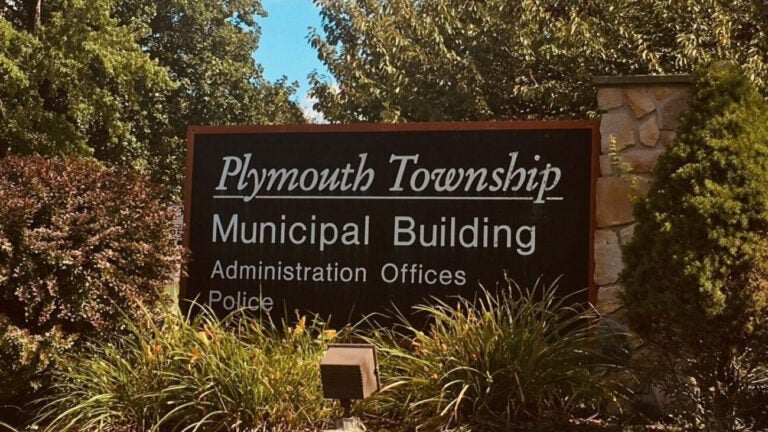
File - The administrative offices of Plymouth Township Council in Plymouth Meeting, Pa. (Plymouth Township)
This story is part of the WHYY News Climate Desk, bringing you news and solutions for our changing region.
From the Poconos to the Jersey Shore to the mouth of the Delaware Bay, what do you want to know about climate change? What would you like us to cover? Get in touch.
Plymouth Township Council is accusing the developer of a proposed data center in Conshohocken of intimidation and bullying over their opposition to the controversial plan.
The 2 million-square-foot facility would span 10 existing buildings at the recently closed Cleveland-Cliffs steel mill, which sits on 66 acres of land along the Schuylkill River, about a mile from the borough’s vibrant downtown area.
Council members said Monday that real estate developer Brian O’Neill, who is steering the proposal, challenged the validity of the township’s zoning ordinance this week, claiming it creates roadblocks to development. The details of the challenge, which will be made public this week, were not immediately clear.
O’Neill has previously rejected the township’s criteria to mitigate the potential impacts of the proposed data center, council members said.
“This is a blatant attempt by the applicant to demand approval by throwing a tantrum. The township is not interested in entertaining such theatrics,” said Lynne Viscio, chair of Plymouth Township Council, during the livestreamed announcement. “We will not allow ourselves to be bullied or intimidated by any developer, full stop. We will not abandon our values. We will not dismiss legitimate concerns raised by our residents. And we will not sacrifice the quality of life that has become synonymous with Plymouth Township — not for any development or developer.”
O’Neill’s attorney has not responded to a request for comment.
O’Neill has estimated the data center would generate $21 million a year in tax revenue. It’s not clear who would operate the facility, which he said would attract businesses to the area.
The facility is one of several proposed data centers in Montgomery County led by O’Neill, with multiple applications also submitted to Upper Merion Township for potential data centers in the King of Prussia area. He pulled his initial application for the Conshocken data center last year because of a legal technicality, but resubmitted the plan in May.
Plymouth Township’s planning agency last year unanimously refused to recommend the proposal to build the data center, which residents say could harm the environment and jack up energy bills. A petition opposing the data center has since garnered more than 3,600 signatures.
Related Content

Conshohocken-area residents push back against proposed data center
The facility would replace the recently closed Cleveland-Cliffs steel mill, which sits on 66 acres of land along the Schuylkill River.
11 months ago
Listen 1:24The demand for data centers
Data centers house the computer servers required to run internet services worldwide. While they have been around since the mid-20th century, the acceleration of power-hungry artificial intelligence has boosted demand for larger sites.
Though proponents of data centers tout the prospect of increased tax revenue, some local residents are concerned about increased noise, reduced property values and rising electricity bills. PJM Interconnection, which manages the region’s electrical grid, has pointed to the increase in data centers as one of the drivers of higher electricity bills.
O’Neill plans to utilize natural gas at the proposed data center, which he argues would reduce the impact on the electric grid. He said the data center would also utilize backup generators during times of high demand on the grid. However, experts say these diesel backup generators emit pollutants that can exacerbate respiratory problems and other health conditions among people who live nearby.
Residents are also concerned about water use, which in some areas of the country have threatened drinking water supplies. Hyperscale data centers can consume up to 5 million gallons of drinking water per day to cool the facilities and their servers to prevent overheating. In some areas, that has drained residents’ well water supplies. O’Neill has stated that operators would recycle and reuse the water to reduce the data center’s strain on water supplies.
Plymouth Township Council said land use applicants are required to prove their proposals won’t have an adverse or detrimental impact on the health, safety and welfare of the community.
In response to O’Neill’s application, council members developed criteria for the proposed data center to ensure potential impacts on residents and natural resources would be mitigated.
The list of more than 40 criteria includes requests for vegetative buffers to reduce noise, a ban on the facility from withdrawing from or discharging into the Schuylkill River, and on-site power generation and renewable power generation technology with a preference for solar. It’s unclear whether O’Neill is opposed to some or all of the proposed mitigation efforts.
“Our responsibility is not to oppose development. It is to ensure that if development is proposed, it occurs in a manner that protects our residents, our neighborhoods and the community we are all very proud to serve,” Viscio said.
Though Plymouth Township Council can recommend action on the proposed data center, final approval is in the hands of the Plymouth Township Zoning Hearing Board, an independent, quasi-judicial body. A hearing on the data center is scheduled Aug. 6.
Related Content

Politicians, energy providers, Big Tech and climate activists are talking about data centers. Here’s what to know.
7 months ago

Get daily updates from WHYY News!
WHYY is your source for fact-based, in-depth journalism and information. As a nonprofit organization, we rely on financial support from readers like you. Please give today.
Part of the series

$1.3 million dam-removal project in Bucks County aims to create and ease fish passage
The project aims to restore river flow in the Neshaminy Creek and help fish to migrate.
7 days ago

Pennsylvania Gov. Shapiro signs wide-ranging executive order reining in data center development
While stopping short of issuing a moratorium on new data centers, Shapiro’s executive order accuses developers of “predatory” behavior against local communities.
4 weeks ago
Listen 1:20
Vineland planning board approves 2nd phase of 300-megawatt data center plan
The plan would make way for the construction of a liquefied natural gas tank and fuel cell units.
4 weeks ago
Listen 1:13