A new billboard on Philadelphia’s I-95 corridor says it’s OK to be fat. It was paid for by an anti-AI lawsuit
Author Emma Copley Eisenberg used a class-action settlement against artificial intelligence to promote body positivity and her new book.

From Philly and the Pa. suburbs to South Jersey and Delaware, what would you like WHYY News to cover? Let us know!
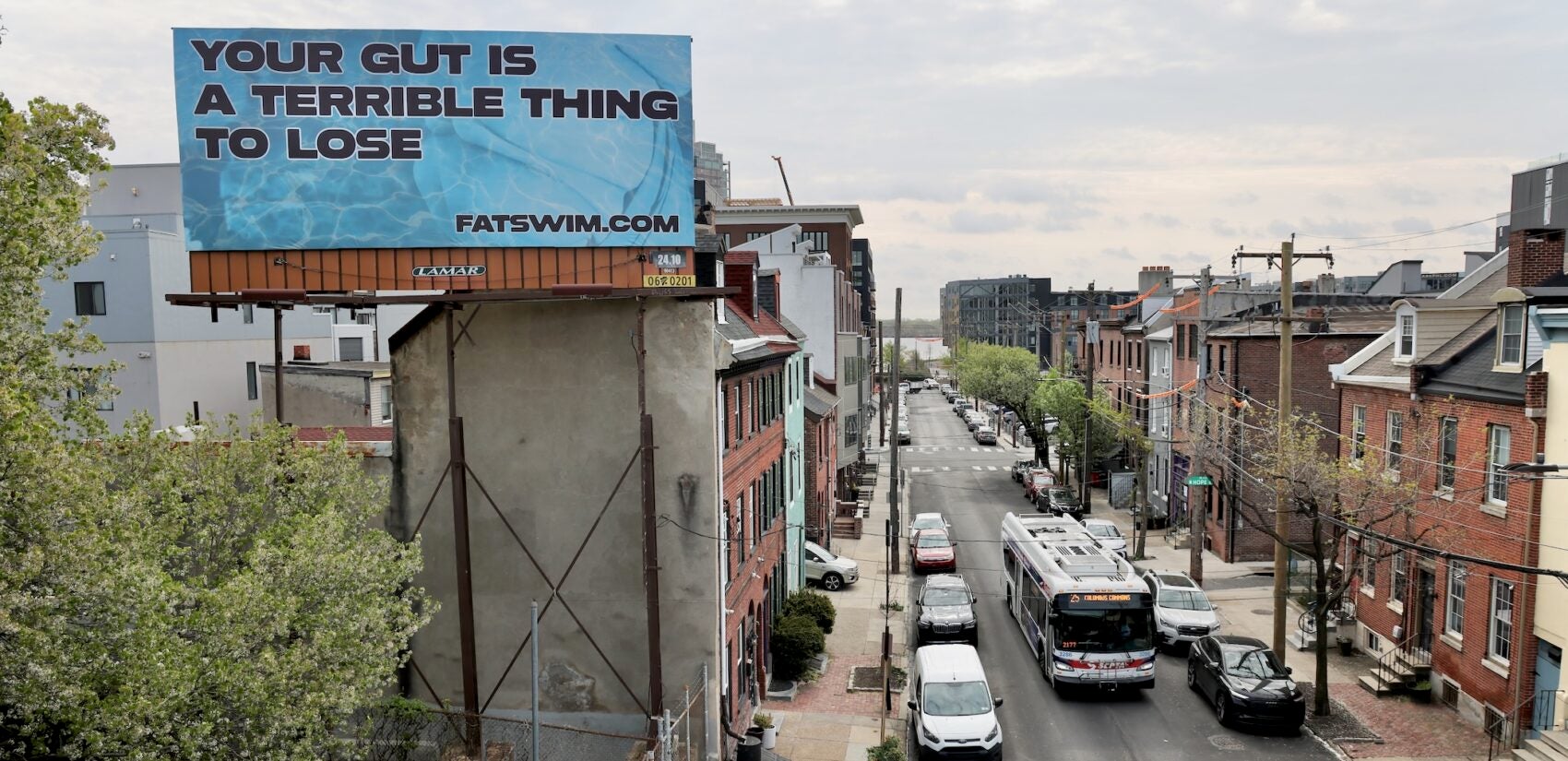
A billboard has been erected along I-95 northbound in Philadelphia promoting positive body imagery and a new book. It was paid for with spoils from a legal fight against artificial intelligence.
In what can seem like an ocean of advertising for body-sculpting surgeries and GLP-1 weight-loss drugs, the roadside billboard on Fairmount Avenue directs passersby to fatswim.com, a website that touts itself as “the opposite of Ozempic.”
“This is just one small blip in a sea that’s telling us all the time that our bodies are disgusting and wrong,” said Philadelphia author Emma Copley Eisenberg, who coordinated and paid for the billboard and whose short story collection “Fat Swim” comes out later this month. “This is one small counterpoint to that saying, ‘Your body is interesting. Let’s be curious about it. It’s art just the way it is.’”
The billboard is a close-up image, made by Philadelphia boudoir photographer Devon Dadoly, of a body with fat rolls obscured by a watery overlay so it appears to be submerged in a pool. The text reads: “YOUR GUT IS A TERRIBLE THING TO LOSE.”
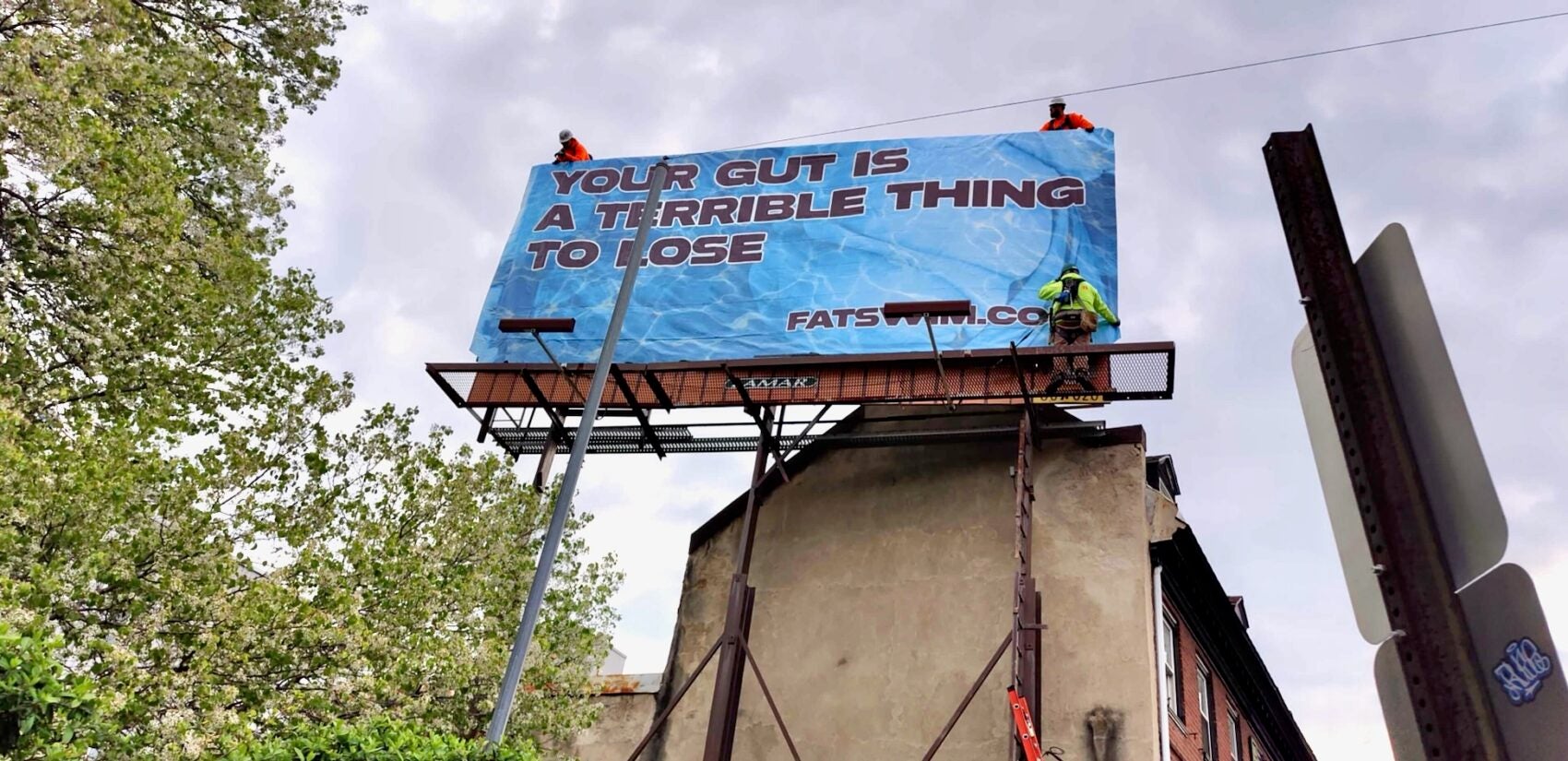
On the bottom is the address to Eisenberg’s website — a compendium of links to books, films, TV shows, podcasts and conferences “engaged with the big mystery of what it is to be a human being with a body,” said the author.
“I can barely watch TV without being bombarded with ads for GLP-1 weight-loss drugs,” she said. “Those are products that are being sold to us with the promise that weight loss is easy and has no consequences. There may indeed be consequences. There may be emotional and spiritual consequences of treating your body as something that is too large and must be shrunk.”
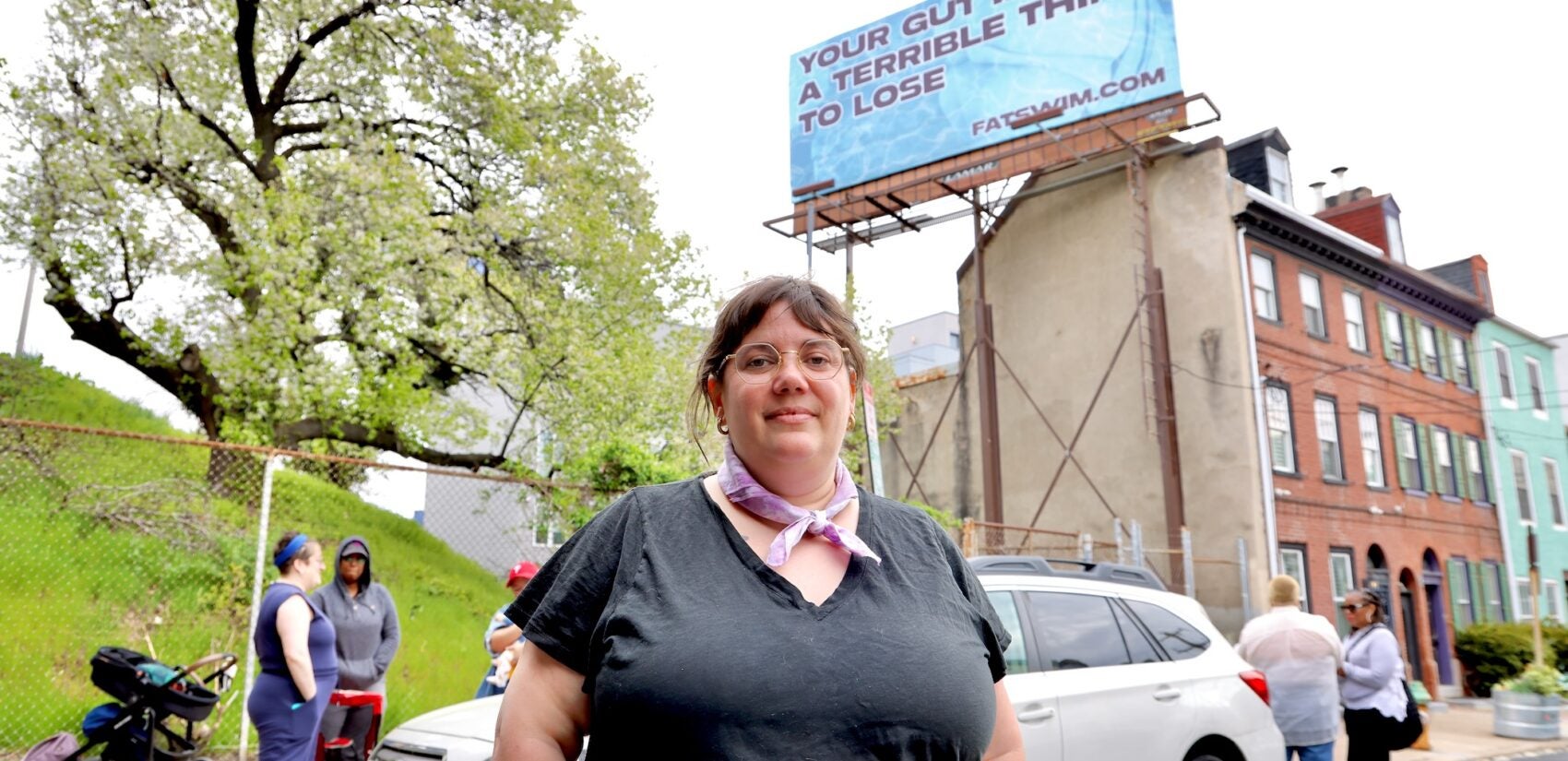
The billboard was paid for by Eisenberg’s portion of a settlement from a 2025 class-action lawsuit against the artificial intelligence company Anthropic. The plaintiffs claim Anthropic violated copyright law by illegally using 500,000 books to train its large-language chatbot, Claude. Eisenberg’s first novel, “The Third Rainbow Girl,” was used by Anthropic without permission.
The $1.5 billion settlement resulted in a small windfall of $3,000 per author. Eisenberg’s portion paid for licensing the photo from Dadoly, fabricating the vinyl billboard tarp and renting the advertising space from the Lamar billboard company for six weeks.
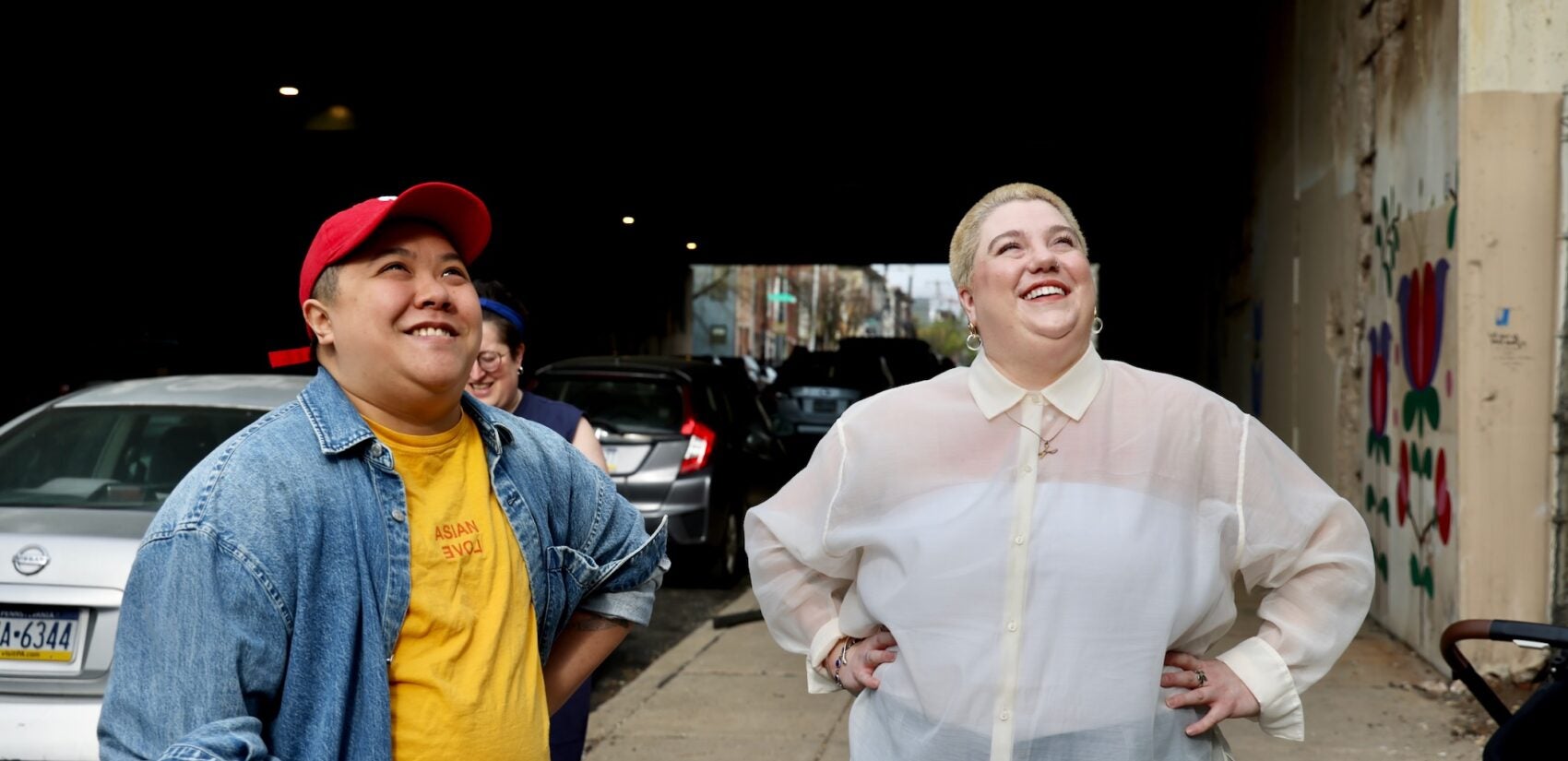
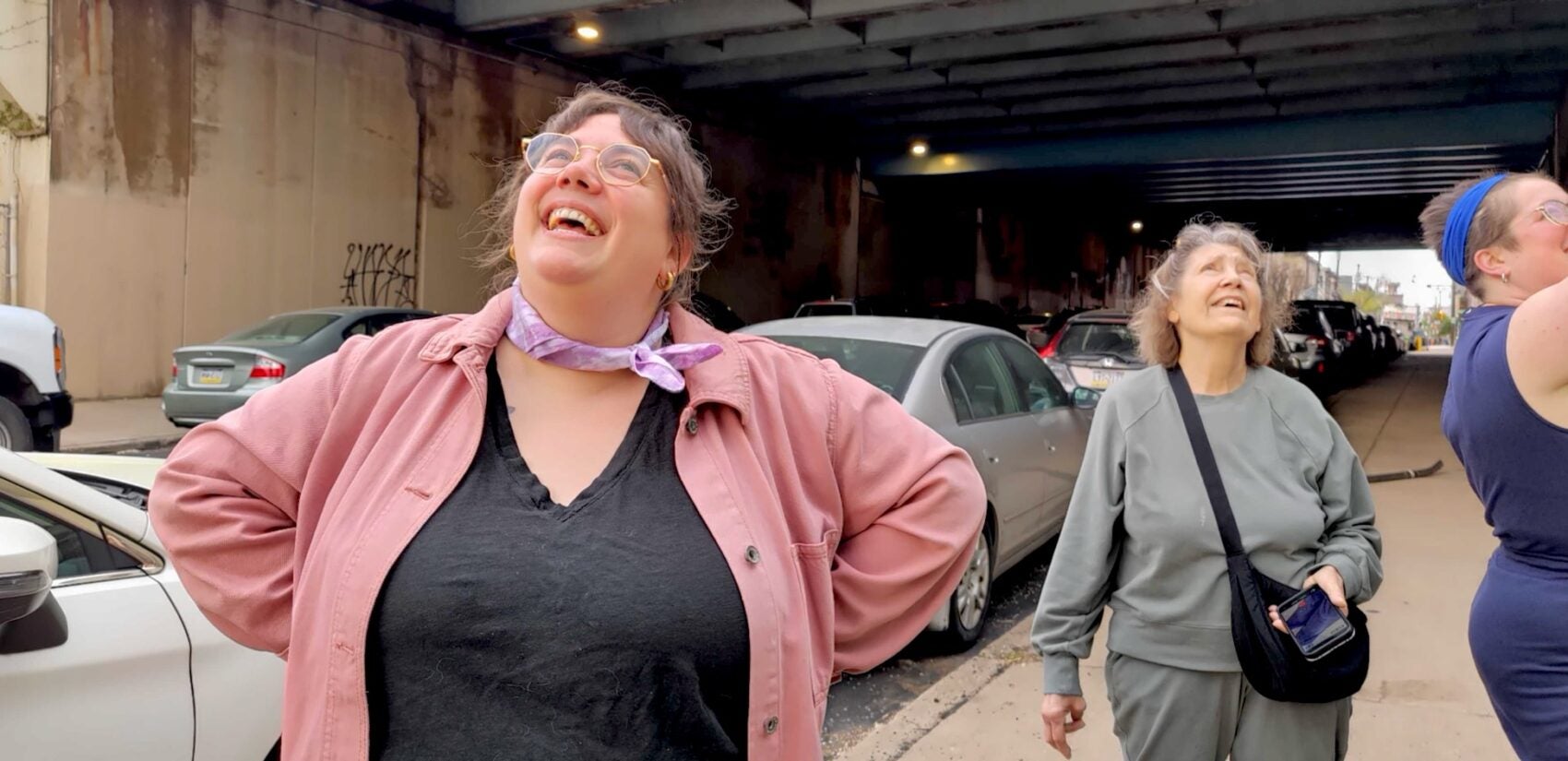
She said she had a little money left over to pay for coffee and donuts for an early-morning tailgate party with her friends and family to watch the billboard installation.
“This is going to be one of the highlights of my life, having my image on a billboard,” said Dadoly, a trauma-informed, body-positive portraitist. “I’m happy to see a fat person on a billboard. I think it needs to happen more often.”
Related Content
How Ozempic is changing weight loss
GLP-1s like Ozempic and Mounjaro are wildly popular for treating diabetes, obesity and now cosmetic weight-loss. How are they changing health care and our culture?
Air Date: September 19, 2024 12:00 pm
Listen 51:50“Fat Swim” is a series of interconnected short stories set in Philadelphia, most of them touching on issues of body acceptance. While not overtly an advertisement for the new book, the billboard directs people to a website where the book is available.
The publishing industry is being transformed by digital piracy and artificial intelligence. Last year, over 4 million books were published in the U.S., and many of them were partially or fully generated by artificial intelligence. Hackers sometimes hijack unused website domains to create shadow libraries of digital books for illegal download.
When thinking about how to use settlement money from artificial intelligence copyright infringement, Eisenberg intentionally rejected online algorithms.
“I think people are getting really suspicious and tired. We’re kept from things that could be meaningful or that could be exciting to us by what our phone shows us,” she said. “A billboard is the opposite of scrolling on Instagram.”
According to data provided by Lamar, the billboard at I-95 and Fairmount Avenue gets about 1 million impressions weekly.

Get daily updates from WHYY News!
WHYY is your source for fact-based, in-depth journalism and information. As a nonprofit organization, we rely on financial support from readers like you. Please give today.
This is what reading looks like: Local authors became live models in a Philadelphia bookstore window
Barnes and Noble asked two dozen local authors to silently read a favorite book in the storefront window. They all jumped at the chance.
2 years ago

Kensington photography book captures a bubble of joy inside a neighborhood in crisis
The photography in “The Group for Mutual Improvement” shows a group of misfit Kensington neighbors building unlikely bonds.
2 years ago
Listen 3:04