




The surveillance state got creepier
There’s growing backlash against Flock Safety cameras. Are they an essential crime-fighting tool, or a mass surveillance system ripe for abuse?
Listen 51:05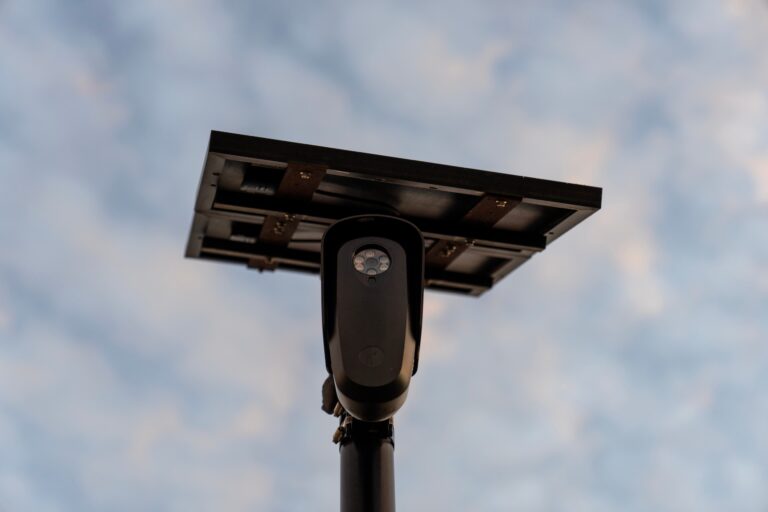
A Flock Safety license plate reader is seen along a public road, Oct. 16, 2025, in Houston. (AP Photo/David Goldman, File)
There’s growing backlash against Flock Safety cameras, the company behind the automated license-plate readers that are used by police across the country. Recent investigations have found that 69 police officials have been accused or charged with misusing the stored data, including for tracking current or former romantic partners.
Flock Safety announced new safeguards and policy changes to address the revelations of police misuse but the public concern continues to grow and there’s been a rise in vandalism against the cameras. .
There are roughly 120,000 Flock cameras nationwide and around 7,000 agencies contracting with the company, but that number is starting to slip as departments respond to the wave of citizen outrage over how this technology is being used. Abington police department just ended their contract with Flock over privacy concerns. Critics say that it’s a mass surveillance system deployed with little oversight. It’s also been tied to ICE operations.
But law enforcement officials counter that these cameras are important crime-fighting tools, helping them track down criminals from child kidnappers to the suspect accused of attempting to assassinate President Donald Trump at his Florida golf course.
Today, the debate around Flock cameras. Are they an essential crime-fighting tool, or a mass surveillance system ripe for abuse?
Guests:
- Drew Harwell, technology reporter for The Washington Post
- Rafael Mangual, attorney and fellow at the Manhattan Institute and a member of the Council on Criminal Justice.
- Matthew Guariglia, senior policy analyst with the Electronic Frontier Foundation
WHYY is your source for fact-based, in-depth journalism and information. As a nonprofit organization, we rely on financial support from readers like you. Please give today.
Brought to you by Studio 2


The state of capital punishment in the US
Public support for the death penalty has steadily declined in the modern era. But in recent years, executions surged. What's behind the rise?
Air Date: October 6, 2026
Listen 50:39
SPS Technologies in Abington reaches settlement following class-action lawsuit over 2025 fire
If approved by a court, affected parties within a 1-mile radius of the former facility at 301 Highland Ave. could be eligible to receive cash payments.
2 months ago

ACLU de Delaware está solicitando a los líderes estatales que establezcan normas a nivel estatal que regulen cuándo la policía puede colaborar con ICE y compartir información.
2 months ago