



Should we start worrying about the national debt?
America is now in the red for a whopping $40 trillion. Does it matter?
Listen 51:10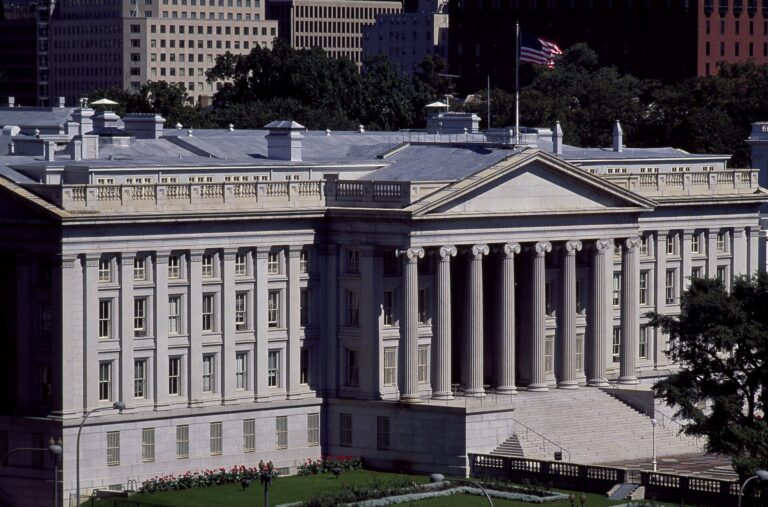
An aerial view of the U.S. Treasury Building.
According to the U.S. Department of the Treasury, America is now in the red for a whopping $40 trillion, with the national debt doubling over the last decade.
How did we get here?
A variety of reasons: tax cuts, defense spending, emergency relief during the pandemic, and an aging population pushing up the cost of social security and medicare. And lenders have taken notice. Interest rates are higher than they’ve been in a quarter of a century. And economists say that without changes to our priorities, the debt will just keep climbing.
So, how much should we be worried?
Running up a tab can be normal in the grand scheme of things – the government borrows to stimulate the economy. For most of American history, economic growth outpaced the interest rates on debt, ensuring the country can keep paying its bills.
But economists say the current moment is different.
Today on Studio 2, we unpack our national debt problem and the underlying politics that have put us on this trajectory. What could it mean for the country’s role on the international stage? What does it mean for regular Americans? And what is Washington planning to do about it?
Guests:
- Brendan Greeley, contributing editor at the Financial Times and author of “The Almighty Dollar: 500 Years of the World’s Most Powerful Money.”
- Patrick Harker, former president of the Federal Reserve Bank of Philadelphia and professor at The Wharton School.
WHYY is your source for fact-based, in-depth journalism and information. As a nonprofit organization, we rely on financial support from readers like you. Please give today.
Brought to you by Studio 2

For George Norcross’ new Atlantic City property, the possibilities are endless
Atlantic City Mayor Marty Small Sr. hopes Norcross’ influence can help his city in Trenton and boost investor interest nationally.
5 days ago
Listen 1:03
As other Republicans call for ending the Iran war or rolling back tariffs, the first-term senator is focused on eliminating “unnecessary” regulations.
2 weeks ago
Listen 0:59
Unemployment rates have climbed for Black and Hispanic workers, and unemployed workers now outnumber open positions.
2 months ago
Listen 1:09