



Craig Woodall’s Not Defined by 9/11
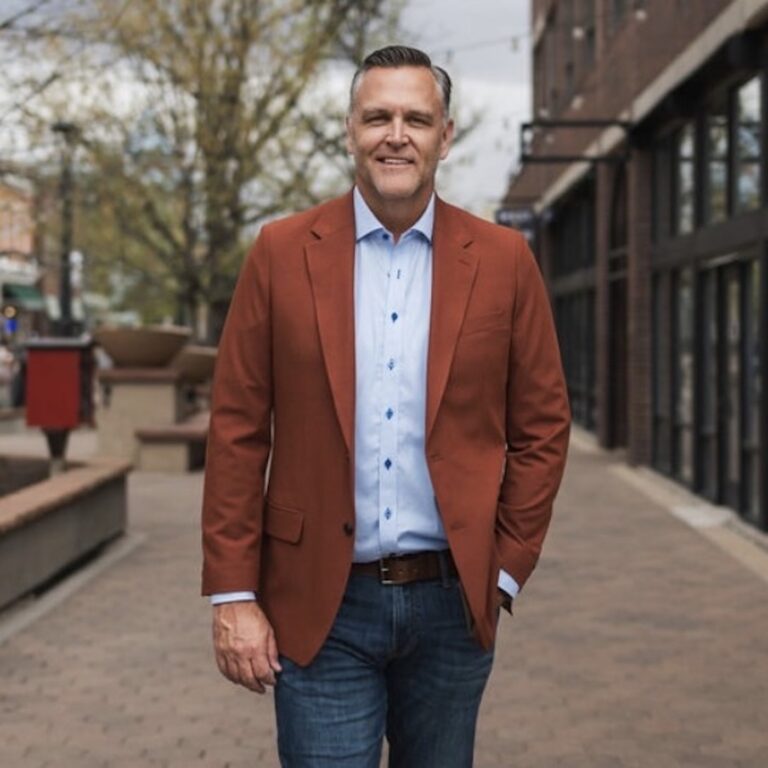
Craig Woodall talks about the loss of his older brother Brent, an accomplished athlete who died in the South Tower on September 11, 2001.
Screenshot
The NFL is finally back, so we’re talking to friends of the pod Madeline Hill and Charlotte Wilder from “The Sports Gossip Show” about the storylines they’re watching as the new season gets underway, the teams and players they’re most curious about, and how we as fans should deal with off-field drama.
Then, as we observe the 25th anniversary of the September 11 attacks, we’ll talk with Craig Woodall about the loss of his older brother Brent, an accomplished athlete who died in the South Tower that day. We dive deep into the role sports, teammates and resilience have played in Craig’s life in the years since and the many gifts his grief has given him.
Show Notes
-
Episode Transcript
DAVID GREENE, HOST: All right, so last time, Charlotte Wilder, you and I were speaking, you were getting ready to root for your team, the New England Patriots, in the Super Bowl. God, it feels like just yesterday. You were very excited, probably until you weren’t excited anymore. Have you recovered, and how are you feeling about this New England team as we are going into another season already?
CHARLOTTE WILDER: (Laughs) David, you are throwing me into the deep end, my dude.
DG: Yeah, I’m sorry. I’m sorry.
CW: Well, listen, let’s just say that was a horrific Super Bowl if you’re a fan of the New England Patriots. And it was probably a horrific Super Bowl if you were a fan of neither team, because the game was terrible.
DG: It was really boring, like, I’m just gonna say they’re boring Super Bowl. It was really boring.
CW: No, it was like watching paint dry, except if paint were a nightmare, if you’re a Patriots fan.
DG: (Laugh) Yeah, the last Super Bowl, I remember that boring. Like, I mean, it was involved with the Seattle Seahawks as well, but it was when my Pittsburgh Steelers beat Seattle, it’s fun— boring Super Bowls are fun when your team wins. I would imagine boring Super Bowls are hell when your team loses, but maybe Seattle’s the problem; I don’t know.
CW: The Rams were also a problem because the Patriots beat the Rams in a horrific, boring Super Bowl. And that was still kind of boring, but it was like a fun ending. But you know, we are approaching another Patriots season, as are all other NFL fans. And I’m personally happy to report that it’s been chill and not dramatic at all in New England. So I’m feeling great, David.
DG: Super chill offseason. Okay, well, I am talking to Charlotte Wilder and Madeleine Hill, who host The Sports Gossip Show. One of the best shows in the sports media world, and we’re gonna get ready together for this NFL season starting. Madeleine, you’re a Buffalo Bills fan. I guess when we talk about Super Bowls, it’s like not a place you can totally relate to. God, I’m just a nasty person.
MADELINE HILL: David, also, starting off strong. That is— you’re bullying us from the jump. Yeah, maybe.
DG: Yeah, maybe this is your year.
CW: Wide right, David.
MH: Is it our year? Who’s to say? You know, they have a new coach, Joe Brady, who also I might have mentioned this on the show before, but he is my step-cousin. It has not helped anyway.
DG: Oh, there’s a family tie. Maybe they’re going to help you now, like now they’re gonna win the Super Bowl. Yeah, yeah, yeah.
MH: Yeah, yeah, yeah. I’ll tell my stepmom to pass along the message to her nephew.
DG: Please do.
MH: I am hopeful that they will have a good season. I mean, everyone on the team loves Joe Brady. We will see, obviously, how that translates to him being the head coach of the team. I personally, I’m like, I’m very apprehensive to assume that they are going to go win a Super Bowl. I think what would be nice is if they had a good season. Just good. I think if it was underperforming, I’d be very disappointed, but I think if it was just average or above average, I’d feel like it was a win considering they’re going through some changes.
DG: I love the management of expectations. Don’t you have a new stadium? I mean, that’s exciting.
MH: Yes, new stadium, but fans are complaining about some of the seats. I don’t know if you’ve seen any of this.
DG: What’s wrong with seats in Buffalo? No.
MH: Well, apparently there are some seats for season ticket holders that have really strange views, like they have a pole in the middle of their seat or like a glass barrier that I think people are not too pleased about. So we’ll see if Bill’s fans still feel like Bill’s Mafia throughout the season are as loyal, even with their maybe not-so-great seats that they were put into in the new stadium.
DG: Aren’t obstructed seat views, like I thought that was an old thing, like a Tiger Stadium in Detroit kind of problem, like old Tiger Stadium, not like a new football stadium.
MH: I know you would think that they would have planned around that, but maybe they just didn’t see that page in the architectural draw plans when they were building the stadium. They’re like, that’ll be fine. It’ll be fine. And then now people are probably going to complain, and they already are. So we’ll see how that goes throughout the season.
DG: Yeah, well, Charlotte, let me come back to you, and you’re really boring off-season for the New England Patriots because I don’t think it was exactly boring. Your coach, Mike Vrabel, made a lot of news in the offseason with some photos of him, let’s say, being involved with Dianna Russini, who, you know, veteran NFL reporter at The Athletic. She’s now stepped down, but so much drama and NFL coach and NFL reporter being seen in sort of suggestive photos— how much of a distraction has that been for you and other Patriots fans?
CW: I mean, I think for me, it’s all very different, right? Like our show is called the Sports Gossip Show. That is a story that we made this show to cover. You know, I’ve known Dianna for like 10 years, and we’ve talked about this a lot on the episodes we did. I think that, you know, we did several episodes about this because I think it’s actually a much more complicated situation, just in terms of the media ecosystem and, like, what NFL insiders are expected to do. And what it means, like, can you even do that job as a woman? And this is not to say Dianna wasn’t, didn’t make a mistake, because she definitely did— like the pictures of them interlacing fingers or being very close at the bar, like those kinds of things— it’s impossible to see that and not think, okay, well, what’s the relationship here, regardless of what it actually is, and has that affected coverage? The Athletic found in an investigation that it hadn’t affected her coverage, but there was something inappropriate, whether it was romantic or not, in their investigation done internally. But I think for Patriots fans, it’s not really. I don’t think it has mattered. I think Mike Vrabel is a beloved head coach. He got the team to a Super Bowl last year. He is also beloved by his players. And by all accounts, he is somewhat like, you know, anytime a player’s going through a tragedy or something off the field, he’ll call them every day to check in. Like, he has so much goodwill inside that building that it seems like it actually has not been an internal distraction, but it has definitely been an external distraction. And I think that the problem is gonna be if the Patriots are not winning. This story, I think, will go away if the Patriots are very good. It won’t go away. It’ll simmer if the Patriots are good. If the Patriots are very bad, this is gonna a problem all season, and maybe fans will start to care more. I think right now NFL fans have had to I mean, if you’re a sports fan, you are very good at compartmentalizing when it comes to your team because sports are inherently pretty messed up. They’re owned by billionaires, and they don’t really care, at least men’s sports, how men treat women. And if you are a fan of men’s sports, I mean, women’s sports have their own issues too, but especially when it comes to domestic violence that men commit against women, and just all of these issues. You have to be able to do a lot of compartmentalization and be like, okay, I’m a fan of this team, even though, like, Robber Kraft was found with the Orchids of Asia Spa in 2019, soliciting prostitution, and, you know, they had all of those Make America Great Hats in the locker room in 2015 or 14. It’s like mental gymnastics, and you kind of make a decision to be like, cognitively, I know these things are messed up, and emotionally, I would like my team to win, so it doesn’t really make any sense.
DG: Yeah, and the question is, can those, can both those things be true? Can this be really a horrible thing that I disagree with? And can I also root for my team to win? I want to come back to that compartmentalization question, but you said something that really struck my ear that I want to hear both of you, you know, dive in like, what did we learn from this Vrable Dianna Russini sort of thing about women who cover sports? Like, what lessons should we take, and what can everyone do better?
CW: I mean, we could talk about this for a long time. I think there was an ESPN article that came out today, as of when we are speaking, and it said that a lot of women have reported that it’s harder to do their jobs. They are telling their editors when they’re meeting with sources. A lot of team personnel has said they won’t meet with women who are covering the team one-on-one for fear of being seen, and that sucks so much, for lack of a better way to say it. And I think what I would like to say is, this cannot just be Dianna Russini’s fault. Dianna Russini made a mistake, but she has not single-handedly set women back. The men who are being reactionary to that and acting in fear in response to one mistake a woman made, they are the people who are perpetuating this problem. And it— you know that might be a controversial thing to say; there might be some women in sports who disagree with me. But I have a very hard time that we are still doing this thing where one woman makes a mistake, and then she is to blame for the bad behavior of men when it comes to how other women can do their jobs. And I understand too, being a woman in this position, being like, well, I don’t want to be seen being photographed in a way, and it’s like, well, we all as a society have to be like, if there’s a man and a woman at a coffee shop and one of them is a reporter, and they’re not touching each other and they are chatting, it’s probably okay. Like, the reactionism drives me nuts.
MH: Yeah, I 100% agree with what Charlotte said. I would also add to it that I still think that this is a discussion that needs to be expanded upon further about the role of the Insider in sports and what are these people’s jobs to get these scoops, and what lengths do they go to to get the scoops. Not to say, of course, what Dianna did was crossing a professional line to potentially get information. That’s not what I’m saying, but I do think that a lot of these other male insiders have, you, they’ve attended weddings of these players before. It’s like, that’s kind of crossing a personal relationship with someone who potentially is your source. Are you an employee? Like, are you working for them? Like, what is going on? Are you guys just pals? So I do think it brings up larger conversations around the role of the Insider. And I think that’s something too that needs to be discussed further, not just in football, but across all professional sports. And I think that this story with Dianna Russini and Mike Vrabel just kind of highlights the blurred lines and all of the kind of murky waters that these insiders play in. Again, not to discount the mistakes that Dianna made, she definitely made a mistake, but the job description itself is already murky. And I think that’s something that needs to be discussed further.
DG: Well, I love both of you for having, I mean, spoken about it, you know, with us here and also covered it so extensively because it sounds like there are just so many questions about the role of the insider and, you know, lessons that we can learn and making sure that, that people are not denying access or scared to be in situations that, that are safe and okay to be able to do their jobs. Well, vibe check on this season. What is one storyline that each of you are really following with curiosity and intrigue?
MH: Well, one storyline that I can’t stop thinking about—it’s more of an entire team— is what’s going on with the San Francisco 49ers because in the off-season,…
DG: What is going on with the San Francisco 49ers?
MH: What is going on with the San Francisco 49ers, because in the off season their head coach got in a car crash that was not disclosed for I think 11 or 12 days for reasons that are still a little bit unclear. And then, in addition, their owner Jed York was arrested for allegedly soliciting prostitution in his home state of Ohio. And then on top of that, there is a story about the man who allegedly scammed at least 26 women out of $1.3 million for pretending to be a San Francisco 49ers player that obviously was not, he was not affiliated with the organization. However, I do think that, being lumped in as a nice little cherry on top before the season started. The 49ers have some weird branding, bad vibes going on. I don’t know. I just feel like there is some internal wierdness that to me, it’s just like, it’s weird. It’s weird, and I can’t stop thinking about what’s going on internally, how they’ve handled, obviously, both of those two scandals that were people who are associated with the team. But then now this third scandal that doesn’t really have to do with them, but they’ve kind of now been roped into it. And if you Google the 49ers, I’m pretty sure probably a story about Daejon Love is coming up higher than maybe some stories about the real players on their team.
DG: Yeah, that’s weird.
MH: Yeah. It’s very strange. It’s something I’m following, and I’m curious to see how those off the field storylines potentially impact on the field performance of the team going into the season.
DG: Yeah.
CW: The 49ers and the Seahawks played in the, I almost called them Western Conference final, the NFC Championship.
DG: NFC Championship, yeah.
CW: And they got pretty much smoked so it feels like these off the field stories coming off of what was a very embarrassing showing to end the season vibes feel bad to me David.
MH: Not good, not good.
DG: Yeah, one of the many challenges for sports fans. Charlotte Wilder, Madeline Hill, hosts the Sports Gossip Show. I see your sign, which is so beautifully homemade, which is the thing that I love so much, but you’ve framed it now for this season. What does that tell us about this season? Like, is this a, I don’t know, more polished season? What’s going on?
[MUSIC]
MH: I think it’s just that people need to take gossip as seriously as we do, that these off field storylines matter and have an impact on on the field performance and that without these off the field story lines, you’re not really getting the full picture of what’s going on on the field in any sport, men’s or women’s.
CW: If we can frame in museum glass our handmade sign, you can take gossip seriously.
DG: There you go. Well, what a way to go out. Thank you both so, so much, and enjoy football season. Can’t wait to talk to you again really soon.
CW and MH: Thank you, David.
DG: Coming up next, we’re going to have an extraordinary story about an athlete who lost his life on 9/11, as we hit this anniversary of that tragic event and talk about how his family has healed and grieved since then. That is Next on Sports in America.
Before we begin, I just wanna note that the rest of this episode is going to include archival audio and video from the September 11th attacks, including moments of distress and violence as those events unfolded in real time. Some listeners may find this material difficult to hear.
[MUSIC]
DG: Brent. Woodall was the kind of athlete who seemed to take naturally to any sport he tried. In college at Cal, he played tight end on football teams that won back-to-back bowl games, including the 1991 team that finished number eight in the country. And he wasn’t just a skilled football player. He also pitched for Cal’s baseball team, helping the Bears reach the College World Series in 1992. He was actually drafted by the Cubs that summer and pitched two years in the minors, but eventually Brent moved to New York in 1995, opting for a career in finance instead.
CRAIG WOODALL: He just had this concept of, I will refuse to lose. I just don’t do it. And that means I flip the switch late. If that means that I have to step up, that’s what I’m gonna do.
DG: To his younger brother, Craig, Brent lived as he competed: a quiet leader, physical, full of vitality and contradictions. Brent was working on the 89th floor of the World Trade Center’s South Tower on September 11th, 2001. On that bluebird morning, Craig watched the news with some remove, feeling certain that Brent, his brother, would report himself safe at any moment. But the call never came. Brent was 31 years old. Craig remembers the small vignettes from their childhood together, exchanges in the kitchen, laughing about their parents, the way he looked up to him as an athlete. 25 years on, those memories have a way of making September 11th feel less like an infamous mark of history and more like simply the day his brother disappeared from his life.
CW: I will always identify with 9/11, but I’m not identified by 9/11. I was for a year or so, and I realized I cannot keep doing that. So shifting that motivation into gratitude and presence has been huge.
DG: After the attacks left Americans grasping for answers, sports became one of the few places we could go to be together again. For Craig, whose entire understanding of competition and teamwork had been shaped by his brother, the lessons of sports would become part of how he learned to live with loss. Today on Sports in America, we talk with Craig Woodall about his new book, “Overcome: Rebuilding Hope After Losing My Brother on 9/11.” We’ll talk about the role that sports has played in the wake of tragedy and the many gifts his grief has given him.
Can we go back? I just wonder if I or someone had met your brother in college, what would we have noticed about him?
CW: He was a big guy. He was calm until he didn’t have to be. And so he could flip a switch that a lot of people didn’t notice until they saw him on the field, or if someone threatened one of his friends or did something insulting to him, he would flip a switch from zero to 100 real quick. And I can’t tell you how many fights I broke up between my brother and someone else or my dad and someone; they both had that same intensity. But he was as committed to his academics as he was to his athletics. So you’d often would have seen him in class and working hard on those things. He was an extremely loyal friend. Had a lot of friends, and friends were his family. Calm, sports-loving guy. Pretty easy to get along with. Hard to get under his skin, but when you did, you knew.
DG: You would, you would pay a price. (Laughs) You knew you were under there. What was your relationship to sports? Like, did you love it as much as he did? And how did, how did that kind of play into your relationship as brothers?
CW: It was almost the entire relationship. That’s how we were raised. My dad was a, played football at University of Arizona, and we were never told, “You will be Division I athletes.” That never was said, but it was kind of unspoken. And so anything we did as kids growing up, we were just in the backyard making up games, playing baseball, playing football, playing soccer, playing weird games we would make up. We competed constantly and he was the kid who matured quicker than everybody else. He was a big kid in class, isn’t always the best athlete, but when they happened to be, that’s a scary combination. And it was certainly not a whole lot of fun for the younger brother, because about two and a half years younger and a thinner build, I was a little bit taller. Very one-sided in our competition outside, but taught me a lot about resilience and being able to fight back and push. And when I finally got around kids my own age, like, this is simple compared to wrestling him and fighting him every day.
DG: What kind of teammate was he?
CW: Yeah, he was a quiet leader. He was not a rah-rah guy. Like I said, until he had to be. He almost seemed to conserve energy when it would come to vocal things. Extremely loyal, his college roommate that I remember tells a story: when his college roommate got injured in a football game, and some guys were kind of standing around and making some noise, Brent came in immediately and just cleared them all out and threw them all around, just because you don’t do that to one of my teammates. So he was a protector and a humbler guy than you would think for as good of an athlete as he was. He had some arrogance to him, like a lot of good athletes do, but you wouldn’t, other than seeing his size when he walked by you, you would not have known he was that good of an athlete because he didn’t just present that way, as a lot of good athletes do.
DG: So interesting. I feel like athletes who are especially built like athletes, it’s like humble can actually be one of the strongest attributes that makes them even more effective as people and as athletes.
CW: Yeah, like I said, he would carry some arrogance along with him, but that was one of the things, especially when he got to college, was probably the first time he’d ever been humbled as an athlete. Because I don’t know if he even got challenged all the way through high school, and then you get to college and everyone’s about that same level, then you really figure out who you are. And he was able to dig in and work real hard. Steve Mariucci was the special teams coach at Cal back then. And I’ve been able to kind of rekindle a relationship with him. And he speaks of Brent’s intelligence. And how he basically handed over the entire special teams playbook to Brent and said, I trust you. You know, if you wanna call a fake, you call it a fake. You line us up, right. If you need to switch sides, you switch sides. And I’m hands off because you are such a student of the game; you’re such an intelligent guy. And he said, it’s an amazing thing when one of your team captains also has your highest GPA and is also a great player. And that’s a pretty unique thing.
DG: God, that must be a great position to be in as a coach. Yeah, to have a player like that, who you can trust with everything and just sort of let them go do their thing. I know you’ve told this story a million times before, I mean, in writing, in a TED Talk, but there was a phone call several days before 9/11 that you and your brother had together. Can you take me into that conversation?
CW: Yeah, it’s one of my favorite memories of all time. So I got home from school, and I was teaching and coaching at the time, teaching high school and coaching football. And I am fairly introverted, and I was exhausted, and my wife greeted me with, hey, call your brother. And to be honest, no way. I’m not gonna call him. We don’t really talk on the phone. We email; that’s about all we do. And we call if we’re setting up, like, plane tickets or something like that. And so she just kept pushing me and to the point I thought something was wrong. You know, did something happen to my parents? Did something happen at the market? Did something happen? And so she said, “He just called you, would you call him back?” So then honestly, I was nervous that something had happened. And when I called him, he was sitting there with his wife, Tracy, and they’d been married just over a year, a year and a month. And they were calling to tell me they were expecting their first child. And it was so awesome. Just because he, I had been married for about five years. I already had a child. Even though I was the younger brother, some of those roles shifted. And so, he was asking me questions about, you know, is it truly as hard as everybody says to get up every single night, or do you change diapers constantly? How did you come up with a name? Just bombarded me with questions. And it was, I remember just thinking, this is a beautiful conversation between brothers who don’t often talk like this. And we talked about, will our kids be friends? Will they be athletes, musicians, artists? What do you think they’ll be like? How are you going to be as a dad? How are we going to do this or that? Are we going to travel together? I couldn’t ask for anything more.
[MUSIC]
[PEOPLE SCREAMING]
BROADCASTER 1: We understand that a plane has crashed into the World Trade Center. We don’t know anything more than that. We don’t know if it was a commercial aircraft.
BROADCASTER 2: We just saw on live television as a second plane flew into the second tower of the World Trade Center.
WOMAN: No!
MAN: The whole building’s gone!
DG: On a crystal-clear late summer morning at 8.46 a.m., a hijacked American Airlines flight struck the North Tower of the World Trade Center. At 9.03 a. m., a second plane crashes into the South Tower of the World Trade Center, where Brent Woodall and thousands of others were working. For Craig, the day became a series of phone calls, television reports, and fragments of information. But he was still thinking about Brent as his big brother, the athlete he had watched compete his entire life, the guy he believed could get himself out of almost anything. He couldn’t bring himself to consider the idea that Brent could be gone, but he was among the nearly 3,000 dead that day when the towers collapsed.
You know, the thing that struck me about the morning of 9/11, when you were, you know, learning about your brother and, and, you know, keeping hope and, and then losing hope, you, it sounds like you were imagining him as an athlete in a way. Like, I know that guy who’s gonna, you know, do whatever it takes to defend his teammates. I think you’ve mentioned, like, you were imagining him, you know, getting out of that tower and carrying someone along with him. Like, how did his strength and all those times that you saw him step up play into what you were kind of imagining and hoping for as this was all unfolding?
CW: Right, so I’d spent my whole life seeing him compete, seeing him dominate, seeing him fight through all these things. And on top of that, just being my big brother, right? Everyone’s big brother is kind of bigger than life. And so I never once had an ounce of concern. And maybe that was a coping mechanism. Maybe that was just how your brain does things. Cause I was sitting in a classroom meeting with people, and they’re like, “Hey, let’s shut it down. You should go home.” And I’m like, “Go home? Why? I want to watch the TV because in a second here he’s going to come running out the front door, you know, someone on each arm, like, why would I leave?” And it just never crossed my mind. So yes, I was picturing him as the athlete and not just the athlete, the intense athlete, the driven athlete. I’d say a lot. He just had this concept of I will refuse to lose. I just don’t do it. And if that means I flip the switch late. If that means I have to step up, that’s what I’m going to do. And so I’m like that’s that’s what will happen. Obviously it didn’t and I was able to have, I think it was on the 10th anniversary, a beautiful conversation with a man who lost his wife and he said “You must be Brent’s brother” and where I’m standing by the memorial I’m like, “Yeah how would you know that?” and he says, “Well you’re big like him” and he said, “My wife was a month away from retiring and the whole time we were saying on your last day Brent’s gonna carry you out on his shoulder.” It’s just like joyful, like you have made it, and he’s like, so when this was, I had no concern because Brent was there. Wow. He’s like, but neither of them got out. And it was just an awesome moment with him, too. We know that pain. It’s pain you share with someone that has gone through something like this that a lot of people can’t relate to. But yeah, I was convinced that he was going to get out. It was until the building fell that I thought maybe it was different. But it wasn’t even that the building fell because I didn’t see it fall live. So I didn’t know how it fell. And I thought… Well, shoot, he could be three blocks away. Those things are so big, it might have fallen on him. It might have, I have no idea. That’s what I was like. Okay, this has reached a new level. I’m out of here. I’m going home, and I’m getting in front of the TV because I want to search for him, and I want to be the one that finds him. But that, none of that concern even entered my mind until the building physically collapsed.
DG: Do you remember the moment when you had to give up hope that he has somehow made it?
CW: Two moments stick in my mind: that first evening when I finally turned the computer off because I couldn’t sleep. I could see him going, “You’re gonna fall asleep while I’m going through this.” And I’m like, all right, stay awake.
DG: You were hearing him like, have a conversation with you, like wondering what he’d be telling you
CW: Right, like he just, why would you sleep? That felt like defeat or giving up, and that’s just not what we did. And so it was just looped coverage. I’m like, everyone’s asleep. You know, I’m not getting anything new. So when I shut everything down, that’s when it hit me for the first time how serious this was. And that was probably the first time that I truly considered he could be gone. Cause I thought the only options at this point, cause it’s been all day. You know, it’s been at this point; it had been about 15-17 hours we still hadn’t heard a word that he’s either trapped underneath all that mess, unconscious in a hospital, or he’s gone and that realization just hit me like a ton of bricks for the first time all day because I think i’d been on go mode like he would have been just trying to find him and that realization just rocked me and i just lost it. So, that sticks in my mind, and then I can recall also we went out to see my parents. And my sister, a couple of days once the plane started flying again. And about three or four days into that trip, I’m like, we still have not heard anything, and it’s been days. I just walked back into his old room, and I just sat down in his room, and I had a lot of great memories, some tough memories, right? Being a little brother, and it just almost like, okay, it’s time for you to process that he’s gone. So I never truly gave up hope in that moment, but that was another symbolic moment that we’re probably never gonna hear from him.
DG: The scale of a tragedy like September 11th can overwhelm the individual who lives inside it. For Craig, remembering Brent has meant pushing back against that, making sure his brother remained the guy he played catch with in the backyard, not just one of the names attached to that terrible day.
[MUSIC]
DG: Things defining you is such a theme in a lot of what you’ve, you know, thought about and written about. I wonder if there’s something that you can tell us about your brother that, that gets lost if we focus too much on, you know, his connection to this tragedy?
CW: Hmm, I think I would say it’s his commitment to his family and his friends. You see this big athlete, you see some of the bravado, you see his success, dominating, bigger than life. But he was— we both were kind of just teddy bears. And at his, we did a service for him in October, one of his best friends read a poem that Brent had written in college about his friendship with his best friend. It’s like, oh, that, and just rock people that even had that side to him. So, we’re all just layers, right? And sometimes we only show what we want people to see, but he definitely had a depth to him when it came to loving his friends like I said, his friends were his family. And his family as well that is a good point that often gets lost in the mix when you think of, you know, this aggressive athlete and the way his life ended
[MUSIC]
DG: But I, you know, I think about athletics, I think, about being aggressive athletes and athletes who just perform at a high level. Like, do you feel like there were lessons from sports that helped you and your family ultimately survive what was to come?
CW: For me, 100%. There definitely were lessons about knock down seven, stand up eight. That’s what I call resilience. You have to get back up and just competing with him and getting knocked down 99 times and having to stand up 100 times. Definitely were lessons. Also lessons in relying on teammates, which is something I did not do early on until I realized the importance again of that because I’d been a teammate my whole life, but when it came to the biggest challenge in my life, I tried to do it alone. That makes no sense. So once I finally figured out to be a teammate in how I approach grief and allow people in to love on me and support me, that was big. But I didn’t know that all at first because I didn’t—I had lost a number of people in high school that were really close to me, and I never dealt with it. No one told you how to grieve. I didn’t know how to do any of that, so I had all this suppressed grief just sitting there right underneath the surface. So when 9/11 happened, I’m like, poof, I am done. And so I just didn’t even wanna think about it. I’m just gonna work hard. I’m gonna overeat, abuse alcohol, sleep in, all these kinds of things to try to cope rather than deal with it. And it wasn’t until I just got rocked in the face with that’s not gonna work that that turned into you’re right. Let me rest on what I know about myself, about people, about resilience, and start rebuilding my life.
DG: Coming up next on Sports in America, we’ll have more from our conversation with Craig Woodall.
Welcome back to Sports in America, and let’s get right back to our conversation with Craig Woodall.
[MUSIC]
DG: Decades later, Craig is communicating with his brother. He hears his voice in moments of doubt, sees him in the small serendipities of everyday life, and sometimes asks himself how Brent would handle a situation. His presence looms large.
And how present is your brother still, like, as a teammate? Like, are— you mentioned, you know, when you were thinking about going to sleep, hearing his voice saying, like, “Craig, what are you doing? Like, I’m, I’m like struggling through a thing. You can’t go to bed now.” Like, over the years, are there often times when you kind of think to yourself, like, you know, I hear Brent telling me something, or, like, what would Brent do about this problem or this thing I’m dealing with?
CW: A ton of times, and you know, he was 31 years old when he died, and he wore 31 in college, and the unique thing about that is he was a tight end because he showed up as a linebacker, quickly moved to running back, and then after a year they’re like, you’re a tight end, and he had great success there, but he didn’t want to change numbers because he didn’t wanna move lockers. Very typical decision of him; like, that’s just how he was, and that number shows up everywhere in my life. Just when I need a little reminder. You know, that you’re at table 31, you’re in room 831. It’s just constant. It was a really cool story of— it was, I think, the first anniversary. I was at Tracy’s house, and she brought down some, I was getting ready to leave, and she’d brought down his golf clubs. She’s like, “Here, take them, these are yours.” I’m like, “What? I don’t need his golf clubs.” She’s like, “No one’s gonna use them. They’re all extended.” I’m like, okay, if you want me to take them. Then she brings down some suits and all these. I’m just like, yes, what are you doing? It’s, I think it was her way of kind of reaching out, giving me these things, and so I just took them home, and I put them in the basement, and I didn’t want to think about them, didn’t wanna touch them. And then i had a dream that literally and this happened maybe three or four times as to what you’re mentioning that i’m sitting there in our old house as kids and brent’s like hey these are your things like i gotta go i have no use for them anymore use the golf clubs wear the suits and i woke up like It could not be more clear that he was trying to tell me So I go in, I take the suits in to get tailored, had to bring them in a little bit, and they hand me my ticket, and it was 31831. And I was like, you can’t make this up.
DG: You can’t make that up.
CW: It’s just unbelievable, and then went out and used the golf clubs and had a good laugh that there were only about five clubs because he’d probably broken most of them or thrown them into the lake, but little things like that pop up a lot, and even times just in my leadership roles and in life I remember thinking I can handle this. Like, what why am I getting nervous about this? Like, Brent wouldn’t be nervous about talking for all these, but he wouldn’t be nervous at all. So I channel some of his confidence, definitely in. And then probably even more so, I would think about what he couldn’t do, and so when I would come home, and I’m tired, and I’m sitting on the couch, and my kids would be like, hey, let’s go to the backyard. Let’s go play, and I was like, I’m exhausted. It would just trigger in my head: He never got to play catch with his daughter. He never got to do the mundane driving kids to practice and waiting to pick him up. He never got to that. So thank God I can.
DG: Is there ever a risk in that going overboard? Someone who’s trying to do their best to never forget and do their best to honor the legacy of someone who is so important to them, but kind of let it go too far and start shaping your life more than it really should in a healthy way?
CW: 100%, and I’m glad you asked that. So I realized I was doing that. Like, my motivation is simply that he’s gone? What about my motivation is just loving my kids and loving my wife, and it’s not him. And so I really challenged myself to change that. And what I had to do is when I changed kind of my whole routines and focused on things. I started focusing so much more on gratitude. And so it started to replace the he’s not here, so I got to go out and play with my kids. How grateful I am to be able to play with my kids and to kind of transition it away from even having to say Brett never got to. And people will say all the time to me like, you know, more than anyone, you know that life is short. Like, well, it’s not about life being short; it’s about life being uncertain, the unknown, and so it’s a privilege to grow old, right, to feel the aches and pains, the gray hair and the wrinkles that he didn’t even get to experience I get to experience, and that is a privilege. And so I’m so glad you asked that question because you definitely need to transition from that being your motivation into something like gratitude for where you are in life and how you’re living your life and the family you have, the health you have, or else it’s almost false to keep doing that. I’ve seen a lot of people, especially associated with 9/11, that still carry those same things. They still wear the T-shirts with the pictures, and they still, that is their identity that they suffered this loss. I will always identify with 9/11, but I’m not identified by 9/11. I was for a year or so, and I realized I cannot keep doing that. So shifting that motivation into gratitude and presence has been huge. And he still it’ll still pop in my head now and then about what, you know, he wasn’t able to, you know, I’m able to have a Saturday night at home watching a movie with my wife. And he never got to do that again. And so those things pop up, and now I just smile and consider it just being grateful for those opportunities.
DG: Does that ever take you to a place of guilt, like when life feels joyful, and you think about, like, that my brother never got a chance to experience this, does guilt ever creep in?
CW: Early on, all the time, it did all the time, and I would be holding my child and, you know, introducing my baby to their baby. I was like, why am I here? Why do I get to do this? And he doesn’t. So there was a lot of grief. There was a lot of, should it have been me? You know, that’s a typical sibling response. And so that I felt that guilt for a long time. And then I could see him literally getting in my face, like, grabbing a handful of shirt, just saying, “And you’re going to use this as an excuse to feel guilty?” I’m like, you’re right, right. And now that guilt is largely gone. I still have sadness around it. I feel sad for Tracy, for Pierce, his friends. But the guilt piece is gone because the best thing I can do to honor him and his legacy is to live life to the fullest and to be able to speak about him and his impact on me and his impact on other people, the kind of person he was, rather than just carry that guilt that motivated me for a year or so. I don’t carry it anymore. It’s now just a grateful feeling about what I’m able to still be, what I can still do, growing old and living my life with my family.
DG: In time, Craig came to see that honoring Brent meant carrying forward the life he knew his brother would want him to live. That’s become his ongoing orientation these days. Part of remembering Brent means making something useful from what he has learned about resilience. His new book, “Overcome,” is an attempt to do exactly that, to make sense of what grief has taught him through the language he and Brent knew best. Sports, competition, and how teammates help us keep moving forward.
I’m curious how you would describe your mission today because you talk about the danger of wearing the T-shirts two decades on, some of the dangers of feeling guilty, but obviously you feel really fulfilled writing about his life and your grief and writing about his legacy. Like, how would you describe now what your mission is compared to, say, 20 years ago?
CW: I get asked that question a lot. Why would you read this book now? It took you 25 years to get over everything and say, first of all, I’m not gonna get over it. I’m gonna get through it, but I don’t want to get it over. I don’t want to forget. But I couldn’t have written this book 20 years ago, 10 years ago. I didn’t know enough. I was so just in the grind with my job and raising young kids and just getting through the day that I was doing just enough to prepare my brain and my body for the day that I was not reflecting on hardly anything. And I think back to what did that do to the relationships around me? And so, as I got further into my career, started to see the end of the tunnel in my current job, I started to realize I’ve got a lot to say here. I’ve got a lot I’ve learned. And the majority of what I wrote is what I messed up. Like, these are the mistakes I made. This was the guilt I carried too long. This was grief that I was unprocessed grief. The anger, some of my favorite quotes that said, “I sat with my anger long enough until she told me her real name was grief.”
DG: Yeah, it’s beautiful
CW: That just rocked me like I didn’t know that. I thought I was just angry from now on, and so I have learned these things, and I’ve learned things in the last five years that I wouldn’t have known. So my mission now isn’t 9/11. It’s not even necessarily his memory as much as it is: you are not defined by what happened to you. My favorite quote, my mantra of all time, is Carl Jung, the famous psychiatrist. He said, “I am not what happened to me. I’m what I choose to become.” And wow, that got me up a lot off the couch. Like, no, I can choose. These bad things have happened, and this has been horrible. And I lost my parents too young. I’m also— there’s so many reasons, so many options for me to say it’s too much. But I have to make that choice to become something else. And so that’s more my mission, that everyone’s going through trials. You’re gonna be going through trials and storms. And it’s when you turn to face those storms and choose to get through them. It will be hard, but it’s possible. And the beauty that you can create in your life still is really what my mission is now. Not so much 9/11 and memories and those things. It’s helping people understand they can pick themselves up and truly live life to the fullest.
DG: Touching on sports a little bit more, I keep thinking about how sports, you know, it’s a space with scoreboards and a space with a clock running out and a win or a loss. It’s the opposite of grief in so many ways. Like grief doesn’t keep, like, a very clear scoreboard. There’s no moment when it’s like I’ve won or I’ve lost. In a way, like, you know, sports is very much the opposite of grief. And I wonder how you reflect on that.
CW: Yeah, that’s a great question. I think that what grieving did for me, and losing my brother and losing my parents did for me, was completely change my perspective on competition and on my role, my jobs, how I parented, because I’m a big believer that either you’re one of two kinds of people, right? You’re either a here-I-am person or a there-you-are person. I was raised to be a here-I-am. Own the room, get in, you’re in charge, you are the leader, you are this. That’s how I taught, that’s how I played sports, that’s how I learned to be a there-you-are person. And so grief taught me those things; you’re right, because grief isn’t competitive. Grief isn’t about, “Look at me, look at me, look what I’ve, look what I’ve done,” and so when I’ve learned to be, you know, a there-you-are person instead of a here-I-am person, I connect with the people in the room and see. What they have, what they need, and it’s helped me so much to be much more of a people-focused person because you don’t see that on the scoreboard either.
DG: In a way, sports has helped Craig come full circle. Brent taught him how to compete. Grief taught him when to stop keeping score. What remains is a different way of understanding what sports can give us. Not just the lessons we carry onto a field, but the people we turn to when life knocks us down. And that may be one of the stranger gifts of sports. Sometimes when we’re fumbling around for answers that won’t come, a game gives us a place to gather, to laugh, to be with other people for a few hours.
[MUSIC]
DG: You know, it’s sort of, it related, I think, to the role that sports played in the days and weeks and months after 9/11. And, you know, I wanna honor the fact that you were going through such personal tragedy. I don’t know if you remember this period of time as well, but it, you know, the fact that Major League Baseball came right back and the fact that the NFL season was there, there was something about sports helping us as a society and country process and move forward in a way that very few other things could do.
CW: Yeah, I remember entirely thinking, Whoa, they just canceled some games. Like why? Like I want to watch games still. I still want to do that. I remember the Piazza home run, right? I mean, there were so many things that were just unreal, and I was glued to all of them, and I love sports, but they provide such a, you know, a couple of hours where you’re not watching the towers collapse. And you’re not watching an update about, “Are we going into Afghanistan?” You’re not seeing speeches. You’re seeing this. You’re not seeing stats. You get to see your team compete, and you can forget about something for a little while. And I think sports has always played, especially in America, played a huge role in our culture and our healing in a lot of ways because it gives us something to gather around, that teammate feel again. Instead of being alone, just processing your own grief. Now maybe you got three or four people with you, and you’re watching a game. You’re communicating, you’re telling funny stories, you’re laughing, where you wouldn’t have allowed yourself to do that had you just sat there for three hours on the couch. Now you’re forcing yourself in a way to enjoy life, right? In a way that you’re used to enjoying it before. So sports played a huge role. So yes, I was going through a lot, and I definitely remember every little, I remember thinking, like, I can’t believe that just happened right after this. The Patriots probably are going to have to win the Super Bowl. The Yankees are going— I just remember all of those symbolic things happening. And yeah, sports are a beautiful thing. It’s been a big connector for me and my brother, especially our whole lives.
DG: Well, Craig, thank you for the book. Thank you for your openness and for spending some time with us. Really, really enjoyed chatting with you.
CW: Yeah, thank you so much. I appreciate the questions.
[MUSIC]
DG: Next time on Sports in America, fantasy football guru Matthew Barry joins us for a conversation about why fantasy is so much more than picking players and keeping score.
MATTHEW BERRY: One of those questions I always get asked is like, you know, fantasy football, why is it so popular? Blah, blah, blah. What’s the secret to its success? And I’m just like, well, it’s fun!
DG: Matthew Barry on the strange, wonderful world of fantasy football, why it keeps old friends in touch, and why even a non-fantasy guy like me might finally be ready to draft a team.
MB: And what fantasy football does is it gives you a rooting interest in all 15 of those games.
DG: That is next time on Sports in America.
[THEME MUSIC]
DG:This is Sports in America. I’m your host, David Greene.
Our executive producers are Joan Isabella and Tom Grahsler. Our senior producer is Michael Olcott. Our producer is Michaela Winberg, and our associate producer is Bibiana Correa.
Our engineer is Mike Villers. Our theme music is composed by Emma Munger. Our talent booker is Britt Kahn. Our tile artwork was created by Bea Walling.
Sports in America is a production of WHYY in Philadelphia and is distributed by PRX. Some of our interviews were originally created by Religion of Sports with special thanks to Adam Schlossman. You can find Sports in America on Apple Podcasts, Spotify, Amazon Music, the iHeartRadio app, wherever you get your podcasts.
And we also wanna hear from you. How about you drop us a line? You can write us at sportsinamerica@whyy.org. That’s sportsinamerica@whyy.org. Thanks, everyone. And we will see you next time for Sports in America.
collapse -
Show Credits
Host: David Greene
collapse
Executive Producers: Joan Isabella, Tom Grahsler
Senior Producer: Michael Olcott
Producer: Michaela Winberg
Associate Producer: Bibiana Correa
Talent Booker: Britt Kahn
Engineers: Mike Villers
Tile Art: Bea Walling
Theme Song: Emma Munger
Sports in America is a production of WHYY, distributed by PRX, and part of the NPR podcast network.
WHYY is your source for fact-based, in-depth journalism and information. As a nonprofit organization, we rely on financial support from readers like you. Please give today.
Brought to you by Sports In America

WNBA Finals Preview with Coach Jackie, Plus How the Seattle Storm Hopes to Bounce Back
What happens when the worst season in franchise history also happens to be your first one as head coach?
Air Date: October 16, 2026 2:00 pm
Listen 52:53
The Phillies STILL Have No Manager, What’s Up With That?
Why it's been nearly two weeks since the end of the Phillies' season and we still haven't heard from Dave Dombrowski.
Air Date: October 13, 2026
Listen 01:16:28
Oksana Masters Went From Chernobyl to the Paralympic Podium
Oksana Masters sustained a handful of permanent birth defects as a result of the Chernobyl nuclear disaster. But that didn’t stop her from becoming a powerful athlete.
Air Date: October 9, 2026 2:00 pm
Listen 53:24