

What to do if you find injured, sick or orphaned wildlife in Philadelphia
Here’s how to safely capture an injured animal and where to take it for help.

From Philly and the Pa. suburbs to South Jersey and Delaware, what would you like WHYY News to cover? Let us know!
It can be hard for a bird with a broken wing, an orphaned baby squirrel or a sick opossum to survive in the wild. But there are wildlife rehabilitation centers such as the Schuylkill Center or Philadelphia Metro Wildlife Center that help injured and sick animals get back on their paws or claws.
“Our goal is to take injured, orphaned, sick or otherwise in distress wild animals and get them nursed back to health,” said Sydney Glisan, director of wildlife rehabilitation at the Schuylkill Center Wildlife Clinic in Upper Roxborough. “So that they can go back out into the wild and thrive back out there.”
Some animals can carry rabies and other diseases. Before you try to help an animal, contact the Schuylkill Center or the Philadelphia Metro Wildlife Center. An expert can help you determine whether the animal needs help and, if so, how to proceed in a way that is safe for you and the animal.
How to determine if the animal is sick, injured or orphaned
Call or text a wildlife rehabilitation center so an expert can help you assess whether the animal is sick, injured or orphaned.
Sometimes, a normal part of an animal’s life cycle — for example, a fledgling bird not being able to fly — can be mistaken for illness or injury, Glisan said. A baby animal that appears orphaned may not be, as animals rarely abandon their young but often need to leave them alone to find food.
Warning signs that an animal is sick or hurt include visible wounds, open-mouthed or heavy breathing, closed eyes, a drooping wing and not running or flying away from humans.
Glisan said the best way to be sure is to talk with an expert.
“If you find something or see something abnormal, give us a call so we can walk through it,” Glisan said.
Related Content
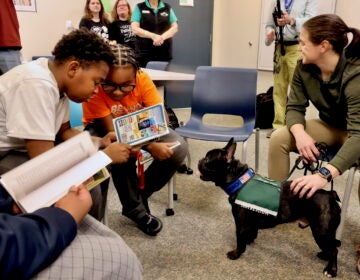
School let the dogs out: Philadelphia’s String Theory has a staff of 4-legged therapists
Every day, trained therapy dogs roam the halls of the Center City charter school, and they’re having a positive impact on student performances.
10 months ago
Listen 1:21How to contain an injured or sick animal
If you see an animal that appears sick or injured — for example, a bird that can’t fly or a squirrel that looks lethargic — try to safely contain it in a box, Glisan said.
She says to always wear gloves, and she recommends tossing a towel over the animal and then using the towel to scoop it up. You can also use a T-shirt for small animals like birds.
The Philadelphia Metro Wildlife Center in Norristown recommends the “box over method” as a safer option for any animal. Poke a few air holes in a cardboard box and place the box over the animal. Then slide a flat piece of cardboard under the box and duct tape it together.
Keep the animal in a dark, quiet place and minimize its interaction with humans to reduce stress.
Should I give injured or sick animals food and water?
Do not give a sick, injured or orphaned animal food or water.
“Imagine you’re at the hospital, you have an injury,” Glisan said. “What’s the first thing that they do — do they give you a ham sandwich? No. They want to treat the injury first.”
In certain situations, water can put animals at risk of drowning or developing hypothermia, Glisan said. Giving animals the wrong food can make them sick.
“They’re not going to starve in that hour or so it takes you to get here — or even a day,” Glisan said.
Where to bring sick, injured or orphaned wildlife in Philadelphia
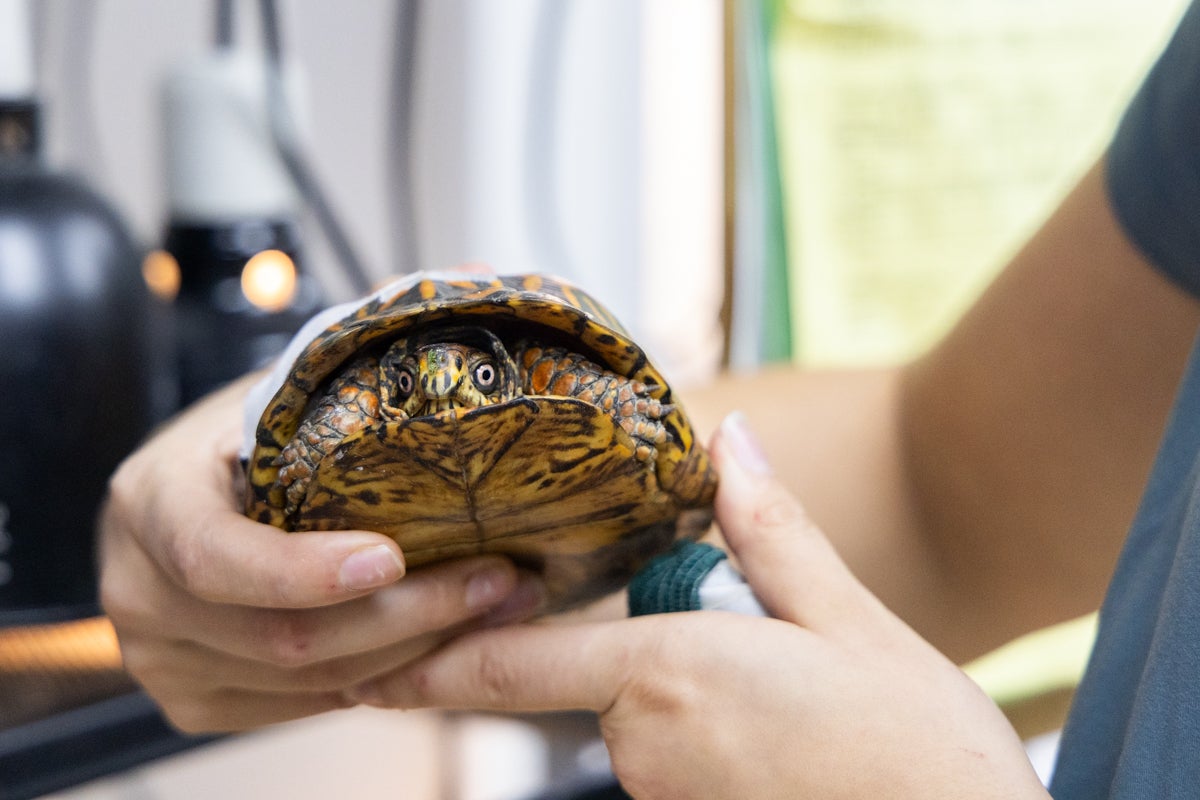
After containing the animal and determining it needs help, transport the animal to a wildlife clinic such as the Schuylkill Center, where staff and volunteers can perform X-rays, treat illnesses, splint broken bones, perform minor surgeries, feed baby animals and provide physical therapy.
The Schuylkill Center Wildlife Clinic in Upper Roxborough accepts wildlife species native to Pennsylvania that do not carry rabies, including birds, opossums, rabbits and squirrels.
The Philadelphia Metro Wildlife Center in Norristown accepts these species, as well as non-native birds, baby deer and animals that can carry rabies, such as raccoons, foxes, skunks, bats or groundhogs. The organization advises people to call before taking any action.
The Aark Wildlife Rehabilitation and Education Center in Chalfont, Pennsylvania, accepts some rabies-carrying species when space allows.
ACCT Philly also responds to reports of raccoons that are either sick or injured or inside a home — except for areas such as an attic, crawl space or inside walls. Most raccoons brought to ACCT are euthanized.
For injured adult deer, call the Pennsylvania Game Commission.
If you are not able to contain or transport the animal yourself, call Wildlife In Need, a network of volunteers in Pennsylvania that helps trap and deliver sick, injured or abandoned wildlife. Glisan also recommends asking family or friends for help transporting an animal, or even coordinating with the wildlife rehabilitation center to use a rideshare courier service.
-
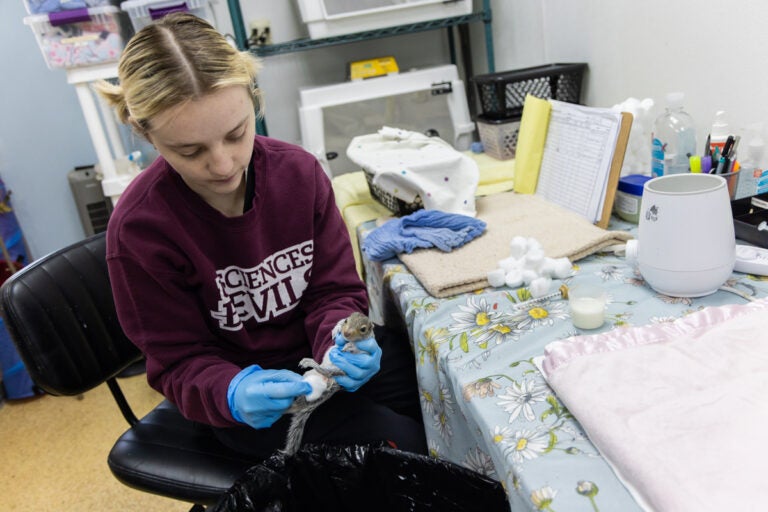
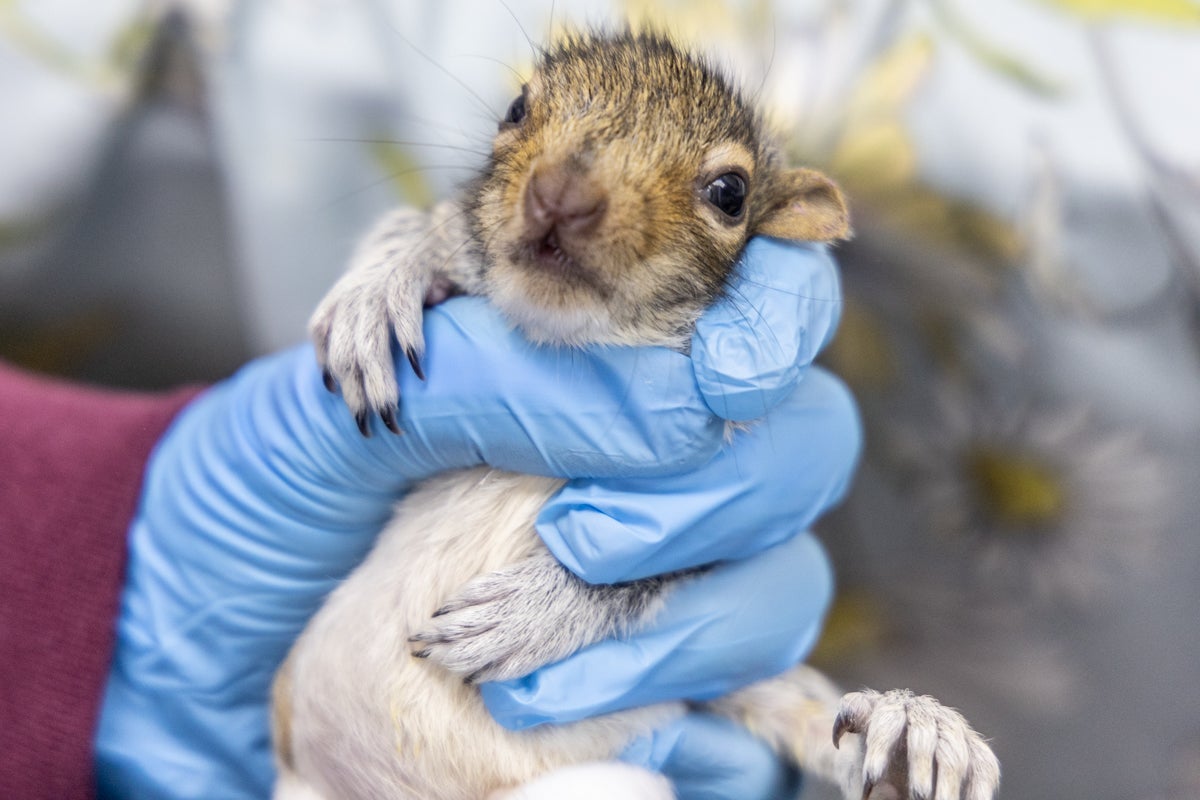
Part time wildlife rehabilitation assistant Jill Halbiger nurses a 4 week-old eastern gray squirrel at the Schuylkill Wildlife Rehabilitation Center in Philadelphia. (Kimberly Paynter/WHYY) -
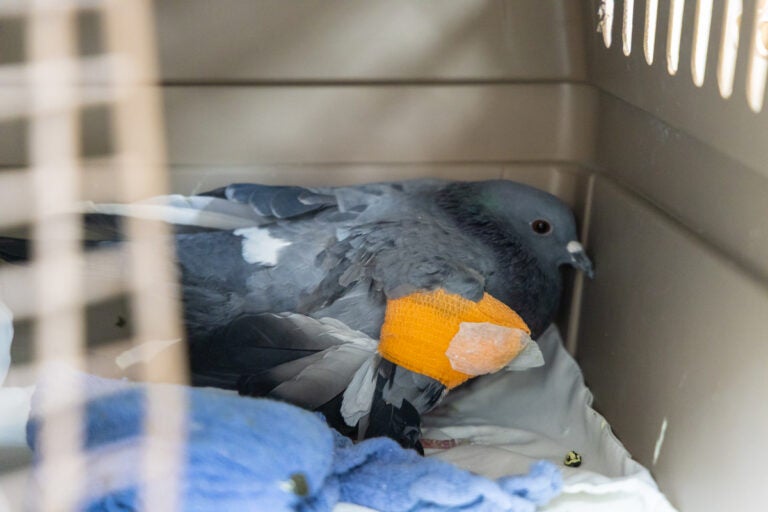
A young pigeon recovers from a wing injury at the Schuylkill Wildlife Rehabilitation Center in Philadelphia. (Kimberly Paynter/WHYY) -
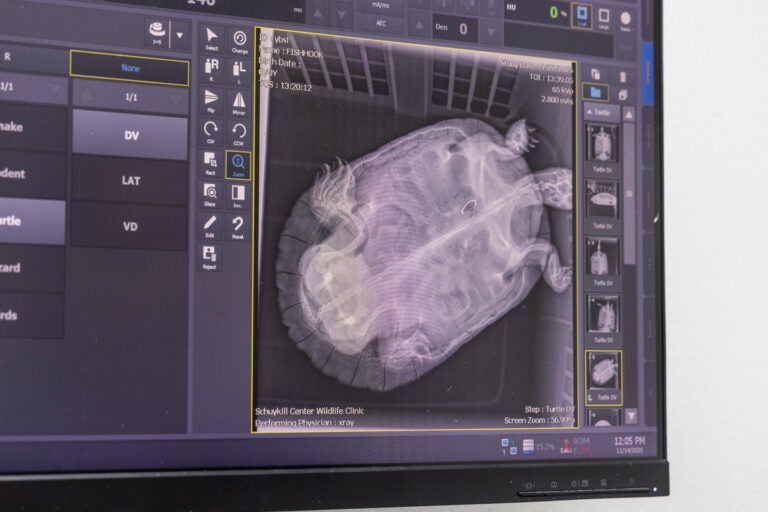
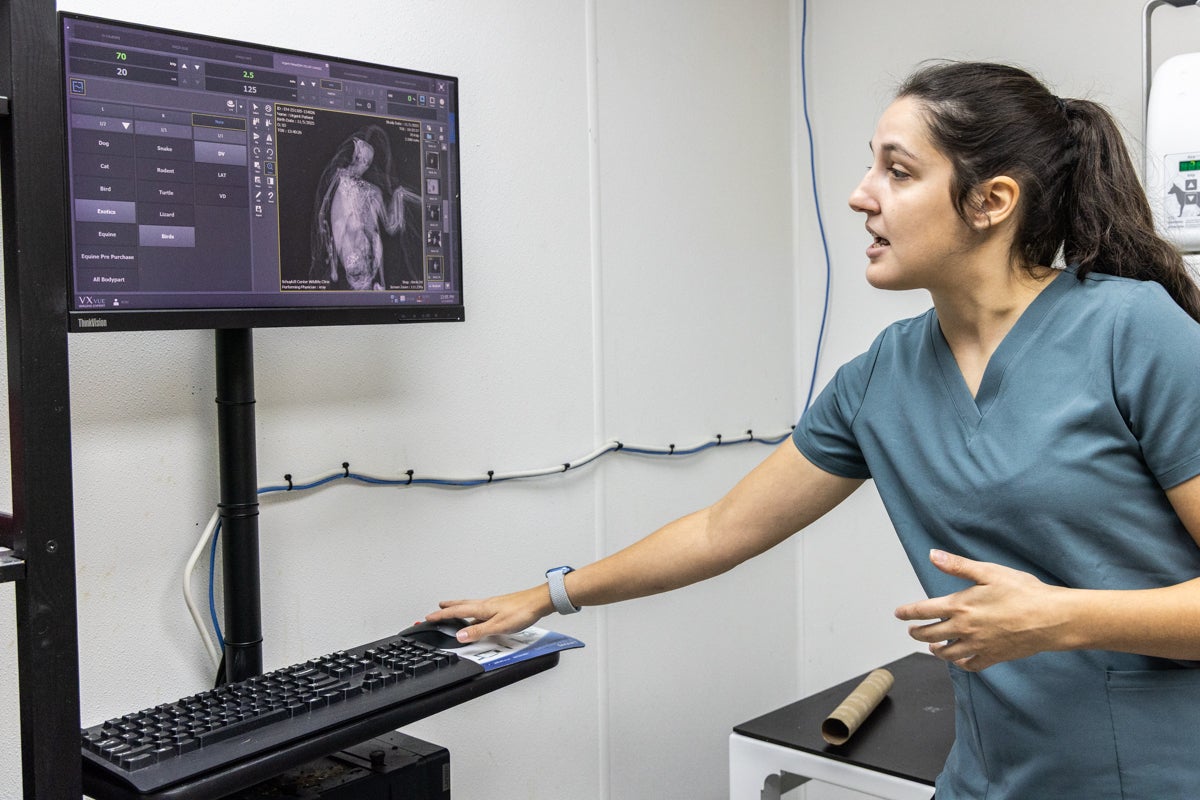
An x-ray shows a fishhook inside of a turtle at the Schuylkill Wildlife Rehabilitation Center in Philadelphia. (Kimberly Paynter/WHYY) -
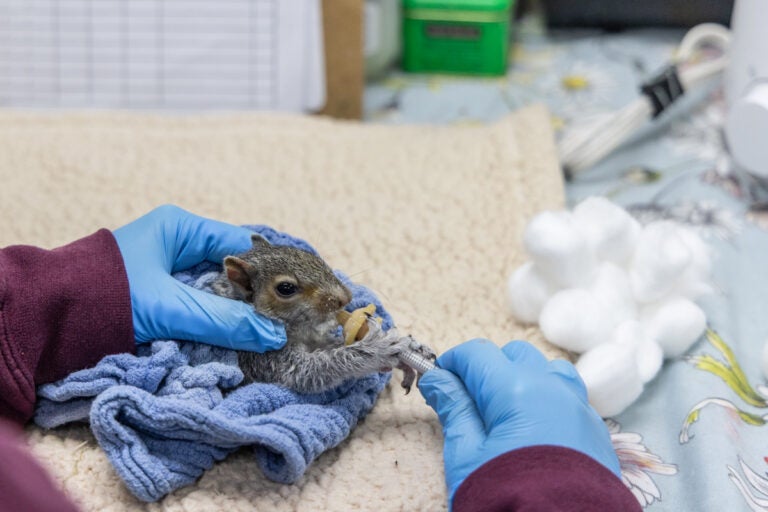
A 4 week-old eastern gray squirrel is nursed with squirrel formula at the Schuylkill Wildlife Rehabilitation Center in Philadelphia. (Kimberly Paynter/WHYY)

Get daily updates from WHYY News!
WHYY is your source for fact-based, in-depth journalism and information. As a nonprofit organization, we rely on financial support from readers like you. Please give today.

Too many deer are causing too much damage in New Jersey, officials say.
2 years ago
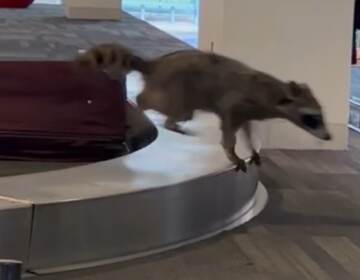
Raccoon runs rampant through Philadelphia airport baggage claim
Airport officials say raccoons visit the airport on occasion as it's surrounded by fields.
3 years ago
Under the new regulation, the state has the authority to “immediately” euthanize animals whose owners have not complied. Breeding is also forbidden.
3 years ago