

Want to make friends in Philly? These rugby players suggest a good tackle
From the city to pockets of Delco, rugby devotees have endured broken bones, torn ACLs and more than a few bruises. But to them, “all is good in the world.”
From Philly and the Pa. suburbs to South Jersey and Delaware, what would you like WHYY News to cover? Let us know!
Travis Hegasi first joined the Philadelphia Rugby Football Club in the spring of 2000. There were barely enough people to make a team.
Fifteen players on the field, and three subs, all locked in to support one another in a sport whose intensity, she says, can forge lifelong bonds.
“We went to battle, 18 of us,” the now 50-year-old veteran of the sport recalled on an early fall evening in Philadelphia’s Harrowgate neighborhood.
Now a coach with the gender-inclusive club, the third-oldest historically women’s rugby club in the United States, Hegasi looks out on a completely different scene.
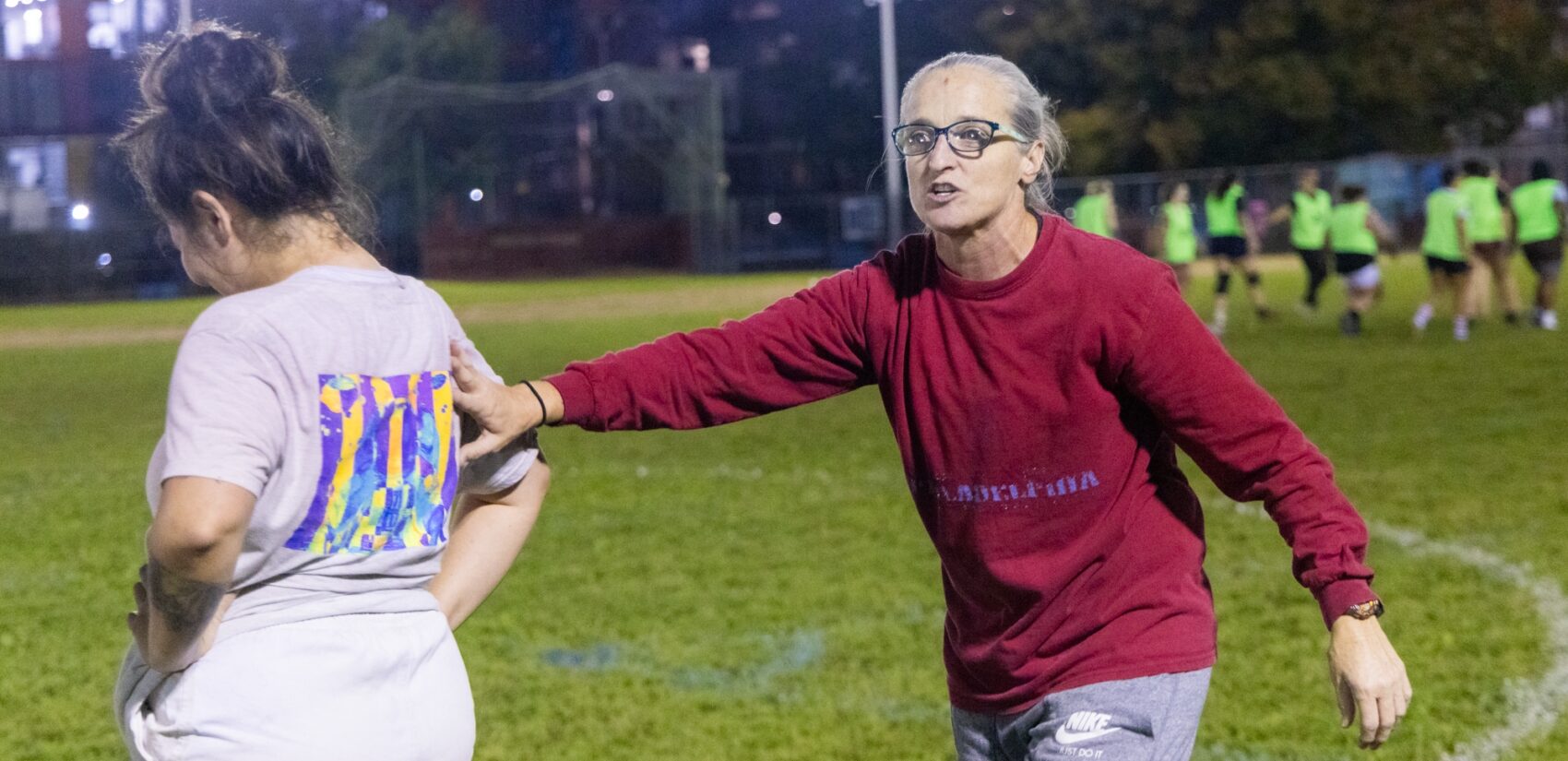
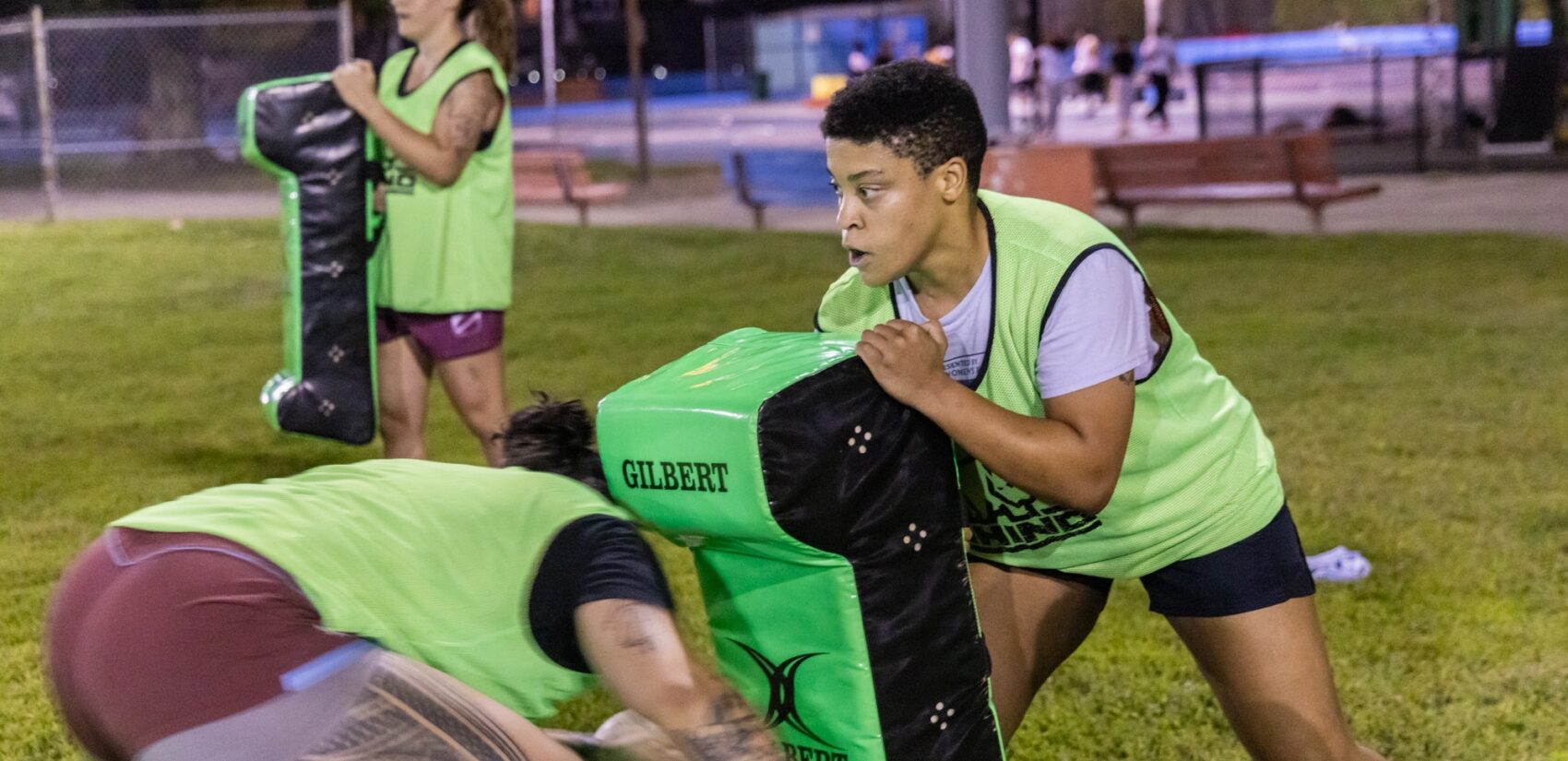
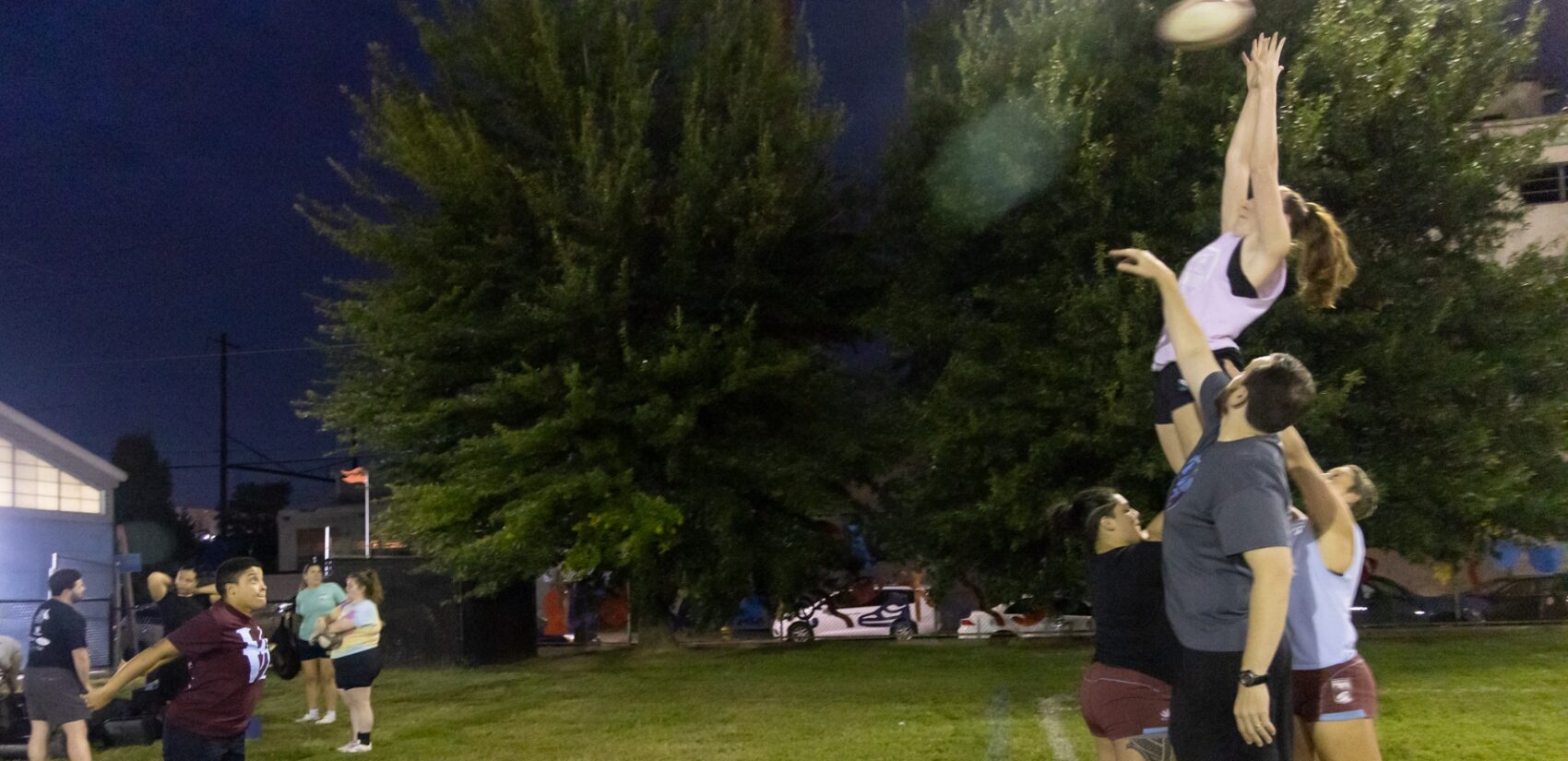
As a technicolor sunset begins to fade to night, dozens of players warm up beneath the bright LED lights illuminating the fields adjacent to the Joseph A. Scanlon Ice Rink & Playground.
At any given practice, the women’s-plus club fields as many as 60 players, enough to fill a roster for both Division I and Division III squads.
It’s evidence of what Hegasi says is the sport’s “amazing growth curve.” Rugby is one of the fastest-growing collegiate sports, by some measures, and club teams like Philadelphia Rugby Football have seen an “explosion in interest” since superstar Ilona Maher and the U.S. women’s team claimed a bronze medal at the 2024 Summer Olympics.
In Philadelphia, the surge in popularity for the sport has as its foundation a legacy built by a homegrown star.
Maryanne “MA” Sorensen, a Delaware County resident, played for Philadelphia Rugby from 1978 to 2001, nearly half of the club’s 50-year history. In 1991, she played on the first and so far only U.S. women’s national team to win the Rugby World Cup.
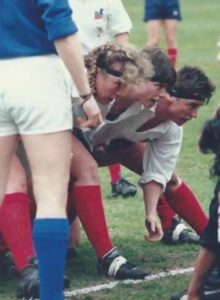
Sorensen, 70, fell in love with the sport as an undergraduate at the College of William and Mary, she told WHYY News in a recent interview. Since then, Sorensen said she hasn’t looked back. Her love for the sport is so deep she let nothing — not medical school, not broken bones nor 100-hour plus work weeks as a physician — keep her from rugby practice and games.
“You can’t be half-hearted about it,” she said. “You really get very emotional. You would give your life to your teammates, and I feel like it’s the one thing that you do in your life that makes sense.”
For Sorensen, the sport’s enduring appeal is simple: It’s “all the things that you couldn’t do as a kid.”
“You were told you can’t get dirty, you can’t do this, you can’t pass the ball, you can’t kick, you can’t tackle,” she said. “And then you just go out and you do it, and you prove them wrong.”
A ‘tough sport’ that fosters teamwork — and lifelong commitment
For Sorenson and other devotees, the sound of sweaty bodies slamming against ruck pads can only mean one thing: rugby practice. Players wipe their minds of their 9-to-5s and prepare themselves for 15-on-15s.
It’s akin to a battle.
“It’s a tough sport,” said Rachel Lambert, president of the Philadelphia Rugby Football Club. “You’re running into people, people are tackling you, and being able to pick yourself back up after that and just keep going can be tough, but it really helps me push myself mentally.”
Rugby, invented in England in the 1800s, is an ancestor of American football, but it is played without helmets or pads. Two teams of 15 — or in sevens rugby, two teams of seven — face off to advance an oval ball down the field, or pitch.
Play seldom stops as each team plays offense and defense alternately as the game unfolds. Players score points by touching the ball in the try-zone, similar to the end zone in American football, and advance the ball by running with it or kicking it. The ball can be passed to teammates, but only backwards or laterally — not forward.
The opposing team can tackle the ball carrier, but unlike football, play continues even when the player is on the ground.
Game time pauses if the ball goes out of bounds or if there’s a penalty.
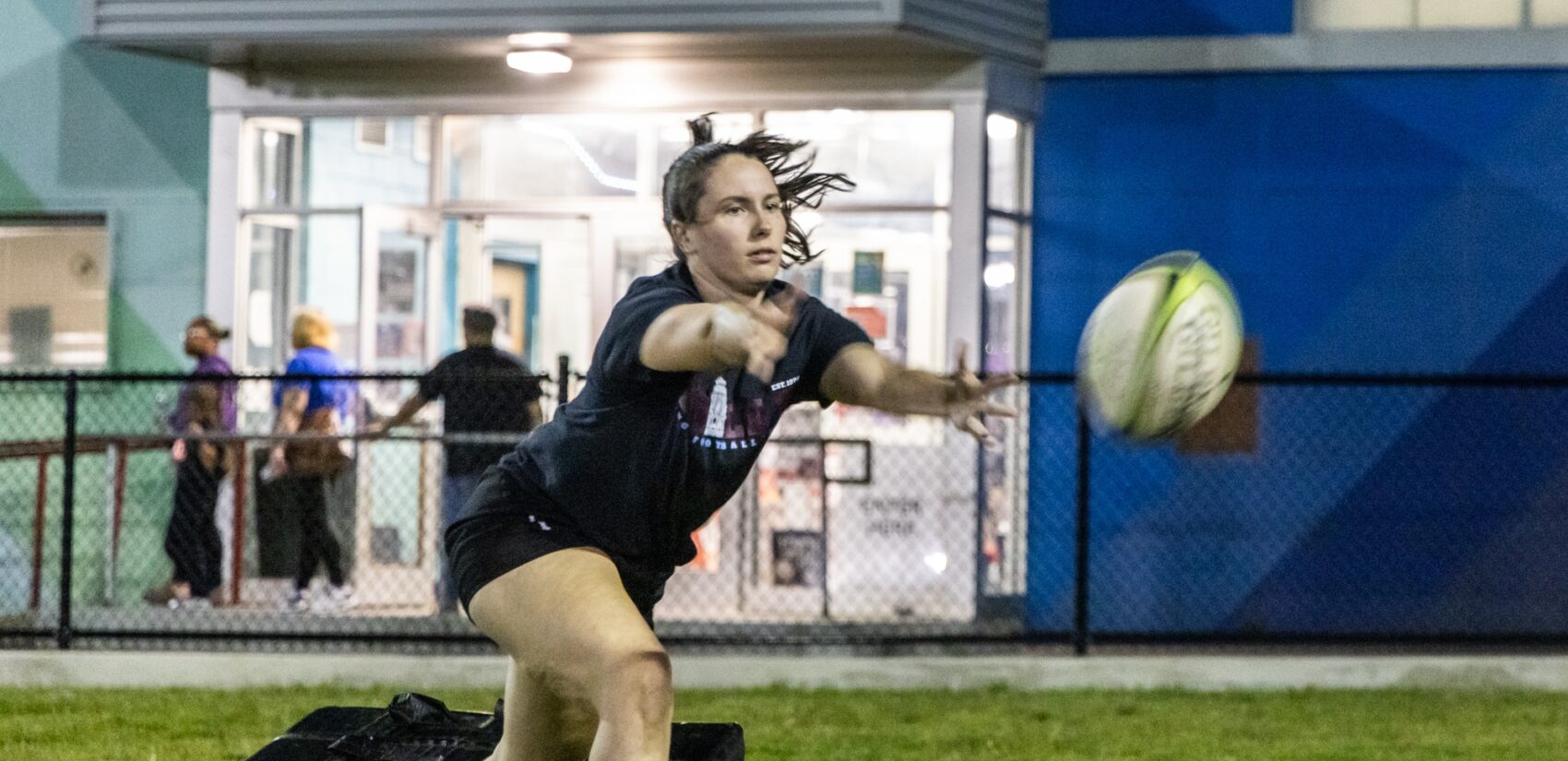
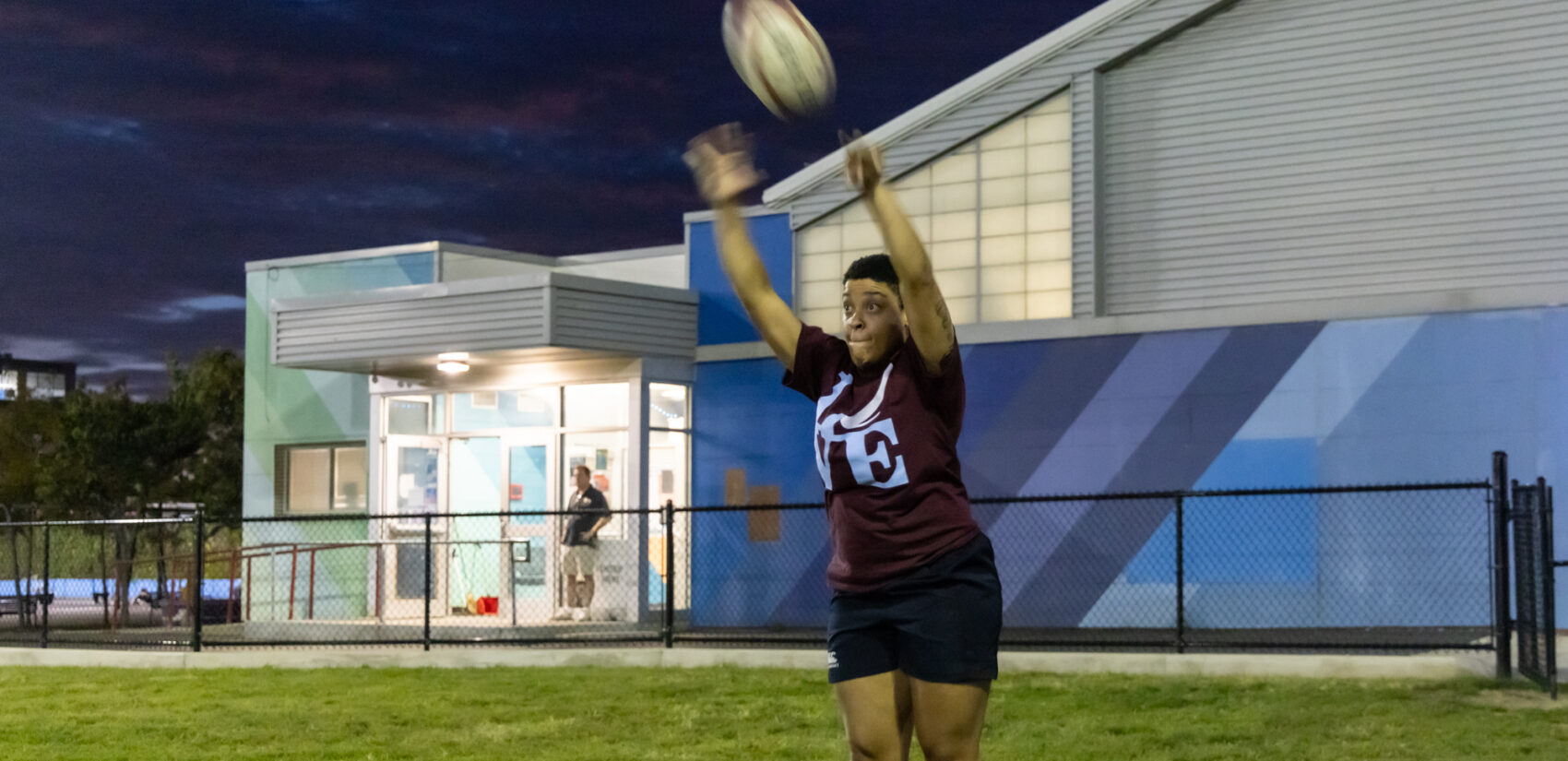
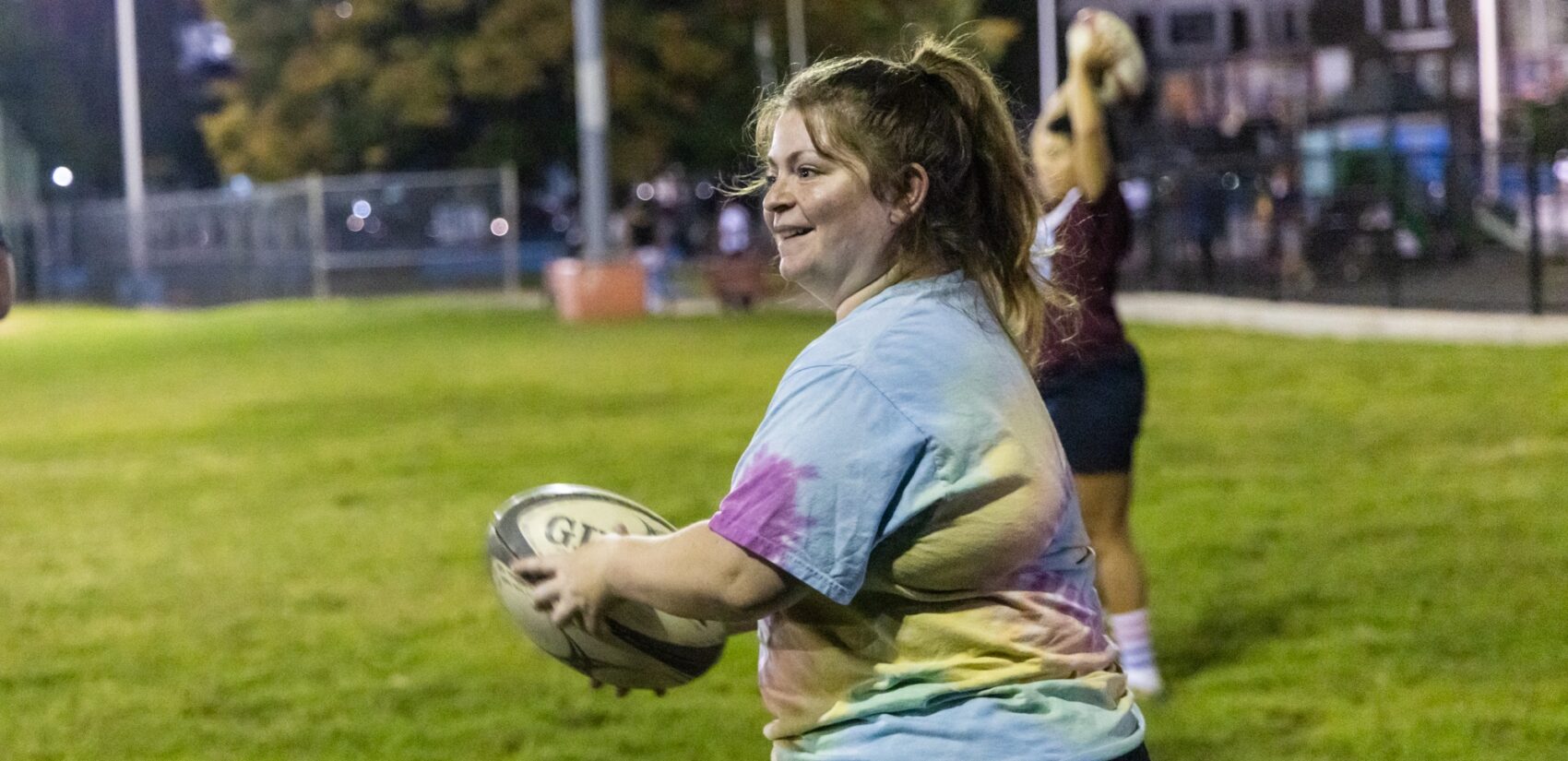
Brittany Sandoval, 34, said learning the rules represented “a steep curve” when she joined Philadelphia Rugby after her interest was sparked watching the 2024 Summer Olympics. She was never exposed to the sport growing up in Overbrook Park in Philadelphia.
Now in her third season on the D-III squad, Sandoval has fully embraced the oft-repeated phrase, “Every body is a rugby body.”
“I’m not the fastest, but I can hit pretty hard,” she said. “I’ve found a niche where the things that I’m strong at can do good for the team.”
Other players, like Savanna Beans, 25, come to the club after playing in college.
The sport offers a way to connect with people “in almost every corner of the world,” on the field and off, she said.
“It’s honestly pretty fulfilling when you’ve made that tackle, when you’ve made that hit, when you catch the ball on the run or make that pass completion to your teammate,” Beans said. “You just kind of feel a sense of community and togetherness because you’re building towards a bigger goal, which is ultimately trying to score or prevent the other team from scoring.”
Related Content
Adult recreational sports are booming. Here’s why Philadelphians keep showing up
Players say they're turning to leagues not just for exercise but for competition, connection and an escape from work and screens.
4 weeks ago
‘It’s like being in a car accident three times a week’
The game, players acknowledge, takes a physical toll.
Kim Watson, 34, is the captain of nearby Brandywine Women’s Rugby Club Football, based in Upper Chichester Township, Delaware County.
She has a long list of injuries sustained on the pitch, leaving her with screws and metal plates, scars, and even a dimple courtesy of a kick in the face.
Then there are those two torn ACLs.
“I did play with a torn ACL, both of them, when I knew because it was the last game of the season,” she said.
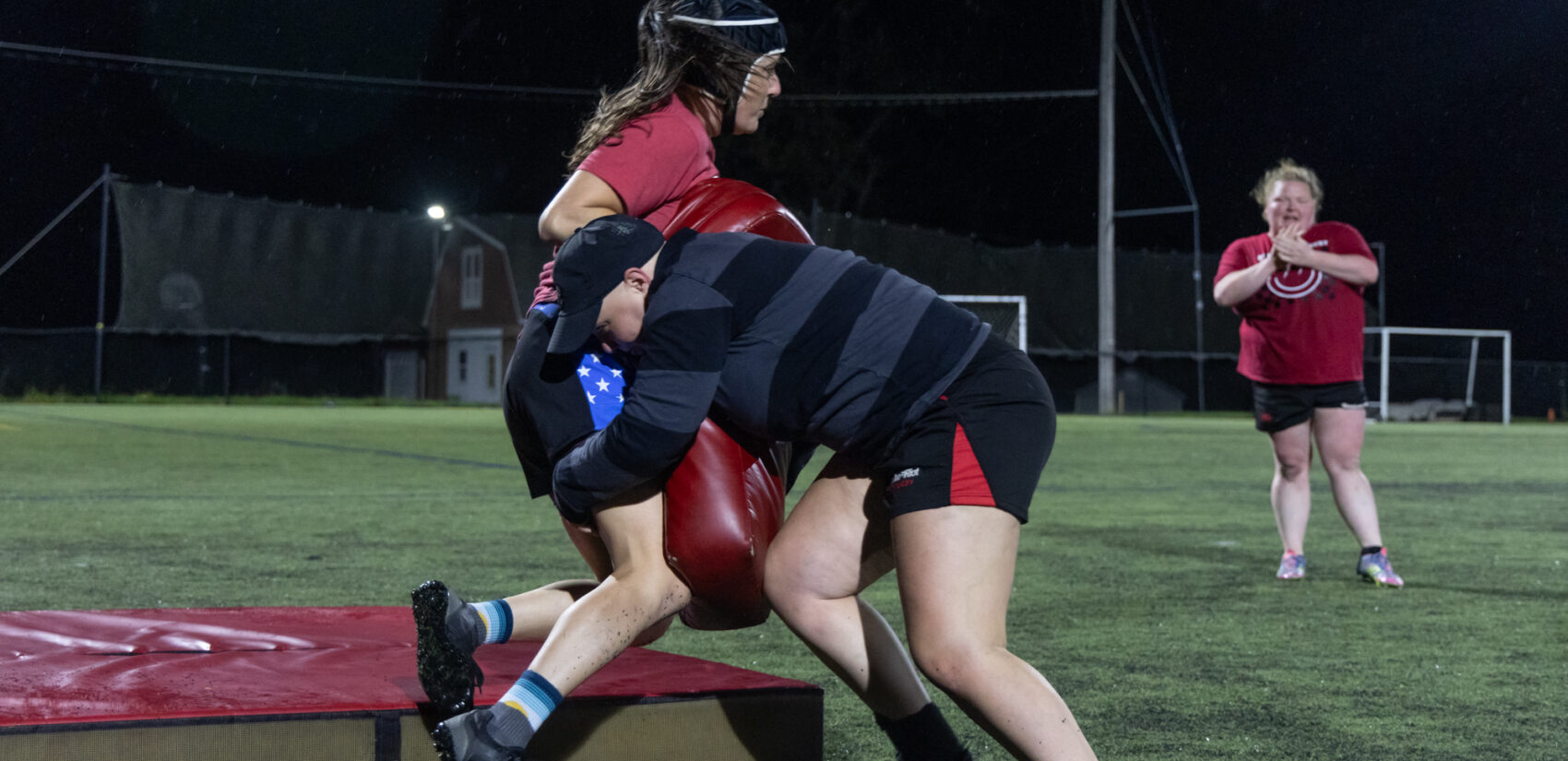
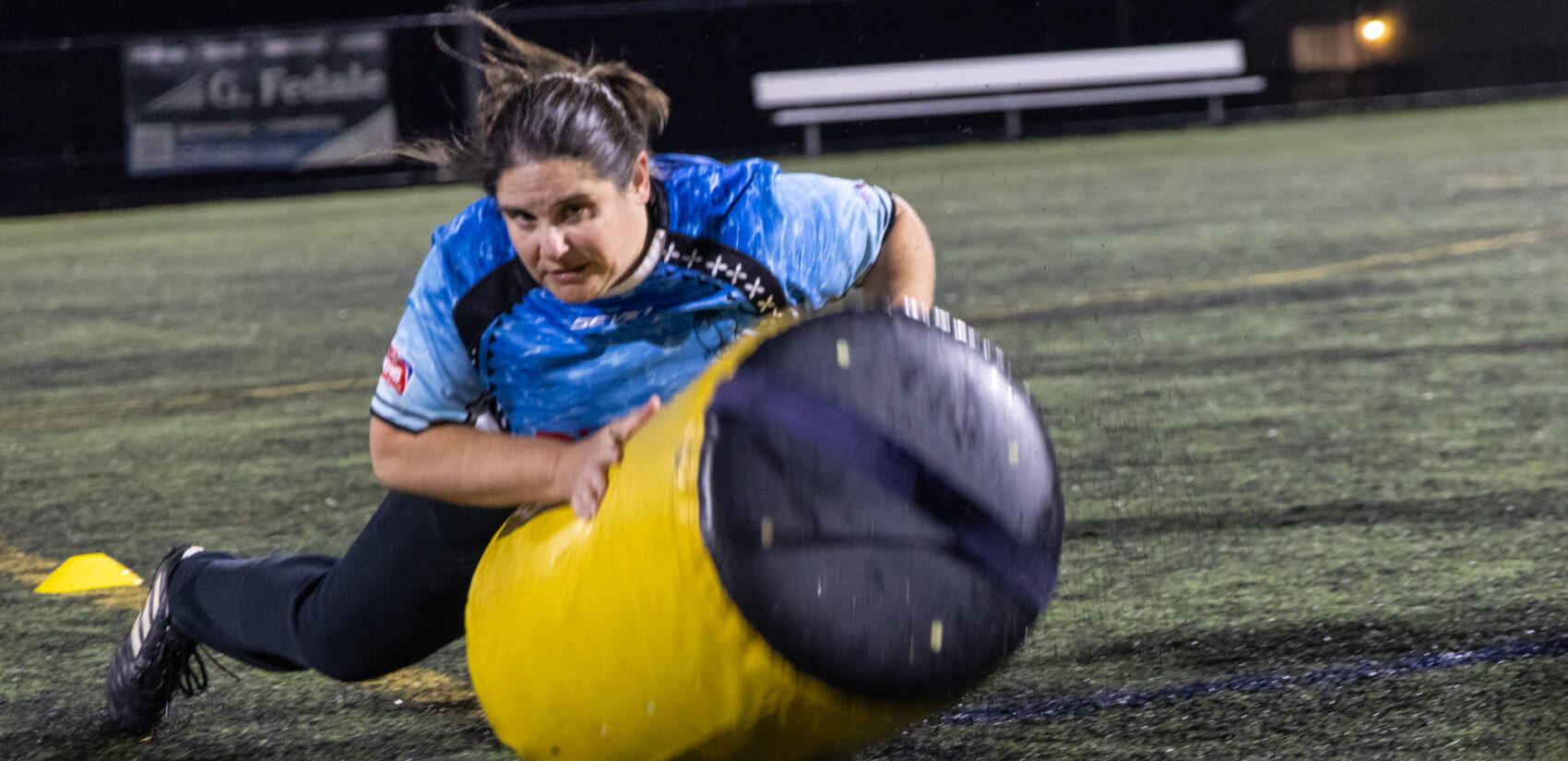
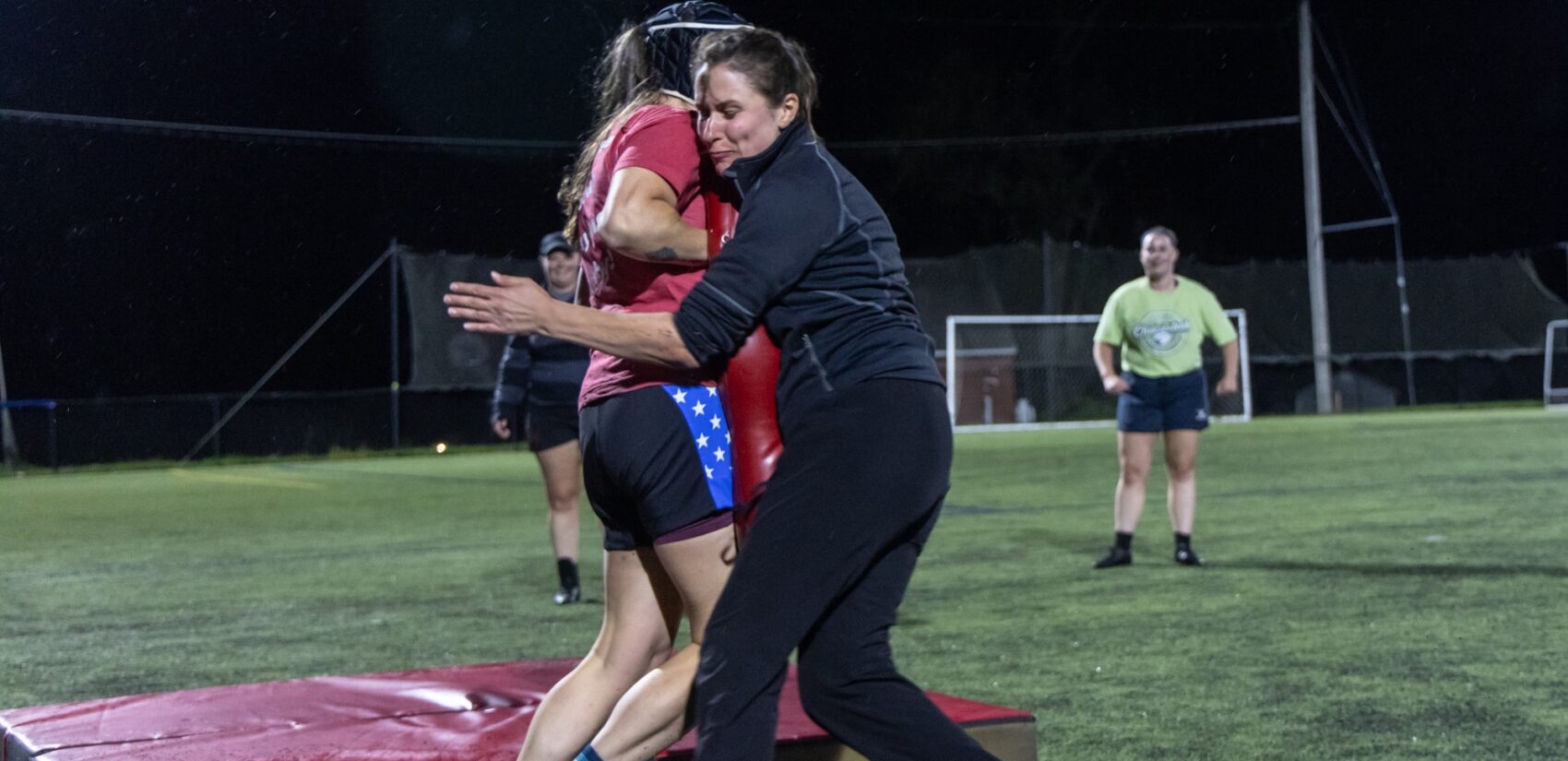
Playing through the pain apparently is endemic in the sport.
Sorensen recalled playing a match on a broken foot the day she first met her husband, who was watching from the sidelines.
“He thought I looked really intense,” she said. “He had no idea I was playing with a broken foot, so I was in pain the whole game.”
Even a game without any injuries leaves its mark on the body.
“It’s sort of like being in a car accident three times a week,” Sorensen said. “You kind of get used to it.”
That physicality makes you “feel like you would just do anything for your teammate,” Sorensen said.
“It’s almost like a medieval sort of response, like when people had to really fight for things,” she said. “I don’t know what it is. Maybe I’m just barbaric in nature … I sometimes feel like I’m sort of crazy that way.”
Stephanie Ottino, the 37-year-old president and assistant coach at the Brandywine club, agreed.
“There’s something special about rugby when you’re putting your body on the line for the person next to you on the field,” she said. “You just create a bond with those people that I never found in other sports that I’ve played in my life.”
Lindsay Watson, 45, is also a member of the Brandywine Club and Kim Watson’s spouse. Rugby, for her, has given more than bumps and bruises.
“Rugby has brought me my family. My captain is also my wife. My best friends are on this team,” she said. “No matter what happens at work or is happening in life otherwise, you could take 90 minutes out of your night and come do this: Hit a bag, hit a tackle, and all is good in the world.”
Related Content

Why is the youth sports industry booming? And how has privatization changed the culture on and off the field?
Air Date: September 1, 2026
Listen 51:11‘Saturday is a rugby day’
Hegasi, the Philadelphia Rugby coach, said she would like to see the sport continue to grow — and for facilities to improve in the region and across the U.S.
On a recent trip to a tournament in Australia, Hegasi said she saw much nicer facilities for the clubs there.
“I would love to see infrastructure for women’s rugby, real fields,” she said. At a recent practice, the team would have to “[fight] against grown men playing softball and fly balls coming at us because we’re sharing field space.”
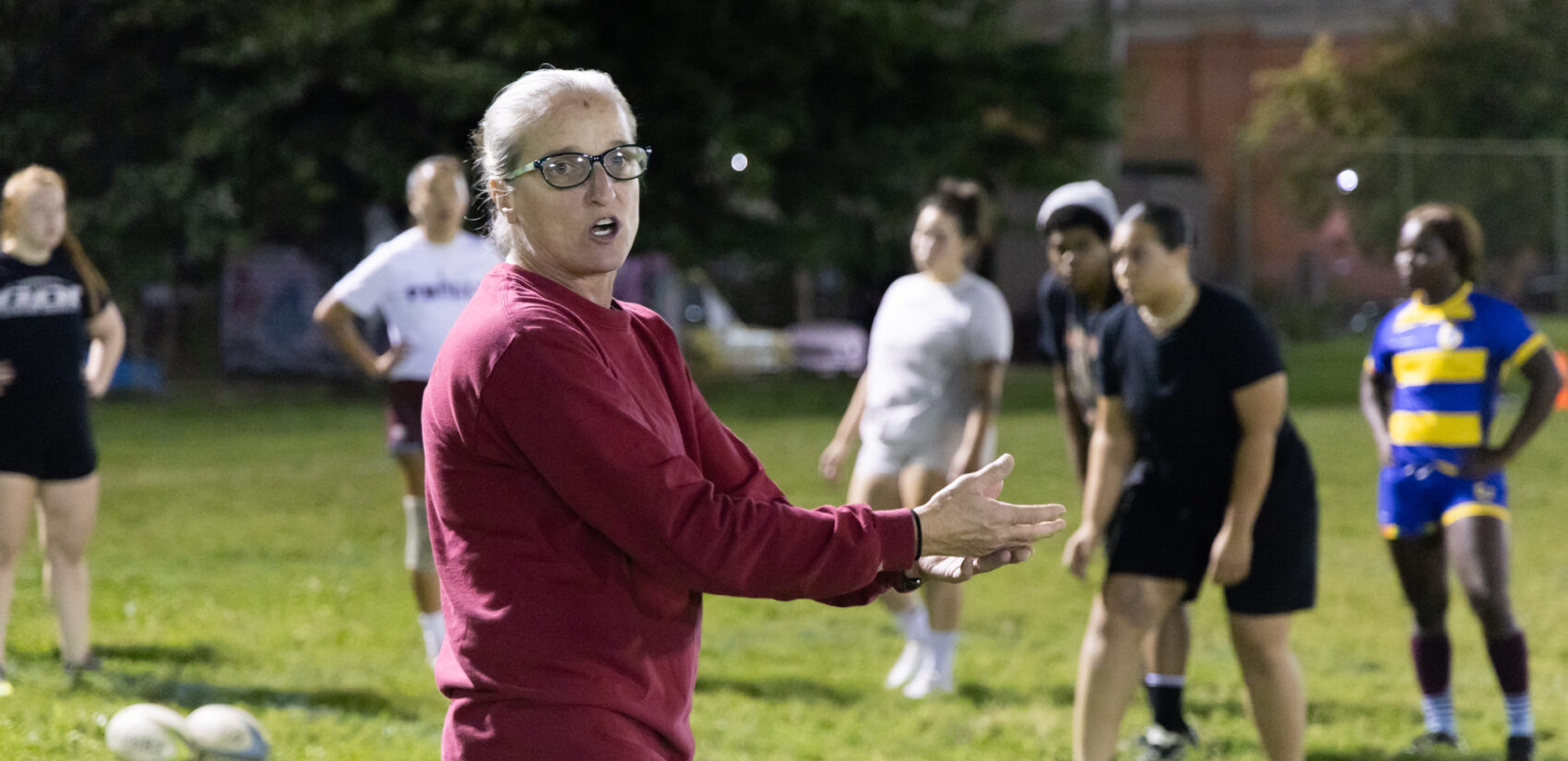
“Organically we’re growing every year,” she added. “We’re getting more and more players … But we need space for them. We need facilities for them.”
Even though space and resources are tight, Lambert, the club president, said the time they dedicate to the sport is set in stone.
“Some people like to say, ‘Saturday is a rugby day,’” she said.

Never miss a moment with the WHYY Listen App!


WHYY is your source for fact-based, in-depth journalism and information. As a nonprofit organization, we rely on financial support from readers like you. Please give today.

One Philly HBCU Week returns with football, music and more
The celebration of historically Black colleges and universities features two football games at Lincoln Financial Field, a performance by Ludacris and a Battle of the Bands.
4 weeks ago
Adult recreational sports are booming. Here’s why Philadelphians keep showing up
Players say they're turning to leagues not just for exercise but for competition, connection and an escape from work and screens.
4 weeks ago

The Olympic sport of curling is attracting new players in South Jersey
Members of the Jersey Pinelands Curling Club are traveling across the nation to participate in competitions.
1 year ago
Listen 1:13