

Philadelphia Ballet completes new building on North Broad
A black box theater and event space make the ballet’s new headquarters accessible by the public.

From Philly and the Pa. suburbs to South Jersey and Delaware, what would you like WHYY News to cover? Let us know!
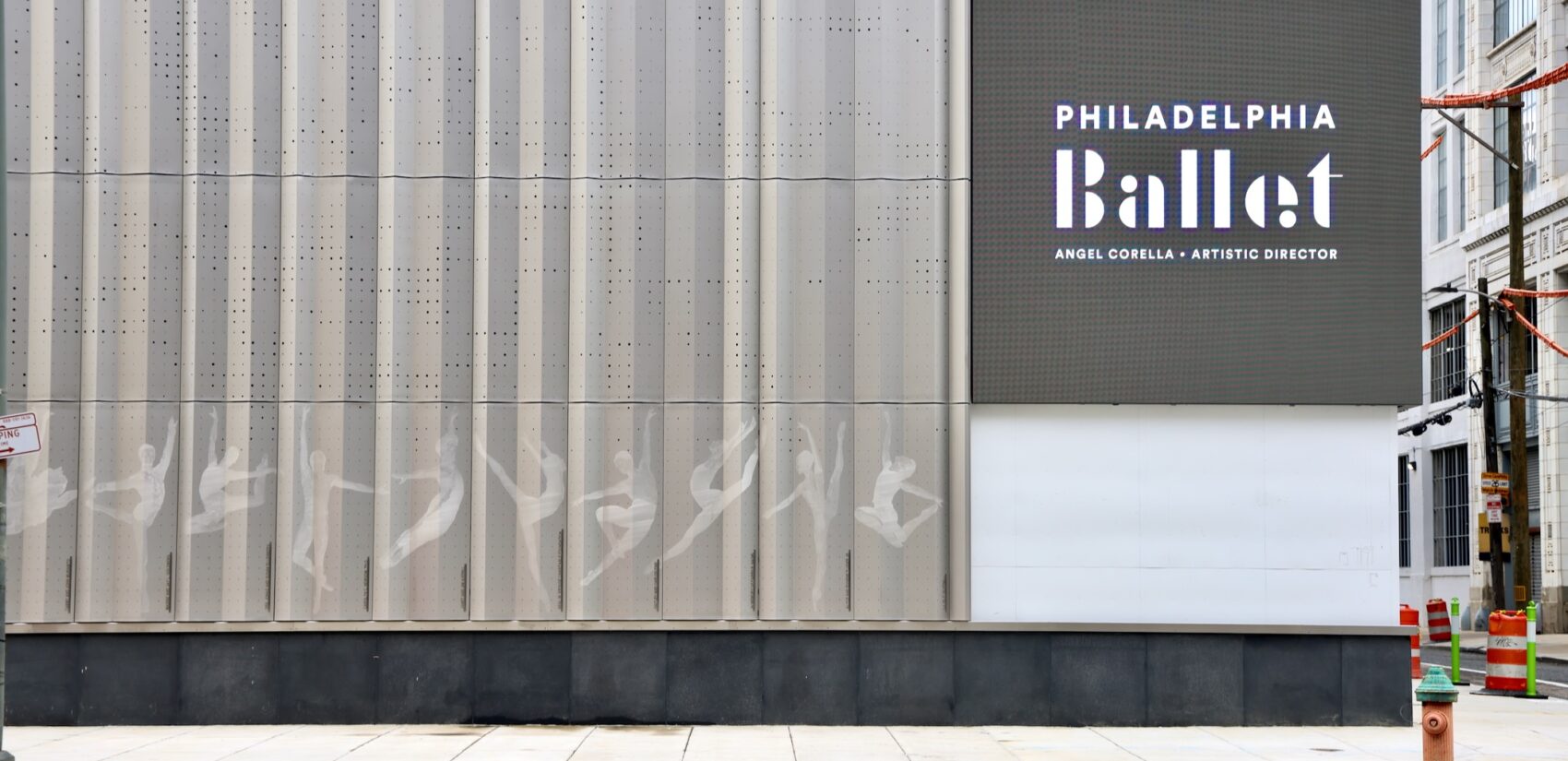
The new Philadelphia Ballet building acts as a literal beacon for the arts on North Broad Street. The four-story façade of stainless-steel panels is topped by a rehearsal space with floor-to-ceiling, wrap-around windows that cast a glow across Broad at night.
“I think that that’s a great way to introduce dance to the community,” Artistic Director Ángel Corella said. “Before we were almost hidden in the back. Now we’re very present on North Broad. We’re hoping that the Avenue of the Arts could be extended because we have The Met a few blocks up.”
The Ballet spent $35 million of a $50 million capital campaign to expand its cramped headquarters in a former garage on Wood Street set back from Broad. Professional dancers with the company often had to squeeze around students of the ballet’s school, sharing rest areas that were, in reality, hallway floors. There was never enough room for the administrative staff, some of whom worked in rented offices on South Broad a quarter mile away.
Due to structural limitations, little could be done to expand the original brick building. The new addition is a five-story tower in front of the original building, bringing the ballet’s presence up to the Broad Street curb. The new construction quadruples the company’s square footage.
“The dancers keep saying, ‘Now it really feels like a real company,’” Corella said. “It’s not only a building but the heart and the life of the dancers for what they have to do to be able to do what they do on stage. They’re athletes and they deserve a space that not only is going to take care of them physically but also emotionally.”
The new building supports the dancer’s athletics
The Philadelphia Ballet has a company of 51 dancers. By comparison, there are 53 players on the Philadelphia Eagles, but the two training facilities were worlds apart.
The Eagles have a 108,000-square-foot training facility sitting on 22 acres in South Philadelphia. Recently renamed the Jefferson Health Training Complex, the Eagles are looking to expand it further, according to the Philadelphia Business Journal.
The Philadelphia Ballet’s original 15,000-square-foot building had a space for training and physical therapy approximately the size of a janitor’s storeroom. Company dancers shared bathrooms with ballet students, so about 200 people were using a single pair of gendered bathrooms.
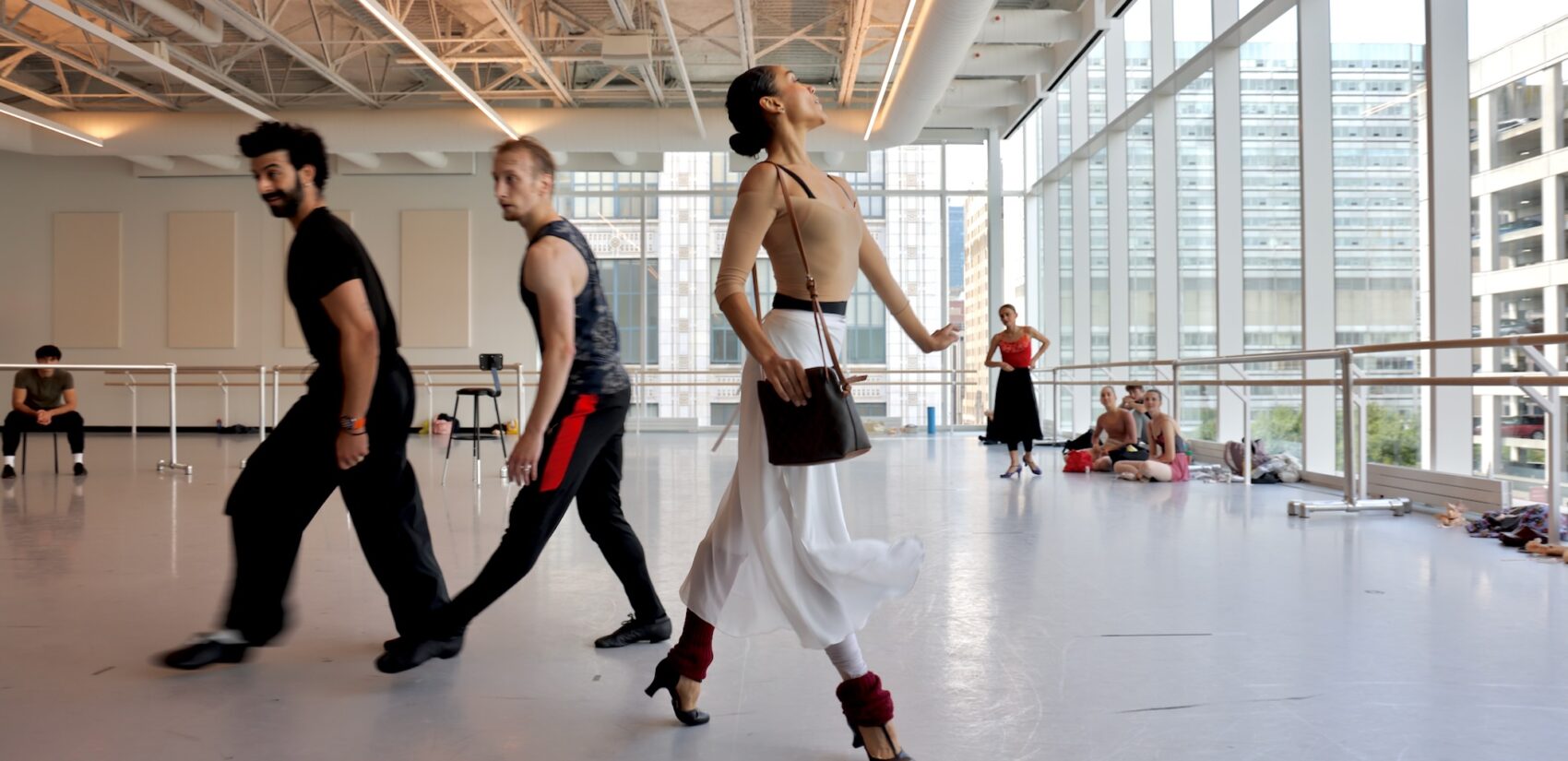
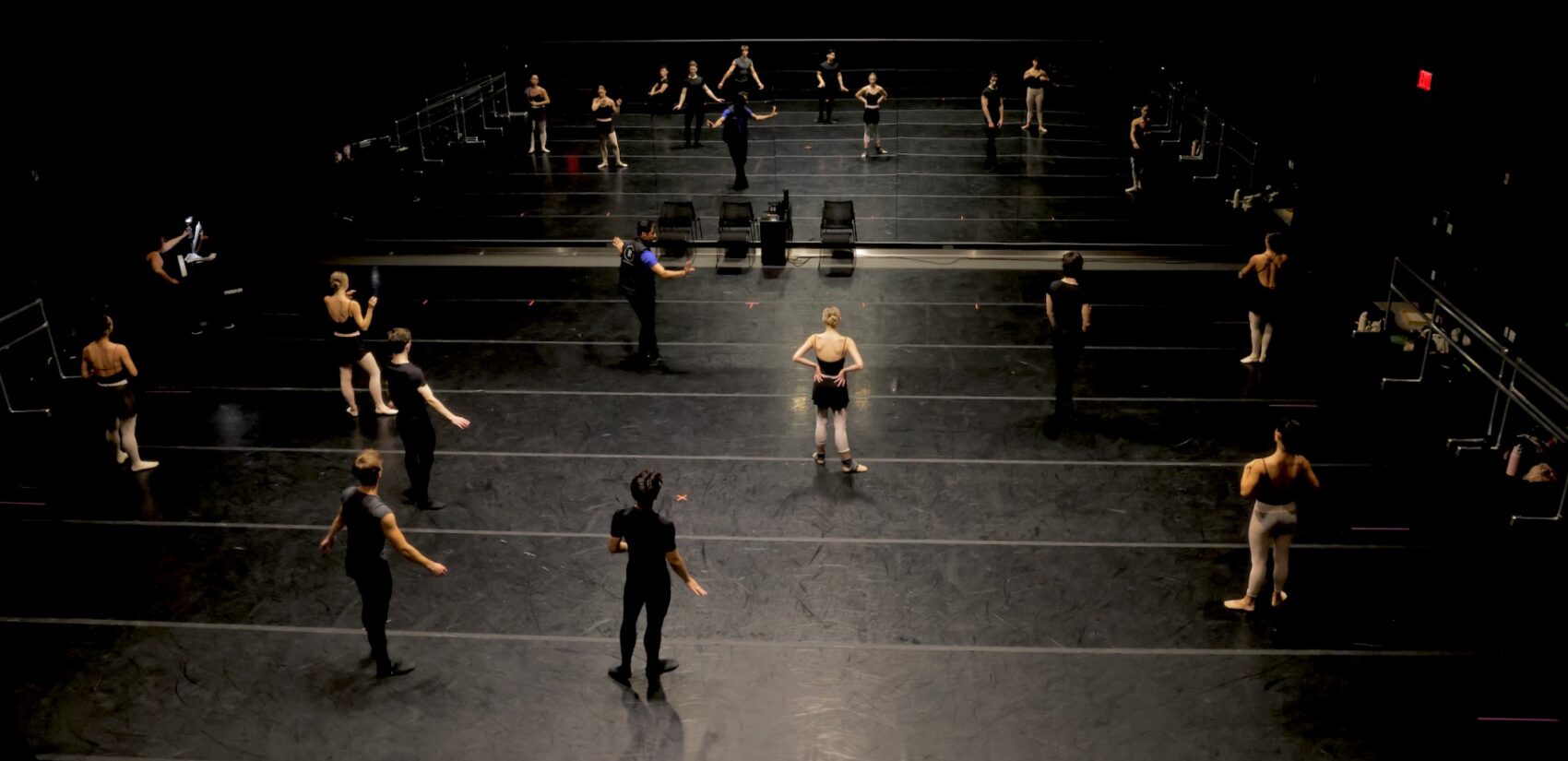
The original building had four dance studios, but no single studio was large enough to replicate the stage at the Academy of Music, where the ballet typically performs. Large-scale productions like “The Nutcracker” and “Swan Lake” had to be broken up into sections because there was no space to rehearse the full show.
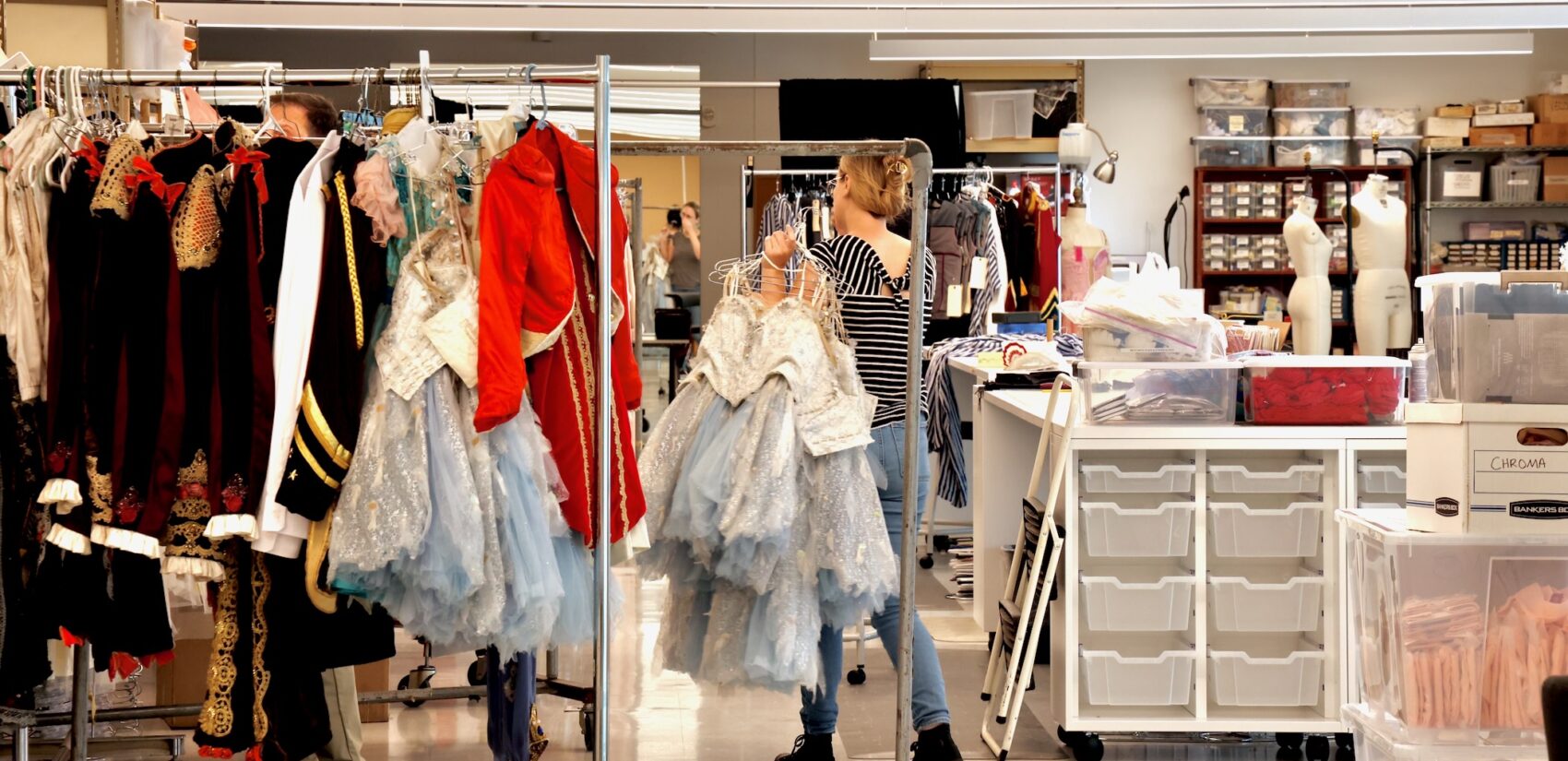
Four thousand pairs of dance shoes – each dancer has a customized, handmade set – were stored in a hallway. Shoe coordinator Kirsten Galler had to go outside to the alley to treat the shoes. She now has her own dedicated room.
“I can’t express how much easier my job is, not being in the hallway,” Galler said. “Spraying and working on those shoes sometimes in the alleyway because that was the safest option for everybody. Now we have a room specifically for that and then they get time to properly ventilate and be ready for the dancers. This offers us the chance to do fittings.”
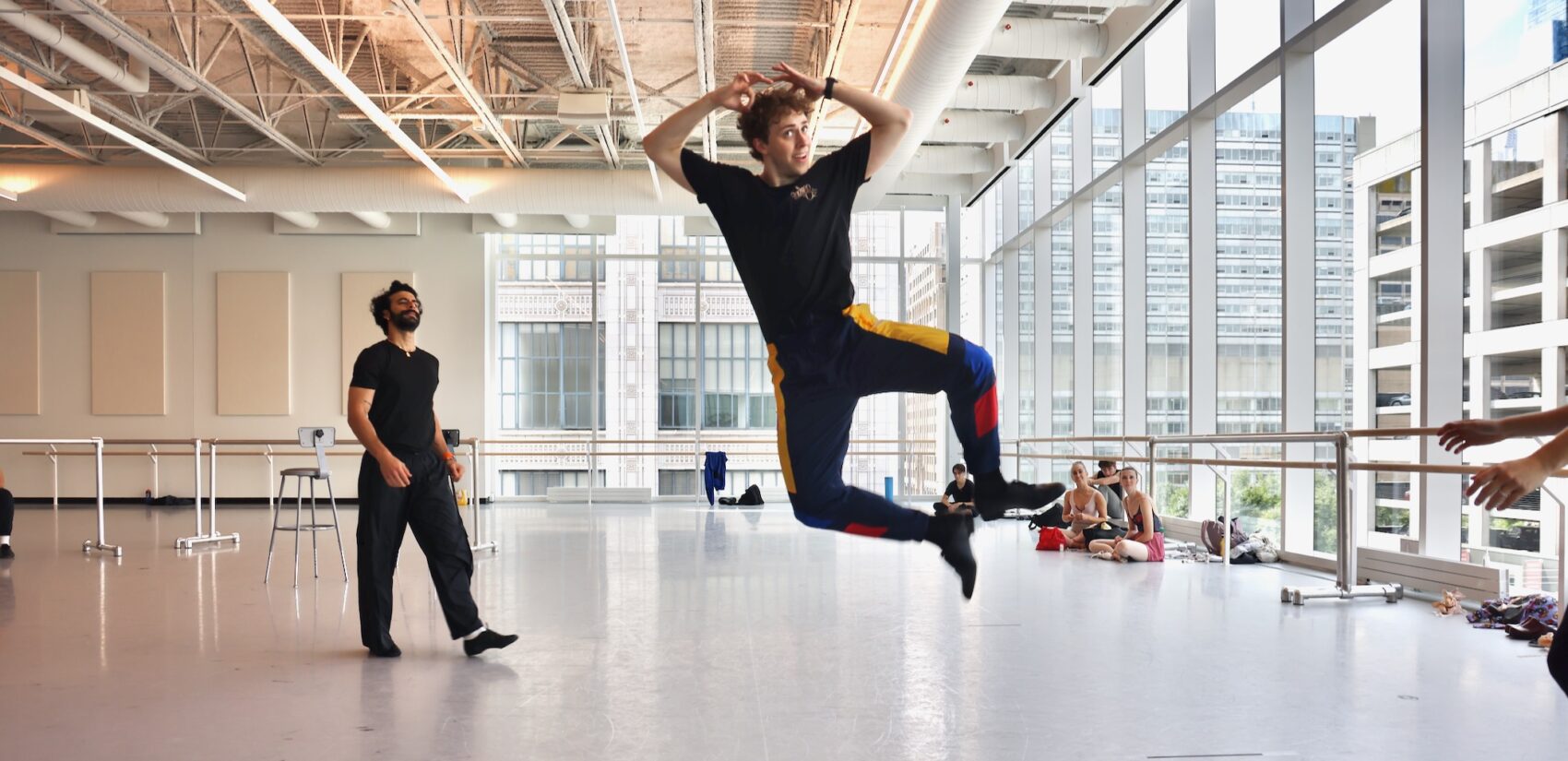
CEO Shelly Power said the new building satisfies the dancer’s needs to comfortably train, rehearse and recover, but also addresses the needs of students and parents.
“It’s a holistic approach,” she said. “A student that comes in that’s training all day long, they’re going to school at the same time. So we have a ‘cyber school’ we call it. It’s an area where they can go if they have a tutor, they can bring a tutor in. They can have a quiet space to get their homework done.”
Parents who drop their kids off at dance class can remain onsite in a lounge area with Wi-Fi internet and a kitchen. The lounge doubles as a lobby for a black-box space that is fully rigged with theatrical technology that can seat about 130 people.
Related Content
Philadelphia’s Academy of Natural Sciences museum is closing
The Academy will continue scientific research and public education, but its museum will go the way of the dinosaur.
1 month ago
Listen 1:00Designed as a public asset
The black box theater is what gives the Philadelphia Ballet building its other critical element: public accessibility. People can attend performances and events in the theater and its lobby. Outside performance companies will be able to rent it.
Architect Stephen Varnhorst said one of the challenges to the design was placing the black box theater in front of the building, eliminating the possibility of doors and windows that buildings typically use as frontage elements. To add curbside interest, he designed the façade with vertical stainless-steel panels etched with 26 life-sized dancing figures, each one modeled after a company dancer.
Varnhorst, who studied other dance company buildings in other cities before designing this one, said it is rare for a ballet company to have such a public-facing headquarters.
“The Ballet owned the land out to Broad Street from the existing building, so we had an opportunity to put a face to the ballet on Broad Street,” he said. “It’s really an unusual opportunity.”
The Ballet’s main performance venue will continue to be the Academy of Music on South Broad Street. Power said the ballet and its neighbors the Pennsylvania Academy of the Fine Arts and the Met concert venue are expanding Center City’s arts corridor up to Temple University, which is now constructing a 200,000-square-foot Caroline Kimmel Pavilion with performance spaces.
“Taking the Avenue of the Arts on the other side of City Hall and extending it all the way up to the Met and beyond, all the way to Temple,” she said. “This is just extending it all the way up North Broad.”
The official ribbon cutting for the Philadelphia Ballet’s building is scheduled for Sept. 18. Its first performance of the 2026-27 season will be “Stars and Stripes Forever” Oct. 8-11, a tribute to America’s semiquincentennial. It will feature George Balanchine’s “Stars and Stripes” and “Who Cares?,” Eliot Feld’s “Variations on ‘America,’” and Jerome Robbins’ “Fancy Free,” which inspired the 1944 Broadway musical “On the Town.”
Editor’s note: This story has been updated to reflect Shelly Power’s correct title, the correct number of previous dance studios the Philadelphia Ballet had and the correct date for the building’s opening.

Get daily updates from WHYY News!
WHYY is your source for fact-based, in-depth journalism and information. As a nonprofit organization, we rely on financial support from readers like you. Please give today.
A summer camp of singing and dancing is the first run-through of the ballet building’s community accessibility.
4 months ago
Philadelphia Ballet dancer makes his ‘Nutcracker’ solo debut after recovering from cancer
At this time last year, Nicholas Patterson could barely walk from chemotherapy. Now he is dancing with the Sugar Plum Fairy.
10 months ago
Listen 2:23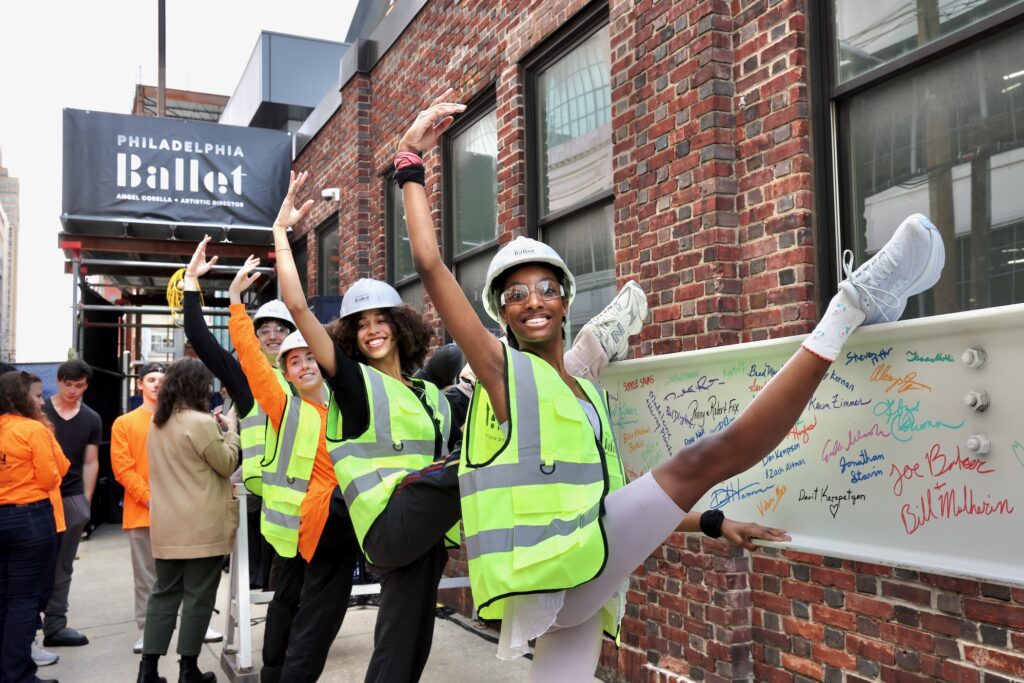
Philadelphia Ballet nears completion of its North Broad building
The Center for Dance will quadruple the ballet’s size and include community spaces.
2 years ago
Listen 1:20