

‘Not out of the woods’: More flooding possible Monday as rare fall nor’easter continues to hammer the Jersey Shore
Shore towns saw the worst of the storm this weekend. Officials say more flooding may come.

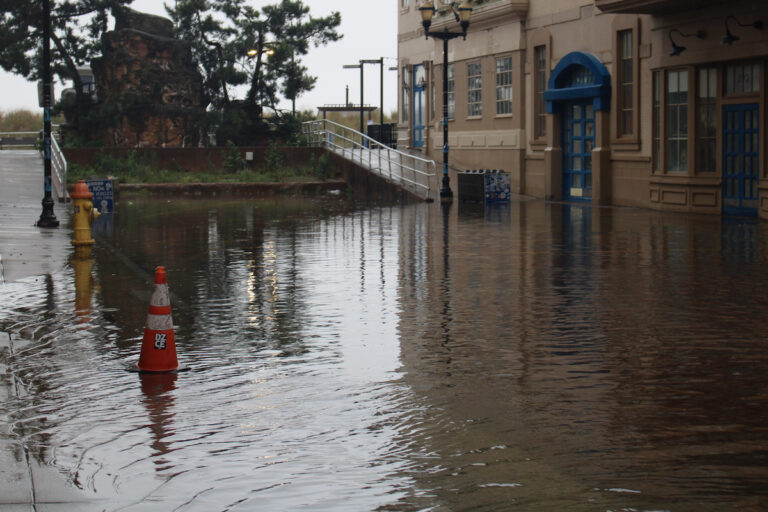
Roadways are partially flooded Sept. 26, 2026, in Atlantic City, New Jersey, as a nor’easter hit the East Coast. (Emily Neil/WHYY)
From Philly and the Pa. suburbs to South Jersey and Delaware, what would you like WHYY News to cover? Let us know!
Coastal communities in New Jersey remain on high alert Sunday as a rare September nor’easter continues to bring rain and wind to areas flooded a day earlier.
High tides caused significant flooding in the Atlantic City area Saturday. Gov. Mikie Sherrill said first responders rescued dozens of people after floodwater between 2 and 3 feet swept through homes and vehicles.
“We’re not out of the woods just yet,” Sherrill said at a news conference Sunday.
Severe dune loss on Atlantic City beaches has also been reported, and with continuing high tides, Sherrill said more flooding could be expected into Monday.
So far, no deaths have been reported in New Jersey. The full extent of damage will likely remain unknown until floodwaters recede and the rain stops.
“I ask that you stay vigilant and continue to watch for updates so you’re prepared if conditions change,” Sherrill said.
Related Content
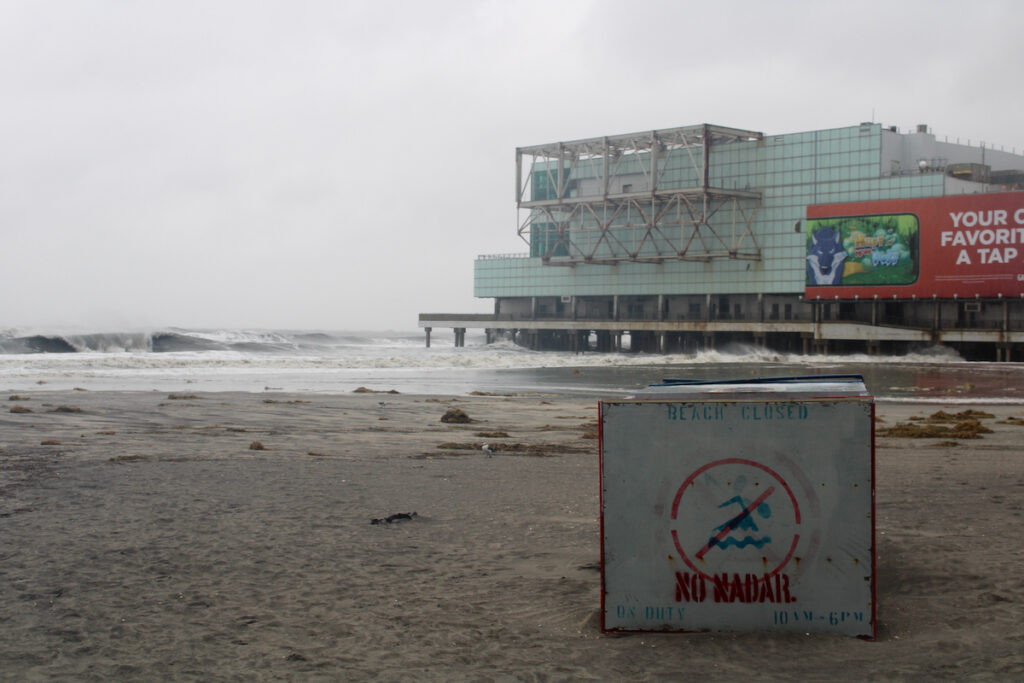
Nor’easter hits Philadelphia region, bringing high waves, coastal flooding to N.J. and Delaware
New Jersey Gov. Mikie Sherrill has issued a state of emergency for eight counties, with some shore towns issuing voluntary evacuation orders.
3 weeks ago
As of 3 p.m. Sunday, PSE&G was reporting 105 active power outages affecting more than 2,500 customers. PECO reported over 100 power outages affecting nearly 2,200 customers. In Delaware, Delmarva Power reported 33 outages affecting more than 800 customers, and the Delaware Electric Coop reported 660 affected customers.
New Jersey issued a state of emergency on Friday ahead of the storm, and FEMA and DHS activated their emergency responses in preparation.
Nor’easters are cold-core storms fueled by contrasts between warm and cold air, unlike hurricanes, which are warm-core storms fueled by warm ocean water. Nor’easters can happen year-round, but they’re most common in winter — making a September storm relatively unusual.

Never miss a moment with the WHYY Listen App!


WHYY is your source for fact-based, in-depth journalism and information. As a nonprofit organization, we rely on financial support from readers like you. Please give today.
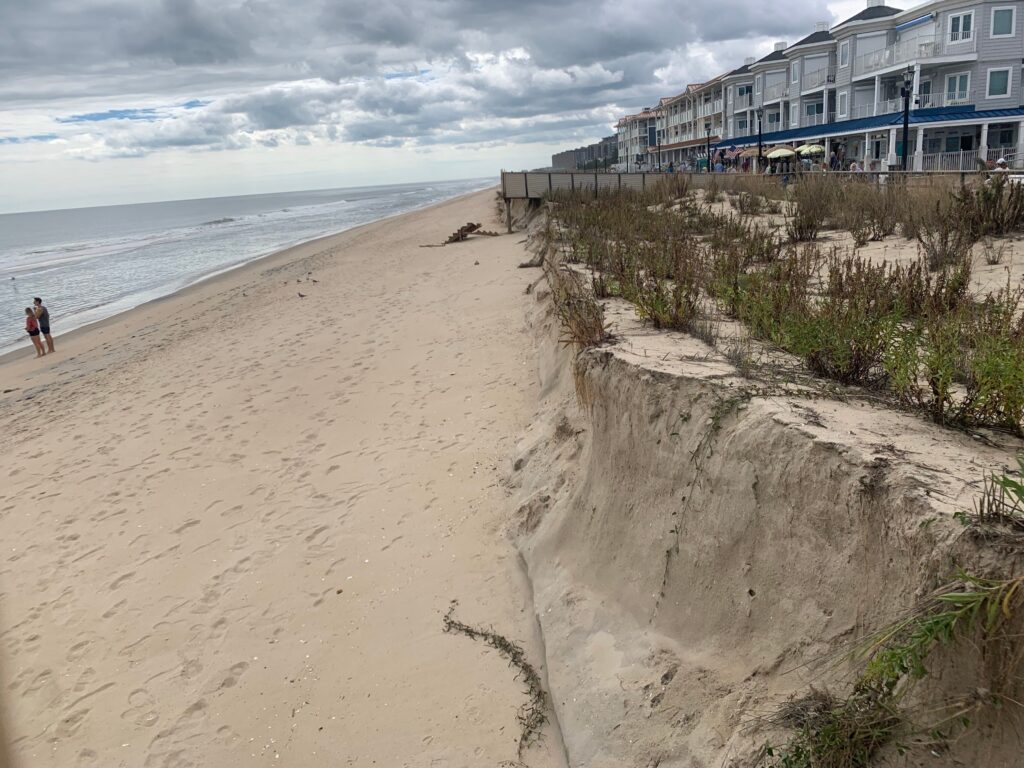
Some beaches saw significant dune loss following the recent nor’easter. However, regular nourishment projects are almost fully federally funded.
5 days ago
Listen 1:06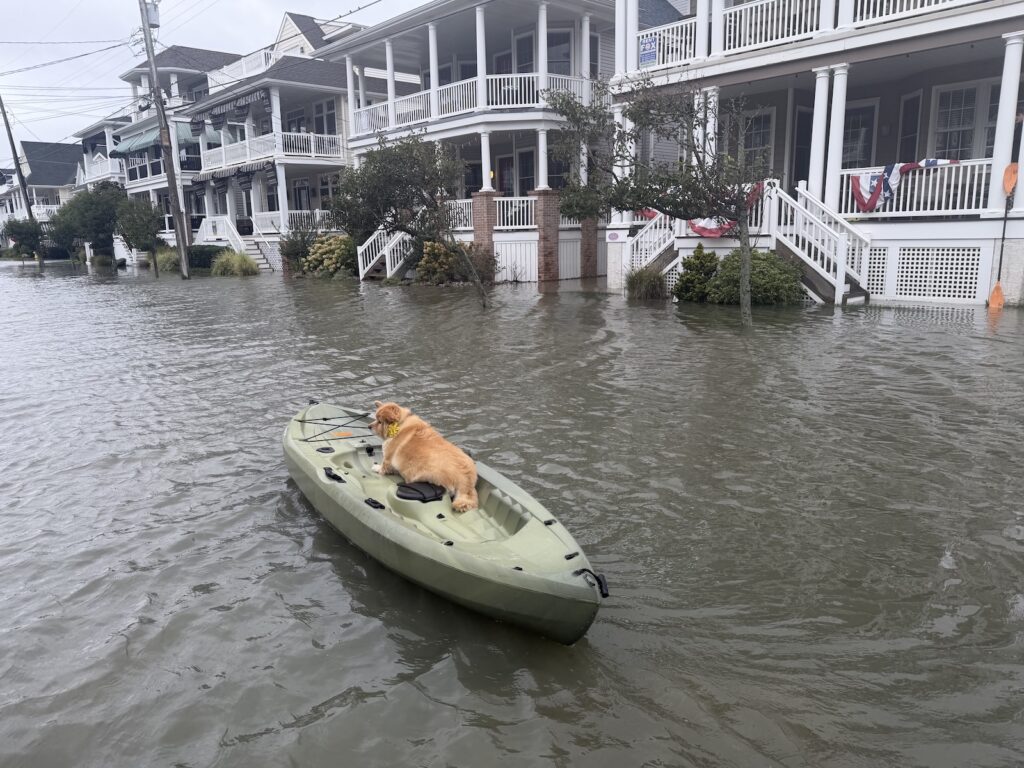
Nor’easter aftermath: Jersey Shore cleanup underway after widespread flooding
In Wildwood, waves breached a beach berm as back bay flooding inundated streets, renewing questions about how to protect the shore.
2 weeks ago
Nor’easter hits Philadelphia region, bringing high waves, coastal flooding to N.J. and Delaware
New Jersey Gov. Mikie Sherrill has issued a state of emergency for eight counties, with some shore towns issuing voluntary evacuation orders.
3 weeks ago