Young people in Pennsylvania face uncertain future as Farm Bill expires
As Congress delays a new Farm Bill, young SNAP recipients and aspiring farmers face cuts, fewer opportunities and growing uncertainty about their future.

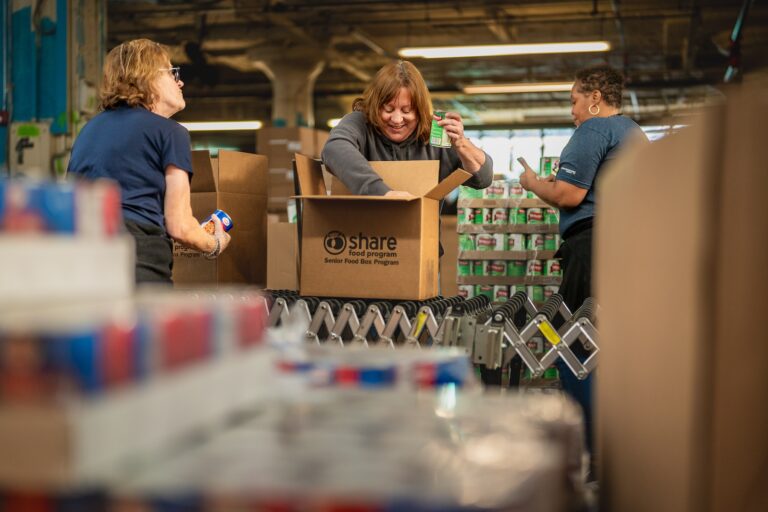
In October 2027, states with a SNAP payment error rate above 6% will be required to pay 5% to 15% of total benefit costs. (Courtesy of Share Food Program)
From Philly and the Pa. suburbs to South Jersey and Delaware, what would you like WHYY News to cover? Let us know!
Farmers and conservation programs aren’t the only ones again facing uncertainty as the latest extension of the 2018 Farm Bill expired on Sept. 30. Residents, including young people, who depend on food benefits from the Supplemental Nutrition Assistance Program, or SNAP, have serious concerns as well.
Congress has yet to reach a reconciled, long-term farm bill, despite the House passing a Republican-led Farm Bill in April and the Senate Agriculture Committee advancing its own version in September.
The Farm Bill is comprehensive federal legislation that governs agricultural, food, nutrition and conservation policy. Congress updates it every five years, with the last Farm Bill adopted in 2018. After initially expiring in 2023, Congress has repeatedly extended the 2018 bill, but it has yet to be fully reinstated.
The stalled Farm Bill has intensified food insecurity pressures and threatened farmers across Pennsylvania. Food assistance programs warn that further delays will put young people experiencing food insecurity at severe risk. But young SNAP recipients and farmers don’t want any Farm Bill; they want one that restores their benefits and reverses funding cuts to secure their future.
SNAP disputes ‘eliminate the humanity’
For Jasper Redrow and their family, the past few months have been excruciating. Jasper, 24, has a 1-year-old daughter and has been on SNAP benefits for four years. Redrow’s account, where they can manage their SNAP eligibility, was recently suspended without notice, and they were unable to access their benefits for almost a month. During this time, their fiance lost his job.
Redrow said they were given conflicting explanations and details about the suspension but that there was no “organization or … any real cognition to the way that they were handling cases even though these are people’s lives and livelihood.”
Partisan gridlock over SNAP funding and fallout from the passing of the One Big Beautiful Bill Act have been the primary roadblocks stalling the Farm Bill in the Senate. About 234,000 Pennsylvanians have lost SNAP benefits since the sweeping federal cuts were enacted. Though Redrow did not lose their benefits, they said communication and administrative delays have resulted in significant obstacles for them and their family.
“I immediately saw the difference in the communication methods and the fact that I stopped getting notices at all about anything. I had to call each time and yet again each time I was told different information,” they said.
For Redrow, the partisan disputes that have delayed a deal are due to “a clear class difference in the people that are talking about these issues versus the people that are actually receiving these benefits.”
In an attempt to lower federal spending, the White House and congressional Republicans aim to shift financial and administrative burdens to state budgets. Redrow said they hope that Democrats are able to enact a two-year delay or reversal of the cost shift. For them, the biggest issue is the “cognitive dissonance” among politicians regarding money.
“They’re not looking at the fact that [SNAP recipients] are living, breathing people that have families and have worries. They have debts. They lose jobs. [Politicians] eliminate the humanity. They take out the part that makes people people because they’re too worried about money,” Redrow said.
As the Farm Bill remains unresolved, families like Redrows are among those worried about potential funding cuts. Redrow said they are “fearful” of how existing cuts and future proposals could threaten their food security.
Youth impact
A major change under the OBBBA that took effect Oct. 1 requires states to pay 75% of SNAP’s administrative expenses, while federal reimbursement drops from 50% to 25%. In Oct. 2027, states with a SNAP payment error rate above 6% will be required to pay 5% to 15% of total benefit costs, a cost previously fully covered by the federal government. Lawmakers are currently debating the cost shift, with the current Republican-led Farm Bill proposing a one-year shift delay, while Democrats demand a two-year delay.
Sarah Weill-Jones, a member of Advocacy Corps by the Friends Committee on National Legislation, said that states are rapidly trying to decrease error rates to reduce their benefit costs. “In that process, they’re just kicking people off SNAP to reduce the error rate,” they said.
Republican lawmakers have said that high error rates indicate eligibility fraud, although Weill-Jones said that rates are due to clerical errors or miscalculations.
“These are people that are working hard like everyone else and SNAP is just supplemental to help them get by. It’s people that are disabled or older adults that are no longer able to work. It’s children that are exempt from the work requirement and are now losing their benefits [because of] representatives that are not protecting them,” Weill-Jones said.
Walker said young people and “anybody that is potentially able, where their labor can be capitalized” are most likely to be cut from assistance programming. Weill-Jones also said that the changes in eligibility “have gotten down to a science.”
“Young people may technically be kind of functioning well enough and working and going to school and living independently but still not having enough money for food and groceries,” they said.
Related Content
Young people face health care decisions shaped by policy. Vot-ER is working to connect health care experiences with civic engagement and voting.
2 months ago
For Redrow, the stigma surrounding receiving SNAP as a young adult has been emotionally difficult. “It takes more of an emotional toll on the younger generation because we are being told by our government that the people that are on these programs are leeches and are not working hard,” they said.
Erin Quinn, an aspiring farmer and graduate student at Rutgers University, said the Farm Bill’s current state strips young farmers of opportunities to break into the farming industry.
Quinn points to the Increasing Land, Capital, and Market Access Program that aimed to help underserved producers by increasing land, capital and market access. After the majority of its programming was terminated in March, advocates are pushing to codify and fund the initiative within the upcoming Farm Bill.
Without the amendment, “a lot of that land [will be] bought up by developers or corporate farms that take away the opportunity for new farmers to build their careers … that’s going to create huge ripples in the in the future of American farming, especially in terms of small farms that are able to make food affordable to the local public,” Quinn said.
Food banks see taxing increase in demand
SNAP cuts and eligibility changes have forced recipients to seek out other means of assistance, including food banks and pantries across the state. Share Food Program executive director George Matysik said demand has increased at their food pantries over the last two years. Despite the growing numbers of residents requiring assistance, Matysik said Share Food’s federal funding has been cut by nearly $10 million.
“This is a real attack on the working class,” he said. The delay in passing a Farm Bill means that programs like his have had to strategically plan for potential rises in demand and reduced agricultural commodities reaching their pantries.
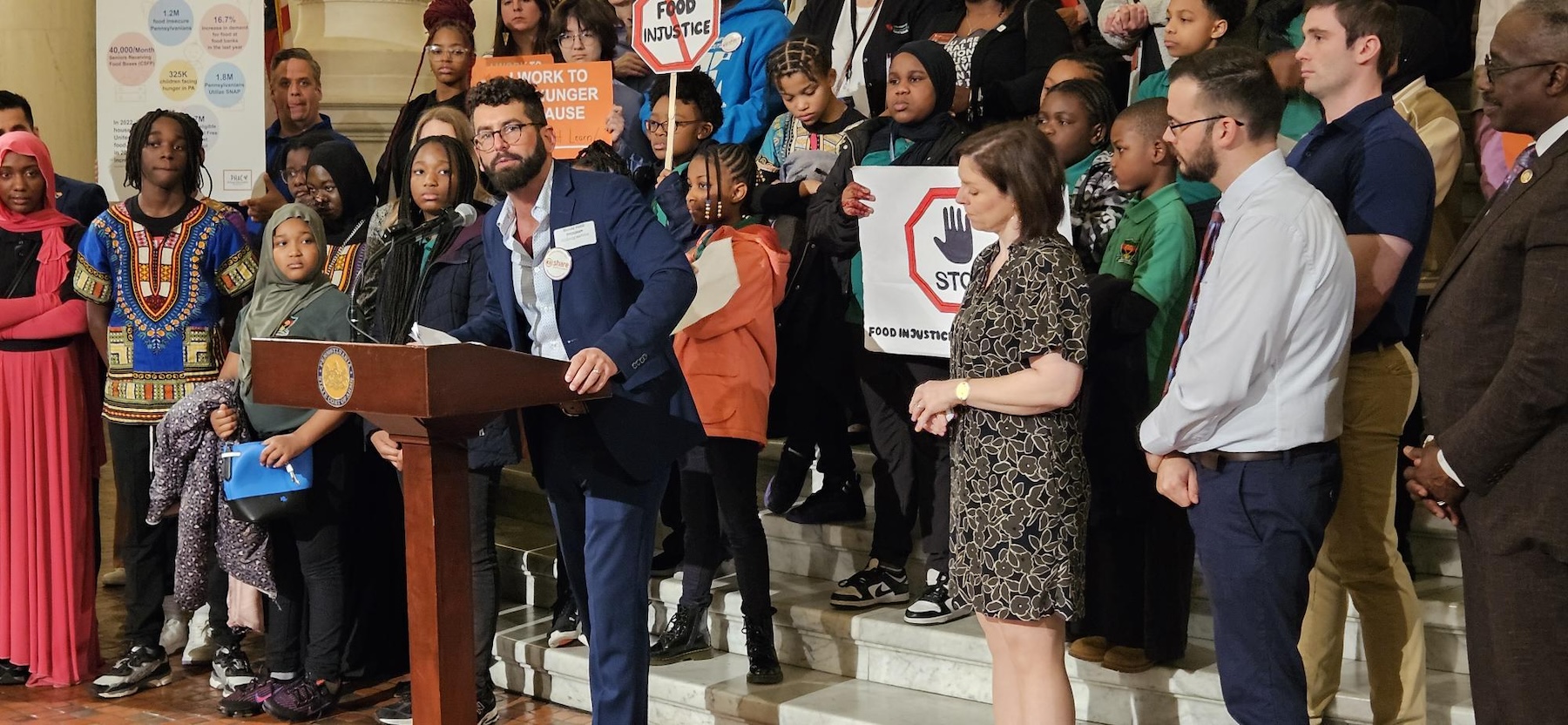
Kate Walker, food pantry coordinator at North Light Community Center, said she sees the effects of the cuts every day. Like Matysik, she has also seen the increased demand for resources as people are kicked off SNAP and struggle with the declining economy.
“I know their stories. I know their food allergies. These are the most vulnerable members of our society that are taking the brunt of this, unfortunately,” she said.
“It’s great that we have these supplemental programs like food banks, but they’re meant to be supplemental. They’re not meant to be like a regular source of food for people and that’s becoming reality as people aren’t able to access food by other means,” said Weill-Jones.
Quinn said local farms can help relieve some demand by providing food banks with local produce. However, the delay in passing the Farm Bill prevents this, as “they need to be backed by research that’s going on at agricultural universities to support the development of new plant varieties and new farming practices.” Under Title VII, the Farm Bill funds programs such as the Agriculture and Food Research Initiative, the Sustainable Agriculture Research and Education Program, and the Specialty Crop Research Initiative.
This is not the end for the Farm Bill
Though the delay has intensified food insecurity and uncertainty about the future of agricultural research and opportunity, advocates said there is still time to shape the legislation.
Jess Bautista at Share Food Program said the current draft of the bill is “a disaster for hungry families and hungry children and hungry working adults.”
“If there is going to be a farm bill, we want one that is actually going to restore some of the SNAP benefits, and is going to make sure that organizations like ours that need additional resources are getting them,” Matysik said.
Weill-Jones is also not giving up advocating for the Farm Bill that they want.
“This is going to go to the Senate floor for the rest of the Senate to be voted on in the coming months. And so there’s still time for edits to be made and for you to contact your representative to let them know why a two-year cost-shift delay for all states is important,” Weill-Jones said.
For Jess Bautista at Share Food Program, the longer Congress waits to pass a Farm Bill, the more people are left vulnerable to cuts in SNAP benefits.
“The longer we don’t have a Farm Bill in place, the more of these cuts to SNAP [remain] and the more people will lose benefits and the hungrier folks will get. So, we need a good bill but we also can’t afford to keep waiting on billions of dollars of cuts to not be reversed at this point,” Bautista told WHYY News.
Editor’s Note: This story is part of a series on Youth Civic Engagement funded by the William Penn Foundation. WHYY News produces independent, fact-based news content for audiences in Greater Philadelphia, Delaware and South Jersey.

Get daily updates from WHYY News!
WHYY is your source for fact-based, in-depth journalism and information. As a nonprofit organization, we rely on financial support from readers like you. Please give today.
Part of the series

Youth voting
WHYY News explores stories about youth voting as part of its civic dialogue work and to elevate awareness for our future generations.
Funded by William Penn Foundation.

Young Pa. voters weigh in on the issues that brought them to the polls
Pennsylvania college students shared why they voted, which issues matter most to them and the challenges they faced navigating the midterm election.
1 week ago

How campus voting initiatives in Pennsylvania aim to tackle barriers to youth voting
As the midterm elections near, universities across Pennsylvania are taking part in the ALL IN Campus Democracy Challenge to help young people navigate the voting process.
3 weeks ago

The city office advocates for people in juvenile justice, child welfare and behavioral health care, teaching them their rights and helping turn their complaints into change.
2 months ago