

Controversial Delaware legislation giving people experiencing homelessness more rights draws opposition from businesses, local governments
The legislation would allow lawsuits against localities for violating an unhoused person’s civil rights.
Listen 0:53
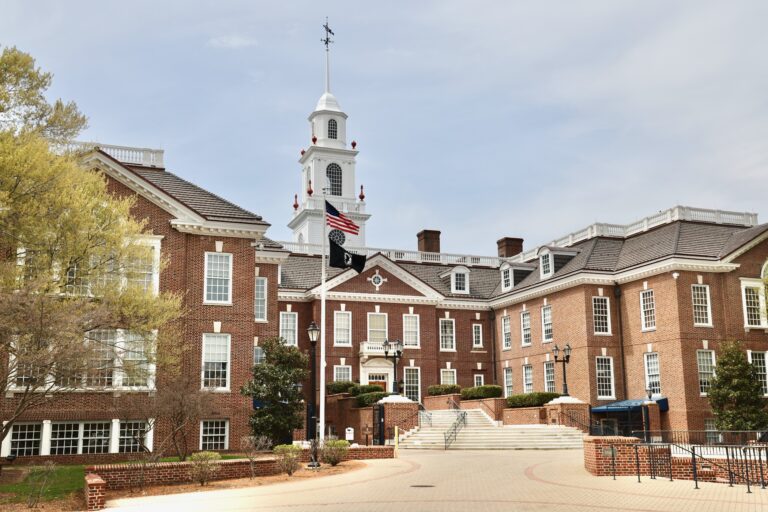
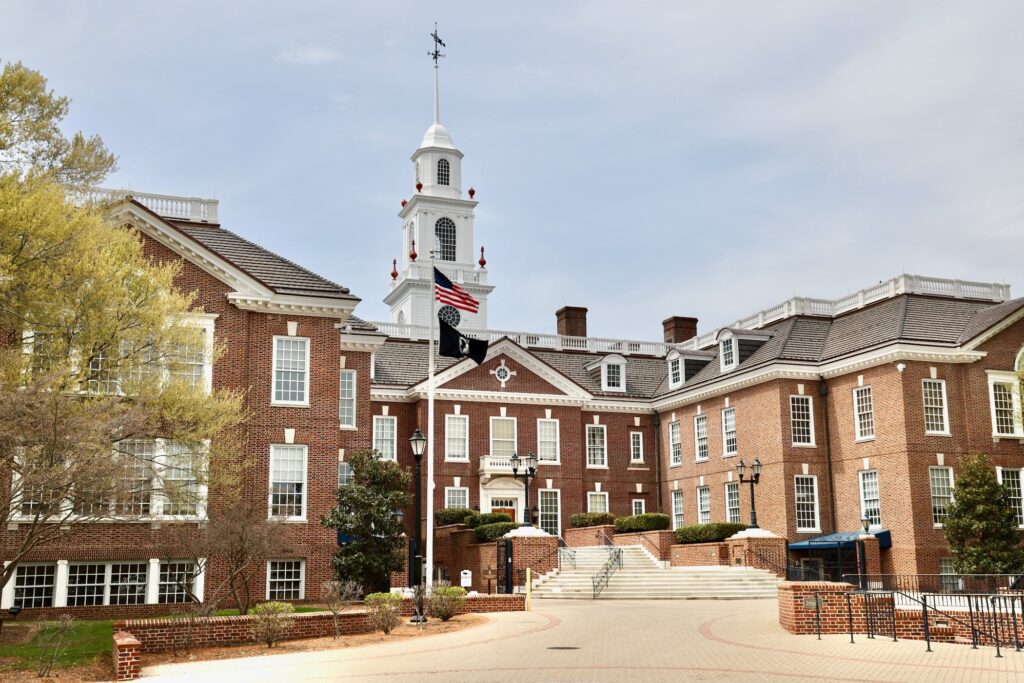
Legislative Hall in Dover, Delaware (Emma Lee/WHYY)
What are journalists missing from the state of Delaware? What would you most like WHYY News to cover? Let us know.
Legislation that would provide more rights to Delaware’s homeless population prompted spirited debate during a Tuesday House committee hearing.
The bill, sponsored by state Rep. Sophie Phillips, D-Bear, would expand the rights and protections of people without homes when using public spaces, such as sleeping or sitting outside. Some local governments said they opposed the legislation because it could leave them liable to a lawsuit.
“Federal, state and private funding for homelessness services is disjointed and difficult to access for service providers,” Phillips said during the hearing. “Rather than addressing this, we are relying on arrests and fines. HB 135 will not allow arrests and fines simply for being homeless, specifically, if they have nowhere else to go.”
The Housing Alliance of Delaware’s 2025 Point in Count of sheltered and unsheltered people revealed 1,585 people experiencing homelessness in the state, a 16% increase over the prior year. Children made up 27% of the state’s unhoused population.
Key rights under the proposal
- It would allow people experiencing homelessness to conduct “life sustaining activities,” in public, such as resting, standing, sleeping, eating and storing personal property, as long as they would not block traffic or alternative indoor shelter is available and accessible.
- People without homes would have the same legal protection against unreasonable search and seizures for their personal property in public spaces as people who store their property in private spaces.
- Local law enforcement and the state police would be barred from ordering people to move parked vehicles used as shelter unless they are obstructing traffic or creating a safety hazard. Residents without homes must first be allowed to move their vehicles before officials could ticket or tow it.
Phillips said she will be introducing an amendment that clarifies alternative indoor spaces requirements, revises the definition of public space and clarifies that governments can impose time, place and manner restrictions on public property as long as it doesn’t disproportionately apply to people experiencing homelessness.
The fiscal note for the legislation said the cost of the bill is indeterminate and potentially significant. That’s because the measure waives sovereign immunity of state or local governments for any civil rights lawsuit that is brought. Sovereign immunity shields government entities from being sued, but it can be waived through legislation.
Related Content
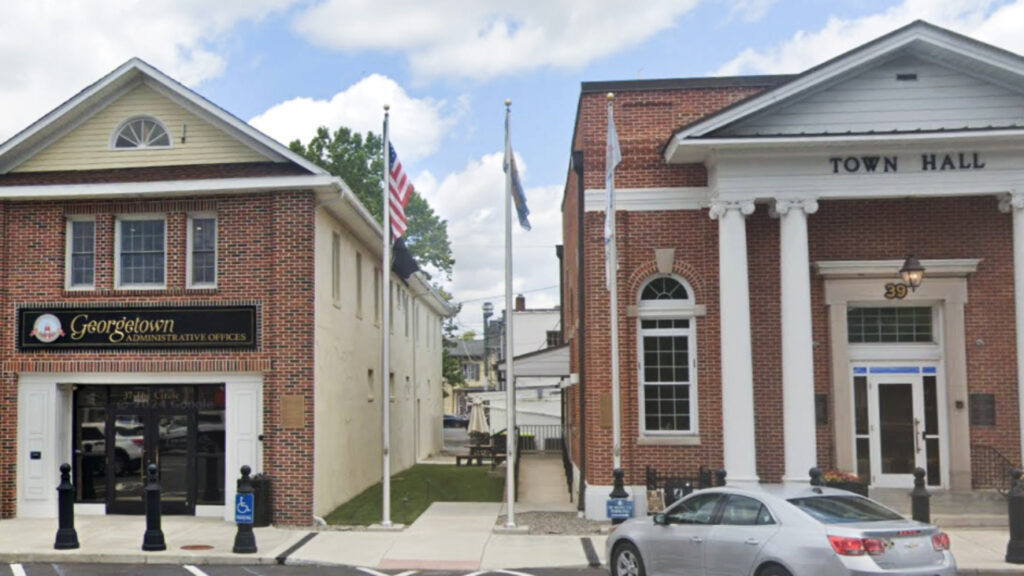
How services, housing gaps and policy made Georgetown, Delaware a focal point for homelessness
A new study sheds light on why homelessness is concentrated in Sussex County’s Georgetown and what leaders say is needed to address it.
9 months ago
Listen 1:40State Rep. Jeffrey Spiegelman, R-Dover, said the bill would make it harder to enforce quality of life offenses like loitering and panhandling, which would hurt small businesses.
“This is a cudgel. This is if you don’t do as we say, you can be hit by a civil rights lawsuit,” Spiegelman said. “That is a very, very dangerous situation, especially at a time when every single one of us would love to have more businesses attracted to the Downtown Development districts.”
Phillips argued that officials will still be able to enforce existing laws.
“Police will still be able to enforce criminal law, including trespassing on private property and asking people to move if they’re blocking streets or sidewalks or businesses,” she said. “Police will still be able to keep our neighborhoods safe from criminal activities, including illegal drug activity and other crimes.”
Becca Cotto, community engagement director for the YWCA of Delaware, urged committee members to support the bill.
“This legislation recognizes that simple but powerful truth, housing instability should never be met with punishment,” Cotto said. “Criminalizing survival, sleeping, resting, protecting oneself or storing one’s belongings only deepens trauma and pushes people further from stability.”
It’s unclear whether the bill will garner enough votes to clear the committee. But the issue of homelessness and how to combat it continues to be a hot topic across the state.
Cities and towns across Delaware are struggling to deal with a rising number of residents without homes, a lack of shelter beds and a lack of affordable housing.
The city of Wilmington has allowed a homeless encampment in a park on its eastside, while barring sleeping outside in all other areas of the city. The city has been struggling to implement strict rules on the park inhabitants while facing pushback from local activists.
Dover City Council recently denied $47,000 to The People’s Church, a downtown homeless shelter, after community complaints about the facility.
According to the Delaware Continuum of Care 2025 Blueprint for Solving Homelessness, roughly 60% of Delaware’s homeless people are in New Castle County shelters, compared with only 15% in Sussex County, reflecting a geographic capacity imbalance.
Homelessness far outpaces available services in southern Delaware, leading to a lack of facilities for those in need of shelter or those doubling up in unstable arrangements.

Get daily updates from WHYY News!
WHYY is your source for fact-based, in-depth journalism and information. As a nonprofit organization, we rely on financial support from readers like you. Please give today.
Part of the series
La legislación permitiría presentar demandas contra las localidades por violar los derechos civiles de una persona sin hogar.
6 months ago

Las autoridades de Wilmington permitirán acampar en un parque de la ciudad, pero prohibirán dormir al aire libre en todas las demás zonas de la ciudad.
12 months ago

Wilmington officials will allow camping in one city park but ban sleeping outside in all other areas of the city.
12 months ago
Listen 0:49